
Blanche Taylor Moore
Serial killer Genene Jones
Serial killer · USA · 1977
Genene Anne Jones (born July 13, 1950) was a former pediatric nurse who worked…
11 victims
Genene Jones
Serial killer · USA · 1977
Genene Anne Jones (born July 13, 1950) was a former pediatric nurse who worked…
11 victims
 Diana Lumbrera
Serial killer · USA · 1976
Diana Lumbrera (1976–1990) systematically suffocated 6 of her own children and…
7 victims
Diana Lumbrera
Serial killer · USA · 1976
Diana Lumbrera (1976–1990) systematically suffocated 6 of her own children and…
7 victims
 Velma Barfield
Serial killer · USA · 1969
Velma Barfield was executed by lethal injection in North Carolina on November 2…
7 victims
Velma Barfield
Serial killer · USA · 1969
Velma Barfield was executed by lethal injection in North Carolina on November 2…
7 victims
 Judy Buenoano
Serial killer · USA · 1971
Judy Buenoano was executed by electrocution in Florida on March 30, 1998. Judy…
3 victims
Judy Buenoano
Serial killer · USA · 1971
Judy Buenoano was executed by electrocution in Florida on March 30, 1998. Judy…
3 victims
 Donald Henry Gaskins
Serial killer · USA · 1969
Donald Henry Gaskins, also known as Donald “Pee Wee” Gaskins, was a serial kill…
200 victims
Donald Henry Gaskins
Serial killer · USA · 1969
Donald Henry Gaskins, also known as Donald “Pee Wee” Gaskins, was a serial kill…
200 victims
 Carl Eugene Watts
Serial killer · USA · 1974
Carl Eugene Watts (born November 7, 1953; died September 21, 2007), also known…
100 victims
Carl Eugene Watts
Serial killer · USA · 1974
Carl Eugene Watts (born November 7, 1953; died September 21, 2007), also known…
100 victims
 John Russell Thompson
Murderer · USA · 1977
July 3, 1987 — United States Court of Appeals, Fifth Circuit decided John Russe…
1 victim
John Russell Thompson
Murderer · USA · 1977
July 3, 1987 — United States Court of Appeals, Fifth Circuit decided John Russe…
1 victim
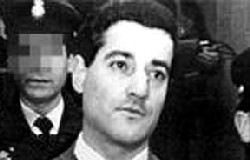 José Antonio Rodríguez Vega
Serial killer · Spain · 1987
José Antonio Rodríguez Vega was a Spanish serial killer nicknamed El Mataviejas…
16 victims
José Antonio Rodríguez Vega
Serial killer · Spain · 1987
José Antonio Rodríguez Vega was a Spanish serial killer nicknamed El Mataviejas…
16 victims
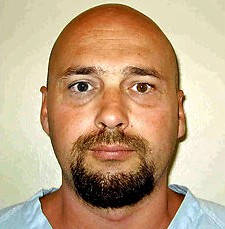 Christopher Scott Emmett
Murderer · USA · 2001
Name: Christopher Scott Emmett · Sex: Male · Race: White · Home: Not stated · A…
1 victim
Christopher Scott Emmett
Murderer · USA · 2001
Name: Christopher Scott Emmett · Sex: Male · Race: White · Home: Not stated · A…
1 victim
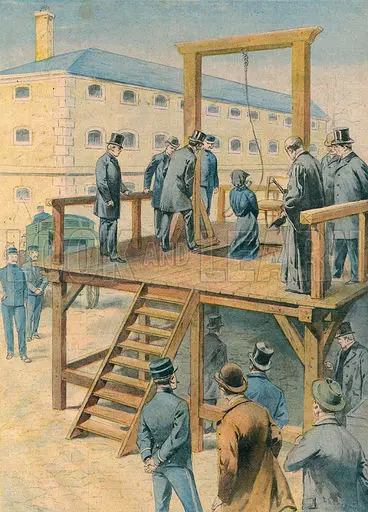 Mary Mabel Rogers
Murderer · USA · 1902
Mary Mabel Rogers (1883 – December 8, 1905) was the last woman legally executed…
1 victim
Mary Mabel Rogers
Murderer · USA · 1902
Mary Mabel Rogers (1883 – December 8, 1905) was the last woman legally executed…
1 victim
- Gender
- female
- Country
- USA
- Location
- Alamance County, North Carolina , USA
- Date of birth
- February 17, 1933
- Age at first offence
- 35
- Characteristics
- poisoner
- Victim profile
- P. D. Kiser (her father) / Isla Taylor ( her mother-in-law) / James N. Taylor (her first husband) / Raymond Reid (her boyfriend)
- Method of murder
- Poisoning (arsenic)
- Date(s) of murder
- 1968 - 1986
- Years active
- 1968–1986
- Date of arrest
- July 18, 1989
- Status
-
Sentenced to death
Sentenced to death on January 18, 1991
Case record: Blanche Taylor Moore
Background
Blanche Kiser Taylor Moore was an American convicted murderer from Alamance County, North Carolina. She was born February 17, 1933. She married James Napoleon Taylor in 1952 and bore him two children, one in 1953 and another in 1959. She worked at Kroger in Burlington as a cashier and later became head cashier. She left her employment on account of sexual harassment on 17 October 1985.
Moore was associated with arsenic poisoning investigations that followed her then husband, the Reverend Dwight D. Moore, being diagnosed with arsenic poisoning while being treated at North Carolina Memorial Hospital in Chapel Hill. An investigation led to the eventual exhumation of the bodies of P.D. Kiser (her father), James N. Taylor (her first husband), and Reid (a previous boyfriend). All of the bodies tested positively for the presence of arsenic.
People
- Blanche Kiser Taylor Moore — defendant
- Raymond C. Reid, Sr. (“Reid”) — victim in the case reviewed on appeal; longtime lover and boss at a Kroger supermarket
- James N. Taylor — Moore’s first husband
- P.D. Kiser, Sr. — Moore’s father
- Reverend Dwight D. Moore — Moore’s then husband; survived arsenic poisoning
- Dr. Norman H. Garrett, Jr. — treated Reid at admission to Wesley Long Hospital
- Dr. Robert Hamilton — specialist in internal medicine and nephrology; treated Reid at North Carolina Baptist Hospital
- Dr. Kyle Jackson — pronounced Reid dead
- Dr. John D. Butts — Chief Medical Examiner for the State of North Carolina
- Dr. Vincent Guinn — professor of chemistry at the University of California-Irvine; expert in nuclear chemistry
- Agent Thomas J. Currin — North Carolina State Bureau of Investigation; questioned document examiner and forensic chemist
- W.A. Shulenberger — expert witness for the defendant
- Lisa Hutchens — head nurse in the Intensive Care Unit (ICU)
- Wanda B. Moss — registered nurse in the ICU at North Carolina Baptist Hospital
- Steven Reid — one of Reid’s sons
- Nurse Hutchens — Lisa Hutchens referenced as head nurse in the ICU
- Mitchell M. McEntire — Moore’s attorney
- Janet Branch — prosecutor during trial
- W. Warren Sparrow — Forsyth County District Attorney
- Freeman, J. — presiding judge who imposed sentence of death
Family and relationships (as described)
Moore’s father, Parker D. Kiser, was described as a mill worker and later an ordained Baptist minister. Moore’s relationship history with multiple men in her life was developed through the trial narrative and evidence. Reid had reported to Dr. Garrett that he became violently ill after eating some of Moore’s homemade potato soup during the New Year’s Eve period described in the appellate opinion.
The offence
Moore was indicted for the 7 October 1986 first-degree murder of Raymond C. Reid, Sr. She was tried capitally at the 15 October 1990 Criminal Session of Superior Court in Forsyth County, and was found guilty as charged of first-degree murder. The capital murder involved murder by arsenic poisoning.
The State’s evidence at trial tended to show that Moore met Reid while working at Kroger supermarket in Burlington in 1962, and that they did not start going out together until 1979. Reid was transferred several times in 1979 and 1980 until he became manager of a store in Winston-Salem, North Carolina. Defendant worked the entire time in Burlington except for a brief period in 1979 when she was at a store in Durham.
Reid initially became ill on 1 January 1986. Reid experienced severe symptoms of nausea, vomiting, and diarrhea. He was absent from work more than four weeks over the next few months, with his last day at work being 29 May 1986.
Reid was admitted to Wesley Long Hospital in Greensboro, North Carolina, on 30 May 1986 by his physician Dr. Norman H. Garrett, Jr. Reid reported to Dr. Garrett that while eating supper seven days earlier, he had experienced nausea, vomiting, and dehydration, became violently ill, and was unable to keep down any solid foods since that time. Dr. Garrett’s initial diagnosis was acute gastroenteritis based on profound dehydration, nausea and vomiting.
The diagnosis was revised during hospitalization to multiple systems failure based on Reid’s symptoms including excessive nausea and vomiting, loose stools, skin rash, edema, dehydration, bone marrow damage, blood cell abnormalities, electrolyte abnormality, tachypnea, respiratory failure, tachycardia, low blood pressure, kidney malfunction and shutdown, and numbness and tingling in his hands and feet, which were described as characteristic of arsenic poisoning. By the morning of 5 June 1986, Reid’s condition had stabilized, and Dr. Garrett informed Reid that he need only remain in the hospital for three to five more days following his circumcision, described as resulting from an infection and not related to Reid’s other symptoms.
Reid’s condition worsened and he was transferred to North Carolina Baptist Hospital in Winston-Salem on 13 June 1986. Dr. Robert Hamilton testified regarding the symptoms of Reid’s admission, including raspy voice, severe swelling in his lower extremities, anemia, low white blood cell count, rash over lower extremities, white patches in his mouth, very poor bowel sounds, difficulty breathing, and signs of kidney failure. Reid’s condition continued to deteriorate, resulting in a “Code Blue” on 21 June 1986. He was intubated and was mechanically ventilated, with some slight improvement following plasmapheresis. A lab report from a urine sample obtained between 27 June 1986 and 28 June 1986 showed “quite elevated” levels of arsenic in the urine, and Dr. Hamilton never saw the results.
Reid improved during July 1986 but continued to have difficulty breathing and needed to be on a respirator. During this time, Moore asked Dr. Hamilton if she could bring food from home for Reid and was given permission. In late September 1986, Reid suffered another serious setback. Lisa Hutchens testified the last time she saw Reid looking well was on 1 October 1986 when she visited him in the intermediate care unit, with Moore feeding him banana pudding. Hutchens visited again on 3 October 1986; Reid was in “acute respiratory distress” and frightened, pleading: “please help [335 NC Page 579] me or I'm going to die.” Reid returned to the ICU on 4 October 1986.
Steven Reid testified that he visited his father on 4 October 1986 and found he had eaten a breakfast prepared by Moore. He stayed until late that afternoon and visited again on the fifth before returning to East Carolina University in Greenville, North Carolina. When Steve called on Monday, 6 October 1986, Moore told him he should return to the hospital as soon as possible. When he arrived on the evening of the sixth, Steve hardly recognized his father. The appellate opinion stated Steve observed swelling, and his description included: “his eyeballs were even starting to swell and his skin was splitting.” Dr. Kyle Jackson testified Reid became “progressively weaker and unable to continue his breathing on his own well enough to sustain life.” By 7 October 1986, Reid was on inotropic drugs and mechanical ventilation; he could communicate only with his eyes. In the early afternoon, Reid “coded,” and medical personnel began CPR and administered emergency drugs. Dr. Jackson pronounced Reid dead from complications he thought attributable to Guillain-Barre syndrome.
Several witnesses recalled that moments after Reid passed away, Moore stated: “We cannot have an autopsy. He has been through too much. He wouldn't want to be cut on like this. We just -- we cannot have one.”
Witnesses also testified about Moore bringing or feeding items, including milk shakes from McDonald’s while Reid was hospitalized at Wesley Long Hospital, and a red container of Jello observed in Moore’s purse by Gloria Head. Dr. Garrett had previously testified that Reid informed him on 30 May 1986 that he began vomiting after eating Jello the previous night.
Wanda B. Moss described treatment at North Carolina Baptist Hospital, including Dobhoff feeding tubes. Moss stated Coca-Cola was inserted by syringe into the tube to unclog it, and the syringes were kept in an unlocked closet in Reid’s room. The appellate opinion stated Coca-Cola was often left unattended in the patient’s room, and Moore was present when Moss used the syringe. Moss also described Moore bringing peanut butter milk shakes, banana pudding, tomato pudding, corn bread, and milk from home and feeding Reid herself. ICU nursing notes reflected repeated instances where Reid complained later in the day of being nauseated after having been fed by Moore. Moss testified she never saw anyone other than Moore bring food to Reid or feed him.
Following a court order, Reid’s body was exhumed on 13 June 1989 in Alamance County. The body was taken to the medical examiner’s office in Chapel Hill and an autopsy was performed. The autopsy revealed “clearly recognizable” Mees lines across the fingernails of both hands. The toxicology report indicated arsenic in Reid’s liver tissue “30 times higher than one might see in an average individual who is not having a significant exposure to arsenic.” Arsenic in Reid’s brain tissue was approximately sixty-seven times higher than expected in a normal individual. Dr. John D. Butts concluded: “Reid died as a result of the complications of arsenic poisoning.” Dr. Vincent Guinn concluded that arsenic levels found in Reid’s hair corresponded “to a long period of ingestion of arsenic, multiple ingestions.” Guinn noted that on 24 June 1986 the arsenic level peaked at 70 parts per million, which was described as “roughly 70 times the normal level.”
Investigation and pretrial
In May 1989, Moore’s then husband, Reverend Dwight D. Moore, was diagnosed with arsenic poisoning while being treated at North Carolina Memorial Hospital in Chapel Hill. Investigation began and led to exhumations of P.D. Kiser, Sr., James N. Taylor, and Reid. All bodies tested positively for arsenic. Moore was indicted in Alamance County for the murders of Kiser and Taylor and the felonious assault on Moore; she was indicted in Forsyth County for the murder of Reid. The Alamance County cases were subsequently transferred to Forsyth County.
The State presented extensive evidence concerning the deaths of Moore’s father and her first husband and Moore’s husband’s illness.
The appellate opinion described extensive pretrial publicity and motions in the context of changing venue and bills of particulars, as well as evidentiary issues regarding other similar crimes and the admission of other evidence.
Arrest
Moore was arrested and charged with the first-degree murder of Raymond Reid (Reid) on July 18, 1989 and held in the Alamance County jail without bond.
Trial
The trial opened in Winston-Salem on October 21, 1990, and was conducted as a capital trial at Forsyth County Superior Court. Moore denied ever giving Reid any food, and the appellate opinion detailed State evidence that she brought food and fed him during his hospitalizations.
During the trial, the State’s evidence linked Moore to Anti-Ant, an arsenic-based ant killer. Witness testimony included:
- Brenda Green, a Kroger co-worker, recalled hearing Moore recommend Anti-Ant to a customer as a good ant-killer.
- Moore testified that during the summer of 1985, she showed Moore a bottle of Anti-Ant and asked him to purchase some for her from Byrd's Food Center in the Glen Raven section of Burlington; Moore testified he purchased the Anti-Ant at Byrd's, gave the bottle to Moore, and told Moore he had purchased it there.
- Leonard Wolfe, a former co-worker and owner of Ken’s Quickie Mart, testified Moore came into his store in early April 1989 and asked if he had any Anti-Ant in stock.
- Peggy Vaughn, owner and operator of Atla Chemical Company in McLeansville, testified her company manufactured Anti-Ant for over ten years, including 1985-1988. She testified the main active ingredient in Anti-Ant is arsenic and stated that State’s Exhibit #30 was identical in appearance to other bottles of Anti-Ant manufactured by her company.
A special agent testified concerning investigation into a letter received by Moore in the Alamance County jail, purportedly written by Garvin Thomas, in which Thomas allegedly confessed to the murder of Reid and the attempted murder of Moore. The appellate opinion stated Agent Thomas J. Currin concluded, based on examinations and comparisons of Moore’s handwriting samples and those of Garvin Thomas, that in his opinion Moore was the person who wrote the confession letter attributed to Garvin Thomas. W.A. Shulenberger testified as an expert witness for the defendant and opined that Moore could not have written the confession letter; he found no evidence of an attempt to disguise or alter the handwriting. The court described that Shulenberger stopped short of stating that Garvin Thomas actually wrote the confession letter.
The trial also included testimony from Carolyn Hinshaw, a jailer with the Alamance County Sheriff’s Department, that a man carrying a teddy bear and signing his name as “Garvin Thomas” attempted to visit Moore in jail and told her he had done wrong and wanted to do some good to right wrongs. Deputy Hinshaw testified this incident occurred two to four months before 19 May 1990, described as the date of the alleged confession letter. Carol DiLelo, a secretary for defense counsel Mitchell M. McEntire, testified that when her employer learned of the teddy bear incident, she arranged a meeting with Garvin Thomas. DiLelo testified that at the meeting, Thomas stated: “he knew he was going to die and that he knew Blanche Moore had not done the things she was accused of doing and he knew that he had hurt her and he had hurt her family and he was sorry about all that.”
Moore testified in her defense. The appellate opinion stated she testified that while Reid was in the ICU at Baptist Hospital, she recalled him being fed only with a tube. She denied seeing Reid have any food at all during that time and denied taking food to Reid while he was in the hospital. She specifically denied taking banana pudding or peanut butter milk shakes to Reid in the hospital. She denied conversing with anyone about Reid’s autopsy and told the jury she would not have been opposed to an autopsy to determine the cause of his death. The opinion also stated she denied having anything to do with Reid’s will even though Reid gave her his power of attorney. She acknowledged hearing of Anti-Ant but denied ever having purchased, attempted to purchase, or directed anyone else to purchase the product. She also denied administering arsenic to James N. Taylor, Reid, or Moore.
At the guilt-innocence phase, the jury found Moore guilty of the first-degree murder of Reid.
Sentencing
During the capital sentencing phase, the jury found in aggravation:
- (i) the murder was committed for pecuniary gain
- (ii) the murder was especially heinous, atrocious, or cruel
As mitigating circumstances, the jury found:
- (i) Moore “provided well for the needs of her children while they were growing up”
- (ii) upon being informed of the warrant for her arrest, she “peacefully submitted herself in accordance with her duty”
- (iii) she “demonstrated concern and kindness for others in her community”
Based on findings that the mitigating circumstances were insufficient to outweigh the aggravating circumstances and that the aggravating circumstances were sufficiently substantial to call for the imposition of the death penalty when considered with the mitigating circumstances, the jury recommended Moore be sentenced to death.
The judgment of death was entered by Freeman, J., on 16 November 1990, and the presiding judge later sentenced Moore to die by lethal injection on January 18, 1991.
An order staying execution of the death sentence was entered on 26 November 1990 pending conclusion of the appeal.
Moore resided at the North Carolina Correctional Institution for Women, with prisoner number 0288088.
Appeals
The appellate record included that Moore appealed as of right pursuant to N.C.G.S. § 7A-27(a) from a judgment imposing a sentence of death entered by Freeman, J., at the 15 October 1990 Criminal Session of Superior Court, Forsyth County, upon a jury verdict of guilty of first-degree murder. The appeal was filed March 4, 1994.
Issues raised in the appeal
Moore argued multiple assignments of error, including:
- Denial of motions for change of venue based on extensive pretrial publicity.
- Denial of motions for a bill of particulars.
- Denial of motion to compel the Forsyth County District Attorney to comply with an open file agreement made with the Alamance County District Attorney.
- Denial of motion for individual sequestered voir dire of prospective jurors.
- Denial of pretrial motion that prospective jurors be examined on their opinions concerning defendant’s eligibility for parole upon conviction.
- The conduct of voir dire during initial screening.
- Evidentiary rulings allowing admission of other similar crimes evidence under Rule 404(b).
- Testimony allegedly admitted to generate sympathy for Reid’s family.
- Denial of motion for mistrial after an emotional display by Assistant District Attorney Janet Branch.
- Denial of a “voir dire” examination of the District Attorney’s files about discovery compliance under N.C.G.S. § 15A-903.
- Admission of physical evidence (Anti-Ant bottle and medical appliances).
- Denial of motion to dismiss based on insufficiency of evidence.
- Refusal to give specific jury instructions on reasonable doubt, identity, dying declarations, and uncontroverted evidence.
- Refusal to submit lesser included offense of second-degree murder.
- Denial of motion to strike the death penalty and impose life sentence.
- Submission of aggravating circumstances for pecuniary gain and “especially heinous, atrocious or cruel.”
- Challenges to proportionality review of the death sentence.
Appellate disposition
The appellate opinion reviewed the capital trial for murder by arsenic poisoning of Reid and held that:
- Moore received a fair trial and sentencing proceeding, free from prejudicial error.
- The death sentence was not imposed under the influence of passion, prejudice, or any other arbitrary factor.
- The death sentence was not disproportionate to the penalty imposed in similar cases.
The opinion concluded: “NO ERROR.”
Other charges and related proceedings described
Moore was charged with:
- arsenic-poisoning death of her first husband, James N. Taylor, who died in 1973
- poisoning her current husband, the Rev. Dwight W. Moore, in 1988 and 1989
- assault with intent to kill Moore in separate cases as described in the trial narrative The appellate opinion states she was indicted in Alamance County for the murders of Kiser and Taylor and the felonious assault on Moore, and that Alamance County cases were transferred to Forsyth County.
The appellate opinion also states that it was an opinion held by authorities that she would not be tried for some additional cases described in narrative portions, and that charges were pending in the deaths of several other speculated victims; those pending items were described without specifying outcomes.
Quotes (verbatim)
- Moore about autopsy immediately after Reid’s death (as recalled by witnesses):
- “We cannot have an autopsy. He has been through too much. We just -- we cannot have one.”
- Reid to Moore/others as described by Nurse Hutchens:
- “please help [335 NC Page 579] me or I'm going to die.”
- W.A. Shulenberger’s testimony as described does not include a direct quote.
- Garvin Thomas statement at meeting (as reported by Carol DiLelo):
- “he knew he was going to die and that he knew Blanche Moore had not done the things she was accused of doing and he knew that he had hurt her and he had hurt her family and he was sorry about all that.”
- Moore (during trial testimony and described statements in the narrative):
- “I know arsenic was found in these people, but it's not because I put it there, because I didn't do it,”
- “never physically harmed an individual,”
- “a very giving person,”
- “to be here for others and to help whenever I could.”
Victims (as listed)
- P.D. Kiser — (1968), exhumations showed arsenic poisoning
- Isla Taylor — (1970), exhumations showed arsenic poisoning
- James N. Taylor — (1971), exhumations showed arsenic poisoning
- Raymond Reid — (1986), death by arsenic poisoning
- Dwight Moore — (1989), poisoned by arsenic, recovered
Aftermath
With automatic appeals in progress, execution was stayed and Moore was able to stave off execution for over 20 years. She maintained her innocence to this day.
Moore later filed a motion in 2010 with the other death-row inmates from Forsyth County to convert their sentences to life imprisonment on the basis of the state’s Racial Justice Act, with the issue described as the racial composition of juries. Moore also underwent chemotherapy and radiation therapy for health issues in prison.


Spotted an error, or have more information about this case?