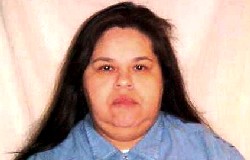
Dora Buenrostro
Murderer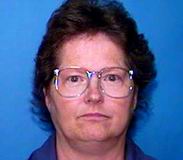 Bobbie Sue Terrell
Murderer · USA · 1984
Bobbie Sue Dudley Terrell was a Pinellas County nurse and worked as the night s…
12 victims
Bobbie Sue Terrell
Murderer · USA · 1984
Bobbie Sue Dudley Terrell was a Pinellas County nurse and worked as the night s…
12 victims
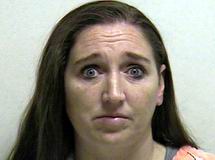 Megan Huntsman
Murderer · USA · 1996
Megan Huntsman was 40 at sentencing. She was a mother of three children who wer…
6 victims
Megan Huntsman
Murderer · USA · 1996
Megan Huntsman was 40 at sentencing. She was a mother of three children who wer…
6 victims
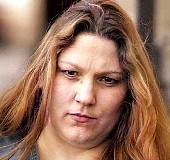 Angela Johnson
Murderer · USA · 1993
Angela Jane Johnson was convicted in federal court of aiding and abetting the m…
5 victims
Angela Johnson
Murderer · USA · 1993
Angela Jane Johnson was convicted in federal court of aiding and abetting the m…
5 victims
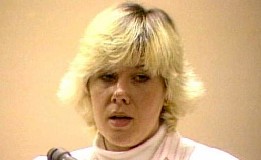 Catherine May Wood
Murderer · USA · 1987
Catherine May Wood was an American caregiver who worked at the Alpine Manor Nur…
5 victims
Catherine May Wood
Murderer · USA · 1987
Catherine May Wood was an American caregiver who worked at the Alpine Manor Nur…
5 victims
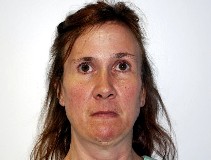 Michele Kalina
Murderer · USA · 1996
Michele Kalina pleaded guilty to murder for one of five infants she initially w…
5 victims
Michele Kalina
Murderer · USA · 1996
Michele Kalina pleaded guilty to murder for one of five infants she initially w…
5 victims
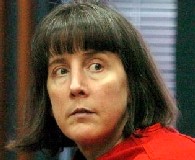 Amy Bishop
Murderer · USA · 1986
Amy Bishop — biology professor and perpetrator · James Anderson — Bishop’s husb…
4 victims
Amy Bishop
Murderer · USA · 1986
Amy Bishop — biology professor and perpetrator · James Anderson — Bishop’s husb…
4 victims
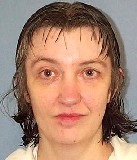 Shonda Johnson
Murderer · USA · 1997
Shonda Johnson was also known as Shonda Nicole Richards. She was White. She was…
1 victim
Shonda Johnson
Murderer · USA · 1997
Shonda Johnson was also known as Shonda Nicole Richards. She was White. She was…
1 victim
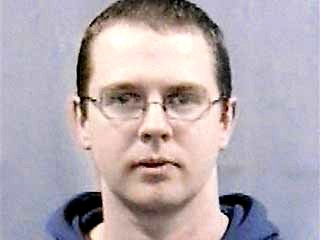 Charles Carl Roberts
Mass murderer · USA · 2006
Charles Carl Roberts IV was an American milk truck driver who was involved in t…
5 victims
Charles Carl Roberts
Mass murderer · USA · 2006
Charles Carl Roberts IV was an American milk truck driver who was involved in t…
5 victims
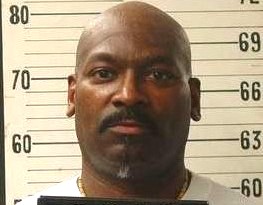 Cecil Johnson
Murderer · USA · 1980
Cecil Johnson Cecil Johnson Jr. was executed by lethal injection in Tennessee o…
4 victims
Cecil Johnson
Murderer · USA · 1980
Cecil Johnson Cecil Johnson Jr. was executed by lethal injection in Tennessee o…
4 victims
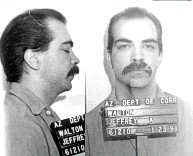 Jeffrey Alan Walton
Murderer · USA · 1986
Jeffrey Alan Walton was sentenced to death for the first-degree murder of Thoma…
1 victim
Jeffrey Alan Walton
Murderer · USA · 1986
Jeffrey Alan Walton was sentenced to death for the first-degree murder of Thoma…
1 victim
 John Russell Thompson
Murderer · USA · 1977
July 3, 1987 — United States Court of Appeals, Fifth Circuit decided John Russe…
1 victim
John Russell Thompson
Murderer · USA · 1977
July 3, 1987 — United States Court of Appeals, Fifth Circuit decided John Russe…
1 victim
 Larry Matthew Puckett
Murderer · USA · 1995
October 14, 1995 — Rhonda Hatten Griffis, age 28, was found lying in a large po…
1 victim
Larry Matthew Puckett
Murderer · USA · 1995
October 14, 1995 — Rhonda Hatten Griffis, age 28, was found lying in a large po…
1 victim
- Gender
- female
- Country
- USA
- Location
- San Jacinto, California, USA
- Date of birth
- 1960
- Age at first offence
- 34
- Characteristics
- parricide, abuse
- Victim profile
- Susana, 9, Vicente, 8, and Deidra, 4 (her children)
- Method of murder
- Stabbing with knife
- Date(s) of murder
- October 25/27, 1994
- Years active
- 1994
- Date of arrest
- October 29, 1994
- Status
-
Sentenced to death
Sentenced to death on October 2, 1998
Case details
Dora Buenrostro was sentenced to death after being convicted of murdering three children. She was a San Jacinto, California resident.
People involved
- Dora Buenrostro — defendant; mother of the three victims; former wife of Alex Buenrostro.
- Susana Buenrostro — victim, age 9.
- Vicente Buenrostro — victim, age 8.
- Deidra Buenrostro — victim, age 4.
- Alex Buenrostro — estranged husband of Dora Buenrostro; lived and worked in Los Angeles; discussed his arrest and the impact the deaths had on his life in court.
- Patrick Magers — Riverside County Superior Court Judge.
- Michael Soccio — Deputy District Attorney.
- Jay Grossman — attorney for Dora Buenrostro.
- Dave Macher — attorney for Dora Buenrostro.
- Nat Holmes — Police Chief.
- Alejandro Buenrostro — identified in reporting as the husband who lived and worked in Los Angeles.
- Deputy District Attorney Richard Bentley — Riverside County Deputy District Attorney.
- Riverside County Deputy Dist. Atty. Richard Bentley — discussed whether prosecutors would seek the death penalty.
- Police Sgt. Barry Backlund — police sergeant.
- Tia D’Errico — juror.
- Gregory Gunn — juror.
- Beverly Longpre — juror.
- Arcelia Zamudio — mother of Dora Buenrostro; testified at the penalty hearings.
Timeline
- October 27, 1994 — Dora Buenrostro led police officers to her apartment where they discovered the bodies of her children Susana and Vicente; she was later convicted for the murders of Susana, Vicente, and Deidra.
- October 29, 1994 — Dora Buenrostro was arrested on suspicion of killing the three children; she was booked on three counts of murder.
- July 31, 1998 — A jury recommended the death penalty for Buenrostro; sentencing was scheduled for Oct. 2.
- August 1998 — Deliberations on whether she should be put to death or spend life in prison without parole continued after the jury’s recommendation; the record also says deliberations continued on “today” after July 29, 1998.
- October 2, 1998 — Dora Buenrostro was sentenced to death.
The offence
Dora Buenrostro was convicted of murdering Susana (9), Vicente (8), and Deidra (4). All three children were stabbed in the neck or throat area.
Susana and Vicente were found in the family’s San Jacinto apartment as they slept in the living room. Deidra’s body was found about 10 miles away in an abandoned car still strapped to the car seat, and in other reporting her body was found in an abandoned post office in Lakeview, west of San Jacinto. Reporting described Deidra as having a broken knife blade in her neck and being stabbed further with a ball-point pen after breaking off the knife blade. Police suspect Deidra was killed two days before her brother and sister.
Prosecutors said Deidra was killed on Oct. 25, 1994 as Dora Buenrostro drove from San Jacinto to the Los Angeles home of her ex-husband, Alex Buenrostro. Prosecutors also said Dora Buenrostro plunged a knife into the throats of Susana and Vicente as they slept in the living room of their San Jacinto apartment.
Investigation and arrest
After the killings, Dora Buenrostro led police to the bodies of Susana and Vicente on October 27, 1994. Police described her actions as inconsistent and evasive in the immediate aftermath.
A police officer quoted Dora Buenrostro’s demeanor before arrest: “was like a roller coaster. She went from laughing and joking to being tired to being nonchalant, but never showed remorse or sadness, even after we told her we found the body of her third child.”
During arrest reporting, Police Chief Nat Holmes said Dora Buenrostro asked, “Well, aren't you going to check things out?” Holmes also said, “We said, 'We did. We've been to L.A.,' ”
Holmes said Buenrostro appeared grim and was still trying to pin the murders on her estranged husband when arrested at 2 a.m. She was booked on three counts of murder in Riverside County Jail and held without bail.
Police Sgt. Barry Backlund said the motive for the killings was unknown and that a possible murder weapon was found. Backlund said Dora Buenrostro made inconsistent statements: at first she said her husband showed up with a knife early Thursday at her apartment, but later said she never mentioned a knife. Backlund said the mother showed a “minimum amount of emotion during the day.”
Deputy District Attorney Richard Bentley said it was too soon to decide whether prosecutors would seek the death penalty. Bentley also described her as “evasive and non-responsive,” especially when asked to help locate the youngest child after she led police to the first two bodies; Bentley said: “She didn't respond to that line of questioning. And if you can put two and two together, you know what we were thinking--that she already knew the baby was dead.”
Dora Buenrostro told police she was framed and planted evidence was involved; she said: “Someone wanted me in jail.” She also said: “They went to any sort of means to that.” In testimony, she continued to deny killing her children and blamed her former husband.
Trial
The trial included competency consideration. Reporting said a November 1995 jury decided Dora Buenrostro was competent to stand trial despite the defense’s contention that she was psychotic.
Dora Buenrostro was convicted by a jury in Riverside Superior Court of three counts of first-degree murder for the October 1994 killings. The convictions were described as being for killing Susana, Vicente, and Deidra.
During the penalty phase, Dora Buenrostro testified against the advice of her attorneys. Jurors described her testimony as showing a lack of remorse.
Dora Buenrostro’s statements during the penalty phase included the following quotes:
- “I am being framed,”
- “I was brought to this place because someone wanted me in jail.”
- “I'm innocent. I didn't do it,” before admitting she did care about living.
- “just a waste of time.”
- “if you guys would have done your job a little better.”
She also continued to deny the murders, accused San Jacinto police of framing her by planting evidence, and lashed out at prosecutors and her own attorneys during or around her penalty-phase testimony.
The trial included detailed descriptions of the killings and crime-scene photographs. Jurors watched or were shown a videotape of police informing Alex Buenrostro that two of his children were dead and another missing. Alex Buenrostro described his arrest shortly after the killings and the impact the deaths had on his life, and jurors and courtroom observers cried several times during the trial.
Sentencing
A Riverside County jury recommended the death penalty for Dora Buenrostro. The death penalty recommendation was read, after which she sobbed. Reporting described that she became emotional as Judge Patrick Magers thanked the panel.
Jurors indicated they searched for a reason to spare her life. Juror Tia D’Errico said: “If she would have said, 'I did it, I'm sorry, I loved my children,' it would have made it easier to vote for life in prison,” and added: “It is not easy sentencing someone to death. But we made the right decision.”
Juror Gregory Gunn said: “If there had been something, an explanation, then it may have been different,” and described that she already had been convicted and her testimony left little choice but the death penalty.
Juror Beverly Longpre said she concluded the time frame showed Buenrostro killed with premeditation, not in a moment of rage.
Judge Patrick Magers followed the jury recommendation. Dora Buenrostro was sentenced to death on October 2, 1998.
Appeals
No appeal information appeared in the provided material.
Outcome
Dora Buenrostro received a death sentence for murdering Susana, 9, Vicente, 8, and Deidra, 4. The sentence was imposed on October 2, 1998.
Other details
Charges and counts
- She was booked on three counts of murder.
- She was convicted of three counts of first-degree murder for the October 1994 killings.
Crime scene and victims’ injuries (as described in reporting)
- Susana and Vicente were stabbed in the throat area in the San Jacinto apartment.
- Deidra had a broken knife blade in her neck and was strapped in a child safety seat; her body was found about 10 miles away in an abandoned car, and in other reporting in an abandoned post office in Lakeview.
- Police described Deidra as also stabbed with a ball-point pen after the knife blade broke.
Family and penalty-phase testimony
Arcelia Zamudio, Dora Buenrostro’s mother, asked the jury to spare her daughter’s life. Other family members testified about Dora Buenrostro’s behavior before the killings, including descriptions that she transformed into an angry, distant woman, and that she was sometimes mad and described seeing family members transform into animals. Zamudio said: “I even thought she was using drugs,” “Something happened to her.”
Prosecutor and defense closing themes (as described)
Deputy District Attorney Michael Soccio described Dora Buenrostro as planning to hurt her ex-husband, then trying to implicate him. Soccio also called her a serial killer who deserved no mercy and described details of the children’s deaths. The defense urged the panel to consider compassion and argued the killings were not premeditated, and that attempts to pin the case on someone else were a “pathetic excuse.”
- “There is an evil and viciousness in her,” Soccio told the jury.
- “There are no words to describe what she did,” Soccio said.
- Soccio also said: “It elevates to the level beyond human understanding.”
- “Do you think killing Dora will make up for the killings?” was asked by defense counsel.
- “Saving a life shows human beings at their best,” was stated by defense counsel.
- “Do you think killing Dora will make up for the killings?” was asked by Grossman during the penalty arguments.
- “Do you think killing Dora will make up for the killings?” was used to frame whether the jury should sentence her to death.
- Defense counsel Dave Macher stated: “There was no planning here,” and urged a lesser conviction if the jury did not believe her testimony.
- Defense counsel Dave Macher’s closing included: “A pathetic excuse that came to mind.”
- Jay Grossman called the case an “unmitigated horror” and conceded Buenrostro lied several times during the trial, while urging compassion.
Mental state discussion in jury deliberations
During deliberations, jurors asked about Dora Buenrostro’s competency to stand trial, and the judge instructed them that competency should not be part of their discussions. Supervising Deputy District Attorney Michael Soccio discussed her mental state with the jurors and said: “She must be crazy.” He also said there was a distinction between legal insanity and disturbed-person behavior.
Spotted an error, or have more information about this case?