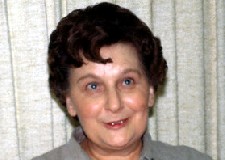
Velma Barfield
Serial killer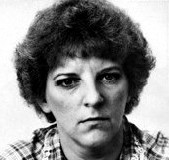 Genene Jones
Serial killer · USA · 1977
Genene Anne Jones (born July 13, 1950) was a former pediatric nurse who worked…
11 victims
Genene Jones
Serial killer · USA · 1977
Genene Anne Jones (born July 13, 1950) was a former pediatric nurse who worked…
11 victims
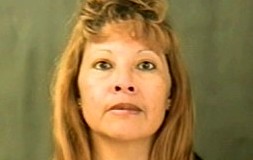 Diana Lumbrera
Serial killer · USA · 1976
Diana Lumbrera (1976–1990) systematically suffocated 6 of her own children and…
7 victims
Diana Lumbrera
Serial killer · USA · 1976
Diana Lumbrera (1976–1990) systematically suffocated 6 of her own children and…
7 victims
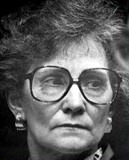 Blanche Taylor Moore
Serial killer · USA · 1968
Blanche Kiser Taylor Moore was an American convicted murderer from Alamance Cou…
4 victims
Blanche Taylor Moore
Serial killer · USA · 1968
Blanche Kiser Taylor Moore was an American convicted murderer from Alamance Cou…
4 victims
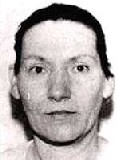 Judy Buenoano
Serial killer · USA · 1971
Judy Buenoano was executed by electrocution in Florida on March 30, 1998. Judy…
3 victims
Judy Buenoano
Serial killer · USA · 1971
Judy Buenoano was executed by electrocution in Florida on March 30, 1998. Judy…
3 victims
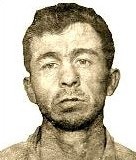 Donald Henry Gaskins
Serial killer · USA · 1969
Donald Henry Gaskins, also known as Donald “Pee Wee” Gaskins, was a serial kill…
200 victims
Donald Henry Gaskins
Serial killer · USA · 1969
Donald Henry Gaskins, also known as Donald “Pee Wee” Gaskins, was a serial kill…
200 victims
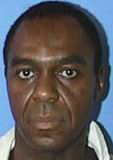 Carl Eugene Watts
Serial killer · USA · 1974
Carl Eugene Watts (born November 7, 1953; died September 21, 2007), also known…
100 victims
Carl Eugene Watts
Serial killer · USA · 1974
Carl Eugene Watts (born November 7, 1953; died September 21, 2007), also known…
100 victims
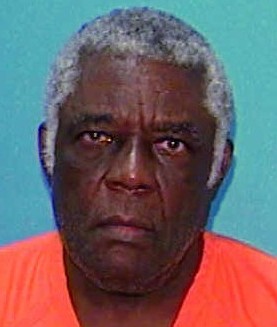 Seburt Nelson Connor
Murderer · USA · 1992
Seburt Nelson Connor was charged and tried in the Eleventh Judicial Circuit, Da…
2 victims
Seburt Nelson Connor
Murderer · USA · 1992
Seburt Nelson Connor was charged and tried in the Eleventh Judicial Circuit, Da…
2 victims
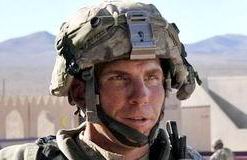 Robert Bales
Spree killer · Afghanistan · 2012
Robert Bales (born June 30, 1973) was a United States Army soldier. He murdered…
16 victims
Robert Bales
Spree killer · Afghanistan · 2012
Robert Bales (born June 30, 1973) was a United States Army soldier. He murdered…
16 victims
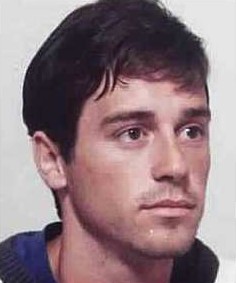 Robert Baltovich
Murderer? · Canada · 1990
Robert Baltovich was a Canadian man born July 17 1965. He was educated at the U…
1 victim
Robert Baltovich
Murderer? · Canada · 1990
Robert Baltovich was a Canadian man born July 17 1965. He was educated at the U…
1 victim
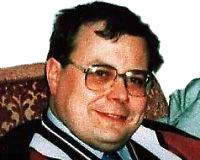 Roger Severs
Murderer · United Kingdom · 1993
Roger Severs was sentenced to two life sentences in prison on December 6, 1994.…
2 victims
Roger Severs
Murderer · United Kingdom · 1993
Roger Severs was sentenced to two life sentences in prison on December 6, 1994.…
2 victims
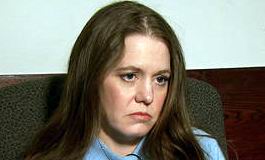 Lisa Donlon
Homicide · USA · 2010
Lisa Donlon was a mother of three boys. Her sons were 11, 13, and 15. She was h…
1 victim
Lisa Donlon
Homicide · USA · 2010
Lisa Donlon was a mother of three boys. Her sons were 11, 13, and 15. She was h…
1 victim
- Gender
- female
- Country
- USA
- Location
- Robeson County, North Carolina, USA
- Date of birth
- October 23, 1932
- Age at first offence
- 37
- Characteristics
- poisoner, drug addict
- Victim profile
- Husbands, fiances, and her own mother
- Method of murder
- Poisoning (arsenic)
- Date(s) of murder
- 1969 - 1978
- Years active
- 1969–1978
- Date of arrest
- May 13, 1978
- Status
-
Executed
Executed by lethal injection in North Carolina on November 2, 1984
Case record: Velma Barfield
Status and execution
Velma Barfield was executed by lethal injection in North Carolina on November 2, 1984.
Offender
Velma Barfield was also known as Margie Velma Barfield and Margie Velma Bullard. She was born on October 23, 1932, in Cumberland County, North Carolina. She was 52 years old at the time of the execution.
Background
Velma Barfield grew up in North Carolina and was from a large family of nine children. She described childhood abuse in which her father beat and raped her and her sisters; the claim was disputed by other relatives.
She dropped out of school and by nineteen had two children: Ron and Kim, by her first husband, Thomas. Her marriage to Thomas Burke was described as happy at first. The marriage deteriorated after Thomas suffered head injuries in a car crash in 1966 and became unable to work. Velma got a job to support the family. Thomas became an alcoholic, and Velma began taking anti-depressants and tranquilizers due to stress. She later had a nervous breakdown, developed drug addiction, and had a history of overdosing and hospital treatment, including four admissions between 1972 and 1975.
Thomas died in 1969 in a house fire. Velma remarried in 1970 to Jennings Barfield. Jennings died within six months; the cause was described as arsenic poisoning. Velma later forged checks to obtain money, connected to her drug use and employment difficulties.
Velma was described as having multiple drug admissions and a history of drug abuse, including taking overlapping prescriptions from multiple doctors. She had been admitted at least four times for overdoses.
The offence (murder of Stuart Taylor)
Relationship and alleged motive
Velma Barfield had a relationship with Stuart Taylor, a widower and tobacco farmer. She forged checks on Taylor's account to pay for her addiction to prescription drugs.
Taylor grew suspicious, and Velma mixed an arsenic-based rat poison into Taylor's beer and tea. Taylor became very ill.
Medical course and autopsy findings
Taylor became sick after a gospel sing in Fayetteville, North Carolina, on the evening of 31 January 1978. After leaving the performance, he became ill with vomiting and diarrhea and continued to be ill. Velma took him to Southeastern General Hospital in Lumberton. He was examined with complaints of nausea, vomiting, diarrhea, and general pain, along with low blood pressure, weak and rapid pulse, dehydration, and ashen skin. After intravenous fluids and vitamins, Taylor was released and Velma took him home where she fed him.
On 3 February 1978 an ambulance was summoned. Taylor was described as in great pain with low blood pressure, rapid breathing, and gray skin. During transport and at the emergency room, he received intravenous fluids and a tracheotomy was performed. He died in the emergency room approximately one hour after he was brought in.
A toxicological screening during an autopsy found that Taylor’s blood contained arsenic at a level of .13 milligrams percent and his liver contained an arsenic level of one milligram percent. The pathologist, Dr. Bob Andrews, concluded that Taylor died from acute arsenic poisoning.
Investigation
Forged checks
After Taylor’s death, the investigation involved checks forged on Taylor’s account. During a questioning period, Robeson County Deputy Sheriffs Wilbur Lovette and Al Parnell talked with Velma at the Sheriff's Department in Lumberton after Miranda warnings and a written waiver. The officers produced evidence of forged checks.
A check dated 31 January 1978 in the amount of $300.00 was introduced. Velma stated she had seen the check before, cashed it, and that while she “filled out” the check it was signed by Taylor himself.
Two checks from Velma’s pocketbook, dated 4 November 1977 and 23 November 1977 and payable to her in the amounts of $100.00 and $95.00 respectively, were produced. Handwriting analysis evidence was introduced tending to show that the checks were not written by Stewart Taylor and that the checks had been cashed by Velma at a branch of First Union National Bank in Lumberton.
Statements and denial then confession
When Velma was asked about the cause of Taylor’s death after being told the autopsy indicated arsenic poisoning, she began crying and stated: "You all think I put poison in his food." She denied involvement with Taylor’s death at that time.
On Monday, 13 March 1978, Velma returned to the sheriff’s department with her son Ronald Burke after being advised of constitutional rights and signing another written waiver. She made a lengthy statement in the presence of Deputies Lovette and Parnell in which she admitted forging checks, including forging another check on 31 January 1978. She said Taylor threatened to “turn her in” to authorities. She stated that on that day she and Taylor went to Lumberton for her doctor appointment, and after leaving the doctor’s office they stopped at a drug store ostensibly for hair spray, where she purchased a bottle of Terro Ant Poison. She stated that on 1 February 1978 she put poison in Taylor’s tea at lunchtime and later that day she put more in his beer.
She stated she had been afraid that Taylor would "turn her in" for forgery and that she used money obtained from the 31 January check to pay bills for doctors and medicine. She concluded by confessing that she gave poison to other persons besides Taylor and that they died.
When Deputy Lovette asked whether arsenic would be found in bodies, Velma answered affirmatively and stated in which bodies arsenic would be found.
Arrest and interrogation
Velma executed written waivers and made statements in the presence of Deputies Lovette and Parnell at the sheriff’s department in Lumberton after Miranda warnings. After her initial reaction to the autopsy findings, she was taken home. Her later statement admitted acts involving Taylor’s death and other poisonings.
Trial
Charge and verdict
Velma was tried for one count of first-degree murder, the murder of Stuart Taylor.
The defense pleaded insanity but this was not accepted. Velma was convicted of first-degree murder. The jury recommended the death penalty based on “aggravating circumstances.” Judge Henry McKinnon fixed her punishment at death.
Evidence admitted regarding other deaths
The judge ruled that evidence linking Velma to the deaths of John Henry Lee, Dottie Edwards, and her own mother, Lillie Bullard, was admissible in the trial for the murder of Taylor.
Forensic evidence about Taylor
Evidence included toxicological testing from the autopsy performed by Dr. Bob Andrews, with arsenic found in Taylor’s blood and liver. Dr. Richard Jordan testified he was "not satisfied" about the precise cause of death. After family requests, the autopsy and toxicological screenings were performed.
Defense theory
Velma’s defense was that she did not mean to kill Taylor, only to render him ill while attempting to cover up thefts and forgery.
Representation and rulings
The defense counsel was Bob Jacobson. The prosecutor was Joe Freeman Britt. The judge was Henry McKinnon.
Medical evidence about drug use
Physicians testified about Velma’s drug history and her use of overlapping medications, indicating that drug effects could have impaired judgment. It was testified that no one could say she had been rendered insane in the legal sense by drugs, but testimony indicated her judgment could have been clouded.
Cross-examination exchanges (verbatim)
Velma testified on direct examination that she had given her boyfriend poison to make him sick but not to kill him. She stated she did not tell doctors because she feared being returned to prison.
During cross-examination, the record included the following exchange in which Velma challenged the interpretation of autopsies:
Velma began during the statement: “What I would like, your Honor” ... “to say to the jury and all, these autopsies – let me say first of all, when a person dies . . . and they ask for an autopsy to be performed, is it not true that we have an autopsy performed to find out the reason of the death? . . . So I don’t believe it killed them really. That is exactly the way I feel about it.”
A stunned Britt asked: “Beg your pardon?”
Velma responded: “I don’t think it killed them.”
Another exchange included:
Velma: “You made Mrs. Edwards sick with Singletary’s rat poison, did you not?” Velma: “No, I thought it was roach and ant poison.” Velma: “So you knew these compounds would certainly make people sick?” The witness replied: “I knew it would make them sick,” Velma: “You knew it would kill them, too, didn’t you?” The witness replied: “No, I did not.”
Jury demeanor
Velma appeared cold and uncaring on the stand and gave the District Attorney a round of applause when he made his closing speech. The jury deliberated for less than an hour before convicting Barfield.
Sentencing
Velma Barfield was sentenced to death. The jury recommended the death penalty. Judge McKinnon fixed her punishment at death.
Confessions and other deaths referenced in the trial
Velma later confessed to other poisonings and deaths besides Stuart Taylor. These included the following admissions described in the statements and trial evidence:
- She admitted she poisoned Mr. Lee in early 1977 after finding a checkbook in joint names. She stated she wrote a $50 check, and that after the forgery was discovered she purchased poison, read the label saying "May be fatal if swallowed," and gave Mr. Lee poison three times in his tea and twice in his coffee.
- She admitted she poisoned Mrs. Dolly Taylor Edwards, including stating she purchased poison with the words "Could be fatal if swallowed," put it in Mrs. Edwards’ coffee and cereal, and that shortly afterward Mrs. Edwards became ill and died later.
- She admitted she poisoned her mother, Lillie McMillan Bullard, including forging her mother’s name to a note in favor of the Commercial Credit Company of Lumberton in an amount of $1,048.00 and then giving her mother poison through soup and a soft drink.
- Evidence also addressed arsenic poisoning in the bodies exhumed pursuant to court orders for John Henry Lee, Mrs. Dolly Taylor Edwards, and Lillie Bullard, with toxicological findings showing arsenic in various tissues. The record also included that toxicological findings in Jennings L. Barfield’s body tissue indicated varying levels of arsenic after exhumation.
Velma denied involvement in the death of her husband, Jennings L. Barfield, during the trial evidence narrative, though his body was exhumed pursuant to a court order and arsenic was found.
Appeals
Appeals were pursued through multiple courts. The North Carolina Supreme Court rejected a final appeal filed on October 30, 1984, on grounds that she was incompetent at her original trial by virtue of her drug addiction.
The Supreme Court had rejected appeals on three occasions before the final appeal. Clemency was declined by Governor James B. Hunt.
Outcome
Velma Barfield was executed on November 2, 1984, by lethal injection.
Aftermath
During the execution process, she was secured to a wheeled gurney with straps over her body and legs, with catheters inserted into her arms and a saline drip started before being wheeled into the execution chamber. Three syringes were attached to each of the IV lines and were operated by three volunteers. One of the IV lines functioned as a dummy so that none of the volunteers could be sure if they had killed her. She was pronounced dead at 2:15 a.m. on November 2, 1984.
A final statement included by her was:
“I know that everybody has gone through a lot of pain, all the families connected, and I am sorry, and I want to thank everybody who have been supporting me all these six years.”
She also requested use of her organs for transplant purposes. The record indicated this was not possible as the heart had not been beating for 10 minutes and could not be restarted, though corneas and some skin tissue were able to be used.
She dressed in her own pink pajamas for the execution and was made to wear a diaper. She asked for Cheez Doodles and Coca-Cola rather than a last meal.
Other details (drug history and prison conduct)
While on death row, Velma went through drug withdrawal and had symptoms described as classic cold turkey, including lack of appetite, insomnia, nausea, cold sweats, and splitting headaches. She was given anti-depressants and anti-anxiety medications and was gradually weaned off over more than a year.
Velma made her cell into a home with photographs and religious slogans. She was described as listening to Christian radio programming and claiming she had become a born-again Christian while in jail.
She helped counsel other female inmates and wrote letters for illiterate inmates, despite special rules applying because of the death sentence. A prison official, Jennie Lancaster, put a 15-year-old named Beth into the cell next to Velma, and Velma supported her by praying with her through the bars. Beth first called her “Mama Margie.” Velma also worked with a pastor on her memoirs, Woman on Death Row.
Two quoted statements from the execution narrative included:
- “When I go into that chamber at 2.00 a.m. it's my gateway to heaven”
- “I want to say that I am sorry for all the hurt that I have caused,” and later: “I appreciate everything – their kindness and everything that they have shown me during these six years.”
In the preparation room before injection, she was instructed: “Please start counting backward from one hundred.” She counted backward beginning: “One hundred, ninety-nine, ninety-eight . . .” Her voice then slurred into silence and she started to snore, with a flat line shown on the heart monitor at 2:15 a.m.
Timeline
- 31 January 1978 — Stuart Taylor became ill after a gospel sing; Velma and Taylor returned to St. Pauls and he began vomiting and having diarrhea.
- 3 February 1978 — An ambulance was summoned; Taylor was transported to the hospital and died in the emergency room approximately one hour after being brought in.
- 10 March 1978 — Robeson County Deputy Sheriffs Wilbur Lovette and Al Parnell questioned Velma at the sheriff’s department in Lumberton after Miranda warnings.
- 13 March 1978 — Velma returned with Ronald Burke, executed another written waiver, and made a lengthy statement admitting poisonings.
- 18 March 1978 — John Henry Lee and Dolly Taylor Edwards bodies were exhumed and toxicological testing was performed.
- 22 March 1971 — Jennings L. Barfield was brought to Cape Fear Valley Hospital in Fayetteville for nausea, vomiting, diarrhea, and aching; trial evidence later described his subsequent death.
- 31 May 1978 — Jennings L. Barfield’s body was exhumed and toxicological screenings were performed, indicating arsenic present in varying levels.
- October 30, 1984 — Velma Barfield filed a final appeal in the North Carolina Supreme Court on grounds of incompetence at the original trial by virtue of drug addiction; the court rejected it.
- November 2, 1984 — Velma Barfield was executed by lethal injection in North Carolina; she was pronounced dead at 2:15 a.m. and her body was removed at 2:25 a.m.
Spotted an error, or have more information about this case?