
Katherine Bunnell
Murderer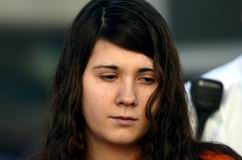 Miranda Barbour
Murderer · USA · 2013
Miranda Barbour, 19, defendant. · Elytte Barbour, 22, defendant and husband of…
100 victims
Miranda Barbour
Murderer · USA · 2013
Miranda Barbour, 19, defendant. · Elytte Barbour, 22, defendant and husband of…
100 victims
 Megan Huntsman
Murderer · USA · 1996
Megan Huntsman was 40 at sentencing. She was a mother of three children who wer…
6 victims
Megan Huntsman
Murderer · USA · 1996
Megan Huntsman was 40 at sentencing. She was a mother of three children who wer…
6 victims
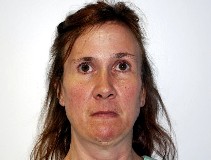 Michele Kalina
Murderer · USA · 1996
Michele Kalina pleaded guilty to murder for one of five infants she initially w…
5 victims
Michele Kalina
Murderer · USA · 1996
Michele Kalina pleaded guilty to murder for one of five infants she initially w…
5 victims
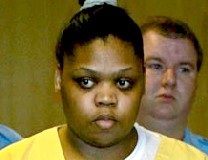 Tiffany Hall
Murderer · USA · 2006
Tiffany Hall was 24 when she was charged in September 2006. She later entered a…
5 victims
Tiffany Hall
Murderer · USA · 2006
Tiffany Hall was 24 when she was charged in September 2006. She later entered a…
5 victims
 Banita Jacks
Murderer · USA · 2007
Banita Jacks was a Washington, DC resident convicted of murdering her four daug…
4 victims
Banita Jacks
Murderer · USA · 2007
Banita Jacks was a Washington, DC resident convicted of murdering her four daug…
4 victims
 Holly Grigsby
Murderer · USA · 2011
Holly Grigsby was sentenced to life in prison without parole on July 15, 2014.…
4 victims
Holly Grigsby
Murderer · USA · 2011
Holly Grigsby was sentenced to life in prison without parole on July 15, 2014.…
4 victims
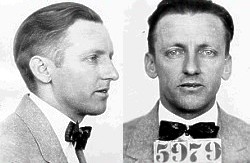 Paul Hadley
Murderer · USA · 1916
Paul V. Hadley was executed by hanging in Arizona on April 13, 1923. On Friday,…
2 victims
Paul Hadley
Murderer · USA · 1916
Paul V. Hadley was executed by hanging in Arizona on April 13, 1923. On Friday,…
2 victims
 Johnny Watkins
Murderer · USA · 1983
2 victims
Johnny Watkins
Murderer · USA · 1983
2 victims
 Jerry McWee
Murderer · USA · 1991
Jerry McWee was convicted of murder and armed robbery in the Circuit Court, Aik…
2 victims
Jerry McWee
Murderer · USA · 1991
Jerry McWee was convicted of murder and armed robbery in the Circuit Court, Aik…
2 victims
 Russell Eugene Weston
Homicide · USA · 1998
Russell Eugene Weston Jr. was born December 28, 1956 and used the nickname “Rus…
2 victims
Russell Eugene Weston
Homicide · USA · 1998
Russell Eugene Weston Jr. was born December 28, 1956 and used the nickname “Rus…
2 victims
 Jeffrey Keller Davis
Murderer · USA · 1991
Jeffrey Keller Davis was sentenced in Greene County, Mississippi, in May 1992 f…
1 victim
Jeffrey Keller Davis
Murderer · USA · 1991
Jeffrey Keller Davis was sentenced in Greene County, Mississippi, in May 1992 f…
1 victim
- Gender
- female
- Country
- USA
- Location
- Woonsocket, Providence County, Rhode Island, USA
- Date of birth
- 1983
- Age at first offence
- 21
- Characteristics
- abuse, child abuse, torture
- Victim profile
- Thomas "T.J." Wright, 3 (her nephew)
- Method of murder
- Beating
- Date(s) of murder
- October 30, 2004
- Years active
- 2004
- Date of arrest
- Same day
- Status
-
Life imprisonment
Sentenced to life in prison on October 6, 2008; Supreme Court of Rhode Island affirmed the judgment of the Superior Court on June 22, 2012
Case information
Defendant: Katherine Bunnell (alias Jane Doe) Victim: Thomas “T.J.” Wright (3-year-old) Relationship: Katherine Bunnell was the victim’s aunt.
Status and outcome
A jury convicted Katherine Bunnell of second-degree murder and conspiracy to commit murder involving the October 31, 2004 death of Thomas J. Wright. The Supreme Court of Rhode Island affirmed the judgment of the Superior Court.
Timeline
- October 29, 2004 — Katherine Bunnell and Gilbert Delestre left their two children and Bunnell’s three nephews in the care of a fifteen-year-old babysitter, Kayla, so they could enjoy a night out. They left their Woonsocket apartment around 7 p.m. and returned at approximately 2:30 a.m.
- October 30, 2004 — Bunnell and Delestre returned to their Woonsocket apartment; the babysitter testified that she heard screaming, saw spilled milk and yogurt, and then observed multiple slaps and other assaults on Thomas “T.J.” Wright, after which the toddler was carried and eventually thrown/fell through the air as described. A 911 dispatch call reported an ill child, and a rescue lieutenant arrived at Bunnell’s apartment at 3:31 a.m.
- October 31, 2004 — An MRI was performed; the Supreme Court opinion references “On October 31, 2004” regarding Thomas J. Wright’s death as a result of extensive injuries.
- January 21, 2005 — A grand jury returned an indictment charging Bunnell with murder and conspiracy to commit murder.
- May 5, 2008 — The jury trial in Providence Superior Court began.
- May 13, 2008 — Bunnell testified at trial.
- May 22, 2008 — Bunnell’s motion for a new trial was heard and denied by the trial justice.
- October 6, 2008 — Sentencing hearing was held; the trial justice sentenced Bunnell to life imprisonment for the murder conviction and ten years for the conspiracy conviction to be served consecutively.
- October 8, 2008 — Bunnell filed a notice of appeal.
- October 22, 2008 — A judgment of conviction was entered.
- June 22, 2012 — Supreme Court of Rhode Island affirmed the judgment of the Superior Court.
Background
Thomas J. Wright lived with Katherine Bunnell in foster care because his mother was in prison.
Bunnell’s and Delestre’s trial involved the injuries inflicted upon Thomas J. Wright after they returned home from a night out.
Kayla testified that Bunnell asked her to babysit on the occasion and told her she “had to go to a football game the next day” because she “was part of [her high school] band,” and “needed to be home by eleven, eleven thirty at the latest.” Bunnell acknowledged she had agreed to be home by 11:30 p.m., at the latest, but testified that “some things happened that prolonged [her return home] that night [causing her] to have to stay at the bar that late.”
The Supreme Court opinion referenced related prior foster-care proceedings and parental-rights matters: it stated that the opinion concerning the boyfriend and coconspirator, Gilbert Delestre, contained more detail, and cited In re Destiny P., 922 A.2d 168 (R.I.2007) upholding termination of parental rights of Bunnell and Delestre with respect to their two children.
The offence
The Supreme Court opinion described Thomas J. Wright dying after extensive injuries inflicted upon him by his aunt and her boyfriend after they returned home from a night of drinking.
Kayla testified that when she was awakened by Bunnell walking into the front door screaming, Delestre followed behind her. Kayla said she saw milk and yogurt and “mixed together,” spilled onto the carpeted area of the floor, and that Thomas was no longer on the couch where she had left him.
Kayla testified that after Bunnell questioned Thomas J. Wright’s brother, Bunnell brought Thomas downstairs by grasping him by his arms and dangling him in front of her. Kayla testified that when Bunnell reached the last step, Bunnell “just dropped” Thomas from approximately two to two-and-a-half feet off the ground. Kayla stated that Thomas “landed on his stomach, and the side of his face hit the floor,” causing his head to “bounce up a little bit.”
Kayla testified that Bunnell continued to hit Thomas on his back and chest with a closed fist multiple times, and that Thomas fell to the ground again with his face hitting the floor. Kayla testified Bunnell then continued to hit him and after the third time the toddler “didn't stand up,” but fell such that the “back of his head [to] hit the floor and * * * bounce[ ] a little bit[,] and then he just laid there.”
Kayla testified Bunnell slapped Thomas “back and forth across his face four times,” with an open hand, and yelled while slapping him. The opinion preserved the following yelled questions and statements:
- “Why did you mess up my floor? Why would you do this to my living room? What's the matter with you?”
- “Why did you mess up my floor? What's the matter with you?”
Kayla testified Bunnell then “yanked [TJ] off the floor” and “pulled him over towards the closet.” Kayla stated that Thomas “fell backwards,” causing “his back and his head [to] hit the door,” and that Thomas “sat there leaning up against the closet door.” Kayla testified Bunnell slapped him in the face again, then took milk and poured it on his head “for “maybe ten seconds.”
Kayla testified Thomas did not attempt to move and continued crying. Kayla testified that Bunnell began looking for her car keys and searched for her keys.
Kayla testified that when she looked outside and returned, she saw Thomas “about two and a half to three and a half feet in the air[,] falling down” toward her and Bunnell, as if “he had been thrown.” Kayla stated that Thomas traveled approximately four to five feet through the air, away from where Delestre was standing. Kayla testified that Delestre’s arms were falling back to his waist and that he told Bunnell to:
- “get [TJ] out of here before’ he ‘drops him.’ “
Kayla testified that Thomas landed on his stomach with his leg twisted underneath as if sitting “Indian style,” and that Thomas’s face hit the floor again when he landed. Kayla testified that Bunnell picked Thomas up by his wrists until he was on his feet and carried him over to the stairs.
The Supreme Court opinion also described Bunnell’s testimony after driving Kayla home: Bunnell testified that when she returned, Delestre walked toward her and said, “Go upstairs and check TJ,” while making a motion like something was wrong with the toddler. The opinion preserved Bunnell’s testimony about what she did and what she said:
“Go upstairs and check TJ,”
Bunnell testified she immediately ran upstairs, called out Thomas’s name, and brought the child to the bathroom, took water from the sink, and put it on Thomas’s head because she thought he would snap out of it and get conscious. Bunnell testified she knew Thomas was “unconscious” because he was “limp when [she] picked him up.” She testified she screamed “Call 9–1–1” and that Thomas “looked blue.”
Kayla testified that after the events, Delestre and Bunnell’s actions involved attempts to ask Kayla if she wanted to go home, and Kayla testified she heard Thomas crying after slaps.
The prosecution opening statements described a mess in the living room involving spilled yogurt and milk; prosecutors said Bunnell and Delestre became enraged when they returned and found the mess. Prosecutors said Bunnell dragged Thomas out of bed, slapped him, struck him repeatedly, pushed him down on the stairs and on the floor, and poured a container of milk over his head. The prosecution opening statements described that the beating took place in front of the fifteen-year-old babysitter and that Thomas was taken by ambulance to Landmark Medical Center in Woonsocket, then to Hasbro Children’s Hospital in Providence. A day and a half after the beating, Thomas was found to be brain dead, taken off life support, and allowed to die.
Investigation
After the 911 dispatch call, Lieutenant Edward Bertholic arrived at Bunnell’s apartment at 3:31 a.m. on October 30, 2004, in response to a call reporting an ill child. When he first saw Thomas, Bertholic noticed “some traumatic injuries,” as well as vomit and blood in and around the child’s mouth. The Supreme Court opinion quoted Bertholic’s description that he noticed “a lot of swelling and bruising around [the child's] eye and forehead,” and that the head injuries resembled “somebody that lost a boxing match or something like that.”
Bertholic testified Thomas’s left arm “was deformed and bruised and it looked like it was possibly broken” and the child had similar injuries on his leg in the thigh area. The opinion stated Bertholic testified Bunnell told him “that they [came] home and found the child like that in the crib.”
Patrolman Peter Menard and Lieutenant Norman Galipeau arrived on the scene that night. Menard testified he spoke with Bunnell, who informed him that after returning from a club—where she, Delestre, and Delestre’s cousin Jose Santiago had gone—she sent Delestre and Santiago “into the house [to] get the babysitter while she waited outside in the car,” and that after the babysitter came out, she brought the babysitter home and then returned.
Galipeau testified that Delestre told officers he “had gone upstairs to check on the kids and * * * he noticed that TJ was limp, half in and half out of his bed.” Menard testified the officers questioned Delestre about where everything took place and where it happened; Delestre replied “it happened upstairs.”
Menard testified that when they questioned Thomas’s older brothers about what happened, Bunnell directed the children to tell the police what the babysitter did. Menard testified Bunnell made the demand “[a]t least three times,” escalating from a calm voice to a yelling voice, finally shouting:
- “Tell the f* * *ing police what the babysitter did to TJ.”
A prognosis described in the Supreme Court opinion stated that around 6:30 a.m. on October 30, 2004, Thomas was in a comatose state. The opinion described the testimony of Reena Isaac, M.D., who was completing a two-year fellowship program in forensic pediatrics at Hasbro Children’s Hospital, regarding CAT scan and MRI findings and “pronounced brain dead,” then removal from life support.
Arrest
The Supreme Court opinion did not describe a specific arrest event in the provided text.
Trial
The indictment charged Bunnell with murder and conspiracy to commit murder on January 21, 2005.
Bunnell’s jury trial took place in May 2008, resulting in second-degree murder and conspiracy convictions.
The Supreme Court opinion discussed the babysitter Kayla’s testimony in detail, including the sequence of events on October 30, 2004.
Bunnell’s defense argued that although Bunnell’s behavior was “offensively and objectionably,” it was neither the cause of nor a contributing factor to Thomas’s death, and the fatal blows happened exclusively at Delestre’s hands after Bunnell left the apartment to bring the babysitter home. The defense relied on Bunnell’s own testimony and the introduction of parts of Delestre’s police interview.
The Supreme Court opinion stated that, outside the presence of the jury, Delestre asserted his Fifth Amendment right against self-incrimination and refused to testify when called as a witness.
The trial was in Providence Superior Court, and it referenced the jury deliberation taking three days.
Attorney General Patrick Lynch and prosecutors made statements about the case; the Supreme Court opinion preserved trial-justice statements and evidentiary rulings but did not preserve all statements from the earlier news excerpts.
Verbatim courtroom statements by the trial justice about culpability were preserved in the Supreme Court opinion. The trial justice stated:
“I believe that the defendant caused what happened [to TJ] that night. She was the one who instigated what happened that night and she started the whole thing rolling. She's the one who dragged him downstairs. She's the one who dragged him across the room. She's the one who hit him as described by Kayla. She dragged him back across the room and she was there when Delestre flung that child across the room and he landed, as they said, Indian style.
“We know from the testimony of the medical examiner that that fracture that he suffered, and we saw the pictures of it, so displaced, that had to have happened at that point, and that probably was enough right there, with everything else that happened, to be the cause of death. She was there. And, what did she do? Not as described by others as having maternal instincts, she got in the car and drove off with the babysitter. That was not somebody who was trying to save this child. No way was she trying to save this child. She was angry and out of control.
“ * * * “And so, I'm sure what the defendant does not understand is that no, she did not get up one morning and plan out on a deliberate murder of this child, but by her wanton disregard for his life, it was the equivalent of that. And so, from that point of view, the Court is not at all impressed by the defendant's contention that she did not intend his death. Her behavior that night was tantamount to the same thing as if somebody just sat out and planned somebody's death.”
Sentencing
The Supreme Court opinion stated the trial justice sentenced Bunnell to:
- Life in prison at the Adult Correctional Institutions (ACI) for the murder conviction, and
- Ten years at the ACI for the conspiracy conviction, with the sentences to be served consecutively.
A judgment of conviction was entered on October 22, 2008.
Appeals
Bunnell filed a notice of appeal on October 8, 2008.
The Supreme Court described two grounds for appeal:
- The trial justice erred by excluding from evidence certain portions of an interview given by Bunnell’s boyfriend, Gilbert Delestre, at the Woonsocket Police Department the day before Thomas “T.J.” Wright died.
- The trial justice erred in denying Bunnell’s motion for a new trial.
The Supreme Court addressed the evidentiary issue under Rule 804(b)(3) and also addressed whether Rule 106 supported admitting the redacted portions.
The Supreme Court held that:
- The trial justice appropriately exercised discretion to exclude six contested excerpts from Delestre’s police interview because none exposed Delestre to criminal liability under Rule 804(b)(3).
- Rule 106 was not available to the defendant as the party seeking to introduce the statement first.
- The trial justice performed the correct analysis in denying the motion for a new trial; the Supreme Court concluded the determinations were not clearly erroneous.
The Supreme Court ended by affirming the judgment of the Superior Court and remanding the papers.
Outcome
Other details
- The indictment charged Bunnell with murder and conspiracy to commit murder.
- The Supreme Court opinion included that Bunnell and Delestre were being tried separately due to each party’s expected implicating statements regarding the other.
- At a Family Court hearing, Kayla described Bunnell’s action when she grabbed Thomas’s wrists as “helping him up .”
- The Supreme Court opinion stated that in October 2004, Lieutenant Galipeau held the rank of sergeant, but it referred to him with his current title of lieutenant.
- The Supreme Court opinion described that the autopsy was performed and a corresponding report was completed by Dorota K. Latuszynski, M.D.; Dr. Gillespie testified to findings based on review of the case file because Dr. Latuszynski was on medical leave.
- The Supreme Court opinion included medical testimony details: Thomas weighed thirty-two pounds and was thirty-six inches tall at death; injuries included multiple blunt traumatic injuries to the head and other described injuries, including subdural hematoma, cerebral edema, and acute compression fractures.
- The Supreme Court opinion described a grand jury indictment on January 21, 2005, and the trial proceedings in May 2008 leading to convictions.
- The Supreme Court opinion stated that Bunnell appealed on two grounds and the Supreme Court affirmed and remanded.
- The opinion stated that “FOOTNOTES” included references to Thomas’s nickname “TJ” and described that record references generally used that nickname.

Spotted an error, or have more information about this case?