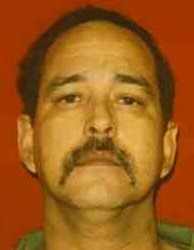
Jerry McWee
Murderer Brian Kevin Rosenfeld
Murderer · USA · 1985
Brian Kevin Rosenfeld Brian Kevin Rosenfeld was sentenced to three concurrent l…
23 victims
Brian Kevin Rosenfeld
Murderer · USA · 1985
Brian Kevin Rosenfeld Brian Kevin Rosenfeld was sentenced to three concurrent l…
23 victims
 Russell Ellwood
Murderer · USA · 1991
Russell Ellwood was a former taxi driver. Authorities suspected him of killing…
20 victims
Russell Ellwood
Murderer · USA · 1991
Russell Ellwood was a former taxi driver. Authorities suspected him of killing…
20 victims
 Robert Martines Perez
Murderer · USA · 1994
Name: Robert Martines Perez · Other name used in proceedings: Robert Martinez P…
15 victims
Robert Martines Perez
Murderer · USA · 1994
Name: Robert Martines Perez · Other name used in proceedings: Robert Martinez P…
15 victims
 Billy Frank Vickers
Murderer · USA · 1993
Billy Frank Vickers Vickers was executed by lethal injection in Texas on Januar…
14 victims
Billy Frank Vickers
Murderer · USA · 1993
Billy Frank Vickers Vickers was executed by lethal injection in Texas on Januar…
14 victims
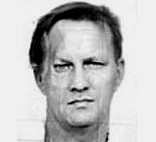 Earl Carl Heiselbetz
Murderer · USA · 1991
Name: Earl Carl Heiselbetz Execution offender identifier: #999014 Age at execut…
2 victims
Earl Carl Heiselbetz
Murderer · USA · 1991
Name: Earl Carl Heiselbetz Execution offender identifier: #999014 Age at execut…
2 victims
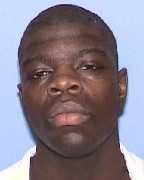 Derrick Charles
Murderer · USA · 2002
Derrick Dewayne Charles was charged with capital murder and pled guilty before…
3 victims
Derrick Charles
Murderer · USA · 2002
Derrick Dewayne Charles was charged with capital murder and pled guilty before…
3 victims
 Robert Wayne Harris
Mass murderer · USA · 1999
March 15, 2000 — Robert Wayne Harris masturbated in front of a female customer…
6 victims
Robert Wayne Harris
Mass murderer · USA · 1999
March 15, 2000 — Robert Wayne Harris masturbated in front of a female customer…
6 victims
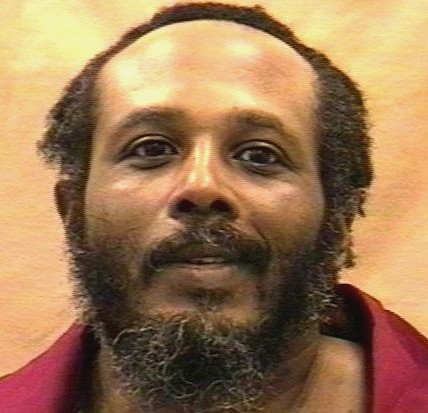 Guy Tobias LeGrande
Murderer · USA · 1983
Guy Tobias LeGrande was sentenced to death in Stanley County Superior Court for…
1 victim
Guy Tobias LeGrande
Murderer · USA · 1983
Guy Tobias LeGrande was sentenced to death in Stanley County Superior Court for…
1 victim
 Roy Allen Stewart
Murderer · USA · 1978
Roy Allen Stewart was convicted and sentenced to death for beating, raping and…
1 victim
Roy Allen Stewart
Murderer · USA · 1978
Roy Allen Stewart was convicted and sentenced to death for beating, raping and…
1 victim
- Gender
- male
- Country
- USA
- Location
- Aiken County, South Carolina, USA
- Date of birth
- December 29, 1952
- Age at first offence
- 39
- Characteristics
- robbery, drugs
- Victim profile
- John Perry (convenience store clerk) / David Willis (his boss)
- Method of murder
- Shooting (.38-caliber revolver)
- Date(s) of murder
- July 1991
- Years active
- 1991
- Date of arrest
- —
- Status
-
Executed
Executed by lethal injection in South Carolina on April 16, 2004
Case overview
Jerry McWee was convicted of murder and armed robbery in the Circuit Court, Aiken County, Luke N. Brown, Special Judge, and received a death sentence. He was executed by lethal injection in South Carolina on April 16, 2004.
Timeline
- July 6, 1991 — Jerry McWee was convicted of killing John Perry on July 6, 1991 (as described in the case material).
- July 1991 — McWee entered a convenience store in rural Aiken County, took clerk John Perry to the back, and shot him twice in the head before stealing $350 from the cash register.
- 1994 — McWee was tried and received a death sentence in a trial year described in the case material.
- 01/23/94 — Date of sentencing.
- 01/23/94 — A sentencing judge, L. Brown, Jr., is listed with this date.
- April 14, 2004 — The U.S. Supreme Court refused to stop McWee’s execution.
- April 15, 2004 — Gov. Mark Sanford denied a petition for clemency.
- April 16, 2004 — Jerry McWee was executed by lethal injection; officials declared him dead at 6:18 p.m.
The offence
McWee sought money to buy drugs when he entered a convenience store in rural Aiken County. He took clerk John Perry to the back of the country store and shot him twice in the head. Authorities said McWee stole $350 from the cash register.
McWee and his accomplice, George Wade Scott, later killed another man, Aiken roofing contractor David Wills. During the penalty phase of the Perry case, it was revealed that McWee and Scott had committed another murder one week after the Perry killing.
During the guilt phase, a statement admitted during the trial included the following account of the shooting:
During the guilt phase of appellant's trial, appellant acknowledged shooting the victim twice, the first time "by accident" and the second time "by mistake".
During the penalty phase, McWee contended that Scott held the store gun to McWee’s back and made him kill the victim. Scott admitted firing the shots which killed the second victim, but alleged McWee made him do it.
Investigation and evidence
In a statement admitted during the guilt phase of McWee’s trial, he acknowledged shooting the victim twice, with the first time described as "by accident" and the second time described as "by mistake".
During the penalty phase, it was revealed that McWee solicited Scott to kill McWee’s ex-wife; Scott testified about firing the shots that killed the second victim.
People
Defendant
- Jerry McWee — inmate identified as an execution defendant; former Augusta, Ga., police officer (for a couple of years).
Victims
- John Perry — convenience store clerk; shot twice in the head; stolen $350 from the cash register.
- David Willis / David Wills — described as an Aiken roofing contractor; a second fatal shooting one week after the Perry killing.
Co-defendants / accomplices
- George Wade Scott — McWee’s accomplice and co-defendant; along on both shootings; shot the second victim; sentenced to life for both killings as part of a plea bargain and testified against McWee.
Trial
Following jury trial, McWee was convicted of murder and armed robbery in the Circuit Court, Aiken County, before Luke N. Brown, Special Judge, and received a sentence of death.
Jury deliberations and parole eligibility issue (as described in later proceedings)
During McWee’s penalty phase, after some deliberation, jurors inquired whether a defendant who received a life sentence was required to serve a minimum number of years before becoming eligible for parole. The trial judge reiterated the “plain and ordinary meaning” charge and declined to instruct the jury on McWee’s parole eligibility after the requests were renewed.
The later habeas proceedings described these trial-stage events:
- Prior to jury voir dire, McWee’s attorneys inquired whether the trial judge would instruct the jury that McWee would be parole eligible after service of thirty years.
- The trial judge indicated he would give such a charge, but at the beginning of the penalty phase stated he would not instruct the jury on parole eligibility.
- The trial judge instructed the jury that the terms “life imprisonment” and “death penalty” were to be given their plain and ordinary meanings.
- After deliberation and the jurors’ question, the trial judge reiterated the “plain and ordinary meaning” charge and again denied a request to instruct on parole eligibility.
Sentencing
McWee received a death sentence following the trial.
A case entry also lists the execution-relevant prison and sentencing details:
- Inmate: McWee, Jerry B.
- Inmate #: 4878
- SID#: SC00796891
- DOB: 12/29/52
- Height: 5' 10"
- Weight: 195 lbs.
- County of Conviction: Aiken
- Date of Sentencing: 01/23/94
- Race: Caucasian
- Sentencing Judge: L. Brown, Jr.
- Aiken County is referenced as the county of conviction and as the county of the trial for the Perry case.
Appeals and post-conviction proceedings
Direct appeal (State)
State v. McWee, 472 S.E.2d 235 (S.C. 1996) (Direct Appeal). McWee’s direct appeal resulted in an affirmance. The Supreme Court, Burnett, J., held:
- the state was not barred from seeking the death penalty;
- the trial court was not required to give parole eligibility instruction during the penalty phase;
- admission of an expert’s opinion did not warrant reversal;
- aggravating circumstances of robbery while armed with a deadly weapon and larceny with a deadly weapon were not based on the same act;
- an accomplice’s demonstration of shooting technique was not relevant;
- McWee was not entitled to a charge on deterrence; and
- the death penalty was appropriate.
The Supreme Court affirmed McWee’s convictions and sentence.
Federal certiorari and habeas (U.S. Supreme Court and federal courts)
The material includes the following U.S. Supreme Court and federal habeas citations:
- McWee v. South Carolina, 519 U.S. 1061, 117 S.Ct. 695, 136 L.Ed.2d 618 (1997) (Cert. Denied).
- McWee v. Weldon, 283 F.3d 179 (4th Cir. 2002) (Federal Habeas).
- McWee v. South Carolina, 537 U.S. 893, 123 S.Ct. 162, 154 L.Ed.2d 158 (2002) (Cert. Denied).
State habeas
State v. McWee, 593 S.E.2d 456 (S.C. 2004) (State Habeas). The Supreme Court, Burnett, J., denied the petition for a writ of habeas corpus. The holding stated that the denial of a request for a parole eligibility charge violated neither constitutional rights nor fundamental fairness.
The habeas decision described the petition as involving the trial court’s refusal to give a parole eligibility charge during the penalty phase and stated:
Put simply, failure to charge the jury that petitioner was parole eligible is not shocking to the universal sense of justice. Clearly, petitioner's constitutional rights were not violated by the trial judge's refusal to give a parole eligibility charge; moreover, there have been no intervening circumstances by way of new law, after-discovered evidence, or any other alleged fact, which, in the setting, warrants the issuance of a writ of habeas corpus.
The court denied the petition.
Clemency and execution
Gov. Mark Sanford refused to reduce McWee’s sentence to life in prison without parole, and McWee’s final appeals were rejected this week. The U.S. Supreme Court turned down an appeal in which McWee argued that the jury should have known he would have been 71 years old before becoming eligible for parole.
A quoted statement attributed to Sanford’s spokesman Will Folks said:
The governor found no reason in this case to effectively overturn the results of an exhaustive judicial process - one that included multiple appeals at every level of the system
During the execution, McWee glanced at the witnesses to his execution, blew two kisses to his mother, gazed back up at the ceiling, and mumbled. McWee’s final words were read by his lawyer:
"I only wished that things could have been different, I would give anything if only that could have been the case."
McWee was officially declared dead at 6:18 p.m. The material reported that a tear formed in his eye as his final words asking for forgiveness were read and that the tear rolled down moments after he stopped breathing.
Other details
Stated motive and related context (as described in the case material)
Authorities said McWee was looking for money for drugs and committed the shooting while stealing $350 from the cash register.
Prior criminal record and employment (as described in the case material)
The material described McWee as having been a police officer in Augusta, Ga., for a couple of years. It also stated that he had no prior criminal record at the time of the murder and that after becoming disabled after an on-the-job injury he worked as a security guard at a local diner, where he met George Scott and later became co-defendants in two Aiken County homicides.
Correctional and identification details
The material identified Broad River Correctional Institution and Capital Punishment Facility at Broad River Correctional Institution as the setting for execution procedures.
Prison disciplinary infraction (as described in the case material)
The material described that McWee had one minor disciplinary action during his time on death row, involving the family giving him more than $25 for items such as shampoo and toothpaste; it stated that excess money constituted “contraband” and McWee was cited.
Victim-family statements and additional quotations
After the execution, Perry’s wife and family issued a statement thanking the community, law enforcement and prosecutors and stating it was not a time to rejoice. The statement included:
"God has given us free will - we are each responsible for our actions,"
"Please make choices you can live with. Please pray for the soul of Jerry B. McWee."
The material also included a statement attributed to Celia McWee:
"I hope my son's death brings peace to the Perry family," Celia McWee told WJBF-TV in Augusta, Ga.
Death-row statistics and nearby scheduled executions (as described in the case material)
The material stated that Jerry McWee was the 30th inmate put to death in South Carolina since the death penalty was reinstated in 1976, and that the state’s last execution had come March 19 for killing a Georgetown police officer 10 years earlier. It also stated that Jason Byram was scheduled to be killed by lethal injection the next Friday for stabbing a teacher in her downtown Columbia home.

Spotted an error, or have more information about this case?