Mary Ann Burdock
Murderer Sarah Dazley
Murderer · United Kingdom · 1842
Sarah Dazley was born in 1819 as Sarah Reynolds. Her date of execution was 5 Au…
3 victims
Sarah Dazley
Murderer · United Kingdom · 1842
Sarah Dazley was born in 1819 as Sarah Reynolds. Her date of execution was 5 Au…
3 victims
 Elizabeth Ross
Murderer · United Kingdom · 1831
Elizabeth Ross, described as a common law wife of Edward Cook (sometimes “Mrs C…
1 victim
Elizabeth Ross
Murderer · United Kingdom · 1831
Elizabeth Ross, described as a common law wife of Edward Cook (sometimes “Mrs C…
1 victim
 Margaret Waters
Murderer · United Kingdom · 1866
Margaret Waters was an English murderess who was hanged by executioner William…
19 victims
Margaret Waters
Murderer · United Kingdom · 1866
Margaret Waters was an English murderess who was hanged by executioner William…
19 victims
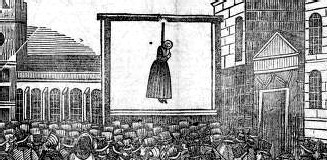 Catherine Wilson
Murderer · United Kingdom · 1854
Catherine Wilson was a British nurse who poisoned victims after befriending the…
7 victims
Catherine Wilson
Murderer · United Kingdom · 1854
Catherine Wilson was a British nurse who poisoned victims after befriending the…
7 victims
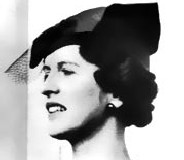 Florence Ransom
Murderer · United Kingdom · 1940
Florence Ransom was a middle-aged woman who was described as physically beautif…
3 victims
Florence Ransom
Murderer · United Kingdom · 1940
Florence Ransom was a middle-aged woman who was described as physically beautif…
3 victims
 Joanna Dennehy
Murderer · United Kingdom · 2013
Name: Joanna Dennehy · March 2013 — Three murders were carried out in the Unite…
3 victims
Joanna Dennehy
Murderer · United Kingdom · 2013
Name: Joanna Dennehy · March 2013 — Three murders were carried out in the Unite…
3 victims
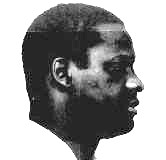 Charlie Livingston
Murderer · USA · 1983
Charlie Livingston was executed by lethal injection in Texas on November 21, 19…
1 victim
Charlie Livingston
Murderer · USA · 1983
Charlie Livingston was executed by lethal injection in Texas on November 21, 19…
1 victim
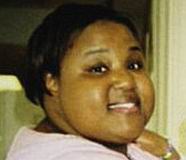 Veronica Cirella
Murderer · USA · 2011
Veronica Cirella was 31 and lived in Plainview, New York. She was the mother of…
1 victim
Veronica Cirella
Murderer · USA · 2011
Veronica Cirella was 31 and lived in Plainview, New York. She was the mother of…
1 victim
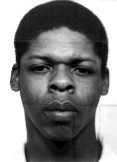 James Davis Richardson
Murderer · USA · 1986
James Davis Richardson Richardson was executed by lethal injection in Texas on…
1 victim
James Davis Richardson
Murderer · USA · 1986
James Davis Richardson Richardson was executed by lethal injection in Texas on…
1 victim
 Carlos Eduardo Robledo Puch
Serial killer · Argentina · 1971
Carlos Eduardo Robledo Puch, also known as "The Death Angel" or "The Black Ange…
11 victims
Carlos Eduardo Robledo Puch
Serial killer · Argentina · 1971
Carlos Eduardo Robledo Puch, also known as "The Death Angel" or "The Black Ange…
11 victims
- Gender
- female
- Country
- United Kingdom
- Location
- Bristol, South West England, England, United Kingdom
- Date of birth
- Around 1805
- Age at first offence
- 28
- Characteristics
- poisoner, robbery, drug addict
- Victim profile
- Clara Ann Smith, 60
- Method of murder
- Poisoning (arsenic)
- Date(s) of murder
- October 23, 1833
- Years active
- 1833
- Date of arrest
- December 1834
- Status
-
Executed
Executed by hanging on April 15, 1835
Case details
Mary Ann Burdock was an attractive Bristol landlady who ran a boarding house.
She lodged with, and became involved with, a young sailor named Charles Wade, who was already married. They lived openly as husband and wife with their lodger living arrangement.
Another lodger at the boarding house was Mrs Clara Smith, an elderly widow who had taken up residence around September 1833. Mrs Smith had savings of over one thousand pounds.
Mary Ann Burdock was originally from Ross-on-Wye, where she was born around 1805. She sought a more exciting life in Bristol as a teenager and lived as a native of Bristol, passing her life in the city. She was forty years of age at the time of her execution.
The offence
Mary Ann Burdock decided to get rid of Mrs Smith in order to obtain funds for Charles Wade. She used arsenic to poison Mrs Smith.
After Mrs Smith died, Mary Ann Burdock told people that Mrs Smith had died “very poor,” that there was only enough money to afford burial expenses, and that Mrs Smith’s clothes were in such a bad state that she was compelled to burn them.
Investigation
Suspicious relatives communicated their suspicions to the authorities.
On Christmas Eve 1834, Mrs Smith’s body was exhumed from its grave in St Augustin’s churchyard. Yellow arsenic was detected in the corpse, and Mary Ann Burdock was arrested.
During exhumation and examination, the undertaker and physician and surgeons described the body’s condition and the discovery of the poison. The body was opened by Dr. Riley, the physician of the Bristol infirmary, assisted by Mr. J. J. Kelson, surgeon. Dr. Symonds, and Mr. Herapath, a lecturer on chemistry.
It was described that the stomach and abdomen were laid open, and that the integuments had been converted into adipocire, “which is a hardening of the fat, or animal soap.” The stomach was taken out and was found to contain yellow arsenic. The stomach contents were submitted to various chemical tests, all confirming the belief that yellow arsenic had been administered and was, in fact, the cause of death.
Trial
The trial took place at the Bristol Assizes, held in the month of April 1835, before the Recorder (Sir Charles Wetherell).
Mary Ann Burdock was indicted for the wilful murder of an old lady named Clara Anne Smith, a lodger, alleged to have been poisoned with yellow arsenic to obtain possession of her property. The trial commenced on Friday the 10th of April and continued through that day and Saturday. The Recorder did not proceed to sum up until Monday, while the jury was kept under the care of the proper officers during the whole of the time.
The evidence was described as circumstantial but “perfectly conclusive.”
Mrs Smith’s death was described as having occurred on the 23rd of October, and shortly afterwards an undertaker named Thompson was sent for by the prisoner. The prisoner told Thompson that an old lady was dead in her house, “who died very poor, and had no friends, and who must therefore be buried at as little expense as possible.”
A coffin and coffin-plate were provided with the deceased’s name and age, and the lady was interred in St. Augustine’s church-yard at eight in the morning of the 80th of October.
Evidence about the arsenic purchase and administration
A seaman named Evans was described as having lodged with the prisoner when she passed as Mrs. Wade in October 1833. Evans was asked to purchase two-pennyworth of arsenic about six days before Mrs. Smith died, with the explanation that there were rats in the house. The arsenic purchase was said to have been from a druggist named Hobbs, in the presence of two witnesses who confirmed Evans’s statement.
It was said that Evans gave the arsenic to the prisoner and that she put it in her pocket. Evans was in the house when Mrs. Smith died and heard Wade and the prisoner laughing during the night. The prisoner said that the deceased died poor and that she should sell some plate the deceased left to pay funeral expenses. Evans also stated that he had seen the deceased with a gold watch and chain about a month before.
The administration of a yellow powder was proved by a girl named Mary Ann Allen, who had been engaged to wait on Mrs. Smith. Mary Ann Allen saw the prisoner put some yellow powder out of a paper, which she took from her pocket, into a basin of gruel, which she subsequently gave to the deceased. Shortly after eating the food, Mrs. Smith was said to have suffered dreadful convulsions and died.
Post-death conduct and instructions
After Mrs Smith’s death, Mary Ann Burdock was described as having opened a cupboard and drawers and as having used abusive epithets to the deceased. The text recorded the epithets: “Only think of the drunken old b--- having this,” &c.
The prisoner was described as telling witness: never to tell anything of Mrs. Smith, or who she was, or what she was, nor that she had ever lived with her. If anyone asked, the prisoner told the witness to say she was “a stranger and a foreigner, from far away in the East Indies;” and the prisoner further instructed: “Nor don't you ever tell any one,” said she, “you saw me put anything into the gruel, for people might think it was curious.”
These details were described as confirmed by other witnesses, including the mother of the girl and a servant who at the time lived with the prisoner.
Evidence about property and statements
Mr. Charles Read, a wine-merchant, who knew the deceased’s brother-in-law in Oporto, testified that in November after her death he went to the prisoner’s house and saw her and Wade. He made inquiries as to Mrs. Smith’s property.
The prisoner said Mrs. Smith died very poor, and that her clothes were in such a bad state she was compelled to burn them. She also said she would not produce anything belonging to her until the funeral expenses were paid, “which amounted to 15 l .”
The narrative described a subsequent visit the next morning, when Wade said there was a box containing some papers belonging to the deceased. The prisoner ultimately agreed that they should each get a professional man to meet. The visits continued until the box was produced and opened, and the papers were examined, including an old will of Mr. Smith’s in favour of his wife. It was stated that there were no deeds.
Mr. Read testified that Mrs. Smith had dressed very respectably since her husband’s death five years earlier. He said he had paid her 700 l. in 1829, and he paid her an annuity of 15 l.
Judge’s directions and jury verdict
The Recorder summed up on Monday. In directing the jury, the Recorder stated:
"The issues of life and death were, by the constitution of the realm, committed to them, and not to him. The prisoner was charged with having murdered, by means of poison, a lady of the name of Clara Ann Smith, the poison being yellow arsenic mixed in water gruel. They would have to make up their minds upon the three following points:-- First, whether Mrs. Smith's death was occasioned by poison; secondly, whether that poisoning was carried into effect by the prisoner; and, thirdly, whether the prisoner knew that she was poisoning Mrs. Smith. If they were of opinion that she did administer the poison knowing it was poison -- if their consciences were made up on these points, however fatal and tremendous the consequences might be to the prisoner, they were bound to make a true deliverance between the king and the king's subjects, and they were bound to pronounce her guilty. They would have to exercise their judgment. The verdict was theirs, and not that of the court. They were charged with the duty of pronouncing the question of guilty or not guilty."
The jury retired for rather more than a quarter of an hour. The verdict returned was “Guilty.”
Mary Ann Burdock addressed the judge in an audible voice, saying:
"My lord, I am innocent, I am innocent. Standing at this bar, I call upon the Almighty to put his judgment upon me if what I am now saying is not true. I know nothing of it; I am innocent; and the Almighty, I hope, will put his judgment upon me at this moment if I am not innocent."
The text recorded that the judge then passed the sentence of the law, directing execution on Wednesday, and that her body was to be buried within the precincts of the jail.
Mary Ann Burdock said:
"May the Lord have mercy upon my soul."
Sentencing
Mary Ann Burdock was sentenced to death. The sentence directed that she be executed on Wednesday and that her body be buried within the precincts of the jail.
Execution and aftermath
Mary Ann Burdock was executed by hanging on Wednesday, 15th April 1835.
The text recorded a description of the execution day and final moments, including the placement of the fatal cap on her head, the rope round her neck, and the timing: “exactly twenty minutes before two o'clock in the afternoon.”
During religious service before execution she sat sullenly silent, never once rising or kneeling. After the sermon she left the chapel with firmness.
In the room under the platform, with her dress arranged, the text recorded that she joined in the prayers with earnestness, repeating the responses:
"Lord have mercy on my soul!"
"Christ have mercy on my soul!"
The text recorded that she made no statement and did not confess the justice of her sentence. She ascended to the fatal drop with comparative firmness, but looked pale and ghastly, and the weight caused instant death.
The text described that she was the first woman to be hanged at the New Drop, executed in front of a crowd of 50,000.
Other details
Relationship and living circumstances
The narrative described that Mary Ann Burdock and Charles Wade lived openly as husband and wife after he became a lodger. Charles Wade was said to have been one of her lodgers and had planned to buy a shop but did not have enough money. He died in April 1834.
The narrative described that Mary Ann Burdock was “soon married to Mr Burdock,” after being described as having acquired a shop and depositing a considerable sum in the bank within four months of Mrs Smith’s demise.
Arsenic-related purchase by others
The narrative described that Mary Ann Burdock got one of her other lodgers, a seaman named Edward Evans, to go and buy arsenic. It was said Evans spent the twopence Mary gave him on drink and had to borrow the money from William Bussell.
The narrative stated that Evans, Bussell and another man named John Johnson went to the shop together around 17th October 1833 and bought two ounces of arsenic.
Service providers and burial
The undertaker Thompson was involved in the initial burial arrangements. The burial took place at St. Augustine’s church-yard, at eight in the morning of the 80th of October, using a coffin and coffin-plate with the deceased’s name and age.
Age
Mary Ann Burdock was forty years of age at the time of her execution.

Spotted an error, or have more information about this case?