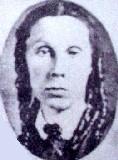
Phoebe Campbell
Murderer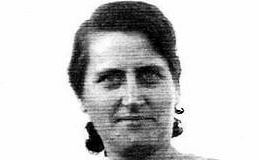 Lila Gladys Young
Murderer · Canada · 1928
Lila Gladys Young was also named Lila Gladys Lila Coolen. Lila Gladys Young was…
100 victims
Lila Gladys Young
Murderer · Canada · 1928
Lila Gladys Young was also named Lila Gladys Lila Coolen. Lila Gladys Young was…
100 victims
 Tooba Yahya
Murderer · Canada · 2009
Tooba Yahya was a 41-year-old second wife in the polygamous Shafia household. H…
4 victims
Tooba Yahya
Murderer · Canada · 2009
Tooba Yahya was a 41-year-old second wife in the polygamous Shafia household. H…
4 victims
 Allyson McConnell
Murderer · Canada · 2010
Allyson McConnell was convicted of manslaughter in the bathtub drowning of her…
2 victims
Allyson McConnell
Murderer · Canada · 2010
Allyson McConnell was convicted of manslaughter in the bathtub drowning of her…
2 victims
 Cherrylle Dell
Murderer · Canada · 1995
Cherrylle Dell poisoned her husband, Scott Dell, with antifreeze-laced wine. Sc…
2 victims
Cherrylle Dell
Murderer · Canada · 1995
Cherrylle Dell poisoned her husband, Scott Dell, with antifreeze-laced wine. Sc…
2 victims
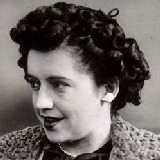 Evelyn Dick
Murderer · Canada · 1944
Evelyn Dick was born to Donald MacLean and Alexandra MacLean on October 13, 192…
2 victims
Evelyn Dick
Murderer · Canada · 1944
Evelyn Dick was born to Donald MacLean and Alexandra MacLean on October 13, 192…
2 victims
 Jane LaMarsh
Murderer · Canada · 2009
Name: Jane LaMarsh Jane LaMarsh was a 50-year-old woman from Wallaceburg, Ontar…
2 victims
Jane LaMarsh
Murderer · Canada · 2009
Name: Jane LaMarsh Jane LaMarsh was a 50-year-old woman from Wallaceburg, Ontar…
2 victims
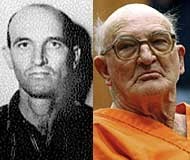 Edgar Ray Killen
Murderer · USA · 1964
Edgar Ray “Preacher” Killen (born 17 January 1925) was an American former Ku Kl…
3 victims
Edgar Ray Killen
Murderer · USA · 1964
Edgar Ray “Preacher” Killen (born 17 January 1925) was an American former Ku Kl…
3 victims
 Hiroko Nagata
Murderer · Japan · 1972
Hiroko Nagata (Japanese leftist radical; also sometimes mistakenly referred to…
14 victims
Hiroko Nagata
Murderer · Japan · 1972
Hiroko Nagata (Japanese leftist radical; also sometimes mistakenly referred to…
14 victims
 Lloyd Duest
Murderer · USA · 1982
Lloyd Duest was sentenced to death on April 14, 1983 and later was resentenced…
1 victim
Lloyd Duest
Murderer · USA · 1982
Lloyd Duest was sentenced to death on April 14, 1983 and later was resentenced…
1 victim
 Edwin Bell
Mass murderer · USA · 1999
February 12, 1999 — Edwin Bell shot his estranged girlfriend, their three young…
5 victims
Edwin Bell
Mass murderer · USA · 1999
February 12, 1999 — Edwin Bell shot his estranged girlfriend, their three young…
5 victims
 Robert Anthony Preston
Murderer · USA · 1978
Robert Anthony Preston (born 11/13/57) was convicted in the Eighteenth Judicial…
1 victim
Robert Anthony Preston
Murderer · USA · 1978
Robert Anthony Preston (born 11/13/57) was convicted in the Eighteenth Judicial…
1 victim
 Dr. Robert George Clements
Murderer · 1920
Robert George Clements committed suicide in 1947 before he was caught by the po…
4 victims
Dr. Robert George Clements
Murderer · 1920
Robert George Clements committed suicide in 1947 before he was caught by the po…
4 victims
- Gender
- female
- Country
- Canada
- Location
- Thorndale, Middlesex County, Ontario, Canada
- Date of birth
- 1847
- Age at first offence
- 24
- Characteristics
- parricide
- Victim profile
- George Campbell (her husband)
- Method of murder
- Hacked to death with an axe
- Date(s) of murder
- July 15, 1871
- Years active
- 1871
- Date of arrest
- 7 days after
- Status
-
Executed
Executed by hanging in London, Ontario, on June 20, 1872
Case overview
Phoebe Campbell (c. 1847 – 20 June 1872) was a Canadian woman executed by hanging for the murder of her husband, George Campbell.
Timeline
- July 14, 1871 — George Campbell of Thorndale, Middlesex County, Ontario was murdered.
- July 15, 1871 — Phoebe Campbell alleged that, in Thorndale, Middlesex County, Ontario, two black-faced men broke into the log cabin and hacked George to death with an axe; a gun misfired during the incident.
- August 4, 1871 — A coroner's inquest deliberated for 45 minutes and concluded that “George Campbell had been murdered by two persons whom we believe to be Thomas Coyle and Phoebe Campbell.”
- April 1, 1872 — Phoebe Campbell’s murder trial began in London, Ontario.
- April 6, 1872 — The jury reached a guilty verdict.
- June 20, 1872 — Phoebe Campbell was hanged in London, Ontario.
- June 21, 1872 — Phoebe Campbell was executed by hanging in the London gaolyard.
The offence
George Campbell was murdered in his log cabin in Thorndale, Middlesex County, Ontario. Phoebe Campbell alleged that two men with blackened faces entered their log cabin and demanded money. When George said he did not have any, the men tried unsuccessfully to fire a pistol at him three times; one attempt involved a gun misfiring. George was then bludgeoned about the head with an axe. Phoebe Campbell stated that one of the men wrestled the axe away and hit George over the head with it.
In another account of the incident, George told Phoebe to get the axe, which she did. One assailant wrestled the axe away from George and struck George over the head with it. George then yelled for Phoebe to get the carving knife; she retrieved a knife from the bureau, but one assailant snatched it away and continued beating George until he fell to the floor.
Phoebe Campbell alleged that the assailants told her not to alert anyone until the next morning. She then ran outside screaming, and neighbours came to her aid. It was described that blood covered every part of the cabin.
Investigation
At first, people believed Phoebe Campbell’s account of two intruders. Over the course of the summer, questions arose about her innocence.
Phoebe Campbell’s story was challenged by questions about why she did nothing while two men attacked her husband, why she seemed unemotional following George’s funeral, and why she was seen talking with Thomas Coyle the day after the murder.
During the investigation, local suspects were arrested, including Thomas Coyle. During the coroner’s inquest, jurors adjourned at the Campbell cabin, where George was found dead on the floor “covered in gore, his head beaten to pieces with both ends of an axe...”. The coroner's inquest concluded: “George Campbell had been murdered by two persons whom we believe to be Thomas Coyle and Phoebe Campbell.”
Arrest and accused persons
Six local men were arrested during the investigation, including Thomas Coyle. Thomas Coyle was described as George Campbell’s farmhand and Phoebe Campbell’s father’s hired man. Phoebe Campbell was also arrested.
Trial
Phoebe Campbell’s murder trial began on April 1, 1872 in London, Ontario. Public interest in the trial was described as much public interest, and it was characterized as sensational in the extreme.
Phoebe Campbell accused George Campbell of having an affair with her cousin’s wife. During trial, the crown prosecutor produced a letter attributed to Phoebe Campbell in which it was stated: “I never shall say you done any such thing again—if I have to die for it.”
When Phoebe Campbell was asked why she changed her testimony, she claimed that the ghost of her late husband visited her and declared her and Coyle innocent.
The crown prosecutor responded: “You can hardly expect anyone to believe such nonsense!”
The jury deliberated and reached a guilty verdict. One account stated the jury reached a guilty verdict on April 6, 1872, and another stated the jury took just one hour to reach a guilty verdict.
Phoebe Campbell insisted she was innocent. She then burst into tears as the judge sentenced her to hanging.
Sentencing
Phoebe Campbell was sentenced to be hanged.
Appeals
No appeal information was included in the provided material.
Outcome
Phoebe Campbell was hanged by the neck on June 20, 1872 in London, Ontario. She was also described as being executed by hanging on June 21, 1872 in the London gaolyard.
Thomas Coyle went to trial for his crime but was acquitted. After the acquittal, Coyle moved to England.
Aftermath and public reaction
It was described that much public attention was given to the story and that postcards depicting the crime were made and bought by many. Newspapers were described as determined to depict Phoebe Campbell as a heartless killer, noting that she went to the gallows without a trace of emotion and held a lace handkerchief in her hand for a minute after the trap had been sprung.
A confession was described as having been written by Phoebe Campbell in May 1872, described as an eight page confession that she and Thomas Coyle had murdered her husband.
Phoebe Campbell later confessed that she and Coyle conspired to murder George so they could marry. A final open letter was described as stating: “it is a solemn thing to die if not prepared.”


Spotted an error, or have more information about this case?