Attina Cannaday
Homicide Christine Falling
Homicide · USA · 1980
Christine Falling (1980-1982) was a 17-year-old babysitter from Perry, Florida.…
5 victims
Christine Falling
Homicide · USA · 1980
Christine Falling (1980-1982) was a 17-year-old babysitter from Perry, Florida.…
5 victims
 Roxanne Severcool
Homicide · USA · 1980
Defendant: Roxanne Severcool (juvenile offender) · Co-defendant: Robert Fadden…
3 victims
Roxanne Severcool
Homicide · USA · 1980
Defendant: Roxanne Severcool (juvenile offender) · Co-defendant: Robert Fadden…
3 victims
 Brenda Spencer
Homicide · USA · 1979
Brenda Spencer was convicted after a school shooting at Grover Cleveland Elemen…
2 victims
Brenda Spencer
Homicide · USA · 1979
Brenda Spencer was convicted after a school shooting at Grover Cleveland Elemen…
2 victims
 Brenda Wiley
Homicide · USA · 1990
Brenda Wiley was convicted in 1992 of fatally stabbing her mother, Bonnie Wiley…
2 victims
Brenda Wiley
Homicide · USA · 1990
Brenda Wiley was convicted in 1992 of fatally stabbing her mother, Bonnie Wiley…
2 victims
 Amy Lee Black
Homicide · USA · 1990
Amy Lee Black was 16 years and six months old at the time of the crime. She was…
1 victim
Amy Lee Black
Homicide · USA · 1990
Amy Lee Black was 16 years and six months old at the time of the crime. She was…
1 victim
 Nicholas Sutton
Murderer · USA · 1979
Nicholas Todd Sutton appealed directly to the Supreme Court of Tennessee his co…
2 victims
Nicholas Sutton
Murderer · USA · 1979
Nicholas Todd Sutton appealed directly to the Supreme Court of Tennessee his co…
2 victims
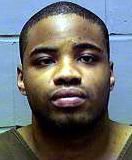 Reginald & Jonathan Carr
Spree killers · Kansas · 2000
The Wichita Massacre, also known as “The Wichita Horror,” was a murder/assault/…
5 victims
Reginald & Jonathan Carr
Spree killers · Kansas · 2000
The Wichita Massacre, also known as “The Wichita Horror,” was a murder/assault/…
5 victims
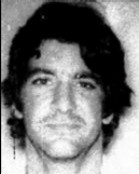 George Jo Hennard
Mass murderer · USA · 1991
George Jo Hennard carried out a mass killing at a Luby’s Cafeteria in Killeen,…
23 victims
George Jo Hennard
Mass murderer · USA · 1991
George Jo Hennard carried out a mass killing at a Luby’s Cafeteria in Killeen,…
23 victims
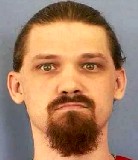 Blayde Grayson
Murderer · USA · 1996
Blayde Grayson (also known as Blayde N. Grayson and Blayde Nathaniel Grayson, a…
1 victim
Blayde Grayson
Murderer · USA · 1996
Blayde Grayson (also known as Blayde N. Grayson and Blayde Nathaniel Grayson, a…
1 victim
- Gender
- female
- Country
- USA
- Location
- Harrison County, Mississippi, USA
- Date of birth
- September 8, 1965
- Age at first offence
- 17
- Characteristics
- juvenile (16), kidnapping, rape, convicted rapist
- Victim profile
- U.S. Air Force Sergeant Ronald Wojcik, 26
- Method of murder
- Stabbing with knife
- Date(s) of murder
- June 3, 1982
- Years active
- 1982
- Date of arrest
- —
- Status
-
Sentenced to death
Released on parole on March 9, 2008 after sentence reversed in 1984; resentenced to one life sentence and two 25-year sentences following reversal of the death sentence
Case information
Attina Marie Cannaday was convicted in Harrison County Circuit Court of the kidnap and murder of U.S. Air Force Sergeant Ronald Wojcik. She was born September 8, 1965.
At the time of trial, Cannaday was a sixteen year old divorcee. She had married at thirteen and divorced at fourteen.
Cannaday was charged with robbery, kidnapping, and homicide. She was tried separately from her co-defendant David Randolph Gray.
The jury sentenced Cannaday to death by lethal injection.
Timeline
- June 3, 1982 — U.S. Air Force Sergeant Ronald Wojcik was kidnapped and murdered; his girl-friend, Sandra Sowash, was kidnapped with him and raped.
- May 22, 1982 — Cannaday met with John Cooper and discussed threats connected to the relationship with Wojcik and Sowash.
- May 21, 1982 — Wojcik told John Cooper that Cannaday had shown up outside his apartment, yelling obscenities.
- June 1, 1982 — Cannaday made a phone call to a friend, Gena Pecoul, expressing love for Wojcik and a desire to kill him.
- June 2, 1982 — Cannaday was at the Red Garter Lounge at the Buena Vista Hotel with David Gray and Dawn Bushart; hitchhiking westward preceded the kidnapping and murder.
- Sunrise following the crime — The body of Wojcik was found with nineteen stab wounds in the face, neck, chest and back areas in a wooded area about fifty feet from the road.
- March 9, 2008 — Cannaday was released on parole.
Background
Cannaday was an Alabama runaway child from a broken home at age thirteen. She married and divorced at age fourteen.
She worked in numerous bars in Gulfport and Biloxi as dancer and barmaid, and supplemented her income by prostitution.
Cannaday met Wojcik at the Sports Page Bar where he “moon-lighted” after his duties at Keesler Air Force Base.
Wojcik kept his two children of his marriage. Cannaday began living with Wojcik and they “ostensibly conducted themselves as a married couple for several weeks until he learned her true age.” When Wojcik learned her true age, he required her to move because “the military disapproved of this relationship.”
Shortly afterwards Wojcik found a new girl-friend, Sandra Sowash.
Cannaday lived at several locations after her removal from Wojcik’s apartment. She became a friend with David Gray, an unemployed young man who lived out of his automobile.
Prior relationships and interactions before the crime
On May 22, 1982, Cannaday met with John Cooper, who was an acquaintance of Wojcik. Cannaday told Cooper that she had caught Wojcik and Sowash in bed together and had threatened to kill Wojcik if she caught them again. Cannaday denied the threat, but admitted discussing the situation with Cooper. Cooper advised Wojcik of the threats, but Wojcik did not seem to be bothered.
Wojcik told Cooper that on the night before (May 21) Cannaday showed up outside his apartment, yelling obscenities.
On June 1, 1982, Cannaday made a phone call to Gena Pecoul. During that conversation, Cannaday expressed her love for Wojcik but also expressed a desire to kill him.
The offence
Kidnapping and murder of Ronald Wojcik
In the early hours of June 3, 1982, twenty-six year old Ronald Wojcik was the victim of kidnapping and murder. His girl-friend, Sandra Sowash, was kidnapped with him and raped.
The three principals were Cannaday, her friend David Gray, and another, Dawn Bushart.
Cannaday and Gray, and Bushart, were intoxicated at the time they entered the sequence of events leading to the kidnapping. Cannaday and Gray drank and danced at the Red Garter Lounge at the Buena Vista Hotel. Gray had smoked some marijuana. Bushart joined Cannaday and Gray.
As the lounge was closing, Cannaday asked Gray if he would go with her to her “old man’s apartment with her to get her van and some clothes.” Gray testified that Cannaday wanted him to beat Wojcik “to scare him and further to kill Wojcik,” and that he refused. Cannaday denied this and denied asking Gray if he had a gun.
Gray took four knives from his car, as Cannaday put it, “in case we got picked up by a nut.” Since Gray’s car was not operative, the three — Cannaday, Gray and Bushart — hitchhiked westward.
They were picked up and taken to a point near Wojcik’s apartment. Seeing Wojcik’s white van, Cannaday knew he was home.
They approached the apartment. Gray gave Bushart a knife and gave Cannaday a black handled knife. Gray kept a butcher knife and a fourth knife strapped to his belt. Gray ordered Bushart to stand out on the front porch.
Cannaday and Gray entered the apartment. The testimony was disputed as to whether the door was unlocked or whether Cannaday had a key.
Cannaday entered Wojcik’s bedroom while Gray remained in the living room. Wojcik and Sandra Sowash were asleep in bed.
The encounter was described as destructive and forceful. The encounter ended with Wojcik and Sowash being forced at knifepoint to get in Wojcik’s van. Wojcik’s two children who were asleep in the other bedroom were left behind.
As they were leaving the apartment, Cannaday picked up a wallet belonging to Wojcik.
Journey and sexual assault allegation during the escape
With Cannaday driving, they proceeded westward along U.S. 90 at a pretty fast rate of speed. After making a right turn off of U.S. 90, Cannaday attempted to race an approaching train, but moments before getting to the tracks, Wojcik grabbed the wheel and prevented the collision with the train.
Gray told Bushart that if Wojcik moved again to cut him.
Both Gray and Sowash stated that Cannaday suggested that Gray have sex with Sowash. Gray forced Sowash to have sexual relations with him while Cannaday continued to drive.
After making several turns, Cannaday decided to stop on a gravel road known as Lampkin Road, somewhere north of Biloxi. Gray got out of the van and forced Wojcik out.
Wojcik urged Cannaday to discuss the situation with him, but Cannaday refused.
There was a conflict as to who had the black handle knife, Sowash saying that Cannaday had it and Cannaday saying that Bushart had it.
Gray forced Wojcik into the woods. This was the last time Wojcik was seen alive.
Disputed stabbing and what happened in the woods
The facts were described as in sharp dispute.
David Gray’s testimony denied any stabbing of Wojcik. Gray’s version was that after entering the woods, Gray was distracted by Cannaday who had shouted his name. Wojcik took this opportunity to hit Gray and a fight occurred. Gray over-powered Wojcik, but had dropped the knife during the fight. After hitting Wojcik until he was nearly unconscious, Gray began looking for his knife. Cannaday then walked up and advised Gray that Sowash had run away and that she had thrown the knife at her. Gray found his knife, and Cannaday asked for it. Gray gave Cannaday the knife and left her in the woods as he walked back to the van.
At the van, Gray smoked a Kool cigarette. A Kool cigarette butt was later found several feet from a place where the van was thought to have been. It was Gray’s belief that when he left Wojcik in the woods, Wojcik was still alive.
When Cannaday returned to the van, she did not have the knife. She said that nothing happened, and they left.
Cannaday’s version was that she never went into the woods, but stayed at the van with Sowash and Bushart the entire time. She testified that Bushart threw the knife at Sowash as Sowash was escaping. Cannaday testified that Gray had blood on his clothes and on the knife upon return to the van. She thought that he had killed Wojcik.
Gray became upset when he discovered that Sowash had gotten away.
Investigation
Movement after the crime and arrest activity
After the escape events, the three left in the van and went to Slidell, Louisiana with Cannaday driving. While traveling, Gray discarded his bloody tee-shirt.
Upon arrival at a store near Slidell, Cannaday bought a black tee-shirt which she put over her red/pink jumpsuit.
Cannaday and Gray went to the residence of Mrs. Mildred Page Robinson and her son Timothy Page. They were acquaintances of Cannaday from when Cannaday and her ex-husband lived in a nearby trailer park. Page noticed Cannaday with the black tee-shirt pulled over the jumpsuit. He did not notice any blood on Cannaday.
Cannaday told him they had come to “party,” and asked for some cut-off jeans to wear. Cannaday removed her red/pink jumpsuit and placed it in water to soak. Cannaday’s explanation was that she had started her menstrual period, and as a result the outfit needed to be soaked. Page noticed blood stains on one of Gray’s arms and one of his pants leg. Gray was not wearing a shirt.
After talking with Mrs. Robinson for a few moments, Cannaday went to sleep. She did not bath or clean up before going to sleep other than wash her red/pink outfit.
Gray and Page got into the van and left in search of a keg of beer.
Returning to the scene of the crime, when Sandra Sowash was able to escape, she found a nearby house from which she notified Harrison County Sheriff’s Department.
Finding of the body and discovery of clothing and evidence
At sunrise the body of Wojcik was found with nineteen stab wounds in the face, neck, chest and back areas, laying in a bushy wooded area some fifty feet from the road.
However, the butcher knife was never found.
A detailed description of the white van was given by Sowash, as well as the name of Tina Cannaday, as a participant.
Wojcik’s wallet was found on the highway near Slidell. The sheriff’s deputies were aware that Cannaday once lived in Slidell, Louisiana.
They notified the Louisiana authorities to be on the lookout for the white van and occupants. In Louisiana the white van was spotted.
Gray and Timmy Page were arrested. Information obtained from Page and other information led police to Mrs. Robinson’s home where Cannaday was asleep. She was awakened, arrested and warned of her constitutional rights.
Investigators Al Herman of the St. Tammany Sheriff’s Department seized the outfit that Cannaday had put in the sink. The water had already drained out, and Herman noticed no blood on the clothing. Articles of jewelry later identified as belonging to Sowash and Wojcik were also recovered.
Cannaday was placed in a sheriff’s car for transportation to the St. Tammany Sheriff’s Department.
By that time, she had been twice warned of her Miranda rights.
During the car ride, Cannaday made unsolicited statements that Gray had used the knife to kill Wojcik and that she saw Gray grasp Wojcik’s hair, pull his head back and cut his throat.
After arriving at the police station, Cannaday was criminally charged. In the presence of Harrison County Officers Martin and Johnson, she gave a fourteen page statement concerning her involvement in the crime, which story she also reflected at trial.
After waiver of extradition, Cannaday and Gray were returned to Mississippi.
Bushart’s arrest and additional statements
After hitchhiking back from Louisiana, Bushart was arrested while walking along Highway 90 in Harrison County.
After incarceration, Cannaday stated to Officer Warden that she believed she was pregnant and that Wojcik was the father. She stated she had not had a menstrual period for three months.
Officer Jim Wren confirmed that a pregnancy test was given to Ms. Cannaday which was negative. Cannaday explained that the officers misunderstood her statements concerning her periods. She stated that she had missed two periods prior to June 3rd, but on the day of her arrest her menstrual period had started.
Forensic findings
Blood tests made by Larry Turner of the Mississippi State Crime Lab indicated that both Wojcik and Gray had type B blood.
Blood spots found on Gray’s pants were type B blood.
Turner also tested the red/pink jumpsuit worn by Cannaday. These tests revealed the enzyme paradoxin in six areas which indicated possible blood traces.
The stains were insufficient to get a blood type. Turner said that the finding of small traces was consistent with the garment having been washed.
There were no traces in the crotch area of the clothing.
Arrest and charges
Cannaday, Gray and Bushart were indicted for capital murder for the kidnapping and homicide of Wojcik, but tried separately.
Trial
Proceedings and co-defendants
David Gray’s trial preceded Cannaday’s. After his conviction, Gray testified against Cannaday and maintained his position of innocence of any murder.
Bushart claimed the constitutional privilege against self-incrimination and did not testify in either of the trials. She later pled guilty to manslaughter.
Cannaday was found guilty of capital murder and sentenced to death.
Guilt/innocence phase issues on appeal
Cannaday’s appeal presented two questions: whether her constitutional right to counsel at the time incriminating statements were obtained from her while in custody in the county jail was violated, and if so whether such violation required reversal for the guilt and sentence phase of her conviction.
Cannaday asserted the trial court committed errors including:
- Excluding prospective jurors in violation of Witherspoon v. Illinois.
- Restricting cross-examination as to the probationary status of the state’s primary witness.
- Prohibiting relevant expert psychiatric testimony offered on behalf of appellant.
- Allowing incriminating statements elicited from her in violation of her rights guaranteed under the Fifth and Sixth Amendments to the United States Constitution of the right to counsel.
- Failing to instruct the jury on the lesser included offense of kidnapping violated her rights to due process.
The appellate decision addressed each assigned error.
Juror exclusion under Witherspoon
Two jurors were excused for their belief concerning imposition of the death penalty on a sixteen year old, but no contemporaneous objections were made when these two witnesses were excused. Because no objection was made, this issue was described as not properly preserved for review.
Even if preserved, the assignment was described as without merit because prospective jurors answered that they would not be able to vote for the death penalty regardless of what the evidence showed because of the youthful age of Cannaday, and the prospective jurors were properly excused.
Restriction on cross-examination about probationary status
During David Gray’s cross-examination by the defense, Gray was asked about his three prior convictions. Thereafter, defense counsel attempted to ask Gray about his probationary status:
Q. You were on probation at the time you were arrested.
BY MR. NECAISE: Object to that, If The Court Please. He can't go into that.
BY THE COURT: Sustained.
The appellate discussion addressed whether the trial court erred in restricting that line of questioning and whether Davis v. Alaska required allowing cross-examination into probationary status as evidence of bias.
The opinion referenced that it was known to the jury that Gray was previously sentenced to death for involvement in the crime and that Gray was not on probation but in jail.
The court held that the Sixth Amendment right to confrontation was satisfied because the defendant was allowed to expose facts from which jurors could draw inferences about the reliability of the witness, and it found no restriction requiring reversal.
Exclusion of psychiatric expert testimony
Two experts, one a psychologist and the other a psychiatrist, were called by the defendant. Both had been appointed by the court to conduct mental examinations of the defendant and both testified that Ms. Cannaday knew right from wrong under the M’Naughten test.
Ms. Cannaday’s intelligence quotient was testified to be a borderline mental retardation level with a score between 60 to 84, and a mental age of 9.8 years.
Defense sought to show limited mental ability through expert psychiatric testimony and asked two hypothetical questions to the clinical psychologist, but both hypotheticals were based on facts not in evidence:
- A hypothetical question referencing Cannaday’s having “smoked marijuana.”
- A second hypothetical question conditioned on Cannaday’s “crying” and being “upset.”
The posing of hypothetical questions based upon facts not in evidence was described as properly objected to, and the court’s sustaining of the objection was described as proper.
Defense also asked of the expert:
- “Based upon (your) professional opinion was Cannaday capable of plotting the murder ... and inducing a casual friend, David Gray, to commit the murder?”
- “(Based upon the evidence) do you think she was able to understand the severity of the situation she was in?”
The appellate opinion stated sanity was not an issue because it was undisputed the defendant knew right from wrong, and that diminished capacity was not a defense in Mississippi. The court also addressed that whether Cannaday understood the severity of the situation might be probative on knowing waiver of Miranda rights, but had no relevance as to guilt or innocence under the state’s rules.
Sentence phase issues on appeal
Incriminating statements and right to counsel
The appellate decision addressed incriminating statements elicited from Cannaday in response to a question asked by Ronald Mason, a deputy sheriff and jailor, while she was in custody. The appointed counsel issue was central to the reversal of the sentence phase.
Ronald Mason became acquainted with Tina Cannaday after she was incarcerated. Counsel had been appointed for her.
Over defense objection, Mason testified:
(W)hen I got to the door Tina Cannaday and Susan Warden were standing by the door laughing and joking, so I got to talking to them. I understood they were talking about murder, so I asked Tina, I said "Tina, did you kill him"? She did not say she killed him, she did not say that David Gray or anybody else killed him. But she did say "after the head was cut back, I took the head and shook it and tried to break it off", that she wanted to keep the head.
Susan Warden testified to a somewhat different version. Warden said that Cannaday responded to Mason’s question by saying that she did not kill Ronald Wojcik but that she should have taken his head off and brought it home. Warden stated Cannaday did not say she shook Wojcik’s head and tried to take it off.
During cross-examination during the sentencing phase, Cannaday did not remember telling Mason about Wojcik’s head or telling Susan Warden that she wanted Wojcik’s head, but admitted she probably did say it. She stated she did not go out into the woods and shake Wojcik’s head.
The appellate court held that the Sixth Amendment right to counsel was violated, and it declared the error harmless on the guilt phase because evidence of guilt as principal to the kidnapping and murder was described as overwhelming.
However, the court held that reversal was required for the sentence phase because the violation infected the sentence phase, with reference to the trial judge’s statement and the “head remark.”
The opinion cited that the trial judge stated the “head remark” brought the death sentence, and concluded reversal and remand for a new sentence phase trial.
Lesser included offense instruction
Cannaday argued that it was error to refuse to instruct the jury on the lesser included offense of kidnapping. The appellate opinion described that the refused instruction was Instruction No. 16.
The proposed instruction was:
INSTRUCTION NO. 16 The Court instructs the Jury that if the Jury can deduce from the facts and circumstances surrounding the case, either from the evidence or lack of evidence, reasonable facts consistent with the Defendant's guilt of a lesser offense than Capital Murder, then there is a reasonable doubt of her being guilty of Capital Murder, and the jury should return the following verdict: "We, the Jury, find the Defendant not guilty of Capital Murder, but we do find the Defendant guilty of Kidnapping," in which event it will be the duty of the Court to sentence the Defendant as provided by law. A "lesser included offense" is defined as "one composed of some, but not all, of the elements of the greater crime, and which does not have any element not included in the greater offense." Black's Law Dictionary, p. 812 (5th ed. 1979). State v. Stewart, 292 So.2d 677 (La. 1974).
The appellate court held there was no error requiring reversal of the guilt phase, stating that kidnapping was an underlying felony that elevates the murder charge to capital murder, and therefore kidnapping was not a lesser included offense under the cited authority.
Age and death penalty as cruel and unusual punishment
Cannaday’s assignment 7 argued that the imposition of the death penalty on a sixteen year old child at the time of the crime constituted cruel and unusual punishment under the Eighth and Fourteenth Amendments.
The appellate opinion described the Supreme Court grant of certiorari on this issue in Eddings v. Oklahoma and noted that Eddings was reversed on an alternative ground without addressing the age issue.
The appellate discussion then addressed Mississippi law and mitigating factors, stating that even though the sentence phase would be retried, Cannaday’s age remained a mitigating factor to be considered by the jury.
The appellate court stated Cannaday’s age by itself was not grounds for reversal.
Appeals
Cannaday v. State, 455 So.2d 713, 720 (Miss. 1984) was decided with a timeline described in the record excerpt as:
- May 16, 1984 — decision.
- Rehearing denied September 12, 1984.
The appellate decision specified that:
- The guilt phase was affirmed.
- The sentence phase was reversed and remanded for a new trial.
The justices referenced in the record excerpt included: PRATHER, Justice, for the Court, with all Justices concur except WALKER, P.J., who dissented.
Dissenting opinion
WALKER, Presiding Justice, dissented and argued against reversing the death sentence. The dissent stated:
The majority has reversed the death sentence in this case because Attina Marie Cannaday did not have an attorney present when she remarked to a guard (in response to a question) "after the head was cut back, I took the head and shook it and tried to break it off." I do not believe that a defendant who has been appointed an attorney or who has employed an attorney and presumably been advised of her constitutional rights under the Fifth [1] and Sixth [2] Amendments to the 7 United States Constitution not to make any statements to authorities without her attorney present, is entitled to any further protection in this regard.
The dissent continued with further reasoning and stated that the dissenting justice would affirm the finding of the jury and the judgment of the circuit court.
The dissent included footnote material:
- “[1] Gray was granted immunity from prosecution on the rape charge in exchange for his testimony concerning the rape.”
- “[2] See Warden v. Stumes, ___ U.S. ___, 104 S.Ct. 1338, 79 L.Ed.2d 579 (1984).” And included quotations for constitutional amendments V and VI.
Outcome
Cannaday was affirmed on the guilt phase. The sentence phase was reversed and remanded for a new sentence phase trial.
In the current status field, Cannaday’s death sentence was reversed in 1984 and she was resentenced to one life sentence and two 25-year sentences.
Other details
Current incarceration and release
Cannaday was described as currently serving one life sentence and two 25-year sentences at Central Mississippi Correctional Facility (inmate number 42451).
She was released on parole on March 9, 2008.
Connection to a film
The movie Too Young to Die? was described as loosely based on her crime and set in connection with debate concerning the death penalty. It was described as a 1990 television movie starring Brad Pitt and Juliette Lewis.
The record excerpt also stated the film was based on a true story involving Cannaday, along with David Gray, who killed Ronald Wojcik with a knife in Harrison County, Mississippi on June 3, 1982.
Co-defendant information included in the record
David Randolph Gray (born May 29, 1954) was described as having been charged with aggravated assault, grand larceny, and homicide. The record excerpt stated Gray was sentenced to death by lethal injection and his sentence was reversed in May 1987 by the U.S. Supreme Court in Gray v. Mississippi, 481 U.S. 648, on the basis that “a qualified juror was excluded from his trial”.
The record excerpt stated Gray is currently serving a life sentence at Central Mississippi Correctional Facility (inmate number 01440).
Spotted an error, or have more information about this case?