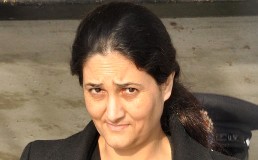
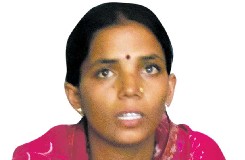
Tooba Yahya
Murderer Allyson McConnell
Murderer · Canada · 2010
Allyson McConnell was convicted of manslaughter in the bathtub drowning of her…
2 victims
Allyson McConnell
Murderer · Canada · 2010
Allyson McConnell was convicted of manslaughter in the bathtub drowning of her…
2 victims
 Jane LaMarsh
Murderer · Canada · 2009
Name: Jane LaMarsh Jane LaMarsh was a 50-year-old woman from Wallaceburg, Ontar…
2 victims
Jane LaMarsh
Murderer · Canada · 2009
Name: Jane LaMarsh Jane LaMarsh was a 50-year-old woman from Wallaceburg, Ontar…
2 victims
 Melanie Alix
Murderer · Canada · 2001
Melanie Alix was a South Shore resident. Her brother, Francois Alix, was 18 mon…
2 victims
Melanie Alix
Murderer · Canada · 2001
Melanie Alix was a South Shore resident. Her brother, Francois Alix, was 18 mon…
2 victims
 Aset Magomadova
Murderer · Canada · 2007
Aset Magomadova was convicted of manslaughter for strangling her daughter, Amin…
1 victim
Aset Magomadova
Murderer · Canada · 2007
Aset Magomadova was convicted of manslaughter for strangling her daughter, Amin…
1 victim
 Catherine Andrus
Murderer · Canada · 2009
Catherine Andrus — common-law wife of Michel Leblanc; pleaded guilty to second-…
1 victim
Catherine Andrus
Murderer · Canada · 2009
Catherine Andrus — common-law wife of Michel Leblanc; pleaded guilty to second-…
1 victim
 Kathrine Dufresne
Murderer · Canada · 2011
Kathrine Dufresne was the mother of seven-year-old Sophie Fitzpatrick, her adop…
1 victim
Kathrine Dufresne
Murderer · Canada · 2011
Kathrine Dufresne was the mother of seven-year-old Sophie Fitzpatrick, her adop…
1 victim
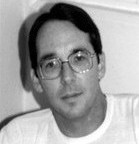 William Zeigler
Mass murderer · USA
William Thomas Zeigler Jr. was prosecuted in Florida for the murders of four pe…
1975 victims
William Zeigler
Mass murderer · USA
William Thomas Zeigler Jr. was prosecuted in Florida for the murders of four pe…
1975 victims
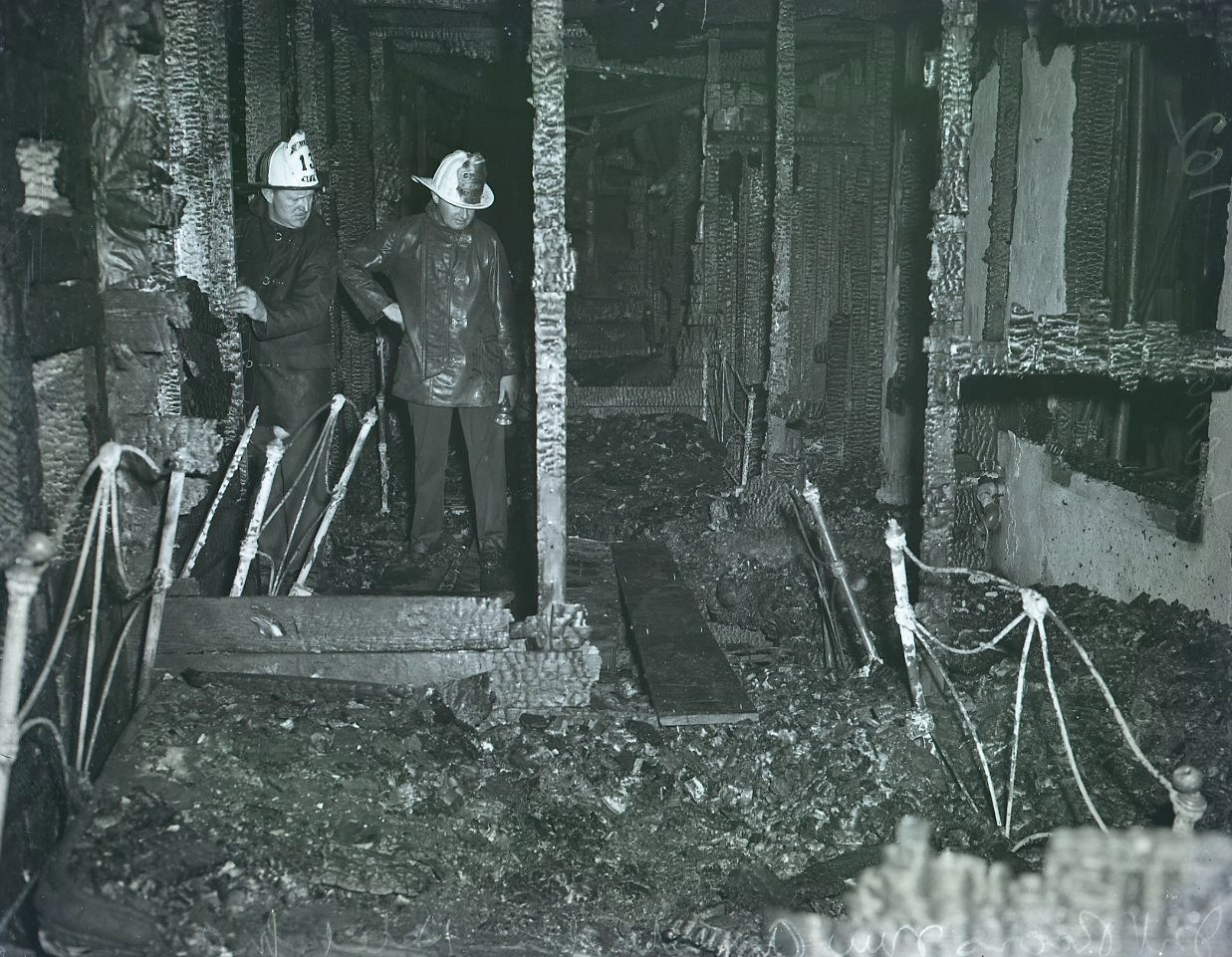 George Holman
Mass murderer · USA · 1944
George Holman was described as a pyromaniac and an arsonist blamed for a deadly…
22 victims
George Holman
Mass murderer · USA · 1944
George Holman was described as a pyromaniac and an arsonist blamed for a deadly…
22 victims
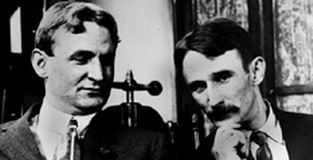 James & John McNamara
Mass murderer · USA · 1910
James B. (“J.B.”) McNamara · John J. (“J.J.”) McNamara · The brothers were Iris…
21 victims
James & John McNamara
Mass murderer · USA · 1910
James B. (“J.B.”) McNamara · John J. (“J.J.”) McNamara · The brothers were Iris…
21 victims
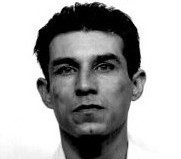 Henry Martinez Porter
Murderer · USA · 1975
July 9, 1985 — Henry Martinez Porter was pronounced dead at 12:31 a. m. followi…
1 victim
Henry Martinez Porter
Murderer · USA · 1975
July 9, 1985 — Henry Martinez Porter was pronounced dead at 12:31 a. m. followi…
1 victim
- Gender
- female
- Country
- Canada
- Location
- Kingston, Ontario, Canada
- Date of birth
- 1968
- Age at first offence
- 41
- Characteristics
- parricide
- Victim profile
- Her three daughters, Zainab, 19, Sahar, 17, and Geeti Shafia, 13; and Rona Mohammad Amir, 50
- Method of murder
- Drowning
- Date(s) of murder
- June 30, 2009
- Years active
- 2009
- Date of arrest
- July 23, 2009
- Status
-
Life imprisonment
Sentenced to life in prison without a possibility of parole for 25 years on January 29, 2012
Other details
Tooba Yahya was a 41-year-old second wife in the polygamous Shafia household. Her husband was Mohammad Shafia. Their eldest son was Hamed Shafia, aged 20. Tooba Yahya was associated with allegations that the family patriarch was upset that his two eldest daughters wanted boyfriends, betraying his traditional Afghan values.
The Crown alleged the family patriarch’s motive involved anger tied to the daughters’ relationships and perceived betrayal of traditional Afghan values. The Crown’s allegations described a so-called honour killing connected to the behaviour of Zainab and Sahar Shafia.
Tooba Yahya was found guilty of four counts of first-degree murder and received life in prison without a possibility of parole for 25 years on January 29, 2012.
Background
The Shafia family left Afghanistan for neighboring Pakistan in 1992. From there they moved to Australia then to the United Arab Emirates for over a decade, where Mohammad Shafia made a fortune in Dubai real estate. They immigrated into Canada and settled in the Saint-Léonard borough of Montreal in 2007.
In 1979 or 1980, Mohammad Shafia married Rona Mohammed, who was infertile and unable to have children. In 1989, he took Tooba Yahya to be his second wife in a polygamous marriage, and she gave birth to seven children. Rona played a crucial role in their upbringing and raised the children as if they were her own.
When the family immigrated to Canada, Rona was presented as an aunt. Except Rona, the rest of the Shafia family practiced Shi'a Islam.
A family member’s interview described Rona as trapped in an abusive, loveless marriage and trying in vain to convince her husband to grant her a divorce. Rona’s siblings claimed that she feared for her life during the days leading up to her death. Tooba Yahya allegedly said to Rona, “You are a slave, you are a servant.”
It was reported that the Shafias held all of Rona’s identity documents, including her passport, so Rona believed she could not flee to another country, where she had relatives. It was reported that Rona came to Canada as a domestic servant on a visitor’s visa and the “[visa's] renewal held over her head like an axe ready to fall” by her husband and co-wife.
Zainab Shafia’s relationship with a Pakistani boy was described as a source of much anger for her father. It was also claimed that the father threatened to kill her.
During the trial, with parents Mohammad Shafia and Tooba Yahya and eldest son Hamed Shafia all in custody, the remaining Shafia children (two girls and a boy) were being cared for under social services.
The offence
The Shafia family murders took place on June 30, 2009 in Kingston, Ontario.
The victims were Zainab Shafia, 19; Sahar Shafia, 17; Geeti Shafia, 13; and Rona Amir Mohammed, 50. The victims were found dead inside a car that was discovered underwater in front of the northernmost Kingston Mills lock of the Rideau Canal on the same day.
Zainab, Sahar, and Geeti were daughters of Mohammad Shafia, 58 and Tooba Mohammad Yahya, 41. The couple also had a son Hamed, 20.
Investigation
On June 30, 2009, a black Nissan Sentra with a broken left taillight was spotted submerged at the Kingston Mills locks, with four female bodies found inside.
Mohammad Shafia was at the Kingston Police station to report that four of their family—three teenage daughters and a purported aunt—were missing. Police initially believed it was a tragic, if bizarre, accident, and first categorized it as a "sudden death investigation".
Authorities learned that Hamed had reported an accident with the family Lexus SUV in an empty parking lot early that same morning in Montreal. Despite suspicions, authorities did not have "reasonable and probable grounds" or sufficient evidence to ask a judge for a search warrant.
Kingston Police Det. Steve Koopman managed to gain the Shafias' consent so they could view the Lexus. After assessing damage on both vehicles, police theorized that the Lexus was used to ram the Nissan into the locks.
It was reported that the Shafia family purchased the used Nissan Sentra for CAD$ 5,000 one day before the family left Montreal for Niagara Falls.
Arrest
On July 23, 2009, Mohammad Shafia, Tooba Yahya, and Hamed were arrested on charges of four counts of first degree murder and conspiracy to commit murder under the guise of honour killing.
Trial
Jury selection began on October 11. The trial officially began on October 20.
The trial was presided over by Ontario Superior Court Judge Robert Maranger. The trial was believed to be a first in Canada conducted in four languages—English, French, Dari and Spanish.
The jury of seven women and five men listened to more than 40 days of proceedings that included delays for a health emergency with Mohammad Shafia, a power outage caused by an ice storm and an evacuation caused by a security threat at the courthouse.
The defence and the Crown addressed evidence, including allegations concerning wiretaps, computer searches, vehicle positioning, and forensic conclusions. The jury heard from collision experts and police witnesses, including testimony relating to damage on the Nissan consistent with contact with the family’s Lexus SUV.
The jury also heard an argument timeline based largely on cellphone records, including the assertion that the accused would not have enough time to drown the women after reaching Kingston just before 2 a.m., and for Hamed to reach Montreal where his phone was recorded at 6:48 a.m. on June 30.
The jury heard evidence about toxicology, and that the victims drowned, with the forensic pathologist stating he could not conclusively tell where the victims drowned or why they sat seemingly calm in the Nissan with the window open and in relatively shallow water.
The prosecution described evidence supporting an involvement in placing the victims into the Nissan and using the SUV to push the Nissan into the locks, including that the car was in first gear when it was pulled from the water with the ignition off and that the headlights were off. The prosecution also described that the girls weren’t wearing seatbelts and that the seats were reclined at an awkward angle. Pieces of the SUV's headlights were found at the scene.
The defence argued that without conclusive proof of how the car went into the water, no one would know exactly what happened that night and it might have been an accident.
Verdict
On January 29, 2012, the jury completed its deliberation after 15 hours and reached a verdict of guilty, four counts of first degree murder for each of the three defendants.
First degree murder carried an automatic sentence of life in prison without a possibility of parole for 25 years.
At the time of the verdict, when Maranger asked whether they wanted to say anything, each declared their innocence.
“We didn't commit the murder and this is unjust,” Mohammad Shafia said through a translator.
“Your honourable justice, this is not just. I am not a murderer and I am a mother,” Yahya said.
Hamed Shafia said in English: “Sir, I did not drown my sisters anywhere.”
Sentencing
On January 29, 2012, Mohammad Shafia, Tooba Yahya, and Hamed Shafia were each handed an automatic life sentence with no chance of parole for 25 years.
“It is difficult to conceive of a more despicable, more heinous crime,” Justice Robert Maranger said.
“The apparent reason behind these cold-blooded, shameful murders was that the four completely innocent victims offended your completely twisted concept of honour … that has absolutely no place in any civilized society.”
Appeals
Hamed Shafia filed notice to appeal his first-degree murder convictions on January 31, 2012.
Mohammad Shafia joined his son in filing an intention to appeal on February 2, 2012.
Tooba Yahya filed an inmate notice of appeal on February 8, 2012, as the first step toward filing a full appeal at a later date.
Aftermath
A publication ban placed on the case prevented the media from naming the four children still alive.
The trial generated widespread media attention in Canada, including debate over whether the killings were properly framed as honour killing or domestic violence, and discussion about Canadian values and the protection of vulnerable immigrant groups.
Statements and reaction recorded during the case
“This jury found that four strong, vivacious and freedom-loving women were murdered by their own family in the most troubling of circumstances. We all think of these four, wonderful women now who died needless deaths. This verdict sends a very clear message about our Canadian values and the core principles in a free and democratic society that all Canadians enjoy and even visitors to Canada enjoy,” Crown attorney Gerard Laarhuis said after the verdicts.
In a statement following the verdict, federal Justice Minister Rob Nicholson called honour killings a practice that was “barbaric and unacceptable in Canada.”
“This government is committed to protecting women and other vulnerable persons from all forms of violence and to hold perpetrators accountable for their acts.”
Islamic organizations and community reaction described during the trial period
Islamic Supreme Council of Canada and other Canadian Muslim organizations publicly denounced domestic violence and honour killing as "un-Islamic".
Ali Falih Altaie, the family imam, said that the murders were "unforgivable", and cautioned against associating honour crimes with Islam, calling the actions incompatible with any religion.
In 2012, imams from across Canada and the U.S. issued a moral ruling condemning honour killings, domestic violence and misogyny as "un-Islamic." Thirty-four imams belonging to the Islamic Supreme Council of Canada, including a handful of American members, signed the fatwa to counter misinterpretations of the Qur'an, they said.
The embassy in Ottawa condemned the murders of four members of a Montreal family originally from Afghanistan, calling the deaths of the three teenaged sisters and their father's first wife "a heinous crime against humanity" and stating that the deaths were not part of Afghan or Islamic culture and “is not acceptable in any way.”
Spotted an error, or have more information about this case?