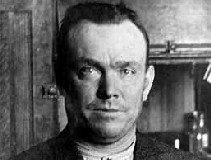
Albert Horsley
Murderer John S. Williams
Murderer · USA · 1910
John S. Williams was convicted of murder and sentenced to life imprisonment on…
18 victims
John S. Williams
Murderer · USA · 1910
John S. Williams was convicted of murder and sentenced to life imprisonment on…
18 victims
 Floyd Allen
Murderer · USA · 1912
Floyd Allen (July 5, 1856 – March 28, 1913) was an American landowner and patri…
5 victims
Floyd Allen
Murderer · USA · 1912
Floyd Allen (July 5, 1856 – March 28, 1913) was an American landowner and patri…
5 victims
 Jackson Lee Davis
Murderer · USA · 1896
Jackson Lee Davis, also known as Diamondfield Jack, was an inmate. · June 4, 18…
2 victims
Jackson Lee Davis
Murderer · USA · 1896
Jackson Lee Davis, also known as Diamondfield Jack, was an inmate. · June 4, 18…
2 victims
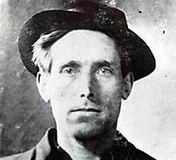 Joe Hill
Murderer · USA · 1914
Joe Hill was a Swedish-American labor activist, songwriter, and member of the I…
2 victims
Joe Hill
Murderer · USA · 1914
Joe Hill was a Swedish-American labor activist, songwriter, and member of the I…
2 victims
 Sheila LaBarre
Murderer · USA · 2005
Sheila LaBarre was convicted of first-degree murders of Kenneth Countie and Mic…
2 victims
Sheila LaBarre
Murderer · USA · 2005
Sheila LaBarre was convicted of first-degree murders of Kenneth Countie and Mic…
2 victims
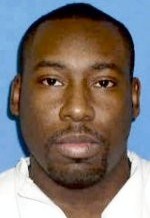 Frederick Patrick McWilliams
Murderer · USA · 1996
Frederick Patrick McWilliams McWilliams was executed by lethal injection in Tex…
1 victim
Frederick Patrick McWilliams
Murderer · USA · 1996
Frederick Patrick McWilliams McWilliams was executed by lethal injection in Tex…
1 victim
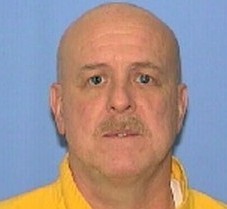 Mark Alan Smith
Serial killer · USA · 1966
Mark Alan Smith was involved in multiple killings and was sentenced to a total…
12 victims
Mark Alan Smith
Serial killer · USA · 1966
Mark Alan Smith was involved in multiple killings and was sentenced to a total…
12 victims
 Alice Njoki
Murderer · Kenya · 2009
Alice Njoki was 27 years old at the time of the sentencing. She had been marrie…
1 victim
Alice Njoki
Murderer · Kenya · 2009
Alice Njoki was 27 years old at the time of the sentencing. She had been marrie…
1 victim
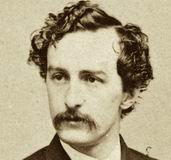 John Wilkes Booth
Assassin · USA · 1865
John Wilkes Booth (May 10, 1838 – April 26, 1865) was an American stage actor w…
1 victim
John Wilkes Booth
Assassin · USA · 1865
John Wilkes Booth (May 10, 1838 – April 26, 1865) was an American stage actor w…
1 victim
- Gender
- male
- Country
- USA
- Location
- Caldwell, Idaho , USA
- Date of birth
- March 18, 1866
- Age at first offence
- 39
- Characteristics
- member of the "texas seven, anarchist, history of mental illness, abuse, torture
- Victim profile
- Frank Steunenberg, former Governor of Idaho
- Method of murder
- B omb rigged to the gate of his house
- Date(s) of murder
- December 30, 1905
- Years active
- 1905
- Date of arrest
- January 1906
- Status
-
Died in custody
Sentenced to death; commuted to life in prison; he died in the Boise penitentiary on April 13, 1954, aged 88, after serving 46 years
Case record: Albert Horsley (Harry Orchard)
STATUS
Albert Edward Horsley was sentenced to death for the 1905 political assassination of former Idaho Governor Frank Steunenberg. His death sentence was commuted to life in prison. He died in the Boise penitentiary on April 13, 1954, aged 88, after serving 46 years.
Background
Albert Edward Horsley was born March 18, 1866, in Wooler, Ontario, Canada, to English and Irish parentage. He was one of eight children in a poor farm family and attended formal school through the third grade. He supported the family by working when he was able.
Albert Horsley worked as a farmhand for neighbors, either on a daily or monthly basis, until he was 20 years old, and his parents received the income. At age 22, Horsley left home to work as a logger in Saginaw, Michigan. He returned to Canada and married around 1889.
Horsley and his wife spent some time cheesemaking, independently and in the employ of others. Horsley’s wife gave birth to a daughter and removed her from their cheese factory. Horsley later recalled that he “lived away beyond my means, and was some in debt, and my credit was not so good.”
Horsley sought to run away with another woman. He burned his cheese factory and collected the insurance money, settling his debts. Horsley abandoned his family and, with his girlfriend, headed west to Pilot Bay, about twenty miles from Nelson, British Columbia. The pair spent three months together there before they split up and went their separate ways. Horsley landed in Spokane, Washington.
In April 1897, Horsley was employed driving a milk wagon to the mining communities around Wallace, Idaho. He worked through 1897, saving money to invest $500 for a 1/16 share of the Hercules silver mine near Burke, toward the end of the year. Horsley quit his milk route and moved to Burke, borrowing money to buy a wood and coal business.
In the spring of 1898, Horsley sold his share of the Hercules mine to pay the debts he incurred, taking a partner into his business to raise funds. His accumulated gambling debts forced him to sell his share of his business in March 1899. He took a job as a “mucker” (shoveler) in the Tiger-Poorman mine near Burke. In this way, Horsley joined the Western Federation of Miners.
Horsley later recalled in his autobiography:
“During all this time I did not save any money, though I worked nearly all the time and always got the highest wages... I made many good resolutions and often saved up a few hundred dollars and thought I would get into some little business for myself. When I would get away from town, as I often did, in some out-of-the-way place, I would save my money and make good resolutions; but how soon I would forget them when I would strike town and see a faro game running, or a game of poker. My money would burn my pocket. There were many other attractions, and money always soon got away. I always bought plenty of good clothes and lived well.”
Steunenberg assassination
On December 30, 1905
On December 30, 1905, Frank Steunenberg, former Governor of Idaho, was killed by a bomb rigged to the gate of his house in Caldwell, Idaho. Frank Steunenberg was serving his second term as governor.
Evening after the bombing
After midnight on the evening of Steunenberg’s murder, Harry Orchard (as Tom Hogan) walked with Clinton Wood, the desk clerk at the hotel in Caldwell, to the site of the assassination, now hours past. Although Orchard did not seem to know the way to the murder scene, Orchard expressed the belief that the governor had been given a “big wad” of money by Idaho mine owners after he left office.
Orchard made no effort to escape. He was later arrested for the assassination. A detective for the Mine Owners’ Association recognized him as Orchard. Orchard responded that his name was Hogan. It was discovered that he was registered at his hotel under the surname Goglan. When Orchard’s room was searched, evidence related to the murder was discovered.
Historian Melvyn Dubofsky theorized that Orchard “may have suffered from a ‘psychotic personality disorder’” that caused him not only to engage in a life of violence, but also, perhaps subconsciously, to set up the circumstances of his own arrest.
The Haywood trial
Confession and cooperation
Under threat of hanging, Orchard made a confession to Pinkerton detective James McParland in the Frank Steunenberg assassination. Orchard confessed as well to the murders of at least sixteen other people. Orchard agreed to testify that the murder of Steunenberg was ordered by William Dudley Haywood, Charles Moyer, and George Pettibone, all leaders of the Western Federation of Miners.
Prosecutors selected Haywood as the first of the three defendants to stand trial because they thought he was the most vulnerable. Prosecutors also believed Haywood’s gnarled physical appearance, his blindness in one eye, and his propensity to use hyperbolic language would make him more likely to be associated with conspiracy and murder in the minds of jurors. McParland had been unable to find corroboration for Orchard’s confession.
Chief prosecuting attorneys were William Borah and James H. Hawley. They were paid in part by money secretly supplied by western mine operators and industrialists. Orchard’s testimony was persuasive to reporters attending the trial. McParland arranged for Orchard’s confession, which he had worked on for fifteen months, to be serialized in a magazine to “reach the largest possible public.”
The defense argued that Orchard had his own, personal motive for murdering Steunenberg. Defense attorneys Clarence Darrow and Edmund F. Richardson argued that if Orchard had not been forced to sell his one-sixteenth share of the mine because of the martial law decree, he would have become wealthy. Orchard denied the accusation.
Evidence and witness issues
The Haywood defense team produced five witnesses from three states who testified that Orchard told them about his anger at Steunenberg. Several of them stated that Orchard vowed to seek revenge against the former Idaho governor. However, the prosecution presented evidence that Orchard sold his share of the mine before the labor troubles began. Darrow later observed that the date of the sale did not seem to matter to Orchard; Darrow said Orchard “tried to sell this interest (again) a year after he had disposed of it.”
The defense presented evidence of extensive infiltration, spying, and sabotage of the WFM by the Pinkertons. One witness was Morris Friedman, James McParland’s former stenographer.
Haywood testified in his own defense and stood up well under five hours of cross-examination.
The defense presented what it claimed was “startling new evidence” about insanity in Orchard’s family, including a grandfather who needed to be “chained up” and an uncle who went insane. Orchard admitted that one of his uncles was “demented” over family problems and had hanged himself, but he testified to knowing nothing about his maternal grandfather, who died before his birth.
Results of the trials
Even before Darrow’s closing argument in the Haywood case, it was clear the prosecution was in trouble. Having relied totally on Orchard’s testimony to make its case against Haywood, the state found the testimony overly ambitious, with Orchard confessing to crimes he could not have committed.
The state of Idaho had provided Orchard with “a library of religious tracts,” which may have influenced his announced conversion to religious belief. Some analysts at the trial opined that “the prosecution let Orchard get away from the facts and his testimony turned into a syrupy story of repentance, religion, and God's mercy to sinners, which had the effect of turning everyone's stomach.”
The Idaho jury found Haywood not guilty. One juror told a reporter: “There was nothing against the accused but inference and suspicion.”
Pettibone was found not guilty in a separate trial after the defense declined to argue the case. Charges against Moyer were dropped.
Steve Adams was tried in three separate trials, resulting in two hung juries in Idaho and an acquittal in Colorado.
After the rest were acquitted and/or released, Orchard was tried alone. He received a death sentence in Idaho for the murder of Steunenberg.
Commutation request and grant
An appeal was made by the prosecution to Idaho Governor Gooding, urging commutation of Orchard’s death sentence for cooperation. This request was granted and Orchard’s sentence was commuted to life in prison.
Harry Orchard’s history of crimes described during testimony
Orchard confessed to playing a violent, and ultimately decisive, role in the Colorado Labor Wars.
During the Haywood trial, Orchard confessed to serving as a paid informant for the Mine Owners Association. He reportedly told a companion, G.L. Brokaw, that he had been a Pinkerton employee for some time.
Orchard was also a bigamist and admitted to abandoning wives in Canada and Cripple Creek. He burned businesses for insurance money in Cripple Creek and Canada. He burglarized a railroad depot, rifled a cash register, stole sheep, and made plans to kidnap children over a debt. He also sold fraudulent insurance policies.
Orchard’s confession to McParland claimed responsibility for seventeen or more murders. Orchard tried to help McParland build a case by implicating Steve Adams as an accomplice, but the effort failed. It revealed details about the methods McParland used to induce defendants to turn state's evidence.
Crimes recited in court: New York Times account
A New York Times report described Orchard sitting in the witness chair at the Haywood trial and reciting “a history of crimes and bloodshed, the like of which no person in the crowded courtroom had ever imagined.” The report stated that the story was told “as simply as the plainest narration of the most ordinary incident of the most humdrum existence.”
The report described that in 1906 Orchard, with another man, placed a bomb in the Vindicator Mine at Cripple Creek, Colorado, which exploded and killed two men. The report described that he informed officials of the Florence and Cripple Creek Railroad of a plot of the Western Federation to “below up one of their trains,” because he had not received money for work done for the federation. It also described that he watched the residence of Gov. Peabody of Colorado and planned his assassination by shooting, with the plan postponed for reasons of policy.
The report described that Orchard shot and killed a deputy, Lyle Gregory, in Denver. It described that Orchard planned and, with another man, executed the blowing up of the railway station at the Independence Mine at Independence, Col., which killed fourteen men.
The report described that Orchard tried to poison Fred Bradley, manager of the Sullivan and Bunk Hill mine, who was living in San Francisco, by putting strychnine into his milk left at his door in the morning. The report stated that this failed, and that in November 1904 Orchard arranged a bomb that blew Bradley into the street when Bradley opened his door.
Court proceedings details in the New York Times account
The report described Orchard’s arrival at the courthouse, being brought from the Sheriff's office by back stairs “built especially for this trial,” and being guarded by deputy sheriffs, penitentiary guards, and detectives. It described a command from a deputy: “Sit down!” The report described Ras Beemer entering followed closely by Orchard with guards and detectives.
The report stated that Senator Borah went on with the line of proof developed the previous afternoon and summoned several hotel keepers to prove that Orchard and Jack Simpkins had been together at Caldwell and other places near there in the Fall of 1905 before the Steunenberg murder. Men from Caldwell, Nampa, and Silver City identified their registers and the signature of Orchard and Simpkins (or Simmons). The report described a young bank clerk from Wallace who testified about teaching Simpkins to write and identified a photograph as the writing of Simpkins and the signatures of Simmons in different hotel registers.
When the bank clerk was excused, the report attributed a remark to Senator Borah: “The next witness will be here in a few minutes.”
The report described Orchard’s demeanor and oath-taking. It stated that Beemer took Orchard by the shoulder and turned him so that he saw the clerk, and then Orchard raised his right arm and took the oath “in a clear voice.” The report described Orchard telling the story of his birth in North Cumberland County, Ontario, forty-one years ago, and giving his true name as Albert E. Horseley. The report stated he used the name of Orchard for eleven years since he came to the United States from Canada.
The report described Orchard as a cheesemaker in Canada, then driving a milk wagon in that state for a time, and then owning and running a wood yard up in the Coeur d'Alenes.
The report stated that Orchard began by his own admission within a month after selling his wood yard and joining the Miner's Union at Burke.
The report described Orchard’s first admission in court after Hawley asked, “Who lit them?” and Orchard replied, “I lit one,” adding, “I don't know who lit the others.” The report described Richardson objecting to keep out the story and Hawley and Borah winning on rulings.
The report included a dispute between Richardson and Senator Borah about theory and responsibility. Richardson asked, “On what theory can it be shown that Haywood was responsible for all of this?” and Senator Borah replied, “The theory of the State is that out of this trouble grew the feeling against Steunenberg which prevailed in the inner circle when Haywood later became a member of it,” and added, “the feeling which directly caused that murder. Haywood became a partisan of the Western Federation and had that feeling, and on that we shall show his responsibility.”
The report included another quoted exchange about Paul Corcoran’s argument at a Burke union meeting. Orchard said, “Corcoran said that there would be no trouble with Steunenberg,” and continued, “He said the unions had always supported Steunenberg and owned him. We only had to look out for the regulars.”
The report described Orchard’s narrative of union debate and the Burke Union’s decision, including that there was an “argument between Paul Corcoran, the Secretary, and Bill Devery, the President, over the proposition to go to Wardner and destroy the mill "and hang the Superintendent."” It stated that “By a bare majority vote, he said, the Burke Union decided to go.”
The report described Orchard telling about blowing up the Bunker Ill and Sullivan Mill at Wardner, on April 29, 1898.
Details of further confessions described in the New York Times account
The New York Times report also described Orchard’s statements and characterizations during his testimony, including that he was “self-possessed, imperturbable murderer witness,” and it provided narrative descriptions of his voice and manner.
The report described Haywood sitting with his lawyers and giving unwavering attention. It described Mrs. Haywood sitting beside her husband and it described Haywood’s mother, Mrs. Crothers, and half-sister, Miss Crothers.
The report described that the courtroom was not even filled when Orchard was called to the stand and that it was known he had been brought in from the penitentiary last and would not come in until the afternoon session. It described court opening at 9 o’clock and Senator Borah continuing proof the previous afternoon.
The report described Orchard’s entrance and that he was kept overnight at Hawley’s office under guard “of Deputy Sheriffs, penitentiary guards, and detectives.”
The report described the impact of Orchard’s testimony and included narrative descriptions of how the story was received. It stated that the report’s author believed Orchard’s story and said, “Today he forced on me the conviction that he was telling what had happened as it occurred.”
The report described that Orchard claimed a man who had done a great wrong could never hope to atone for all of it, but that he believed he “ought to do what he could to set matters as far straight as possible.”
The report described the narrative of Orchard’s wandering in Utah, California, Nevada, and elsewhere for three years or more, until he reached the Cripple Creek area in July 1902. It described that in those tasks he carried out tasks assigned by employers.
It included narrative details on crimes such as the blowing up of the Vindicator shaft at Cripple Creek and the killing of McCormick and Beck, manager and shift boss of the mine. It described an attempt to blow up Bradley in San Francisco, and it described “the ghastly massacre of non-union men at the Independence Depot because Haywood thought it necessary to get up some excitement to prevent a split in the Federation.”
The report described that Orchard told of “pulling the wire that exploded the bomb at Independence” and that Orchard described placing strychnine in milk left on Bradley’s doorstep.
The report described Orchard’s account of killing Lyle Gregory, stating he followed Gregory about the streets of Denver in the night and shot him in the back. The report included the line: “When he said, "and then I shot him," his manner and tone were as matter-of-fact as if the words had been "and then I bought a drink."”
The report also described Orchard’s narration about names of men for whom he worked and who assisted. It stated “Haywood as the master” and described that Pettibone gave directions, furnished money, and in one instance started out as if to help but made excuse and turned back in the Gregory murder. The report described that Haywood was the source of money and that even what Pettibone gave him came from Haywood. It described that Moyer was named occasionally. It described additional names including W. F. Davis, Sherman Parker, Charley Kennison, and W. B. Easterly Financial Secretary of Orchard's own union. It stated that Parker was dead and that he was shot a little while ago in Goldfield.
Last years and death
Orchard converted to Seventh-Day Adventism soon after receiving his sentence. He was buried in Morris Hill Cemetery, Boise.
Spotted an error, or have more information about this case?