Rebecca Fincham Davis
Murderer Bobbie Sue Terrell
Murderer · USA · 1984
Bobbie Sue Dudley Terrell was a Pinellas County nurse and worked as the night s…
12 victims
Bobbie Sue Terrell
Murderer · USA · 1984
Bobbie Sue Dudley Terrell was a Pinellas County nurse and worked as the night s…
12 victims
 Megan Huntsman
Murderer · USA · 1996
Megan Huntsman was 40 at sentencing. She was a mother of three children who wer…
6 victims
Megan Huntsman
Murderer · USA · 1996
Megan Huntsman was 40 at sentencing. She was a mother of three children who wer…
6 victims
 Angela Johnson
Murderer · USA · 1993
Angela Jane Johnson was convicted in federal court of aiding and abetting the m…
5 victims
Angela Johnson
Murderer · USA · 1993
Angela Jane Johnson was convicted in federal court of aiding and abetting the m…
5 victims
 Catherine May Wood
Murderer · USA · 1987
Catherine May Wood was an American caregiver who worked at the Alpine Manor Nur…
5 victims
Catherine May Wood
Murderer · USA · 1987
Catherine May Wood was an American caregiver who worked at the Alpine Manor Nur…
5 victims
 Michele Kalina
Murderer · USA · 1996
Michele Kalina pleaded guilty to murder for one of five infants she initially w…
5 victims
Michele Kalina
Murderer · USA · 1996
Michele Kalina pleaded guilty to murder for one of five infants she initially w…
5 victims
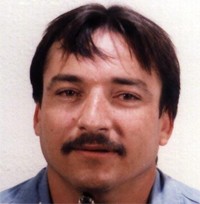 Ramon Salcido
Spree killer · USA · 1989
Defendant: Ramón Bojorquez Salcido Name used in appellate materials: Ramon Bojo…
7 victims
Ramon Salcido
Spree killer · USA · 1989
Defendant: Ramón Bojorquez Salcido Name used in appellate materials: Ramon Bojo…
7 victims
 Manling Williams
Murderer · USA · 2007
Manling Tsang Williams was 32 years old at sentencing and lived in a Rowland He…
3 victims
Manling Williams
Murderer · USA · 2007
Manling Tsang Williams was 32 years old at sentencing and lived in a Rowland He…
3 victims
 Wyley Gates
Homicide · USA · 1986
Wyley Gates was a 17-year-old computer whiz and honors student who was describe…
4 victims
Wyley Gates
Homicide · USA · 1986
Wyley Gates was a 17-year-old computer whiz and honors student who was describe…
4 victims
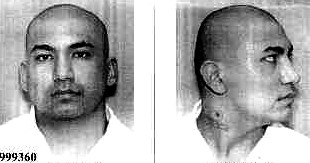 Juan Martin Garcia
Murderer · USA · 1998
Juan Martin Garcia was convicted of capital murder in Harris County, Texas, und…
1 victim
Juan Martin Garcia
Murderer · USA · 1998
Juan Martin Garcia was convicted of capital murder in Harris County, Texas, und…
1 victim
 Dalton Prejean
Homicide · USA · 1974
Dalton Prejean Dalton Prejean (December 10, 1959 - May 18, 1990) was an America…
2 victims
Dalton Prejean
Homicide · USA · 1974
Dalton Prejean Dalton Prejean (December 10, 1959 - May 18, 1990) was an America…
2 victims
 Joe Angel Cordova
Murderer · USA · 1982
Feb. 27, 1982 — Cordova, his 16-year-old nephew, and two other teens abducted M…
1 victim
Joe Angel Cordova
Murderer · USA · 1982
Feb. 27, 1982 — Cordova, his 16-year-old nephew, and two other teens abducted M…
1 victim
- Gender
- female
- Country
- USA
- Location
- Arapahoe County, Colorado, USA
- Date of birth
- ????
- Characteristics
- kidnapping, rape
- Victim profile
- Virginia May, 34
- Method of murder
- Shooting ( .22 rifle)
- Date(s) of murder
- July 21, 1986
- Years active
- 1986
- Date of arrest
- —
- Status
-
Life imprisonment
Sentenced to life in prison in 1987
Other details
Rebecca Fincham Davis was the defendant in a Colorado appellate case titled PEOPLE v. FINCHAM, No. 87CA1248, 799 P.2d 419 (1990). The appellate decision was dated May 24, 1990. Rehearing was denied on July 5, 1990. Certiorari was denied on November 13, 1990. The People of the State of Colorado were the plaintiff-appellee and Rebecca Fincham was the defendant-appellant (a/k/a Rebecca Fincham Davis).
Duane Woodard, Atty. Gen., Charles B. Howe, Chief Deputy Atty. Gen., Richard H. Forman, Sol. Gen., and Hope P. McGowan, Asst. Atty. Gen., Denver, appeared for the plaintiff-appellee. David F. Vela, Colorado State Public Defender, and Barbara S. Blackman, Chief Appellate Deputy State Public Defender, Denver, appeared for the defendant-appellant. The opinion was by Judge MARQUEZ.
Rebecca Fincham Davis was convicted in connection with the kidnapping and murder of Virginia May, in which she and her former husband, Gary Davis, were convicted and sentenced in separate trials.
Trial
Rebecca Fincham, identified as Rebecca Fincham Davis, appealed the judgment of conviction entered upon jury verdicts finding her guilty of:
- first degree murder after deliberation
- first degree felony murder
- conspiracy to commit first degree murder after deliberation
- second degree kidnapping
- conspiracy to commit second degree kidnapping
- accessory to crime
The appellate court affirmed in part, vacated in part, and remanded for further proceedings.
Legal issues on appeal
I. Statements of Gary Davis and the Confrontation Clause
Rebecca Fincham contended that the admission into evidence of the statements of Gary Davis, who did not testify at her trial, violated her constitutional right of confrontation. The appellate court addressed the statements Davis made to members of the sheriff’s office, noting that the statements had been redacted to omit references to the defendant.
The trial court found that Gary Davis was “unavailable” under CRE 804 by virtue of having asserted his Fifth Amendment privilege against self-incrimination. The appellate court concluded that, for purposes of a Confrontation Clause analysis, Gary Davis was “unavailable.”
The appellate court stated that the trial court should have inquired whether the statements contained sufficient “indicia of reliability” to overcome their presumptive unreliability, citing People v. Drake. The trial court had ruled only that statements “having to do with [Gary] Davis himself” would be admissible since they were statements against his penal interest. The appellate court noted no express finding of reliability was made by the court with respect to Gary Davis’ confession.
The appellate court held that even if the absence of appropriate findings concerning the reliability of Davis’ statements made their admission erroneous, the error was harmless beyond a reasonable doubt. It reasoned that Rebecca Fincham chose to testify at trial and, through her own testimony, admitted she was present when the victim was placed in the car and that she drove the vehicle to the location where the victim’s body was later found, relating many of the same facts contained in Gary Davis’ statement. The court further noted that references to the defendant were excised from Gary Davis’ statement.
II. Excluded evidence about dependent personality disorder
Rebecca Fincham argued that the trial court erred in refusing to permit defense witnesses to testify regarding her dependent personality as it related to culpable mental states of the charged offenses and to available defenses. The appellate court rejected this argument.
Rebecca Fincham sought to present testimony from two psychiatrists tending to establish that she exhibited a dependent personality disorder. The trial court disallowed the evidence on the ground that Rebecca Fincham failed to raise the affirmative defense of impaired mental condition, which must be raised at arraignment or, upon good cause shown, at any time prior to trial.
The appellate court agreed with the trial court that the testimony was inadmissible. It addressed that Rebecca Fincham argued the evidence was introduced not to prove an impaired mental condition but to establish she lacked the required culpable mental state because of a tendency to yield to persons perceived as in charge or to weakly resist actions. The appellate court stated that no offer of proof was given as to the distinction and that it was not persuaded by the argument. It also concluded that the evidence sought to be introduced was evidence of mental condition rather than state of mind, and that because the defense was waived, arguments for admissibility under the rules of evidence were without merit.
III. Hearsay statements of the victim’s children
Rebecca Fincham contended that the trial court erred in admitting hearsay statements of the victim’s children. The appellate court rejected this contention.
The appellate court stated that courts look primarily to the effect of a particular event upon the declarant, and if satisfied the event was sufficient to cause adequate excitement, the inquiry ends. It stated that the passage of time is significant but not conclusive because the element of trustworthiness in the case of young children finds its source primarily in lack of capacity to fabricate rather than lack of time to fabricate.
The appellate court also concluded that general questions preceding the hearsay declarations did not destroy their character as excited utterances. It found that the children’s statements concerned a sufficiently startling event: the violent kidnapping of their mother from their home. The statements were made less than two hours after the event, and were in response only to very general questions by their father. It further noted that according to the father, one of the children started to cry when making the statements. The appellate court stated that the substance of the children’s statements was corroborated by Rebecca Fincham’s own testimony at trial placing her at the victim’s ranch with Gary Davis at the time of the abduction. The appellate court therefore found no error in admitting the children’s statements.
IV. Motion for mistrial based on advisory witness statements
Rebecca Fincham contended that the trial court abused its discretion by failing to declare a mistrial or to preclude further testimony after an advisory witness twice referred to inadmissible evidence.
The appellate court stated that while a trial court has broad discretion to declare a mistrial, a mistrial is a drastic action warranted only when prejudice to the accused is too substantial to be remedied by other means.
It concluded that the advisory witness’ testimony that he went with the victim’s children to the tool shed and “had them describe what happened” was not hearsay and was not inculpatory. For the second statement—about noticing “there was a lot of sexual paraphernalia and magazines”—the trial court found for the record that the violation of the court’s prior orders limiting testimony had not been aggravated or intentional, and offered a cautionary instruction. The defense rejected that offer. The appellate court also noted that the court stated it would consider Rebecca Fincham’s request to prohibit the witness from testifying further if another violation occurred and cautioned the witness not to mention sexual items. The appellate court concluded that under all circumstances, the two statements did not amount to prejudice warranting reversal of the denial of her motion for a mistrial.
V. Prosecutor’s closing argument comments
Rebecca Fincham argued that prejudice arose due to the prosecutor’s comments during closing argument. The appellate court rejected the argument, noting there was no objection to this argument and that, because the jury is presumed to have followed court instructions, she failed to show unfair prejudice resulting from the prosecutor’s comments.
VI. Pattern jury instruction on affirmative defenses
Rebecca Fincham contended that the trial court erred in rejecting the pattern jury instruction on affirmative defenses. The appellate court stated that considered as a whole, the court’s instructions did not constitute reversible error.
The appellate court quoted the general instruction on affirmative defenses tendered by Rebecca Fincham, which the trial court had rejected because it quoted COLJI-Crim. No. 7:01 (1983), providing:
“The evidence presented in this case has raised an affirmative defense. The prosecution has the burden of proving the guilt of the defendant to your satisfaction beyond a reasonable doubt as to the affirmative defense, as well as to all the elements of the crime charged. After considering the evidence concerning the affirmative defense, with all the other evidence in this case, if you are not convinced beyond a reasonable doubt of the defendant's guilt, you must return a verdict of not guilty.” (emphasis added)
The appellate court quoted the trial court’s explanation for rejecting the proposed instruction:
“The instruction ... makes comment on the evidence, an affirmative defense has been presented by evidence. Court feels this is an issue for the jury to determine.” (emphasis added)
The appellate court also quoted the instruction the trial court gave instead:
“If you find that the evidence presented in this case has raised an affirmative defense, the prosecution has the burden of proving the guilt of the defendant to your satisfaction beyond a reasonable doubt as to the affirmative defense....” (emphasis added)
The appellate court agreed with Rebecca Fincham that the threshold determination of whether an affirmative defense has been raised by the evidence must be made by the court and not the jury. It also agreed that the instruction given by the trial court should not have been given and that the court should have used the pattern instruction.
However, the appellate court concluded that, as a whole, the jury instructions did not constitute reversible error because the purpose of the instruction was to inform the jury that once an affirmative defense was raised, the prosecution had the burden of proving guilt beyond a reasonable doubt as to the affirmative defense. It held that the jury was specifically instructed on presumption of innocence and the prosecution’s burden of proving all elements beyond a reasonable doubt, and that among the elements of each crime charged were included the words “without the affirmative defense in instruction number __.” The appellate court therefore concluded that the jury was adequately informed and the instructions did not relieve the prosecution of its burden of proof on affirmative defenses.
Sentencing and outcome
The appellate court vacated the judgment of conviction for first degree felony murder and remanded for resentencing and amendment of the mittimus. It affirmed the judgments of conviction and sentences for:
- second degree kidnapping
- accessory to crime
In discussing sentencing, the appellate court addressed issues about multiple sentences and the number of judgments of conviction for premeditated murder, felony murder, and second degree kidnapping when there was only one victim. It stated that only one judgment of conviction may be imposed for first degree murder when there is only one victim. It also held that conviction for felony murder, predicated on kidnapping, precluded simultaneous conviction of the lesser included offense of kidnapping. It concluded that judgments should have been entered for first degree murder after deliberation and for second degree kidnapping, but not also for first degree felony murder.
The appellate court rejected Rebecca Fincham’s argument that the consecutive thirty-year sentence for conspiracy should be vacated, stating that a trial court retains discretion to impose consecutive or concurrent sentences under the cited statute where multiple counts are not supported by identical evidence, and it found evidence supportive of conspiracy distinct from evidence of the underlying crimes and sufficient aggravating conduct.
The appellate court therefore remanded solely for resentencing consistent with its views.
Sternberg and Criswell, JJ., concurred.

Spotted an error, or have more information about this case?