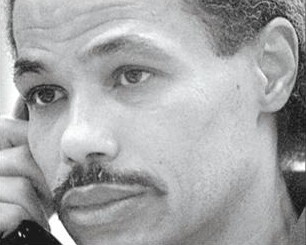
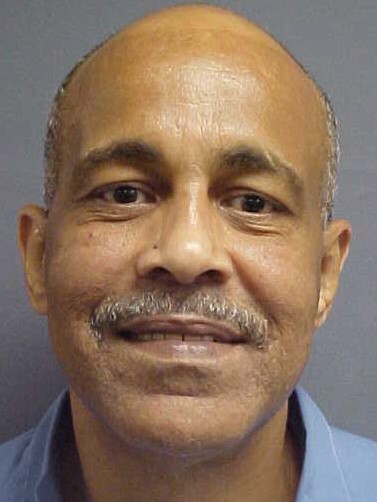
Willie Lloyd Turner
Murderer Ervil LeBaron
Murderer · USA · 1972
Ervil Morrell LeBaron (1925 to August 16, 1981) was the leader of a polygamous…
35 victims
Ervil LeBaron
Murderer · USA · 1972
Ervil Morrell LeBaron (1925 to August 16, 1981) was the leader of a polygamous…
35 victims
 Marvin Gray
Murderer · USA · 1975
Marvin Gray was convicted killer who claimed responsibility for 23 slayings and…
23 victims
Marvin Gray
Murderer · USA · 1975
Marvin Gray was convicted killer who claimed responsibility for 23 slayings and…
23 victims
 Yahweh ben Yahweh
Murderer · USA · 1980
Yahweh ben Yahweh was born and legally named Hulon Mitchell Jr. (October 27, 19…
23 victims
Yahweh ben Yahweh
Murderer · USA · 1980
Yahweh ben Yahweh was born and legally named Hulon Mitchell Jr. (October 27, 19…
23 victims
 Charles Manson
Murderer · USA · 1969
Charles Milles Manson (born November 12, 1934) was an American criminal and mus…
9 victims
Charles Manson
Murderer · USA · 1969
Charles Milles Manson (born November 12, 1934) was an American criminal and mus…
9 victims
 Paul David Bailey
Murderer · and make sure he never gets out." Safe-Nz.org.nz Paul David Bailey home last updates contact · 1991
Paul David Bailey was a convicted serial rapist. The Departmental psychologist’…
1 victim
Paul David Bailey
Murderer · and make sure he never gets out." Safe-Nz.org.nz Paul David Bailey home last updates contact · 1991
Paul David Bailey was a convicted serial rapist. The Departmental psychologist’…
1 victim
 Toni Fratto
Murderer · USA · 2011
Toni Fratto was a 19-year-old in Elko District Court, where her parents watched…
1 victim
Toni Fratto
Murderer · USA · 2011
Toni Fratto was a 19-year-old in Elko District Court, where her parents watched…
1 victim
 Jamaal Howard
Murderer · USA · 2000
Name: Jamaal Howard · TDCJ Number: 999383 · Date of Birth: 02/08/1980 · Convict…
1 victim
Jamaal Howard
Murderer · USA · 2000
Name: Jamaal Howard · TDCJ Number: 999383 · Date of Birth: 02/08/1980 · Convict…
1 victim
 John Salvi
Murderer · USA · 1994
John C. Salvi III (March 2, 1972 – November 29, 1996) was identified as an anti…
2 victims
John Salvi
Murderer · USA · 1994
John C. Salvi III (March 2, 1972 – November 29, 1996) was identified as an anti…
2 victims
- Gender
- male
- Country
- USA
- Location
- Southampton County, Virginia, USA
- Date of birth
- 1946
- Age at first offence
- 24
- Characteristics
- robbery
- Victim profile
- Man (inmate) / W. Jack Smith, Jr. (jewelry store owner)
- Method of murder
- ??? / Shooting
- Date(s) of murder
- 1970's / 1978
- Years active
- 1970–1978
- Date of arrest
- J uly 12, 1978
- Status
-
Executed
Executed by lethal injection in Virginia on May 25, 1995
Case record: Willie Lloyd Turner
STATUS
Willie Lloyd Turner was executed by lethal injection in Virginia on May 25, 1995.
Background
Willie Lloyd Turner was indicted in Virginia on charges of capital murder for fatally shooting the white proprietor of a jewelry store in the course of a robbery. Turner was a black man.
During voir dire, the state trial judge refused Turner’s request to question the prospective jurors on racial prejudice. The jury convicted Turner, and after a separate sentencing hearing, recommended that he be sentenced to death, a recommendation the trial judge accepted.
The Virginia Supreme Court upheld the death sentence, rejecting Turner’s argument that the trial judge deprived him of a fair trial by refusing to question the prospective jurors on racial prejudice. Turner then sought habeas corpus relief in Federal District Court, which rejected the same argument and denied relief, and the Court of Appeals affirmed. The U.S. Supreme Court reversed and remanded.
The U.S. Supreme Court case was Turner v. Murray, Director, Virginia Department of Corrections, certiorari to the United States Court of Appeals for the Fourth Circuit (No. 84-6646). The case was argued December 12, 1985 and decided April 30, 1986.
The offence
On July 12, 1978, Turner entered a jewelry store in Franklin, Virginia, armed with a sawed-off shotgun. He demanded that the proprietor, W. Jack Smith, Jr., put jewelry and money from the cash register into some jewelry bags. Smith complied, but triggered a silent alarm, alerting the Police Department.
When Alan Bain, a police officer, arrived to inquire about the alarm, Turner surprised him and forced him to surrender his revolver. Having learned that Smith had triggered a silent alarm, Turner became agitated. He fired toward the rear wall of the store and stated that if he saw or heard any more police officers, he was going to start killing those in the store.
When a police siren sounded, Turner walked to where Smith was stationed behind a counter and, without warning, shot Smith in the head with Bain’s pistol, wounding Smith and causing him to slump incapacitated to the floor. Officer Bain attempted to calm Turner, promising to take him anywhere he wanted to go and asking him not to shoot again.
Turner angrily replied that he was going to kill Smith for "snitching," and fired two pistol shots into Smith’s chest, fatally wounding him.
As Turner turned away from shooting Smith, Bain was able to disarm Turner and place him under arrest.
In addition to Smith and Bain, a store employee and two customers were present at the time.
Investigation
A Southampton County, Virginia, grand jury indicted Turner on charges of capital murder, use of a firearm in the commission of a murder, and possession of a sawed-off shotgun in the commission of a robbery.
Turner requested and was granted a change of venue to Northampton County, Virginia, a rural county some 80 miles from the location of the murder.
Prior to the commencement of voir dire, Turner’s counsel submitted to the trial judge a list of proposed questions, including the following:
- "`The defendant, Willie Lloyd Turner, is a member of the Negro race. The victim, W. Jack Smith, Jr., was a white Caucasian. Will these facts prejudice you against Willie Lloyd Turner or affect your ability to render a fair and impartial verdict based solely on the evidence?'"
The judge declined to ask this question, stating that it "has been ruled on by the Supreme Court."
The judge did ask the venire, who were questioned in groups of five in Turner’s presence, whether any person was aware of any reason why he could not render a fair and impartial verdict, to which all answered "no." At the time the question was asked, the prospective jurors had no way of knowing that the murder victim was white.
Trial
The jury that was empaneled consisted of eight whites and four blacks. Turner was convicted on all of the charges against him.
Following a separate sentencing hearing on the capital charge, the jury recommended that Turner be sentenced to death. The trial judge accepted that recommendation.
Turner appealed his death sentence to the Virginia Supreme Court. Among other points, he argued that the trial judge deprived him of his constitutional right to a fair and impartial jury by refusing to question prospective jurors on racial prejudice. The Virginia Supreme Court rejected this argument, relying on Ristaino v. Ross, and held that:
- "[T]he mere fact that a defendant is black and that a victim is white does not constitutionally mandate . . . an inquiry [into racial prejudice]."
Having failed in his direct appeal, Turner sought habeas corpus relief in the Federal District Court for the Eastern District of Virginia. The District Court rejected the same argument.
The District Court noted that in Ristaino, the defendant was charged in a crime of interracial violence and inquiry into racial prejudice at voir dire was not constitutionally required because the facts of the case did not suggest a significant likelihood that racial prejudice might infect the trial.
The United States Court of Appeals for the Fourth Circuit affirmed the District Court’s denial of habeas corpus relief.
The U.S. Supreme Court granted certiorari, and reversed.
Quotations from the judicial decision (verbatim)
Justice White delivered the opinion of the Court with respect to Parts I and III and concluded that a defendant accused of an interracial capital crime is entitled to have prospective jurors informed of the victim's race and questioned on the issue of racial bias. Justice White stated:
- "This rule is minimally intrusive."
Justice White also stated:
- "Also, a defendant cannot complain of a failure to question the venire on racial prejudice unless he has specifically requested such an inquiry."
On the sentencing proceeding, the Court held:
- "The risk that racial prejudice may have infected petitioner's capital sentencing is unacceptable in light of the ease with which that risk, being especially serious in view of the finality of the death sentence, could have been minimized."
And the Court further held:
- "While it is not necessary that petitioner be retried on the issue of guilt, there was an unacceptable risk of racial prejudice infecting the capital sentencing proceeding, and the inadequacy of the voir dire requires that his death sentence be vacated."
The Court concluded in Part IV:
- "We hold that a capital defendant accused of an interracial crime is entitled to have prospective jurors informed of the race of the victim and questioned on the issue of racial bias."
The Court held:
- "The rule we propose is minimally intrusive"
And:
- "Because of the range of discretion entrusted to a jury in a capital sentencing hearing, there is a unique opportunity for racial prejudice to operate but remain undetected."
The Court also stated:
- "In the present case, we find the risk that racial prejudice may have infected petitioner's capital sentencing unacceptable in light of the ease with which that risk could have been minimized."
The Court’s holding regarding the outcome of the case was:
- "The judgment of the Court of Appeals is reversed, and the case is remanded for further proceedings consistent with this opinion."
Sentencing
After a separate sentencing hearing, the jury recommended that Turner be sentenced to death, and the trial judge accepted the recommendation.
Turner was sentenced to death.
Appeals
Turner v. Commonwealth (Virginia Supreme Court) upheld the death sentence and rejected the argument about voir dire and racial prejudice.
Turner v. Bass (U.S. Court of Appeals for the Fourth Circuit) affirmed the denial of habeas corpus relief.
Turner v. Murray, Director, Virginia Department of Corrections (U.S.
Outcome
Turner was executed by lethal injection in Virginia on May 25, 1995.
While incarcerated, Turner vexed prison officials by helping to plot the 1984 escape of six fellow inmates from death row at Mecklenburg Correctional Center.
Officials also said that, after his execution, a loaded pistol found in a typewriter belonging to Turner was apparently planted and that a lawyer’s report about finding the weapon must be part of a hoax.
In the aftermath described:
- Turner’s lawyer, Walter J. Walvick of Washington, reported finding the gun three hours after Turner died.
- The report said that Walvick discovered the .32-caliber Smith & Wesson and 18 rounds of ammunition after following Turner’s instructions to open the typewriter after the execution.
- Prison officials said that Turner had reached the typewriter through the bars of his cell until just before he was executed.
- Prison officials said fingerprints were not found on the gun and that the lawyer had improperly taken the typewriter.
- The department’s director, Ronald J. Angelone, said:
- "Much has been said about the fact that this was Willie Lloyd Turner's last attempt to embarrass the Department of Corrections,"
- "People that knew Turner have indicated that they believe that he would have wanted to leave his signature on that gun in the form of fingerprints,"
- "There is no reason why inmate Turner would have wiped the fingerprints clean before placing the gun in the typewriter."
- Gov. George F. Allen said on statewide radio that the incident might be "just a stunt by a defense attorney."
Walvick denied staging the event and said:
- "People's lives were at risk,"
- "The Department of Corrections has a security problem that needs fixing. All I can say is, the Governor must be embarrassed."
- Walvick also said he had pried open the machine in the presence of two newspaper reporters, but corrections department officials found the circumstances suspicious.
- Corrections department officials said Walvick broke the department’s chain of custody of the evidence by removing the typewriter from the institution without an inspection.
Laura LaFay of The Virginian-Pilot in Norfolk said that Turner had implied during an interview with her before his death that he had a gun, and that at the time she considered the claim implausible.
The report said the investigation was closed because there was no evidence to support Walvick’s contention that the gun was ever inside the prison.
Walvick said that after one raid on Turner’s cell:
- "The investigator told me Willie had keys that would have gotten him through every door but the last one."
Walvick said security was so tight in the cells where the condemned spend their last weeks that Turner must have had the gun for years.
The aftermath also stated that Turner, 49, died by lethal injection at Greensville Correctional Center, in Jarratt, for the 1978 slaying of a jewelry store owner in Turner’s hometown of Franklin.
It stated that Turner had previously committed one murder in prison during the 1970’s and that he also was convicted of killing a fellow inmate and escaping three times.
Other details
Victim
W. Jack Smith, Jr., a jewelry store proprietor, was fatally shot.
The victim’s death was described as occurring during an armed robbery of a jewelry store in Franklin, Virginia.
The incident was described as a slaying of a jewelry store owner in Turner’s hometown of Franklin.
People
- Alan Bain: a police officer who arrived to inquire about the silent alarm and later disarmed Turner and placed him under arrest.
- Walter J. Walvick: Turner’s lawyer.
- Ronald J. Angelone: director of the Department of Corrections.
- George F. Allen: governor.
- Laura LaFay: reporter of The Virginian-Pilot in Norfolk.
Prior criminal conduct while incarcerated
The aftermath described that while incarcerated Turner helped plot the 1984 escape of six fellow inmates from death row at Mecklenburg Correctional Center, and that Turner previously committed one murder in prison during the 1970’s.
It also stated that Turner was convicted of killing a fellow inmate and escaping three times.
Firearm in prison
A loaded pistol was described as being found in a typewriter belonging to Turner after the execution, and officials said it was apparently planted. The report described a three-page statement by prison officials and statements about chain of custody and fingerprints.
U.S. Supreme Court procedural details
The decision reversed and remanded the judgment of the Court of Appeals. The decision included opinions and dissents by Justices including JUSTICE WHITE, JUSTICE BLACKMUN, JUSTICE STEVENS, JUSTICE O’CONNOR, BURGER, C. J., BRENNAN, J., MARSHALL, J., POWELL, J., and REHNQUIST as joined by other Justices in the dissents and concurrences.
Multiple footnotes were included in the decision text, including statements about the case’s travel through layers of review and descriptions of prior trial and post-conviction proceedings.
Spotted an error, or have more information about this case?