
Sukhwinder Dhillon
Serial killer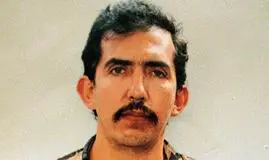 Luis Alfredo Garavito
Serial killer · Colombia/Ecuador · 1992
Luis Alfredo Garavito Cubillos, also known as "La Bestia" ("The Beast") or "Tri…
192 victims
Luis Alfredo Garavito
Serial killer · Colombia/Ecuador · 1992
Luis Alfredo Garavito Cubillos, also known as "La Bestia" ("The Beast") or "Tri…
192 victims
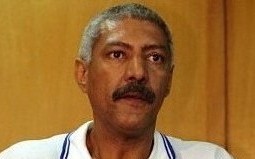 Edson Isidoro Guimaraes
Serial killer · Brazil · 1999
Edson Isidoro Guimarães was a Brazilian nursing assistant and nurse’s aide at S…
131 victims
Edson Isidoro Guimaraes
Serial killer · Brazil · 1999
Edson Isidoro Guimarães was a Brazilian nursing assistant and nurse’s aide at S…
131 victims
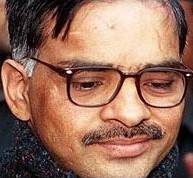 Javed Iqbal
Serial killer · Pakistan · 1998
Javed Iqbal (born 1956 in Lahore, Punjab, Pakistan; died October 8, 2001, in La…
100 victims
Javed Iqbal
Serial killer · Pakistan · 1998
Javed Iqbal (born 1956 in Lahore, Punjab, Pakistan; died October 8, 2001, in La…
100 victims
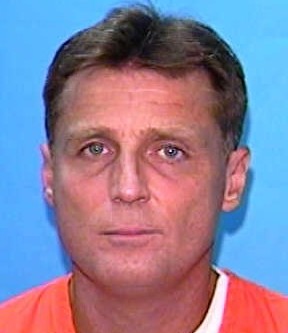 Glen Edward Rogers
Serial killer · USA · 1993
Glen Edward Rogers was a spree killer whose cross-country rampage in 1994-95 le…
70 victims
Glen Edward Rogers
Serial killer · USA · 1993
Glen Edward Rogers was a spree killer whose cross-country rampage in 1994-95 le…
70 victims
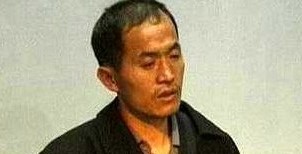 Yang Xinhai
Serial killer · China · 2000
Yang Xinhai (simplified Chinese: 杨新海; pinyin: Yáng Xīnhǎi; 17 July 1968–14 Febr…
67 victims
Yang Xinhai
Serial killer · China · 2000
Yang Xinhai (simplified Chinese: 杨新海; pinyin: Yáng Xīnhǎi; 17 July 1968–14 Febr…
67 victims
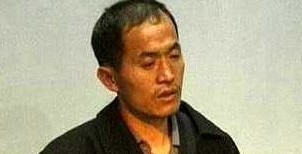 Yang Xinhai
Serial killer · China · 2000
Yang Xinhai (simplified Chinese: 杨新海; pinyin: Yáng Xīnhǎi; 17 July 1968–14 Febr…
67 victims
Yang Xinhai
Serial killer · China · 2000
Yang Xinhai (simplified Chinese: 杨新海; pinyin: Yáng Xīnhǎi; 17 July 1968–14 Febr…
67 victims
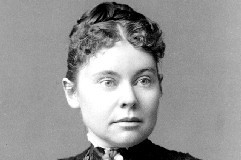 Lizzie Borden
Murderer? · USA · 1892
Lizzie Andrew Borden (July 19, 1860 – June 1, 1927) was an American woman who w…
2 victims
Lizzie Borden
Murderer? · USA · 1892
Lizzie Andrew Borden (July 19, 1860 – June 1, 1927) was an American woman who w…
2 victims
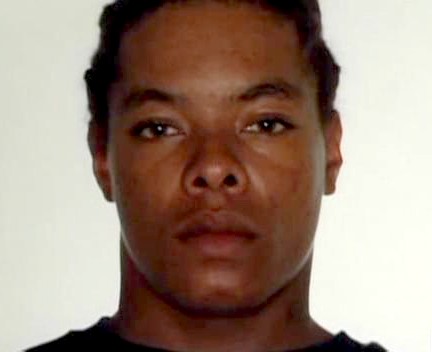 Tiequon Cox
Mass murderer · USA · 1984
Tiequon “Lil Fee” Cox was born Tiequon Aundray Cox on December 1, 1965. Cox was…
4 victims
Tiequon Cox
Mass murderer · USA · 1984
Tiequon “Lil Fee” Cox was born Tiequon Aundray Cox on December 1, 1965. Cox was…
4 victims
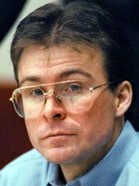 Robert James Acremant
Murderer · USA · 1995
Robert James Acremant was 29 years old when he pleaded guilty last year to aggr…
3 victims
Robert James Acremant
Murderer · USA · 1995
Robert James Acremant was 29 years old when he pleaded guilty last year to aggr…
3 victims
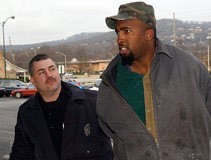 Emanuel Patterson
Mass murderer · USA · 2003
Emanuel Burl Patterson was 23 at the time of the shootings. Police said Patters…
4 victims
Emanuel Patterson
Mass murderer · USA · 2003
Emanuel Burl Patterson was 23 at the time of the shootings. Police said Patters…
4 victims
 Heather Trujillo
Homicide · USA · 2007
Heather Trujillo was a 16-year-old Johnstown girl accused of beating to death h…
1 victim
Heather Trujillo
Homicide · USA · 2007
Heather Trujillo was a 16-year-old Johnstown girl accused of beating to death h…
1 victim
- Gender
- male
- Country
- Canada / India
- Location
- Canada / India
- Date of birth
- 1959
- Age at first offence
- 36
- Characteristics
- financial gain
- Victim profile
- Parvesh Kaur Dhillon, 36 (his wife) / Ranjit Singh Khela, 25 (his friend and business associate) / Kushwinderpreet Kaur Toor (his third wife) / His 12-day-old twin boys (by the second wife, Sarabjit Kaur Brar)
- Method of murder
- Poisoning (strychnine)
- Date(s) of murder
- February 3, 1995 - June 23, 1996
- Years active
- 1995–1996
- Date of arrest
- October 1997
- Status
-
Died in custody
Sentenced to 25 years to life in prison in 2001; died in prison on November 16, 2013
Overview
Sukhwinder Singh Dhillon was convicted of first-degree murder for fatally poisoning his wife, Parvesh Kaur Dhillon, and for fatally poisoning his business partner, Ranjit Singh Khela. He received a sentence of 25 years to life in prison and later died in prison.
Timeline
- January 30, 1995 — Parvesh Kaur Dhillon fell ill at home and subsequently died four days later in hospital.
- June 1996 — Ranjit Singh Khela died in a manner described as rigid with symptoms consistent with strychnine.
- April 1997 — Detectives tracked Dhillon to his hometown of Ludhiana in the Punjab and several remote villages.
- October 1997 — Dhillon was arrested at an east Hamilton used car dealership.
- 2000 — A mistrial was declared after witnesses from India proved to be impostors.
- January 2001 — Dhillon appealed regarding his first conviction.
- July 2001 — Dhillon was convicted of his wife’s murder.
- August 1, 2001 — Dhillon was sentenced to 25 years in prison for poisoning his wife; he also faced a second charge of first-degree murder in the death of Ranjit Singh Khela.
- October 20, 2010 — The Ontario Court of Appeal dismissed Dhillon’s latest appeal attempt after deliberating for 20 minutes.
- November 16, 2013 — Dhillon died in prison while serving his life sentence; Corrections Canada said he died in a Kingston hospital “last Saturday.”
- November 21, 2013 — A report stated that Dhillon died in prison.
Background
Dhillon came to Canada in 1981 from Ludhiana. He was described as a used car salesman. He lived with his wife Parvesh Kaur Dhillon in Hamilton. Dhillon was described as a serial poisoner and as a former inmate at the Warkworth Institution.
Dhillon was associated with multiple marriages in two countries. The court heard that he married Parvesh Kaur in 1983 in Punjab and lived together until her death in 1995. After Parvesh Dhillon’s death, the court heard that Dhillon traveled to India and married Sarabjit Kaur Brar within nine weeks of his wife’s death. The court also heard that Dhillon returned to India again and married Kushwinderpreet Kaur (also named Kushwinderpreet Kaur Toor in one account) after Brar, with the new bride having no knowledge of his earlier marriages.
Police investigations included allegations involving bigamy and dowry fraud in Punjab. Punjabi police launched an investigation into Dhillon’s bigamy and dowry fraud.
Dhillon was reported to have had a December 1995 timeline involving returning to India and visiting Brar in hospital where she had just given birth to their twin boys. The court heard that Dhillon remained in India and that the father of the two brides began immigration proceedings, and that Dhillon’s application for his fourth wife was rejected.
The offence
Wife’s death (strychnine poisoning)
Parvesh Kaur Dhillon died after becoming violently ill at home. She was rushed to Hamilton General Hospital with symptoms doctors could not diagnose. Her body was so rigid her back was arched backward like a bow. She died an agonizing death after first falling violently ill at home and subsequently slipping into a coma and dying four days later in hospital. The coroner was unable to establish the cause of death at the time.
Medical examiners later found the cause of death to be strychnine poisoning.
A report said Dhillon laced Parvesh Dhillon’s headache pills with strychnine. In court, the Crown alleged that Dhillon poisoned his wife with strychnine to collect insurance proceeds. The Crown told the jury that the death of Parvesh Dhillon was considered a mystery and that science had since solved it.
The Crown prosecutor described the death as having been considered a mystery at the time and tied it to a later scientific determination of strychnine poisoning.
Business partner’s death (strychnine poisoning)
Ranjit Singh Khela died in June 1996 after taking a pill given to him by Dhillon, which Dhillon described as “good forbackache and good for sex.” The court heard that Khela’s body went stiff and he died in hospital.
A report said Ranjit told his wife he had taken a pill given to him by Dhillon, which was supposed to be a cure for his impotence. The same insurance investigator that looked at Parvesh Dhillon’s claim later recognized similarities between the two deaths.
Forensic investigation proved Dhillon’s murder weapon had been strychnine or “kuchila,” described as a minuscule amount that can cause rapid and tortured death. Police believed Dhillon bought seeds used to make the poison in a Punjabi market and brought them back to Canada.
Dhillon was found guilty of first-degree murder in the death of Ranjit Singh Khela.
Investigation
Clifton Elliot was described as a veteran insurance claims investigator who followed up on death claims for both Parvesh Dhillon and Ranjit Khela. Elliot contacted police with suspicions, setting in motion an investigation that led detectives including Detective Warren Korol and detective Kevin Dhinsa to Dhillon’s hometown of Ludhiana in the Punjab and several remote villages in April 1997.
Forensic investigation found evidence of strychnine or “kuchila.” Police believed Dhillon bought seeds used to make the poison in a Punjabi market and brought them back to Canada.
Police believed Dhillon was a suspect in additional strychnine deaths in India, including the death of his third wife, and twin boys from a second wife. It was stated that the bodies were exhumed in India by Hamilton police and brought to the Centre of Forensic Sciences in Toronto, where their bodies were described as loaded with medications their mother said she never gave them.
Dhillon was also described as being a suspect in the death of his third wife there. The wife’s body was cremated without an autopsy, and relatives said her body was so stiff as she was dying that they laid her across their laps in a car en route to the hospital, with her legs sticking out a window.
The babies were described as being 12-day-old twins. Their deaths were described as occurring just after Dhillon visited them.
Detectives tracked Dhillon’s murderous ways to India as part of the investigation.
Arrest and custody
Dhillon was arrested at an east Hamilton used car dealership in October 1997. He was described as being in custody since then.
He was later serving a life sentence at the Warkworth Institution.
Trial
Charges and prosecutors
The Crown alleged that Dhillon poisoned his wife and a business associate to collect insurance proceeds. The Crown prosecutor was Brent Bentham.
In one account, Dhillon faced a second charge of first-degree murder in the death of his business partner Ranjit Singh Khela while being sentenced for poisoning his wife.
Insurance investigator and insurance proceeds
It was stated that Parvesh Dhillon’s death was considered a mystery, and that medical examiners later found strychnine poisoning as the cause. It was stated that Dhillon filed an insurance claim the next business day after Parvesh Dhillon’s death.
A report said Dhillon collected $215,000 in insurance payments and also got $65,000 to pay off a mortgage and an $18,000 line of credit protected against the death of a spouse.
Another account said Dhillon collected more than $215,000 in insurance proceeds and also got $83,000 in loans paid off.
In the second death, the Crown alleged that Khela and Dhillon took out insurance policies with each other as beneficiaries for $100,000 and that a clause would double the amount in the event of accidental death. Khela died in June 1996.
Witness problems and mistrial
A mistrial was declared in 2000 when witnesses from India proved to be impostors.
Verdicts
Dhillon was convicted of his wife’s murder in July 2001.
Dhillon’s conviction for Ranjit Khela’s murder came five months after the conviction for Parvesh Kaur Dhillon’s murder, according to one account. Another report described that Dhillon was found guilty on Tuesday of first-degree murder in the death of his wife Parvesh Kaur Dhillon, and that he was later sentenced to 25 years in prison.
A jury deliberated after lengthy deliberations, and a juror reaction was described in relation to closing addresses by Brent Bentham, but the record only provided that the address “brought tears to the eyes of a juror in Kitchener court” in the report.
Quotes
Brent Bentham told the jury: “The death of Parvesh Dhillon was considered a mystery. That mystery, the Crown contends, has since been solved by science.”
Sentencing
On August 1, 2001, Dhillon was sentenced to 25 years in prison.
In 2001, Dhillon received a sentence described as 25 years to life in prison, and he was later described as serving a life sentence. One account described the sentence as being “25 years to life in prison” twice, with the final chapter described as ending in an Ontario Court of Appeal ruling.
Appeals
2010 Ontario Court of Appeal dismissal
On October 20, 2010, the Ontario Court of Appeal dismissed Dhillon’s latest appeal attempt after deliberating for 20 minutes.
The appeal was described as concerning a pretrial ruling by Superior Court Justice Stephen Glithero that prevented the defense from setting up Ranjit Singh Khela’s wife as an alternative suspect.
Toronto lawyer Brian Snell represented Dhillon for the second time at the appeal court. Snell argued that the defence should have been allowed to tell the jury that Lakhwinder Kaur Sekhon made and distributed homeopathic medicines from her Hamilton home, that they contained small amounts of strychnine, and that the medicines had been destroyed after the murder.
Crown counsel Brian McNeely argued that if the defense had been allowed to do that, the prosecution would have had to be given the opportunity to tell the jury that Dhillon had already been convicted in an earlier trial of poisoning his wife with strychnine. It was stated that the jury in Ranjit’s trial was not allowed to know of the earlier murder conviction.
Prior appeal
A prior appeal attempt occurred in January, involving the first of Dhillon’s convictions. The appeal justices dismissed it without hearing the Crown’s case.
Outcome
Dhillon served his life sentence at Warkworth Institution.
Corrections Canada said Dhillon, who was 54 years old at the time of his death, died in a Kingston hospital “last Saturday.” The report stated there was no word on the cause of death.
A source told The Spectator that the cause of death was cancer.
Death in custody
Dhillon died in prison on November 16, 2013, and reports also stated he died in prison on November 21, 2013. He was described as having turned 54 last May.
Dhillon was reported as an inmate at the Warkworth Institution and died in a Kingston hospital.
Other details
Dhillon was described as having returned to his native Punjab to marry three women and collect dowry payments in the 17 months between the two crimes referenced in one account.
Relatives and investigators were described as having said additional events:
- His third wife’s body was cremated without an autopsy, and relatives described stiffness before transfer to hospital.
- The twin boys from his second wife were described as being loaded with medications their mother said she never gave them after bodies were exhumed and brought to the Centre of Forensic Sciences in Toronto.
- Dhillon was described as being suspected in at least three other strychnine deaths in India: his third wife and twin boys from a second wife.
- Police launched investigations into his bigamy and dowry fraud in Punjab.
Dhillon was described as having been beneficiary to life insurance policies in both deaths, according to the account referencing insurance investigator Clifton Elliot. Detective Sergeant Warren Korol was quoted saying: “It was a long, hard road and I give a lot of credit to the jury. It seemed some of the odds were stacked against this case coming together, but it did.”
Reports also described that the prosecution was expensive, that witnesses were flown in from India, and that the case was documented as a 31-part series and spawned a Bollywood movie and a book of the same name being rereleased by HarperCollins Canada next spring, though these production details were not tied to any further legal outcome.
Spotted an error, or have more information about this case?