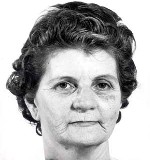
Elizabeth Duncan
Murderer Marie Noe
Murderer · USA · 1949
Marie Noe was convicted in June 1999 of murdering eight of her children. Betwee…
8 victims
Marie Noe
Murderer · USA · 1949
Marie Noe was convicted in June 1999 of murdering eight of her children. Betwee…
8 victims
 Waneta Ethel Hoyt
Murderer · USA · 1965
Waneta Ethel (Nixon) Hoyt was born in Richford, New York, and died in prison on…
5 victims
Waneta Ethel Hoyt
Murderer · USA · 1965
Waneta Ethel (Nixon) Hoyt was born in Richford, New York, and died in prison on…
5 victims
 Alicia Crimmins
Murderer · USA · 1965
Name: Alicia Crimmins On her first trial in 1968 was charged only with the deat…
2 victims
Alicia Crimmins
Murderer · USA · 1965
Name: Alicia Crimmins On her first trial in 1968 was charged only with the deat…
2 victims
 Earle Dennison
Murderer · USA · 1952
Earle Dennison was a widow and worked as a surgical nurse. She worked at the We…
2 victims
Earle Dennison
Murderer · USA · 1952
Earle Dennison was a widow and worked as a surgical nurse. She worked at the We…
2 victims
 Marie Dean Arrington
Murderer · USA · 1964
Marie Dean Arrington (born August 8, 1933) was an American criminal. She was al…
2 victims
Marie Dean Arrington
Murderer · USA · 1964
Marie Dean Arrington (born August 8, 1933) was an American criminal. She was al…
2 victims
 Sean Derrick O'Brien
Murderer · USA · 1993
Name: Sean Derrick O'Brien Sean Derrick O'Brien was executed by lethal injectio…
2 victims
Sean Derrick O'Brien
Murderer · USA · 1993
Name: Sean Derrick O'Brien Sean Derrick O'Brien was executed by lethal injectio…
2 victims
 Steven Edward Stein
Murderer · USA · 1991
Steven Edward Stein was sentenced to death on July 23, 1991. · 01/23/91 — Stein…
2 victims
Steven Edward Stein
Murderer · USA · 1991
Steven Edward Stein was sentenced to death on July 23, 1991. · 01/23/91 — Stein…
2 victims
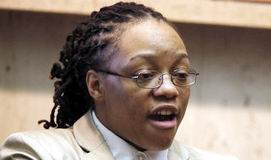 Nadiyah Venable
Murderer · USA · 2010
On September 27, 2013, Nadiyah Venable was sentenced to 55 years in prison with…
1 victim
Nadiyah Venable
Murderer · USA · 2010
On September 27, 2013, Nadiyah Venable was sentenced to 55 years in prison with…
1 victim
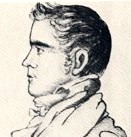 Samuel Green
Serial killer · USA · 1817
Samuel Green was executed by hanging in Massachusetts on April 25, 1822. He was…
Samuel Green
Serial killer · USA · 1817
Samuel Green was executed by hanging in Massachusetts on April 25, 1822. He was…
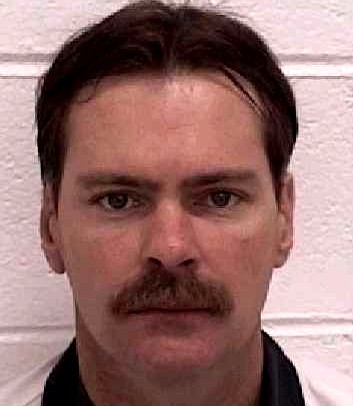 Leonard Drane
Murderer · USA · 1990
Leonard Maurice Drane was convicted in a capital case involving the killing of…
1 victim
Leonard Drane
Murderer · USA · 1990
Leonard Maurice Drane was convicted in a capital case involving the killing of…
1 victim
 Johnson Aziga
Murderer · Canada · 2003
Johnson Aziga (born 1956) was a Ugandan-born Canadian man resident in Hamilton,…
2 victims
Johnson Aziga
Murderer · Canada · 2003
Johnson Aziga (born 1956) was a Ugandan-born Canadian man resident in Hamilton,…
2 victims
- Gender
- female
- Country
- USA
- Location
- Santa Barbara County, California, USA
- Date of birth
- 1904
- Age at first offence
- 54
- Characteristics
- murder for hire, jealous rage, incest
- Victim profile
- Her daughter-in-law Olga Kupczyk Duncan, 30 (seven months pregnant)
- Method of murder
- Strangulation
- Date(s) of murder
- November 17, 1958
- Years active
- 1958
- Date of arrest
- December 1958
- Status
-
Executed
Executed in California's gas chamber on August 8, 1962
Case record: Elizabeth Duncan
Background
Elizabeth Ann Duncan hired two men to kill her pregnant daughter-in-law, Olga Kupczyk Duncan. Duncan was jealous that Olga threatened her incestuous relationship with her son, Frank Duncan.
Duncan moved to Santa Barbara with her 27-year-old son, Frank, who was an attorney and then unmarried. Late in 1957, she was hospitalized after taking an overdose of sleeping pills, explaining to her doctor that she had taken them because she was afraid Frank would "leave her."
Duncan met Olga while visiting her in the hospital. Frank met Olga, who was working there as a nurse. Duncan objected to Frank's seeing Olga and telephoned her almost daily for three months. During the course of these calls, Duncan discussed the matter with a friend, Mrs. Emma Short, or made the calls in her presence, told Olga to "leave her son alone" and frequently threatened to kill her if she did not stop seeing him.
On one occasion, when Olga said that she and Frank were going to be married, Duncan replied, "You'll never marry my son, I'll kill you first." Duncan also repeated the idea in a more oblique way to her doctor by saying: "Frank will never leave me," and that he would never dare to get married.
Duncan was married at least 11 times. When cross-examined, she admitted to 10 marriages and said, "there might have been an 11th.... I'm afraid to count the others: they didn't mean that much to me." At one point, prosecutors alleged she married 16 times. Duncan coned young men into marrying by telling them she needed a husband in order to inherit a great fortune, promising them a cut. Duncan claimed at first that she had two children—Frank and a daughter, Patricia, who died at 15—then later admitted she had four other children, including three daughters and a son.
Frank Duncan lived at his mother's home and in his testimony admitted he had lived with his mother almost his whole life. His relationship with his mother and Duncan's subsequent jealousy became the basis of motive in the case. Despite being married, Frank slept at his mother's home.
The offence
Frank and Olga were secretly married on June 20, 1958. When Duncan learned of the marriage, she declared she would not allow them to live together. Frank stayed at Duncan's home until the end of June and visited Olga in her apartment. During one of these visits, Duncan knocked on the door and angrily demanded that Frank come home. A quarrel ensued and Frank left with Duncan. A few days later, Frank started to live with Olga at another apartment, keeping the new address secret from Duncan.
About the middle of July 1958, Duncan told Mrs. Barbara Reed that Olga had become pregnant by another man and was trying to "frame" Frank. Duncan offered Mrs. Reed $1,500 to assist her in killing Olga. Mrs. Reed replied that she would think the matter over and later informed Frank of the proposal.
In the early part of August, Duncan arranged with an ex-convict, Ralph Winterstein, to assist her in carrying out a fraudulent plan for an annulment of the marriage between Frank and Olga. Duncan posed as Olga and Winterstein as Frank. In a brief uncontested hearing, Winterstein testified that Olga had not lived with him since their marriage, that she refused to do so, and that she had told him she had never intended "to go through with the marriage." A decree was granted to the plaintiff.
Duncan later persuaded Mrs. Short to propose to Winterstein that he "take care of Olga." Winterstein refused but did not report the incident because he was afraid of getting into trouble as a result of the fraudulent annulment.
In the middle of August, Duncan discovered where Olga was living and gained admittance to the apartment in Olga's absence, apparently to discover whether any of Frank's clothes were there. Duncan told the apartment manager: "She is not going to have him. I will kill her, if it is the last thing I do."
Duncan told Mrs. Diane Romero—whose husband Rudolph was a client of Frank—that Olga was blackmailing Frank and asked her to help "get rid" of Olga. At Duncan's request, Diane went to Olga's apartment to "look the place over." Olga answered the door; Diane recognized her as a nurse who had cared for her several years earlier and left after a short visit.
Thereafter, Duncan offered Rudolph Romero money to "get rid" of Olga, and Rudolph refused.
While seeking assistance from the Romeros, Duncan met Mrs. Rebecca Diaz, in whose house the Romeros lived. Duncan told Mrs. Diaz that Olga was threatening her and demanding money and asked her to help find a man to "get her out of town." Mrs. Diaz agreed to notify Duncan if she found anyone. Duncan later telephoned Mrs. Diaz and asked, "Becky, do you remember what we talked about?" Mrs. Diaz replied that she did, and Duncan said, "Well, forget about it. I won't need you any more. It will be today or never."
On November 12, 1958, Duncan went with Mrs. Short to the Tropical Cafe in Santa Barbara. Mrs. Esperanza Esquivel owned the cafe; Esquivel and her husband had been charged with receiving stolen property. Frank, as their attorney, had obtained a dismissal of the case against Esquivel and was seeking probation for Esquivel's husband, who had pleaded guilty. Duncan told Mrs. Esquivel that Olga was blackmailing her and had threatened to throw acid in Frank's face and asked whether Esquivel had any friends who would help "get rid" of Olga. Mrs. Esquivel replied: "there were some boys" but she did not know whether they would want to talk to Duncan.
The next day, Duncan returned to the Tropical Cafe with Mrs. Short and was introduced to Luis Moya, 21, and Augustine Baldonado, 26. Duncan told Moya and Baldonado that her son was being blackmailed by Olga and said she wanted to "get rid" of her. They discussed what it would be worth to Duncan and agreed that she would pay $3,000 when the "job" was done and $3,000 within three to six months.
The group considered several plans and decided that Moya and Baldonado would kidnap Olga, take her across the border, and kill her in Tijuana. Moya said that money was needed for transportation, a weapon, and gloves. Duncan left for a while and on her return went to the kitchen with Moya where she paid him $175 she obtained by pawning some rings. She told Emma as they drove home: "I think they are going to do it," and she said she was right.
Moya and Baldonado hired a car from Mrs. Sara Contreras, borrowed a pistol from a friend, and purchased ammunition, gloves, and adhesive tape. On the evening of November 17, 1958, they drove to Olga's apartment. When Olga came to the door, Moya told her that her husband, Frank Duncan, was drunk in a car downstairs and asked for her help to get him upstairs, and Olga accompanied him to the car. Baldonado was then in the back seat pretending to be Frank. When Olga opened the rear door, Moya hit her on the back of the head with the pistol and Baldonado pulled her into the car.
As they left Santa Barbara, they drove to the beach and stopped because Olga was screaming and struggling. While Baldonado held her, Moya struck her on the head with the pistol, breaking the handle and knocking her unconscious. Baldonado tied her up with tape and they continued out of town.
Later, with trouble in the car, they drove into the mountains near Ojai in Ventura County instead of going to Mexico. They dragged Olga out of the car down the side of a hill to a culvert that ran under the road. The pistol had been damaged so it could not be fired, and Moya and Baldonado took turns strangling her. They dug a hole and buried her after they could not feel her pulse.
While returning to Santa Barbara, Moya and Baldonado hid their bloody clothes and the seat covers of the car. They attempted to clean the car by sweeping it and spraying lacquer to hide blood spots. The next day they told Mrs. Contreras that the seat covers had been burned by a cigarette and that they would fix them or give her money for repairs.
Moya contacted Duncan and informed her that they had performed their "part of the bargain." Duncan said she could not draw money out of the bank because police had been inquiring about Olga's disappearance. Duncan cashed a check Frank had given her to pay for a typewriter, and she met Moya at a downtown store in Santa Barbara where she handed him an envelope containing $150. Later, at Duncan's request, Mrs. Short left an envelope for Moya with the cashier of a restaurant. The envelope was addressed to "Dorothy," contained $10, and Moya obtained it by saying it was for his aunt.
When Frank questioned Duncan about the check, she told him she was being blackmailed. Frank informed police and said he was afraid Duncan was involved in Olga's disappearance and was being blackmailed for that reason. Olga's body was disinterred on December 21, and an autopsy surgeon found Olga was pregnant and that her death was caused by head wounds, strangulation, or suffocation such as would be produced by being buried alive. Coroners investigation found that Olga was still alive when buried.
Investigation and arrest
The investigation resulted in confessions by Moya and Baldonado and Duncan's arrest on a charge of murder. Moya confessed to law enforcement officers that he murdered Olga and testified that he believed he had been forgiven. Moya asked to see a minister and Reverend Floyd K. Gressett came to the jail in response to a call from a police officer. After speaking with Reverend Gressett, Moya got on his knees and for the first time in his life asked God to forgive him. Reverend Gressett decided that Moya was sincere and was ready to confess to God and man. Immediately thereafter Moya confessed to law enforcement officers. A psychiatrist, Dr. David R. M. Harvey, testified that Moya was a sociopathic personality and a constant danger to society, capable of murder "right now." Dr. Harvey said that a sincere religious belief was a good start toward rehabilitation, but that the period of time during which Moya held the belief was too short to permit a determination as to the validity of his conversion.
On December 21, Baldonado led Santa Barbara and Ventura County officials to Olga's grave.
Trial
Duncan was indicted for murder. She pleaded not guilty and not guilty by reason of insanity. The jury found her guilty of murder in the first degree and fixed the punishment at death. Pursuant to stipulation, the court sitting without a jury passed upon the sanity issue and found Duncan was sane at the time of the commission of the offence. Her motion for a new trial was denied, and the appeal came before the court automatically under subdivision (b) of section 1239 of the Penal Code.
Multiple persons testified about threats made by Duncan against Olga, efforts to obtain assistance in killing Olga, and other circumstances connected with the crime.
Jury and venue issues
Duncan filed a motion for change of venue from Ventura County before jury selection and renewed it unsuccessfully after jury selection but before it was sworn. She submitted affidavits indicating many persons had indicated a belief that she was guilty and had expressed opinions prejudicing her right to a fair and impartial trial due to publicity and statements made by public officials. Affidavits were accompanied by newspaper articles showing that testimony before the grand jury had been published in daily installments and that public officials, including the district attorney, made statements to the press during the investigation.
The district attorney's reported statements included: "The brutal, calculated, revolting killing for hire of Olga Duncan is one of a number of horrible crimes which have recently been committed in California. ... I simply can not understand how some of our leaders, in the face of these events, can seriously contend that the death penalty is not appropriate punishment for the perpetrators of such a crime." Another quoted portion concerned his request for the imposition of the death penalty, including statements that the "most pertinent point in the death penalty" was retribution; rehabilitation statistics were "pretty said"; the chances of rehabilitating the three persons charged with the crime were "awfully slim"; he did not want to "take that kind of chance"; and he did not have any qualms about "putting California's third woman in the gas chamber." Other reported statements included that he had evidence this was not the first time Duncan sought to hire someone to kill Olga and that her jealousy of Olga was the major motive for the crime.
The court denied the change of venue motion. The trial court also disallowed challenges for actual bias to four prospective jurors: J. T. Porter, S. M. Flynn, Mrs. Susie Saavedra, and Mrs. Erma Behrens. These jurors had formed opinions unfavorable to Duncan based on reading newspapers and hearing radio and television broadcasts and discussing the case with 15 or 20 people; some jurors expressed initial hesitation but stated they could set aside the opinions and decide based solely on evidence and instructions.
Accomplice instruction issue
Duncan requested that the court instruct the jury that Mrs. Esquivel was an accomplice. The trial court refused and instead instructed the jury on what constitutes an accomplice and what corroboration is required, and that whether any witness other than Moya and Baldonado was an accomplice was for the jury to determine from all testimony and circumstances shown by evidence.
Impeachment and evidence issues
On direct examination, Duncan testified she was married at one time to F. M. Lowe and later to F. P. Duncan. She testified that her daughter, Patricia, was the issue of her marriage to Duncan and that her son, Frank, was the issue of her marriage to Lowe and had changed his name to Duncan.
The district attorney questioned Duncan to show that at the time of her marriage to Lowe, three prior marriages had not been dissolved and that the Lowe marriage had not been terminated when she married Duncan. The People introduced court records showing Duncan had defaulted in an annulment action brought by Duncan against her and failed to deny an allegation that she was the wife of another when she married Duncan.
The appellate opinion stated that attacking Duncan on the legality of her marriages was not relevant and that impeachment in this manner degraded her; however, it also stated that Duncan's answers were favorable and tended to minimize any harmful effect.
The district attorney was also permitted to question Duncan as to whether Frank had made his home with her during her marriage to several men. The court refused to permit questioning as to whether she had lived with any of the men she was married to during that period. The district attorney was further allowed, over objection, to cross-examine Duncan as to whether she had previously lied about her age. On Duncan's motion, the questions and answers were stricken and the jury instructed to disregard them.
The appellate court concluded the evidence of guilt was abundant and there was no miscarriage of justice.
Sentencing and appeals
The jury fixed the punishment at death. Duncan's appeals were exhausted. The court refused to hear another appeal in 1962. At the time of her execution, Frank Duncan was in San Francisco, pleading her case before the U.S. Court of Appeals.
Outcome
On August 8, 1962, Moya and Baldanado died next to each other, strapped into the metal chairs of California's gas chamber. Duncan was led into the chamber shortly after and looked around and noticed that her son was not there. "Where is Frank?" were Elizabeth Duncan's last recorded words.
Five years later, Glenda Jackson stated that she believed she had found and used trial transcripts for historical presentations, and said that she liked true crime stories. Jackson stated that, according to her research, Ma Duncan's last words were, "Where's Frank?"
Spotted an error, or have more information about this case?