
Kathleen Folbigg
Murderer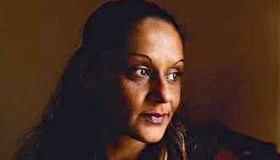 Anu Singh
Murderer · Australia · 1997
Anu Singh (born 3 September 1972) was an Australian of Indian descent who kille…
1 victim
Anu Singh
Murderer · Australia · 1997
Anu Singh (born 3 September 1972) was an Australian of Indian descent who kille…
1 victim
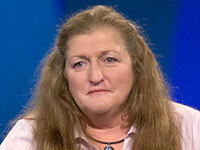 Brenda Hodge
Murderer · Australia · 1983
Brenda Hodge was born Dorothy Brenda White in Victoria in 1951 to Beryl Nanette…
1 victim
Brenda Hodge
Murderer · Australia · 1983
Brenda Hodge was born Dorothy Brenda White in Victoria in 1951 to Beryl Nanette…
1 victim
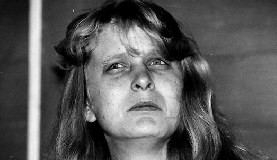 Gunn-Britt Ashfield
Murderer · Australia · 1993
Gunn-Britt Ashfield was the mother of six-year-old John Ashfield. In 2011 she w…
1 victim
Gunn-Britt Ashfield
Murderer · Australia · 1993
Gunn-Britt Ashfield was the mother of six-year-old John Ashfield. In 2011 she w…
1 victim
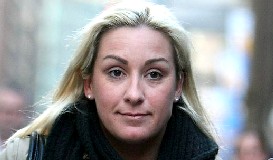 Keli Lane
Murderer · Australia · 1996
Keli Lane (born 21 March 1975) was a former Australian water polo player. She w…
1 victim
Keli Lane
Murderer · Australia · 1996
Keli Lane (born 21 March 1975) was a former Australian water polo player. She w…
1 victim
 Storm Brooke
Murderer · Australia · 1990
Storm Brooke was an Australian prisoner who stabbed fellow prisoner Debbie Dick…
1 victim
Storm Brooke
Murderer · Australia · 1990
Storm Brooke was an Australian prisoner who stabbed fellow prisoner Debbie Dick…
1 victim
 Tracey Wigginton
Murderer · Australia · 1989
Tracey Wigginton (born 1965) was an Australian murderer who achieved notoriety…
1 victim
Tracey Wigginton
Murderer · Australia · 1989
Tracey Wigginton (born 1965) was an Australian murderer who achieved notoriety…
1 victim
 Ronnie Joe Neal
Murderer · USA · 2004
Ronnie Joe Neal had prior prison sentences in Texas. TDCJ-ID #525256 reflected…
1 victim
Ronnie Joe Neal
Murderer · USA · 2004
Ronnie Joe Neal had prior prison sentences in Texas. TDCJ-ID #525256 reflected…
1 victim
 Maurizio Minghella
Serial killer · Italy · 1978
Maurizio Minghella was born in Genova on 16 luglio 1958. He lived in the Bolzan…
9 victims
Maurizio Minghella
Serial killer · Italy · 1978
Maurizio Minghella was born in Genova on 16 luglio 1958. He lived in the Bolzan…
9 victims
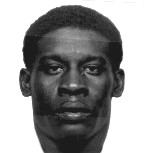 Billy Wayne White
Murderer · USA · 1976
Billy Wayne White was sentenced to death for the capital murder of Martha Laura…
1 victim
Billy Wayne White
Murderer · USA · 1976
Billy Wayne White was sentenced to death for the capital murder of Martha Laura…
1 victim
 Gary Black
Murderer · USA · 1998
Gary W. Black was convicted of first-degree murder and sentenced to death in 19…
1 victim
Gary Black
Murderer · USA · 1998
Gary W. Black was convicted of first-degree murder and sentenced to death in 19…
1 victim
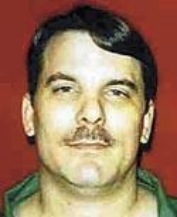 David Clayton Hill
Murderer · USA · 1994
June 9, 1964 — David Clayton Hill was born. · March 7, 1994 — Spencer Guerry wa…
1 victim
David Clayton Hill
Murderer · USA · 1994
June 9, 1964 — David Clayton Hill was born. · March 7, 1994 — Spencer Guerry wa…
1 victim
 David Maust
Serial killer · USA · 1974
David Edward Maust (April 5, 1954 - January 20, 2006) was an American serial ki…
5 victims
David Maust
Serial killer · USA · 1974
David Edward Maust (April 5, 1954 - January 20, 2006) was an American serial ki…
5 victims
- Gender
- female
- Country
- Australia
- Location
- New South Wales, Australia
- Date of birth
- June 14, 1967
- Age at first offence
- 22
- Characteristics
- parricide, child killer
- Victim profile
- H er four infant children, Patrick Allen, 8-month-old, Sarah Kathleen, 10-month-old, Laura Elizabeth, 19-month-old, and Caleb Gibson, aged 19 days
- Method of murder
- Smothering
- Date(s) of murder
- 1989 - 1999
- Years active
- 1989–1999
- Date of arrest
- April 19, 2001
- Status
-
Imprisoned
Sentenced to 40 years' imprisonment with a non-parole period of 30 years on October 24, 2003; the court reduced her sentence to 30 years' imprisonment with a non-parole period of 25 years on appeal on February 17, 2005
Case overview
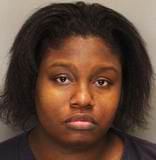
Kathleen Megan Folbigg (née Donovan) was an Australian child killer. She was convicted of murdering her three infant children, Caleb Gibson, Patrick Allen, and Sarah Kathleen, and of the manslaughter of a fourth child, as well as maliciously inflicting grievous bodily harm upon another child. Her convictions and sentence were imposed by the Supreme Court of New South Wales and then reduced on appeal.
Timeline
- 24 October 2003 — Kathleen Folbigg was sentenced to 40 years' imprisonment with a non-parole period of 30 years.
- 21 May 2003 — A jury found Kathleen Folbigg guilty of three counts of murder, one count of manslaughter, and one count of maliciously inflicting grievous bodily harm.
- 17 February 2005 — The court reduced her sentence to 30 years' imprisonment with a non-parole period of 25 years on appeal.
People
- Kathleen Megan Folbigg (née Donovan) — defendant.
- Craig Folbigg — husband.
- Thomas John Britton — natural father of Kathleen Folbigg; murdered her mother.
- Kathleen Mary Donavan — Kathleen Folbigg’s mother.
- Graham Barr — Supreme Court judge who sentenced her.
- Sully J — judge in the appeal.
- Daniel Maher — police prosecutor at the bail hearing.
- Richard Wakely — magistrate who refused bail.
- Mark Tedeschi, Q.C. — Crown Prosecutor at trial.
- Peter Zahra — lawyer for the defence at trial.
- Brian Doyle — defence council at the bail hearing.
- Justice Graham Barr — sentenced her to 40 years' imprisonment with a non-parole period of 30 years.
- Bernard Ryan — Detective Sergeant who investigated Laura Folbigg’s death.
- Carol Newitt — CF’s sister; babysat for Patrick.
- Deborah Grace — neighbour who gave evidence at trial.
- Mr. Saunders — former police officer.
- Dr. Janice Ophoven — forensic pathologist referred to at the bail hearing.
- Professor Hilton — pathologist who had conducted Sarah’s post mortem examination (referred to in the bail and trial material).
- Dr. Christopher Seeton — doctor in charge of the sleep investigation unit at Sydney’s Westmead Children’s Hospital.
- Professor Roger Byard — forensic pathologist; called by the defence.
- Professor Herdson — Crown expert witness referred to.
- Professor Berry — Crown expert witness referred to.
- Dr. Beal — Crown expert witness referred to.
- Dr Khaira — physician referred to regarding inability to assign a cause for Patrick.
- Dr. Kan — referred to regarding excluding signs of manual asphyxiation.
- Professor John Hilton — performed the post-mortem examination of Sarah’s body.
- Dr. Allan Cala — forensic pathologist who performed the post-mortem examination of Laura.
- Sister Margaret Tanner — Sister at Westmead Children’s Hospital; related to downloading information from the sleep monitor.
- Rod Milton — forensic psychiatrist who gave evidence (referred to in trial context reporting).
Other details
Kathleen Folbigg maintained her innocence, claiming the four children died from natural causes.
She was found guilty and sentenced for the deaths of Caleb, Patrick, Sarah, and Laura, with the murders taking place between 1991 and 1999, according to the narrative material.
Following conviction, she resided in protective custody to prevent possible violence by other inmates.
The offence
Counts found by the jury (trial outcome)
On 21 May 2003, Kathleen Folbigg was found guilty by the Supreme Court of New South Wales jury of:
- three counts of murder
- one count of manslaughter
- one count of maliciously inflicting grievous bodily harm
Sentencing
On 24 October 2003, she was sentenced to 40 years' imprisonment with a non-parole period of 30 years.
On 17 February 2005, the court reduced her sentence to 30 years' imprisonment with a non-parole period of 25 years on appeal.
Appeals
Kathleen Folbigg appealed against all five convictions and applied for leave to appeal against her sentences.
Four grounds of appeal against the convictions were argued.
Grounds argued on appeal (as set out)
- Ground 1 — The Crown case at trial accepted that the evidence available was insufficient to establish guilt beyond reasonable doubt in each individual case; it contended a joint trial was appropriate.
- Ground 2 — The Crown case depended heavily upon the contents of her diaries; the issue was whether that was a reasonable reading of the diary material.
- Ground 3 — Evidence from expert witnesses was adduced to the effect that they knew of no previous recorded case where three or more babies in one family had died suddenly without proper professional diagnosis; the issue was admissibility.
- Ground 4 — The Crown relied in part upon coincidence and tendency evidence; the issue was the correctness of the learned trial judge’s directions.
Trial evidence and medical evidence discussed in the appeal material
The appeal material discussed competing expert evidence and included verbatim excerpts concerning the interpretation of medical findings and the SIDS concept.
Mentioned principles about Dr Cala evidence and SIDS terminology
The appeal included the judge’s discussion of Dr Cala’s report and the distinction between a “SIDS death” and a conclusion where unnatural causes could not be excluded, including the following verbatim quotation:
“(Dr Cala) used to be employed as a pathologist in the New South Wales Institute of Forensic Medicine in Sydney, and in that capacity carried out an autopsy on the body of the child Laura, and provided a report for the Coroner. In his report he stated his inability to determine the cause of Laura’s death . Such a conclusion is to be distinguished from one that a death is a SIDS death. The acronym SIDS is made up from the initial letters of the words Sudden Infant Death Syndrome. Having heard a number of expert witnesses give evidence about its meaning, I have the impression that it means no more than this, that the epithet is assigned to the death of a child of appropriate age who is believed to have died of a natural cause or natural causes, which cause or causes cannot be identified. According to Dr Cala, the difference between the two conclusions is that a death should not be described as a SIDS death if unnatural causes, which for present purposes means deliberate or accidental trauma, cannot be excluded .”
Evidence excerpts included in the appeal material
The appeal material included verbatim excerpts from the trial evidence, including the following on Laura’s heart inflammation:
“Q. Now is that sort of finding, the finding that you found on Laura’s heart of inflammatory infiltrate, consistent with the after effects of a cold or flu? A. I believe so.
Q. In your opinion did it play any role in causing her death? A. I don’t believe so.
Q. Would you explain to the court why you have that opinion? A. As I said, the heart was normal to the naked eye, but my microscopic examination did reveal inflammation of the heart. Having said that, the inflammation was quite patchy and rather mild in the sense that although the inflammation existed it was of a rather low amount as opposed to other cases that I’ve seen where the inflammation was much heavier in the heart and in other organs.
Q. Where the inflammation is much heavier, can it cause death? A. Yes.
Q. And where it causes death is that a condition that is known as myocarditis? A. Yes, it is.”
And later:
“Q. What do you say to the possibility that she died of myocarditis? A. I think, it’s known that myocarditis can cause sudden death, usually by cardiac rhythm disturbance, and I can’t say that didn’t happen with Laura but I think it’s, in all likelihood, very unlikely.
Q. Is it a reasonable possibility in your opinion that she died from myocarditis? A. I don’t believe it is.”
The appeal material included the following excerpts from questioning about whether her death could be regarded as another SIDS case:
“Q. What do you say as to whether or not the death of Laura can be regarded as just another SIDS case? A. Well, I don’t believe that’s correct at all.
Q. And why is that? A. Firstly, Laura was about 20 months old when she died. Now SIDS, as I said, is an invented term but nevertheless to classify a death as SIDS it generally falls within the age of about three to six months of age. So she is clearly three times, over three times the age for that, and that by itself, and I think that’s a very important thing to consider, in my opinion would categorically exclude this child’s death as being due to SIDS, irrespective of any family history of other deaths and so on. In isolation this would not and should not be called SIDS.”
The appeal material included the following statement from Mr Zahra SC:
“There is no issue that this was a SIDS death. It is not part of the way the accused’s case will be run.”
And further verbatim excerpts from Dr Cala:
“Q. In relation to Laura, you have already told us that your diagnosis was that her cause of death was undetermined? A. Yes.
Q. That it was consistent with smothering? A. Yes.
Q. Including deliberate smothering? A. Yes.
Q. And that she probably died from an acute catastrophic asphyxiating event of unknown causes? A. Yes.
Q. Now, putting those four individual children together is this correct, that they all died from what in your view should have been diagnosed as undetermined causes? A. Yes.
Q. That they all died in circumstances consistent with deliberate smothering? A. Yes.
Q. And that they all possibly died from an acute and catastrophic asphyxiating event of unknown causes? A. Yes.
Q. Is there any natural cause of death that could account for all those four deaths and the ALTE? A. No.”
And in cross-examination:
“Q. You can point to nothing, so far as your findings overall of Laura are concerned, that can specifically be attributed to suffocation? A. Because there are no positive findings for suffocation, and my finding of no positive findings doesn’t exclude suffocation.
Q. Yes. Do I understand the essence of what you are saying is that because there was nothing, you can’t exclude it? A. Because there was nothing to be found still does not exclude suffocation.
Q. Because it doesn’t necessarily follow that if there was suffocation that there could be signs? A. That’s correct.
Q. So your process of reasoning in this case that you can’t exclude suffocation or that it is consistent with suffocation is always based on that foundation, that there are no symptoms, therefore you can’t rule it out? A. Yes. There are generally no positive signs of suffocation, so in essence you can almost never rule it out.”
The appeal material included further verbatim extracts about myocarditis exclusion and diary letter:
“Q. Looking at the case in isolation, the autopsy you carried out, can you exclude myocarditis as the cause of death? A. I can’t exclude it as a cause of death.
Q Might you have given the cause of death as myocarditis looked at individually? A. I don’t think I would because, although it was present, the amount of inflammation was not particularly heavy. There wasn’t any evidence of heart failure, the heart to the naked eye looked pretty normal, so – and not only that, there was evidence in other organs, the lungs and spleen in particular, of lymphocytes being in there as well. In other words, indicative of some viral infection that Laura was suffering from around the time of her death.
Q. Did you write to a Detective Ryan on 19 June 2001? A. Yes.
Q. And did you answer a number of questions? A. Yes.
Q. And did you say this on the second page of that letter: “If I examined the body of Laura in isolation, I might give the cause of death as myocarditis.” A. Yes.
Q. Is that your view today? A. Well, I said in the letter I might, and if I was pushed I would take it no further than I might, but I have to – for the reasons that I have given, that the amount of inflammation and so on was not particularly heavy and there weren’t any overt signs of heart failure, and so on. But I have to say, as I have said, I can’t exclude the possibility that this child did not die of myocarditis.
Q. Particularly in the absence of any other pathology that you can’t exclude myocarditis? A. There really was no other significant pathology that I found, either with the naked eye or looking down the microscope to account for the child’s death.”
Professor Byard evidence excerpts included in the appeal
The appeal material included verbatim excerpts from Professor Byard in-chief and cross-examination, including:
“Q. What is your diagnosis in the present case? A. I’ve put the cause of death as undetermined because I can’t exclude myocarditis as the cause of death.
Q. What is your process of reasoning, coming to the conclusion of that being undetermined? A. If I looked at her cases in isolation I would, without anything else, I would have said myocarditis. But the fact that there have been other deaths in the family makes me less certain that I can say myocarditis. So I said undetermined cause because of the circumstances.”
And:
“Q. In isolation, looking at slides, I have no doubt the cause of death was myocarditis.”
And:
“Q. Do you agree that Laura’s myocarditis could be incidental to her death? A. Yes.
Q. And do you agree with Dr. Cala, that the myocarditis is probably unrelated to her death? A. No, I don’t.
Q. I would like to put a hypothetical situation to you. If a child, like Laura, had a cold or a flu that had caused mild myocarditis, and the child’s mother deliberately smothered her, without leaving any signs, then do you agree that many pathologists would wrongly conclude that Laura had died from myocarditis if they were viewing Laura’s case on its own? A. Yes.
Q. And do you agree that that is a distinct possibility in this case? A. I think that is a possibility.”
And:
“Q. Would you also agree that most people – and I deliberately say people, meaning adults and children – most people who have myocarditis, don’t die? A. I think that’s probably correct, yes.
Q. And of those who do die, of those people – adults and children – who do die, most of them have symptoms? A. Yes, I think that’s correct.
Q. So for all of those reasons, would you agree with this; that if myocarditis was the cause of Laura’s death it was a quite unusual case? A Yes”
The appeal included:
“Q. You have given evidence that it is possible in this case that all four of these children died from suffocation? A. Yes.
Q. And I take it that you also agree that it is possible that Patrick’s ALTE was caused by suffocation? A. Yes.
Q. And by suffocation you would include deliberate suffocation by an adult? A. That’s correct.
Q. Would you agree with this; that it is not a reasonable conclusion to say that they all died from the same natural cause? A. I think that’s – could you repeat that again?
Q. Yes. Do you agree with this: That it is not a reasonable conclusion that they all died from the same natural cause? A. Yes. I think that’s a reasonable statement.”
Diary extracts included in the appeal material
The appeal material included diary quotations verbatim, including:
“3 June 1990: This was the day that Patrick was born. I had mixed feelings this day. wether or not I was going to cope as a mother or wether I was going to get stressed out like I did last time . I often regret Caleb & Patrick, only because your life changes so much, and maybe I’m not a Person that likes change. But we will see?”
“18 June 1996: I’m ready this time. And I know Ill have help & support this time. When I think Im going to loose control like last times Ill just hand baby over to someone else. .... I have learnt my lesson this time.”
“4 December 1996: [found out she was pregnant]. I’m ready this time. But have already decided if I get any feelings of jealousy or anger to much I will leave Craig & baby, rather than answer being as before. Silly but will be the only way I will cope.”
“1 January 1997: Another year gone & what a year to come. I have a baby on the way, ...... This time. I am going to call for help this time & not attempt to do everything myself any more – I know that that was the main Reason for all my stress before & stress made me do terrible things.”
“4 February 1997: Still can’t sleep. Seem to be thinking of Patrick & Sarah & Caleb. Makes me generally wonder whether I am stupid or doing the right thing by having this baby. My guilt of how responsible I feel for them all, haunts me, my fear of it happening again haunts me. ....... What scares me most will be when Im alone with baby. How do I overcome that? Defeat that?”
“25 October 1997: .... I cherish Laura more, I miss her [Sarah] yes but am not sad that Laura is here & she isn’t. Is that a bad way to think, don’t know. I think I am more patient with Laura. I take the time to figure what is rong now instead of just snapping my cog. ... Wouldn’t of handled another like Sarah. She’s saved her life by being different.”
“9 November 1997: ... he [Craig] has a morbid fear about Laura. ... well I know theres nothing wrong with her. Nothing out of ordinary any way. Because it was me not them. ... With Sarah all I wanted was her to shut up. And one day she did.”
“28 January 1998: I’ve done it. I lost it with her. I yelled at her so angrily that it scared her, she hasn’t stopped crying. Got so bad I nearly purposely dropped her on the floor & left her. I restrained enough to put her on the floor & walk away. Went to my room & left her to cry. Was gone probably only 5 minutes but it seemed like a lifetime. I feel like the worst mother on this earth. Scared that she’ll leave me know. Like Sarah did. I know I was short tempered & cruel sometimes to her & she left. With a bit of help. I don’t want that to ever happen again. I actually seem to have a bond with Laura. It can’t happen again. Im ashamed of myself. I can’t tell Craig about it because he’ll worry about leaving her with me. Only seems to happen if I’m too tired her moaning, bored, wingy sound, drives me up the wall. I truly can’t wait until she’s old enough to tell me what she wants.”
Outcome
The appeal material concluded that none of the grounds of appeal was made good and the convictions appeal was dismissed. The sentence reduction on appeal resulted in an overall term of imprisonment of 30 years with a non-parole period of 25 years.
Spotted an error, or have more information about this case?