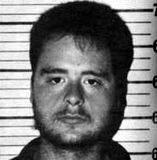
Lesley Eugene Warren
Serial killer Rodney Alcala
Serial killer · USA · 1977
Rodney James Alcala (born August 23, 1943) was also known as Rodrigo Jacques Al…
100 victims
Rodney Alcala
Serial killer · USA · 1977
Rodney James Alcala (born August 23, 1943) was also known as Rodrigo Jacques Al…
100 victims
 Glen Edward Rogers
Serial killer · USA · 1993
Glen Edward Rogers was a spree killer whose cross-country rampage in 1994-95 le…
70 victims
Glen Edward Rogers
Serial killer · USA · 1993
Glen Edward Rogers was a spree killer whose cross-country rampage in 1994-95 le…
70 victims
 Michael Swango
Serial killer · USA · 1981
Michael Swango (Joseph Michael Swango) was a physician and American serial kill…
60 victims
Michael Swango
Serial killer · USA · 1981
Michael Swango (Joseph Michael Swango) was a physician and American serial kill…
60 victims
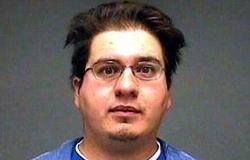 Efren Saldivar
Serial killer · USA · 1989
Efren Saldivar (born 30 September 1969) was an American serial killer who murde…
50 victims
Efren Saldivar
Serial killer · USA · 1989
Efren Saldivar (born 30 September 1969) was an American serial killer who murde…
50 victims
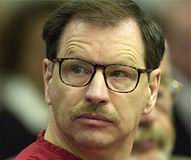 Gary Ridgway
Serial killer · USA · 1982
Gary Leon Ridgway Ridgway was born 18-February-1949 in Salt Lake City, UT. He w…
49 victims
Gary Ridgway
Serial killer · USA · 1982
Gary Leon Ridgway Ridgway was born 18-February-1949 in Salt Lake City, UT. He w…
49 victims
 Charles Cullen
Serial killer · USA · 1984
Charles Cullen (born February 22, 1960) was a former nurse and the most prolifi…
45 victims
Charles Cullen
Serial killer · USA · 1984
Charles Cullen (born February 22, 1960) was a former nurse and the most prolifi…
45 victims
 Carl Williams
Murderer · Australia · 2003
Carl Antony Williams (b. October 13, 1970) was an Australian convicted hitman a…
4 victims
Carl Williams
Murderer · Australia · 2003
Carl Antony Williams (b. October 13, 1970) was an Australian convicted hitman a…
4 victims
 Seiji Katagiri
Mass murderer · Japan · 1982
Seiji Katagiri (片桐 清二 Katagiri Seiji) served as Captain of Japan Airlines Fligh…
24 victims
Seiji Katagiri
Mass murderer · Japan · 1982
Seiji Katagiri (片桐 清二 Katagiri Seiji) served as Captain of Japan Airlines Fligh…
24 victims
 Jasen Shane Busby
Murderer · USA · 1995
Name: Jasen Shane Busby Status: Executed by lethal injection in Texas on August…
2 victims
Jasen Shane Busby
Murderer · USA · 1995
Name: Jasen Shane Busby Status: Executed by lethal injection in Texas on August…
2 victims
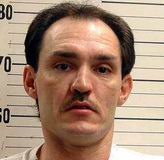 Hubert Glenn Sexton
Murderer · USA · 2000
Hubert Glenn Sexton was convicted in Tennessee for first degree murder of Stanl…
2 victims
Hubert Glenn Sexton
Murderer · USA · 2000
Hubert Glenn Sexton was convicted in Tennessee for first degree murder of Stanl…
2 victims
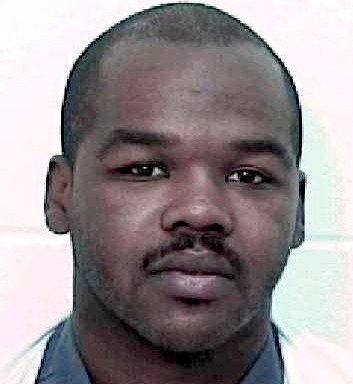 Curtis Osborne
Murderer · USA · 1990
Curtis Osborne was a male inmate convicted by a Spalding County jury of the mur…
2 victims
Curtis Osborne
Murderer · USA · 1990
Curtis Osborne was a male inmate convicted by a Spalding County jury of the mur…
2 victims
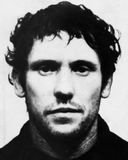 Barry Prudom
Murderer · United Kingdom · 1982
Barry Prudom was the prime suspect in the killings of police officers after pol…
3 victims
Barry Prudom
Murderer · United Kingdom · 1982
Barry Prudom was the prime suspect in the killings of police officers after pol…
3 victims
- Gender
- male
- Country
- USA
- Location
- N ew York/North Carolina/South Carolina , USA
- Date of birth
- October 15, 1967
- Age at first offence
- 20
- Characteristics
- rape, mentally ill, alcohol, drug addict, serial rapist
- Victim profile
- Patsy Vineyard / Velma Gray / Jayme Hurley / Katherine Johnson
- Method of murder
- Strangulation
- Date(s) of murder
- 1987 - 1990
- Years active
- 1987–1990
- Date of arrest
- J uly 20, 1990
- Status
-
Sentenced to death
Sentenced to death in North Carolina on October 6, 1995; death sentence affirmed (no error)
Case identification
Lesley Eugene Warren
Background
Lesley Eugene Warren was born on October 15, 1967 in Candler, North Carolina. He was the oldest of two siblings and had been physically and psychologically abused since birth by his father. He was diagnosed with conduct disorder and schizoid personality disorder, and his IQ was measured at 115-125. Warren achieved his GED after dropping out of school during middle school. He received a dishonorable discharge from the military and was a heavy alcohol and drug abuser. He killed only female victims who were good-looking and white from age 20 to 40, from April 1987 to 7/16/1990. He usually killed his victims close to where he was living at the time. He used a gun to threaten the women he ultimately strangled each one to death, and he was known as “The Babyface Killer” (a true crime book was written about him under this nickname).
Warren was described as a good-looking and charismatic man who charmed and seduced his victims before murdering them. Investigators believed that he was responsible for at least eight to ten other murders of women. He was arrested 7/21/1990 and convicted 9/15/1993 and was placed on Death Row in Central Prison, North Carolina for the last two victims.
Patsy Diane Vineyard was born on May 1, 1967. She was survived by her parents and one sister, one brother, and two half brothers. Warren allegedly met Patsy Vineyard at a bar in May of 1987 while her husband was out of town. Warren allegedly went with her to the then-abandoned Madison Barracks where Warren strangled her and threw her body into the Black River near Sackets Harbor. On May 21, 1987, Patsy’s husband returned to their home to find her not there and reported her as a missing person. Patsy Vineyard had come from Tennessee where she was the only one of her family to move away from the area, marrying a soldier; Pvt. Michael Vineyard. One of her family members described her as “the most loving person anyone would ever want to meet.”
Warren was not tried for Patsy Vineyard’s murder. He received a life sentence for killing Velma Gray in Spartanburg, South Carolina, and for the Asheville murders of Jayme Hurley and Katherine Johnson.
The offence
Warren was indicted for first-degree murder of Katherine Johnson. The jury found him guilty of first-degree murder on the basis of premeditation and deliberation.
The State’s evidence tended to show that on 15 July 1990 Terri Quinby attended the Radisson Hotel employees’ picnic at Cedrow Park in High Point, North Carolina, with her two brothers, her sister, and her children and their children. Warren went with Ms. Quinby and her family to the picnic. Ms. Quinby introduced Katherine Johnson, whom she knew when Johnson worked part-time in the Radisson gift shop, to Warren at the picnic. They played softball, ate, and drank beer.
After the picnic, around 4:00 p.m., many of the Radisson group, including Warren, went to Applebee’s. At Applebee’s Warren told Ms. Quinby’s brother Freddy he would “have her [the victim] by the end of the night” and that “he would have her [the victim] before the night was over, for us to watch and see.” Ms. Quinby and the rest of her family, along with Warren and the victim, went to the house of Ms. Quinby’s sister, Robin, for dinner. The victim rode with Warren on his motorcycle, and Robin drove the victim’s car from Applebee’s to Robin’s house. At approximately 9:00 p.m. they all went to Ms. Quinby’s house. After sitting on the porch for a while, Warren and the victim went for a motorcycle ride and drove by Ms. Quinby’s house around 11:30 p.m. Warren returned about an hour later to get the victim’s car. He said the victim could not drive it and that they were going to get a room at the Town House Motel.
On the morning of 16 July 1990 Warren was sleeping on Ms. Quinby’s couch. He said he left the victim at the motel and walked back so that she could drive to class that morning. Warren spent the week at Ms. Quinby’s house.
On 20 July 1990 High Point police arrested Warren at the Quinby house on a South Carolina warrant. When he was arrested and searched, police found a set of keys which Warren claimed were his; police later discovered that the keys were to the victim’s car.
During investigation, Warren confessed to killing Katherine Johnson in High Point and stated he placed the victim’s body in the trunk of her car and parked it in a parking deck near the Radisson. High Point officers located the victim’s car and found the victim’s naked, decaying body in the trunk, with a bra wrapped around her neck. Warren’s fingerprints were found outside the driver’s side door, and his right palm print was found on the outside of the trunk. Warren further stated that he and the victim had had sex in a soccer field. Officers searched the athletic field and found the victim’s shoes near an unmown grass embankment. The autopsy revealed areas of hemorrhage indicating strangulation by pressure to the neck, and the pathologist determined that the cause of death was asphyxia due to strangulation. The victim’s decomposed body was identified using dental records.
Warren presented no evidence at the guilt phase.
Investigation
On 28 May 1990 Asheville Police Department Detective Lambert questioned Warren about the disappearance of Jayme Hurley. Warren admitted he saw Hurley on 24 May 1990, the day she disappeared, consented to leaving his van at the Police Department so it could be searched, and returned on 29 May 1990 to pick up his van.
On 29 May 1990 Warren was advised of Miranda rights and signed a rights waiver form. He was informed the police had found a pocketbook in his van; he first said it belonged to his wife, and Detective Lambert told him the pocketbook was identified as belonging to Hurley. After this conversation, Warren stated he may need or may want to get an attorney. Despite Warren’s request for counsel, officers decided to continue questioning because Hurley might still be alive.
During the questioning Warren stated that Hurley had died from a cocaine overdose and that Warren had thrown her body into the French Broad River. After the questioning, Warren was arrested on an outstanding arrest warrant for failure to produce title to a motor vehicle and for misdemeanor larceny of Hurley’s pocketbook.
Warren was represented by Scott Jarvis at the bond hearing on the misdemeanor charges. At the bond hearing on 7 June 1990 the district attorney anticipated additional charges but was not ready to file these charges. The judge reduced defendant’s bond and Warren was released.
On 7 June 1990 Warren went to the Police Department to get his van. Detective Lambert asked for and Warren consented to give blood, hair, and urine samples. After samples were collected, Warren agreed to return the next day to talk to Detective Lambert about Hurley. Warren did not return on 8 June 1990; instead his mother and Keith Cochrane, Mr. Jarvis’ investigator, both left messages that Mr. Jarvis wanted to be present for anything further concerning the misdemeanor charges or the Hurley disappearance.
Detective Lambert investigated in South Carolina to obtain background information from Warren’s family. Detective Lambert learned that South Carolina authorities suspected Warren of homicide in the Spartanburg area. South Carolina officials used a trap and trace device on the phone of Warren’s wife to locate Warren in High Point and issued a warrant for his arrest for first-degree murder and kidnapping.
On 20 July 1990 the High Point Police Department was notified there was an outstanding South Carolina warrant for Warren’s arrest. High Point police arrested Warren at Terri Quinby’s house at 2:44 p.m. Warren was taken to the police station until Asheville police arrived, and about 6:30 p.m. an Asheville police officer took him back to Asheville. Keith Cochrane asked Asheville police to notify Mr. Jarvis when Warren arrived in Asheville, but he was never contacted.
Warren arrived in Asheville and was interviewed by Detective Lambert at 9:10 p.m. after he was advised of and waived his rights without ever invoking his Fifth Amendment right to have counsel present. Detective Lambert questioned Warren about the South Carolina and Asheville homicides and another murder for which Warren was implicated in New York. Warren discussed the murders and confessed to committing all three murders, including the murder of Hurley in Asheville. Afterward Detective Lambert told Warren he thought there were more killings and it would be a good time to admit to them. Warren then confessed to killing Katherine Johnson in High Point and explained events leading up to and following her death.
The High Point Police Department was informed of these facts and discovered the body of Katherine Johnson in the trunk of her car. At approximately 12:09 a.m. on 21 July 1990 Warren signed a statement confessing to four murders. After that statement, Warren willingly discussed the murders with investigators from other agencies.
On the morning of 21 July 1990 an arrest warrant was issued for Warren by a Guilford County magistrate. Lieutenant Dunn of the High Point Police Department served the warrant on Warren in Asheville. Warren told Lieutenant Dunn he would like to speak with High Point investigators concerning the victim’s murder.
On Monday, 23 July 1990 Detectives Grubb and McNeill of the High Point Police Department and Special Agent Bob Padgett with the State Bureau of Investigation (“SBI”) went to Asheville to interview Warren. Warren was given Miranda warnings again and waived his rights. During the interview someone poked his head in the door and closed the door when Warren made an arm motion as if to say “go on and leave us alone.” Warren said, “my lawyer,” and continued talking. The person was later identified as Mr. Cochrane. Warren never asked to have an attorney present during the interview, and at the conclusion of the interview Warren said he would be glad to talk to officers again.
Arrest
on 20 July 1990 on a South Carolina warrant for first-degree murder and kidnapping. He was transported and interviewed in Asheville.
Warren was arrested 7/21/1990 in connection with the investigation described in the background facts.
Trial
Warren was indicted on 17 September 1990 for the first-degree murder of Katherine Johnson (“victim”). The jury found defendant guilty of first-degree murder based on premeditation and deliberation.
Pretrial issues: confession and right to counsel
Warren argued that his confession was obtained in violation of his Fifth Amendment right against self-incrimination and his Sixth Amendment right to counsel.
On the Sixth Amendment issue, the court addressed that Warren was arrested in High Point on a South Carolina warrant for first-degree murder, taken to Asheville, questioned about a murder there as well as murders in South Carolina and New York, and first confessed to those murders before confessing to the murder in High Point of Katherine Johnson which was the subject of this trial. The court concluded that the Sixth Amendment right to counsel was offense-specific and had not attached to the homicides when Warren was arrested because no adversarial judicial proceedings had been instituted in the murder cases. It further held there was no bar to admission of the statements under the Sixth Amendment or Article I, Section 23 of the North Carolina Constitution and N.C.G.S. § 15-4 under the described circumstances, including the sequence of charges and confessions.
On the Fifth Amendment issue, the court addressed Warren’s motion to suppress his statement. Warren had invoked his Fifth Amendment right to counsel on 29 May 1990 during custodial interrogation for a murder in Asheville. He was released on 7 June. The murder in this case occurred in High Point on 15 July 1990, and Warren was arrested on 20 July. The court held Warren waived his rights and confessed, and it concluded that a break in custody rendered Edwards v. Arizona inapplicable.
Pretrial and guilt-phase rulings summarized in appellate review
The appellate review included the following issues and holdings:
- The trial court did not err in denying defendant’s motion to dismiss due to insufficient evidence of premeditation and deliberation, where the State’s evidence showed lack of provocation, manual strangulation, cramming the body into the trunk, parking the car in a parking deck, and fabrication of a story to conceal the murder.
- The court did not err in sustaining objections and intervening ex mero motu regarding defense counsel’s closing argument attempts to explain proof beyond a reasonable doubt, including “moral certainty” references.
- The court did not err by overruling objections to the prosecutor’s closing argument comments described as a corrected lapsus linguae and commentary anticipating defense closing arguments.
- The court did not err by overruling objections to the prosecutor’s argument regarding intent, fixed purpose, and premeditation and deliberation from start to finish.
- The court held there was no prejudicial error regarding the prosecutor’s argument that premeditation and deliberation could be found at any point prior to the victim dying, and it concluded any impropriety was promptly corrected by requiring that premeditation and deliberation be found prior to the killing.
- The court addressed prosecutor’s argument asking jurors to imagine fear and emotions of a victim and concluded it was not improper; it also acknowledged that arguments asking jurors to put themselves in the place of victims will not be condoned.
- The court concluded prosecutor’s character comments in closing were based on facts in evidence.
- The court concluded no error in the cumulative effect of alleged errors in prosecutor’s argument.
- The court did not err in admitting seven photographs of the victim’s body, finding them relevant and probative, and concluding their probative value was not outweighed by unfair prejudice.
- The court concluded no plain error where jury was instructed on flight and the court found the State still had to prove each element of the charged offense.
- The court found no plain error in instructions on the elements of second-degree murder as taken directly from pattern jury instructions.
- The court found no error in prohibiting jury notes in the absence of objection by the parties, where the amended statute applied because the trial began on 18 March 1996.
Jury selection issues
Warren argued that the trial court erred by excusing for cause juror Alma Larson based on religious opposition to the death penalty. The court held there was no error: the juror was excused because she was unable to follow the law and could not vote for death. It also held no liberty interest under the North Carolina Constitution was violated because exclusion was based on inability to perform lawful duties as a juror.
The appellate review also addressed a trial court comment that no juror would be excused for business reasons. The court held the argument that the comment chilled juror responses was not borne out by the record, noting two potential alternate jurors were asked and excused with consent of counsel for business reasons after the judge’s remarks.
Sentencing phase issues
After the capital sentencing proceeding, the jury recommended a sentence of death and the trial court entered judgment in accordance with the recommendation.
Key appellate holdings included:
- Denial of a request for an instruction that life imprisonment meant life without parole was proper given the timing of the offense and the statutory changes.
- Denial of a pretrial motion for appointment of counsel regarding a motion for appropriate relief was not an abuse of discretion.
- The trial court did not err in peremptory instructions on mitigating circumstances where the jury was told mitigating circumstances must be established by a preponderance of the evidence and later that they should indicate “credible or convincing” regarding credibility of evidence supporting a mitigating circumstance. The appellate court concluded this was not improper in the context of the charge and cited State v. Holden.
- The court held there was no plain error related to an omission in an issues and recommendation form where the form inadvertently omitted the last three words “circumstance to exist” regarding one mitigating circumstance; it was found harmless beyond a reasonable doubt.
- The court held the aggravating circumstance under N.C.G.S. § 15A-2000(e)(2) could be submitted where prior murders preceded the charged murder but convictions occurred before sentencing, rejecting the timing argument.
- The court rejected arguments that use of a pattern jury instruction omitting “on or about the alleged date” violated ex post facto principles because the instruction was altered to conform to the law and the law did not change as applied.
- The court found no error in the judge’s response to the jury’s questions regarding the aggravating factor (e)(2) when considering whether both parts of a sentence had to be true.
Regarding parole eligibility, the court held the trial court did not err by denying a request for an instruction on parole eligibility and found the prosecutor did not argue future dangerousness.
The appellate court also held:
- The court did not err by admitting postmortem photographs of victims from prior murder convictions in prior cases because they illustrated testimony and supported the prior capital felony aggravating circumstance.
- The court overruled objections to prosecutor’s capital sentencing closing comments including quotes from judicial opinions, calling defendant a coward, and other references described in the appellate review.
- The court held no gross impropriety requiring intervention ex mero motu where prosecutor commented in opening statement about prior convictions, including referring to “capital or first degree murder.”
- The court held no mistrial was required where defendant’s witness inadvertently mentioned death row only once on direct examination and it was never brought to the attention of the jury.
Preservation issues and proportionality review
The appellate review included preservation arguments, and the court held there was no compelling reason to depart from prior holdings. It concluded:
- The record fully supported the aggravating circumstance that defendant had been previously convicted of another capital felony (N.C.G.S. § 15A-2000(e)(2)).
- There was no indication the death sentence was imposed under the influence of passion, prejudice, or any other arbitrary factor.
- The death sentence was not excessive or disproportionate after proportionality review, including comparison to cases where death was found disproportionate.
The appellate court stated “NO ERROR.”
Timeline
- 17 September 1990 — Warren was indicted for the first-degree murder of Katherine Johnson.
- 29 May 1990 — Warren was advised of rights and invoked his Fifth Amendment right to counsel during questioning in Asheville about Jayme Hurley.
- 7 June 1990 — Warren was released after a bond hearing and later consented to provide blood, hair, and urine samples at the Police Department.
- 15 July 1990 — The murder of Katherine Johnson occurred in High Point.
- 18 March 1996 — Warren’s trial began.
- 20 July 1990 — Warren was arrested by High Point police at Terri Quinby’s house on a South Carolina warrant.
- 21 July 1990 — Warren signed a statement confessing to the four murders; an arrest warrant was issued by a Guilford County magistrate.
- 23 July 1990 — Detectives Grubb and McNeill and Special Agent Bob Padgett interviewed Warren again in Asheville.
- 15 October 1997 — Heard in the Supreme Court (Parker, Justice).
- October 6, 1995 — Warren was sentenced to death in North Carolina.
Outcome
Warren was found guilty of first-degree murder of Katherine Johnson. Following a capital sentencing proceeding, the jury recommended a sentence of death, and the trial court entered judgment in accordance with that recommendation. The appellate court affirmed the judgment and found “NO ERROR.”
Other details
Warren was sentenced in North Carolina and was placed on Death Row in Central Prison, North Carolina. He was also described as receiving a life term in South Carolina in 1993 for a different murder.
The appellate review also included the following quoted statements:
- Warren told Ms. Quinby’s brother Freddy he would “have her [the victim] by the end of the night” and that “he would have her [the victim] before the night was over, for us to watch and see.”
- Warren stated, during the Asheville interview when someone interrupted the door, “my lawyer,” and continued talking.
- During the transcript-provided closing discussion of proof language, defense counsel quoted from State v. Phillip:
- “A reasonable doubt is a fair and honest doubt based on common sense and reason[] and one that leaves your mind so that you cannot say that you have an abiding conviction to a moral certainty of the defendant's guilt.” [ Id . at 268, 134 S.E.2d at 391.]
- “If the jurors are not satisfied to a moral certainty of the defendant's guilt, they have a reasonable doubt.” [ Id . at 269, 134 S.E.2d at 391.]
- Warren’s confession as recounted in the trial narrative included that he and the victim had had sex in a soccer field, and officers searched for shoes at the athletic field.
The appellate record included jury-instruction language regarding flight:
- “Now the State contends that the defendant fled, and evidence of flight may be considered by you, together with all the other facts and circumstances in this case, in determining whether the combined circumstances amount to an admission or show a consciousness of guilt. However, proof of this circumstance is not sufficient in itself to establish the defendant's guilt. Further, this circumstance has no bearing on the question of whether the defendant acted with premeditation and deliberation. Therefore, it is not to be considered by you as evidence of premeditation and deliberation.”
Spotted an error, or have more information about this case?