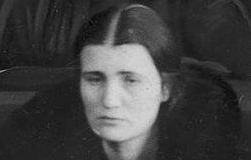
Rita Gorgonowa
Murderer Lila Gladys Young
Murderer · Canada · 1928
Lila Gladys Young was also named Lila Gladys Lila Coolen. Lila Gladys Young was…
100 victims
Lila Gladys Young
Murderer · Canada · 1928
Lila Gladys Young was also named Lila Gladys Lila Coolen. Lila Gladys Young was…
100 victims
 Florence Ransom
Murderer · United Kingdom · 1940
Florence Ransom was a middle-aged woman who was described as physically beautif…
3 victims
Florence Ransom
Murderer · United Kingdom · 1940
Florence Ransom was a middle-aged woman who was described as physically beautif…
3 victims
 Martha Wise
Murderer · USA · 1924
Martha Wise (born 1885; died June 28, 1971), also known as “the Borgia of Ameri…
3 victims
Martha Wise
Murderer · USA · 1924
Martha Wise (born 1885; died June 28, 1971), also known as “the Borgia of Ameri…
3 victims
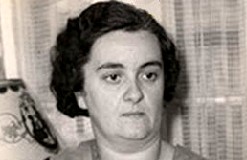 Mary Frances Creighton
Murderer · USA · 1923
Mary Frances Creighton (c. 1898 - July 16, 1936) was a housewife and was execut…
3 victims
Mary Frances Creighton
Murderer · USA · 1923
Mary Frances Creighton (c. 1898 - July 16, 1936) was a housewife and was execut…
3 victims
 Jessica Tata
Murderer · USA · 2011
Jessica Tata was a Houston home day care owner who fled to Nigeria after a fire…
4 victims
Jessica Tata
Murderer · USA · 2011
Jessica Tata was a Houston home day care owner who fled to Nigeria after a fire…
4 victims
 Ramiro Felix Gonzales
Murderer · USA · 2001
Name: Ramiro Felix Gonzales · TDCJ Number: 999513 · Date of Birth: 11/05/1982 ·…
1 victim
Ramiro Felix Gonzales
Murderer · USA · 2001
Name: Ramiro Felix Gonzales · TDCJ Number: 999513 · Date of Birth: 11/05/1982 ·…
1 victim
 Michael Alig
Murderer · USA · 1996
Michael Alig was the offender. · “Angel” Melendez was the victim. Michael Alig…
1 victim
Michael Alig
Murderer · USA · 1996
Michael Alig was the offender. · “Angel” Melendez was the victim. Michael Alig…
1 victim
- Gender
- female
- Country
- Poland
- Location
- Brzuchowice, Poland
- Date of birth
- March 7, 1901
- Age at first offence
- 30
- Characteristics
- rape, convicted rapist, domestic violence
- Victim profile
- Elzbieta (Lusia) Zaremba, 17
- Method of murder
- Hitting in the head by a blunt object, probably an ice pick
- Date(s) of murder
- December 30, 1931
- Years active
- 1931
- Date of arrest
- Next day
- Status
-
Released
Released on September 3, 1939
Case name
Rita Gorgonowa
Personal details
Rita Gorgonowa was also known by the real name Emilia Margerita Gorgon, née Ilic.
She was a governess and the main character of one of the most infamous crime stories of the Second Polish Republic.
Background
Emilia Margerita Ilic was either of Serbian or Croatian origin.
Her father was a physician who died when she was three. Her mother later remarried.
At the age of 15, Margerita married a Colonel of the Austro-Hungarian Army, Erwin Gorgon.
Probably in 1918, she gave birth to a son and settled in Lwow with her husband’s family.
In 1921, Erwin Gorgon left Poland and immigrated to the United States in search of a job.
Soon afterwards, Rita was forced by her in-laws to leave their house after they had wrongly accused her of immoral behaviour. She left her son with the in-laws and supported herself by babysitting.
Rita was regarded as a very attractive woman.
Relationship and household work
In 1924, Rita became a governess at the house of the 41-year-old architect Henryk Zaremba.
She lived at his villa in Brzuchowice, 7 kilometers from Lwow.
Before employing her, Henryk Zaremba had separated from his wife, who suffered from mental problems and had been locked in a psychiatric ward.
Henryk Zaremba and his ex-wife had two children: daughter Elzbieta (Lusia), born 1914, and son Stanislaw, born 1917.
Apart from babysitting, Gorgonowa ran the house.
After about a year, Rita and Henryk began an affair, which produced daughter Romana, born in 1928.
Rita later claimed that she was hoping to marry the wealthy architect.
A close relationship between Rita and Henryk was noticed by teenage Lusia, who often argued about it with her father.
Rita’s husband’s and Henryk Zaremba’s circumstances were described as involving older male relationships, with her physician father having died when she was a toddler and her having spent much of her life searching for a father figure and security.
The offence
On the night of December 30/31, 1931, Elzbieta (Lusia), who was sleeping in her bed, was hit in the head by a blunt object, probably an ice pick, and died on the spot.
Investigators concluded that the murder was carried out by a resident of the house. They stated there were no footsteps on the windowsill and in the snow around the building, no traces of a break-in, and that family dog Lux did not bark that night.
According to an official police report, Gorgonowa crossed the corridor from her room to Lusia’s room, killing the girl. She then opened the window and penetrated her victim’s vagina with a finger, trying to make it appear as a rape.
Upon leaving Lusia’s room, Gorgonowa noticed Lux, the dog, and hit it in the head. The canine wailed, waking Stas Zaremba (Stanislaw), who was sleeping in the dining room.
The boy entered the corridor, noticing a person dressed in a sheepskin standing next to a Christmas tree. Stas later claimed it was Rita.
Unable to get back to her bedroom, Gorgonowa ran out through the front door.
While entering her bedroom, she broke a small window, cutting her finger. She then changed her nightdress and joined other residents of the house who had been alarmed by Stas.
On December 31, Gorgonowa threw the ice pick into a pool, losing a candle.
Later, a bloodstained handkerchief was found, and traces of blood were found on Rita’s sheepskin.
The blood on the handkerchief and the sheepskin was described as type A, while Gorgonowa’s blood was described as type 0.
A finding by police experts was said to have been undermined by the famous scientist from Lwow, Ludwik Hirszfeld.
Investigation and arrest
The murder was discovered by Stanislaw Zareba, who was awakened by a dog, and alerted residents of the house.
Doctor Ludwik Csala was called for, together with a police officer, who scanned the room.
Since circumstantial evidence pointed at Gorgonowa, she was immediately arrested.
Also, Henryk Zaremba, suspected of cooperation with murderers, was locked for six weeks.
Police detectives interviewed a gardener and a teenage boy from Brzuchowice, who was secretly in love with Lusia.
During the interrogation, Gorgonowa maintained her innocence.
Rita later vehemently declared her innocence.
Trial
On May 14, 1932, after a short trial, the District Court at Lwow sentenced Rita Gorgonowa to death.
Legal mistakes and appeals by her defence changed the verdict later by the Supreme Court.
Her defence counsel were Mieczyslaw Ettinger of Warszawa, Jozef Wozniakowski of Krakow and Maurycy Axer of Lwow.
While in prison, Margerita gave birth to daughter Ewa on September 20, 1932.
Her case was moved to District Court in Krakow, where on April 29, 1933, Rita was sentenced to eight years.
Sentencing and time served
Rita was sentenced to death on May 14, 1932.
Her verdict was later changed by the Supreme Court due to legal mistakes and appeals by her defence.
On April 29, 1933, she was sentenced to eight years in prison.
She was to be released on May 24, 1940, but due to the German Invasion of Poland, she was released on September 3, 1939.
Release and aftermath
Her post-1939 fate had not been established.
Further fate of Rita Gorgonowa was unknown.
Her daughters claimed that she survived World War II.
According to some sources, she moved to Silesia or ran a newsstand in Opole.
Other sources claimed she left Poland and settled in South America.
In 2014, Rita’s daughter Ewa and daughter-in-law Margarita Ilic-Lisowska declared their intention to re-open the trial and change of the verdict, but it had not happened.
Film and later cultural references
In 1977, a feature film The Case of Gorgonowa was made by director Janusz Majewski, with Ewa Dalkowska playing the role of Rita.
Other details
Lusia Zaremba was identified as the teenage girl buried in the Lychakiv cemetery, with a placard that also included Henryk Zaremba.
Stanislaw Zaremba was the son born in 1917.
Romana was born in 1928.
Rita had a son and two daughters.
The winter period between Christmas and New Year’s in Poland was described as usually a time of relaxation, and the weather was described as snowy and cold during the 1930 holiday season.

Spotted an error, or have more information about this case?