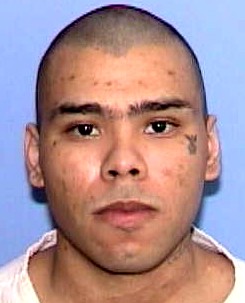
Ramiro Felix Gonzales
Murderer Russell Ellwood
Murderer · USA · 1991
Russell Ellwood was a former taxi driver. Authorities suspected him of killing…
20 victims
Russell Ellwood
Murderer · USA · 1991
Russell Ellwood was a former taxi driver. Authorities suspected him of killing…
20 victims
 Robert Martines Perez
Murderer · USA · 1994
Name: Robert Martines Perez · Other name used in proceedings: Robert Martinez P…
15 victims
Robert Martines Perez
Murderer · USA · 1994
Name: Robert Martines Perez · Other name used in proceedings: Robert Martinez P…
15 victims
 Billy Frank Vickers
Murderer · USA · 1993
Billy Frank Vickers Vickers was executed by lethal injection in Texas on Januar…
14 victims
Billy Frank Vickers
Murderer · USA · 1993
Billy Frank Vickers Vickers was executed by lethal injection in Texas on Januar…
14 victims
 Kayoko Nakai
Murderer · Japan · 2000
Kayoko Nakai was 66 and ran a rival telephone dating club in Kobe at the time o…
4 victims
Kayoko Nakai
Murderer · Japan · 2000
Kayoko Nakai was 66 and ran a rival telephone dating club in Kobe at the time o…
4 victims
 Daniel Wayne Cook
Murderer · USA · 1987
Daniel Wayne Cook worked at a restaurant in Lake Havasu City, Arizona, and shar…
2 victims
Daniel Wayne Cook
Murderer · USA · 1987
Daniel Wayne Cook worked at a restaurant in Lake Havasu City, Arizona, and shar…
2 victims
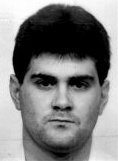 Cameron Willingham
Murderer · USA · 1991
Cameron Willingham was convicted of capital murder for murdering his three chil…
3 victims
Cameron Willingham
Murderer · USA · 1991
Cameron Willingham was convicted of capital murder for murdering his three chil…
3 victims
 Terri Rachals
Angel of Death? · USA · 1985
Terri Rachals was a nurse in the Surgical Intensive Care Unit of the Phoebe Put…
0 victims
Terri Rachals
Angel of Death? · USA · 1985
Terri Rachals was a nurse in the Surgical Intensive Care Unit of the Phoebe Put…
0 victims
- Gender
- male
- Country
- USA
- Location
- Medina County, Texas, USA
- Date of birth
- November 5, 1982
- Age at first offence
- 19
- Characteristics
- rape
- Victim profile
- Bridget Townsend (female, 18)
- Method of murder
- Shooting
- Date(s) of murder
- January 15, 2001
- Years active
- 2001
- Date of arrest
- —
- Status
-
Sentenced to death
Sentenced to death on September 27, 2006
Case information
- Name: Ramiro Felix Gonzales
- TDCJ Number: 999513
- Date of Birth: 11/05/1982
- Date received: 09/27/2006
- Age (when received): 23
- Education level: 7th Grade
- Date of offence: 01/15/2001
- Age (at the offence): 18
- County: Medina
- Race: Hispanic
- Gender: Male
- Hair color: Black
- Height: 5 ft 2 in
- Weight: 136
- Eye color: Brown
- Native county/state: Native
- Prior occupation: Frio Texas welder, fence builder
- Prior prison record: TDCJ#1259816 on a life sentence for aggravated sexual assault with deadly weapon from Bandera County
The offence
Gonzales was charged with intentionally causing the death of Bridget Townsend by shooting her with a firearm during the course of committing or attempting to commit aggravated sexual assault, kidnapping, or robbery.
On January 15, 2001 in Medina County, Gonzales kidnapped an eighteen year old female, sexually assaulted and fatally shot her.
Investigation
While Gonzales was in the Bandera County jail waiting to be transported to prison on another matter, he asked to speak with sheriff James MacMillian. When MacMillian met with him, Gonzales stated that he had information concerning Townsend, a person who had been reported missing almost two years earlier. MacMillian did not believe him initially, but when Gonzales asserted that he could show where Townsend's body was, MacMillian took him more seriously.
With Gonzales sitting in the passenger seat giving directions and the jail administrator riding in the back, MacMillian drove out to the ranch where Gonzales and his family lived. After the paved road ended at the ranch headquarters, they continued driving over caliche roads and jeep trails to a remote cedar-covered hillside. They walked another hundred yards to the location where Gonzales indicated that they would find Townsend's remains. As they walked, Gonzales described the jewelry Townsend had been wearing, where she had been standing when he shot her, and where he had put her body. They saw a human skull about ten feet from the place Gonzales said he had left her. They observed other bones scattered by wildlife, and they found jewelry similar to the jewelry described by Gonzales. After MacMillian and the jail administrator tied yellow evidence tape on the trees to mark the location, they drove back to Bandera. MacMillian left markers along the route to retrace it.
During the drive back to the sheriff's office, Gonzales volunteered two different stories. Initially, he stated that some people in the Mexican Mafia had needed a place to dispose of a body, and so he let them use that location. Then he stated that he was present while other people committed an offense, but all he did was show them how to get to that location. After returning to the sheriff's office, Gonzales gave additional conflicting stories. A Texas Ranger, Skylor Hearn, testified that Gonzales first told him that he had been hired by the Mexican Mafia and Townsend's boyfriend, Joe Leal, to kill Townsend. Next, Gonzales indicated that the Mexican Mafia was not involved, but that he and Leal had agreed that he would kill Townsend. Finally, Gonzales stated that Leal had not been involved, and that he had killed Townsend on his own. Gonzales then admitted that his previous stories had been lies. Hearn testified that Gonzales provided details in his final story that were consistent with evidence that was discovered during the investigation.
The appellant gave a statement that was audiotaped and typed. Gonzales reviewed, revised, and signed the typed statement. At trial, Hearn read the typed statement out loud, and the audiotape was played.
While Hearn was taking Gonzales's statement, MacMillian showed investigators the location of Townsend's remains. Investigators found Townsend's skull, most of her long bones and some small bones, her clothing, her jewelry, and her shoes. Townsend's rib cage and vertebrae were never found. Gunshot residue tests on Townsend's shirt revealed the presence of lead. Hearn later seized three high-powered rifles with scopes that he found in Gonzales's grandfather's house and ranch truck. Hearn showed them to Gonzales, along with a rifle Hearn had borrowed from the sheriff's department, and asked if Gonzales recognized any as the murder weapon. Gonzales immediately selected the .243-caliber rifle that Hearn had seized from the ranch truck.
Arrest
No separate arrest event was described in the provided material beyond Gonzales being in the Bandera County jail waiting to be transported to prison on another matter.
Trial
Statement read at trial and description of events
Hearn read the typed statement out loud at trial and the audiotape was played.
In his statement, Gonzales related that Leal, Townsend's boyfriend, was his drug supplier. Gonzales said that on or about January 14, 2001, he telephoned Leal's house because he wanted more drugs. Townsend answered the phone and told him that Leal was at work. Gonzales then drove to Leal's house in order to steal cocaine. When Townsend answered the door, Gonzales walked past her to the bedroom closet where he knew Leal kept drugs, and he began searching. Gonzales found between $150 and $500 in cash on a closet shelf and put it in his pocket.
Gonzales said he did not respond when Townsend asked him what he was doing. Townsend picked up the telephone and started dialing, telling him that she was calling Leal. Gonzales pushed her down, dragged her into the bedroom, and tied her hands and feet with nylon rope found in the closet. Gonzales asked Townsend if Leal had any drugs, and she told him no. Gonzales carried her to the front door, paused to turn out the lights so no one would see them, and then carried her to his truck.
Gonzales said he drove Townsend to the ranch. When they arrived, he stopped long enough to retrieve a high-powered .243-caliber deer rifle with a scope that he knew was kept in his grandfather's ranch truck. He stated that at the time he took the rifle, he intended to shoot Townsend because he did not want her to tell anyone that he had "torn up" Leal's house and kidnapped her. Armed with the rifle, Gonzales drove Townsend to the location where her remains were later found.
Gonzales said he untied Townsend and walked her toward the brush, but when he started loading the rifle, Townsend began crying and asking for her mother. She told him she would give him money, drugs, or sex if he would spare her life. In response, Gonzales unloaded the rifle and took Townsend back to his truck, where he had sex with her. After she dressed, Gonzales reloaded the rifle, walked her back into the brush, and shot her. He said he listened as her body hit the ground, and then he drove home.
Gonzales said that after he got back to his grandparents' house, he removed the empty shell casing from the rifle and slung the casing away from the house. He put the rifle back into his grandfather's ranch truck and went inside, where he interacted with his family as though nothing had happened.
Testimony of Joe Leal
Joe Leal testified about the course of events that led him to report Townsend's disappearance to police. Leal said he spoke to Townsend on the telephone around 6:00 p.m. or 7:00 p.m., and she told him she had to get up early for work the next morning. He said that when he came home from work a little after midnight, he believed Townsend was asleep. Leal said her truck was parked outside and things "looked normal." Inside, Leal said Townsend's purse and keys were on the counter as usual, but the house was cold because the heater had not been turned on. Leal said Townsend was not asleep on the couch where he expected her to be, so he went into the bedroom. Leal said he saw that she was not in the bed and looked around, noticing the door to the bedroom closet was open. Leal testified that a small box he kept on a closet shelf was sitting out on the ironing board, open and empty, and it had contained between $200 and $300 in cash. Leal testified that Townsend never took money from that box without asking him first.
Leal testified that becoming concerned, he began calling friends and family to see if anyone knew where Townsend was. He said his sister and his friend helped him search the neighborhood. When they could not find her, Leal called the police. He also contacted Gonzales because Townsend had told Leal that Gonzales had come by the house earlier that day, and Leal hoped Gonzales might have seen something while he was there. Leal said Gonzales denied he had been there that day. Leal testified that when he told Gonzales that he might as well tell the truth because Townsend had told him that he had come by, Gonzales continued to deny it.
Sentencing
Gonzales was sentenced to death on September 27, 2006.
Appeals
- Gonzales, Ramiro F. v. The State of Texas
- June 17, 2009
- Mentioned as: Court of Criminal Appeals of Texas opinion AP-75,540 (TDCJ Number 999513)
Outcome
The legal outcome provided was that Gonzales was sentenced to death on September 27, 2006.
Other details
- Victim: Bridget Townsend — White Female
- Co-defendants: None
- Race and Gender of Victim: White Female
- Mentioned missing period: Townsend had been reported missing almost two years earlier before Gonzales told MacMillian he could show the location of her remains.
Spotted an error, or have more information about this case?