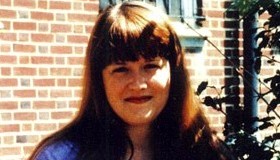
Kimberly Hricko
Murderer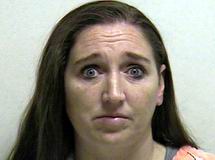 Megan Huntsman
Murderer · USA · 1996
Megan Huntsman was 40 at sentencing. She was a mother of three children who wer…
6 victims
Megan Huntsman
Murderer · USA · 1996
Megan Huntsman was 40 at sentencing. She was a mother of three children who wer…
6 victims
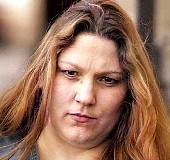 Angela Johnson
Murderer · USA · 1993
Angela Jane Johnson was convicted in federal court of aiding and abetting the m…
5 victims
Angela Johnson
Murderer · USA · 1993
Angela Jane Johnson was convicted in federal court of aiding and abetting the m…
5 victims
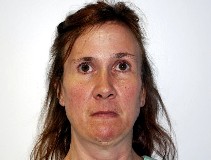 Michele Kalina
Murderer · USA · 1996
Michele Kalina pleaded guilty to murder for one of five infants she initially w…
5 victims
Michele Kalina
Murderer · USA · 1996
Michele Kalina pleaded guilty to murder for one of five infants she initially w…
5 victims
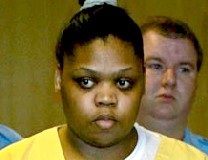 Tiffany Hall
Murderer · USA · 2006
Tiffany Hall was 24 when she was charged in September 2006. She later entered a…
5 victims
Tiffany Hall
Murderer · USA · 2006
Tiffany Hall was 24 when she was charged in September 2006. She later entered a…
5 victims
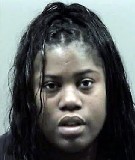 Banita Jacks
Murderer · USA · 2007
Banita Jacks was a Washington, DC resident convicted of murdering her four daug…
4 victims
Banita Jacks
Murderer · USA · 2007
Banita Jacks was a Washington, DC resident convicted of murdering her four daug…
4 victims
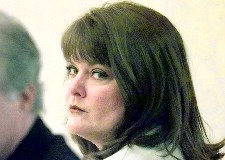 Susan Eubanks
Murderer · USA · 1996
Susan Dianne Eubanks, also referred to as Susan Eubanks, was convicted by a jur…
4 victims
Susan Eubanks
Murderer · USA · 1996
Susan Dianne Eubanks, also referred to as Susan Eubanks, was convicted by a jur…
4 victims
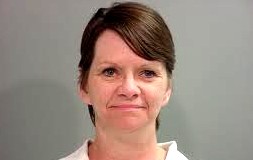 Delores Eggert
Murderer · USA · 2007
Delores Eggert (50) pleaded guilty to first-degree murder in the death of her m…
1 victim
Delores Eggert
Murderer · USA · 2007
Delores Eggert (50) pleaded guilty to first-degree murder in the death of her m…
1 victim
 Judy Valot
Murderer · USA · 1998
Judy Valot was convicted of second-degree murder in the killing of her boyfrien…
1 victim
Judy Valot
Murderer · USA · 1998
Judy Valot was convicted of second-degree murder in the killing of her boyfrien…
1 victim
 Luther Jerome Williams
Murderer · USA · 1988
Luther Jerome Williams was convicted in 1989 for the murder of John Robert Kirk…
1 victim
Luther Jerome Williams
Murderer · USA · 1988
Luther Jerome Williams was convicted in 1989 for the murder of John Robert Kirk…
1 victim
 Richard Donald Foster
Murderer · USA · 1984
Richard Donald Foster was executed by lethal injection in Texas on May 24, 2000…
1 victim
Richard Donald Foster
Murderer · USA · 1984
Richard Donald Foster was executed by lethal injection in Texas on May 24, 2000…
1 victim
 Bradley Murdoch
Murderer · Australia · 2001
Bradley John Murdoch was sentenced to life in prison (minimum 28 years) on Dece…
1 victim
Bradley Murdoch
Murderer · Australia · 2001
Bradley John Murdoch was sentenced to life in prison (minimum 28 years) on Dece…
1 victim
- Gender
- female
- Country
- USA
- Location
- Talbot County, Maryland, USA
- Date of birth
- 1965
- Age at first offence
- 33
- Characteristics
- poisoner, to collect insurance money, arson
- Victim profile
- Stephen Hricko, 35 (her husband)
- Method of murder
- Poisoning ( succinylcholine chloride)
- Date(s) of murder
- February 14, 1998
- Years active
- 1998
- Date of arrest
- 3 months after
- Status
-
Life imprisonment
Sentenced to life in prison plus 30 years on March 20, 1999
Case record: Kimberly Hricko
People
- Kimberly Michelle Hricko — surgical technician; defendant.
- Stephen Hricko — victim; Kimberly Hricko’s husband.
- Steven Hricko — victim (also referred to as Stephen Hricko); husband.
- Mary Hricko — Hricko’s mother.
- Jennifer Hricko — victim’s sister.
- Mary Hricko (age 71) — spoke to the judge.
- Robert Dean — prosecutor.
- Harry Trainor — defense attorney.
- Judge William Horne — sentenced Hricko.
- Judge Moylan — made quoted remarks about Hricko’s explanation.
- Detective Chief Inspector Alan Reid — not present in the provided material.
- Dr. David Fowler — Deputy Chief Medical Examiner; testified to the likely use of succinylcholine chloride.
- John Tobin — Maryland State Police officer who investigated the scene for accelerants.
- Assistant district attorney — testified that he saw Steve consume one or two beers (name not provided).
- Ken Burgess — Hricko’s co-worker; testified that Hricko offered him money to kill her husband.
- FBI (agent) — Mark Lebeau testified that no trace of succinylcholine was detected in the urine.
- Mark Lebeau — FBI witness.
- Cathy Rosenberger — local realtor.
- Troopers — questioned Hricko after the death.
Timeline
- February 14, 1998 — Kimberly Hricko and Stephen Hricko attended a romantic Valentine’s weekend murder-mystery play at a resort on Maryland’s Eastern Shore.
- February 15, 1998 (early morning) — Stephen Hricko was found dead in a smoke-filled hotel room.
- January 13, 1999 — Kimberly Hricko went on trial on charges of murdering her husband during the Valentine’s weekend getaway.
- January 16, 1999 — a jury convicted Kimberly Hricko of first-degree murder and first-degree arson.
- March 19, 1999 — a judge sentenced Hricko to life in prison and 30 years on an arson conviction; the sentences were to be served concurrently.
- March 20, 1999 — the case status records that she was sentenced to life in prison plus 30 years.
Background
Kimberly Hricko was a surgical technician who had a nine-year marriage with her husband, Stephen Hricko. She lived a “comfortable middle-class” life with him before the events of Valentine’s weekend of 1998. She and Stephen attended a Valentine's weekend getaway at a resort on Maryland’s Eastern Shore. The resort staged a murder mystery play for guests, described as a Valentine's package, and the couple watched the on-stage whodunit.
The prosecution argued that Kimberly Hricko was bitterly unhappy in her marriage and wanted to get rid of her husband. Several friends and former co-workers testified that she had complained in late 1997 and early 1998 about being unhappy in her marriage, that she had begun an affair with a younger man, and that she wanted her husband killed. The prosecution also said she stood to collect money from life insurance policies taken out on her husband.
During sentencing, her mother, Mary Hricko, asked the judge not to show leniency. Mary Hricko said: “Nothing has been the same.” She also said: “My husband can't talk about him without crying.”
Kimberly Hricko told the judge that she prays every day that her husband’s family can find peace, and she said: “I feel so sorry for all the sorrow and loss they've endured.” The judge later imposed the sentence.
The offence
Hours after the couple watched a Valentine's Day murder-mystery play, Stephen Hricko was found dead in their hotel room. The room had been set on fire and contained thick smoke. Kimberly Hricko told police that after the play, she and Stephen had an argument, she left, and when she returned she found the hotel room in flames.
The prosecution alleged a two-part plot: poisoning Stephen and then setting the room on fire to cover up the crime. Prosecutors alleged that Hricko knocked Stephen out with succinylcholine, described as a nearly untraceable muscle paralyzer used in surgery, to stop his breathing. The prosecution also alleged she set fire to the hotel suite hours after the couple watched the Valentine's Day murder-mystery play earlier in the evening.
The on-stage whodunit portrayed a groom sipping poisoned champagne then dropping dead during a toast, with the audience trying to solve the mystery.
Investigation
The case included forensic testimony about the cause of death and whether poisoning occurred.
A state medical examiner concluded Hricko was probably poisoned with succinylcholine chloride, commonly used in surgery, and that it paralyzes the diaphragm and stops breathing, producing fatal brain damage within four minutes if the subject does not receive help to breathe. Deputy Chief Medical Examiner Dr. David Fowler told the jury that Stephen Hricko was probably injected with a fatal dose of the drug but acknowledged that it was not found in his system. Fowler said the drug is processed rapidly by the body and can be undetectable in a matter of minutes. He said the autopsy ruled out other causes of death, including heart attack, drug or alcohol overdose, a lethal buildup of pesticides, or carbon monoxide that Stephen might have inhaled from the fire.
The defense argued that Hricko drank heavily the night he died and may have accidentally set his bedspread on fire. The defense also theorized suicide, without stating how it might have occurred.
The autopsy found no signs of alcohol or carbon monoxide in Stephen’s body in one account, and another account described “a normal level of carbon monoxide in his lungs, indicating that he was dead before the fire started.” The autopsy also found no soot or burns in Stephen’s trachea or lungs, suggesting he had stopped breathing before the fire started.
The investigation included questions about whether there was evidence of accelerants or arson mechanism. Maryland State Police Officer John Tobin investigated the scene for accelerants and testified that he found no trace of ignitable liquid.
An FBI lab conducted eight different tests on Stephen’s urine, and Mark Lebeau of the FBI testified that no trace of succinylcholine was detected in the urine.
The defense highlighted that the autopsy did not detect succinylcholine in Stephen’s body, and no needle tracks were observed. The defense also used testimony that at least 10 cc’s of the drug would be required to stop Stephen’s breathing and that it would take at least three minutes to inject that much succinylcholine, as part of the argument that poisoning evidence was inconclusive.
One narrative also stated that recent prescriptions indicated Stephen was taking antidepressants and muscle relaxers, which the autopsy detected. The muscle relaxant described was Cyclobenzaprine, with warnings against taking it with antidepressants or alcohol.
Arrest
The material states that Kimberly Hricko was arrested for murder. In the quoted account, a trooper questioned her after breaking the news that Stephen was dead before the fire started. The trooper described Hricko staring, not speaking, continuing to cry, and moving to another chair while crying. The trooper asked her to tell what happened that night and stated:
- “Kimberly, please tell me what happened that night.”
- Kimberly stated: “if I tell you what happened, can I go home tonight and see my daughter.”
- The trooper replied: “Kimberly, please just tell me the truth and what happened the night your husband died.”
- Kimberly stated: “I want to tell you but I want to see my daughter first.”
- Later Kimberly stated: “I really want to tell you the truth, but can I still go home?”
The narrative then states she was not allowed to go home and was arrested for murder.
The material also states that she never confessed to the killing, but in a conversation with one of her friends while in jail, she all but admitted murdering her husband.
The following quote attributed to the friend relates to what was said by Kimberly Hricko:
- “Kim said that I don’t care what anyone says, it wasn’t for the money.”
Trial
Kimberly Hricko went on trial on charges of murdering her husband, Stephen, during the Valentine’s weekend getaway.
In opening statements, prosecutor Robert Dean said there was nothing more that Kimberly Hricko wanted than to get rid of her husband. Dean also argued that she planned the killing and sought money from life insurance. Dean said:
- “There is nothing more that Kimberly Hricko wanted than to get rid of her husband.”
- “There is nothing more that Kimberly Hricko wanted than to get rid of her husband,” Dean said.
Dean also said Hricko stood to collect on life insurance policies, and the figure described in the material was $400,000. Another account described her as standing to collect on a $200,000 life insurance policy.
The defense argued the evidence was inconclusive and that Hricko was depressed and a suicide risk. Defense attorney Harry Trainor suggested Hricko was seriously depressed and could have been at risk of suicide. Trainor said:
- “No medical doctor, pathologist or toxicologist can reliably tell us the cause of Stephen Hricko's death,” Trainor said.
Trial witnesses included friends and co-workers who said she had offered money to kill Stephen. One co-worker testified that Hricko offered him $50,000 to have her husband killed. Another narrative states that when asked how much she offered, he could not remember whether it was $5,000 or $50,000, and he said the co-worker was Ken Burgess.
Ken Burgess testified that Hricko had offered him money to kill her husband, and he admitted being caught and punished for welfare fraud in Virginia. According to police records, Burgess placed three controlled calls to Hricko in which he tried unsuccessfully to get her to discuss what happened to Stephen.
Witnesses also included girlfriends who testified that they had actually heard Hricko talking about killing Stephen, and a man with whom Hricko had an affair. The material states that these witnesses did not directly link her to the crimes but were described as damaging to her character.
The jury convicted Kimberly Hricko of first-degree murder and first-degree arson. The jury deliberated only a few hours before finding her guilty of first-degree murder and first-degree arson.
In one narrative, it states that during the trial, Judge Moylan wrote and quoted remarks about Hricko’s attempted explanation. The quoted remarks were:
- “It is a forensic fact of life that an exculpatory effort that is disbelieved thereby becomes highly inculpatory,” Judge Moylan wrote.
- “In prosecutorial jargon, it is called the ‘false exculpatory.’ In the algebra of production burdens, it goes to prove consciousness of guilt. Kimberly’s attempted explanation fell into that category in several regards. Indeed, it began to unravel even as it began.”
The material also includes a quoted exchange from testimony described as taking place during investigation questioning:
- “I asked her why she didn’t call me, the friend testified.”
- “She says well it was too late. I didn’t want to wake you up.” And another set of quotes:
- “Why, at a given hour, would one be unwilling to wake up with a phone call the very people one was fully intending to wake up by ringing the door bell?” Judge Moylan expressed his own incredulity at this response.
- “I asked her would you please tell me the amount of alcohol that your husband consumed that night,” he said.
- “She advised me that he was drinking heavily that night. At that time I confronted her with the Medical Examiner toxicologist’s report information indicating 0.00 blood alcohol contents in her husband’s body. At that time she just stared for a second and said, I don’t understand that. And I don’t understand that. I said well could you please explain to me if your husband was drinking this amount of alcohol why didn’t it register? Again she just said, I don’t understand why. I don’t understand.” The material also includes a quote from another witness about cremation arrangements, attributed to Stephen’s sister:
- “She let it be known that it was fine with her if we took care of it all except that the cremation was decided on and that any other aspects she didn’t have a strong opinion on but that it was up to us.”
Sentencing
Judge William Horne sentenced Kimberly Hricko to life in prison for killing her husband. He also sentenced her to 30 years for setting fire to the room where her husband's body lay. The two sentences were to be served concurrently.
The sentencing narrative also states that in Maryland, first-degree murder carries an automatic life sentence, but judges have the authority to suspend all or part of it.
The material states that Hricko’s attorneys immediately filed an appeal of the conviction and sentencing after she was sentenced.
Appeals
The material states that Kimberly Hricko’s attorneys filed an appeal of the conviction and sentencing. The heading at the beginning refers to the Court of Special Appeals of Maryland as the setting for “Kimberly Michelle Hricko v. State of Maryland.”
Outcome
The case outcome recorded is that she was convicted by a jury of first-degree murder and first-degree arson and then sentenced to life in prison plus 30 years, with concurrent sentences, on March 20, 1999.
Aftermath / other details
One narrative states that during the January trial, friends and co-workers said Hricko had confided to them that she was bitterly unhappy in her marriage and wanted to get rid of her husband. The material states she did not grant media interviews, on the advice of her appellate attorney, and that in written correspondence she wrote:
- “can’t help but cry”
- “I am so frustrated,”
- “Here I sit in my cell with a sentence of life plus thirty concurrent, and I am innocent.”
The material also described trial media coverage as sensationalized, dubbing it “The Murder Mystery Weekend Killing.”
Cathy Rosenberger, a local realtor who sat through the entire trial, said her observations included:
- “There were at least 50 stories on Kim's case in the local paper, with approximately 35 of them on the front page,” said Rosenberger.
- She was also amazed that a mistrial was not called and said: “By midweek, Judge Horne had dismissed two jury members, who were not only sleeping, but snoring,” she claims. Rosenberger also said the judge made it very clear he wanted the trial and verdict wrapped up within a week, quoting:
- “The judge made it very clear from the beginning that he wanted the trial and verdict wrapped up within a week's time,” says Rosenberger.
The material states that Hricko had a daughter, described as nine years old in one account. It also states that investigators questioned Hricko, and she asked to see her daughter when discussing going home.
The material references a comparison to the Darlie Routier case in Texas and states that in both cases the prosecution had no physical evidence linking the defendants, and that there were no eyewitnesses to the crimes and no confessions, and that lead detectives lost their notes before testifying. It also states that the Kim Hricko case was described as a “sad commentary” on the American justice system in that narrative.
Spotted an error, or have more information about this case?