
Judy Valot
Murderer Megan Huntsman
Murderer · USA · 1996
Megan Huntsman was 40 at sentencing. She was a mother of three children who wer…
6 victims
Megan Huntsman
Murderer · USA · 1996
Megan Huntsman was 40 at sentencing. She was a mother of three children who wer…
6 victims
 Angela Johnson
Murderer · USA · 1993
Angela Jane Johnson was convicted in federal court of aiding and abetting the m…
5 victims
Angela Johnson
Murderer · USA · 1993
Angela Jane Johnson was convicted in federal court of aiding and abetting the m…
5 victims
 Michele Kalina
Murderer · USA · 1996
Michele Kalina pleaded guilty to murder for one of five infants she initially w…
5 victims
Michele Kalina
Murderer · USA · 1996
Michele Kalina pleaded guilty to murder for one of five infants she initially w…
5 victims
 Tiffany Hall
Murderer · USA · 2006
Tiffany Hall was 24 when she was charged in September 2006. She later entered a…
5 victims
Tiffany Hall
Murderer · USA · 2006
Tiffany Hall was 24 when she was charged in September 2006. She later entered a…
5 victims
 Banita Jacks
Murderer · USA · 2007
Banita Jacks was a Washington, DC resident convicted of murdering her four daug…
4 victims
Banita Jacks
Murderer · USA · 2007
Banita Jacks was a Washington, DC resident convicted of murdering her four daug…
4 victims
 Susan Eubanks
Murderer · USA · 1996
Susan Dianne Eubanks, also referred to as Susan Eubanks, was convicted by a jur…
4 victims
Susan Eubanks
Murderer · USA · 1996
Susan Dianne Eubanks, also referred to as Susan Eubanks, was convicted by a jur…
4 victims
 Michael Sigala
Murderer · USA · 2000
Michael Adam Sigala was a Hispanic male with brown hair and hazel eyes. He was…
2 victims
Michael Sigala
Murderer · USA · 2000
Michael Adam Sigala was a Hispanic male with brown hair and hazel eyes. He was…
2 victims
 Camellia Brown
Murderer · USA · 2006
Camellia Boyd Norton Brown was a Knightdale woman whose case involved the shoot…
1 victim
Camellia Brown
Murderer · USA · 2006
Camellia Boyd Norton Brown was a Knightdale woman whose case involved the shoot…
1 victim
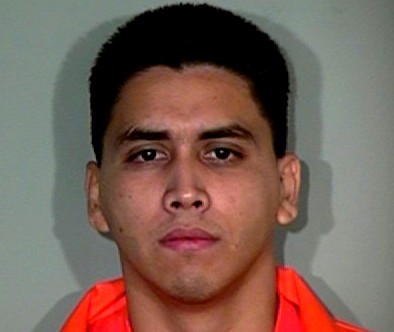 Ernesto Salgado Martinez
Murderer · USA · 1995
Ernesto Salgado Martinez — defendant · Officer Robert Martin — victim; DPS offi…
1 victim
Ernesto Salgado Martinez
Murderer · USA · 1995
Ernesto Salgado Martinez — defendant · Officer Robert Martin — victim; DPS offi…
1 victim
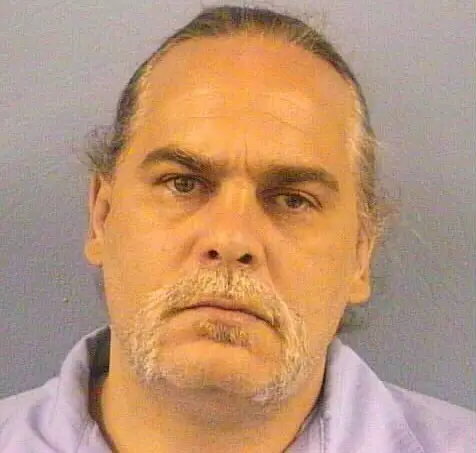 Robert Cloutier
Murderer · USA · 1990
February 1, 1990 — Robert Cloutier was arrested after being identified as the p…
2 victims
Robert Cloutier
Murderer · USA · 1990
February 1, 1990 — Robert Cloutier was arrested after being identified as the p…
2 victims
- Gender
- female
- Country
- USA
- Location
- Irvine, Orange County, California, USA
- Date of birth
- 1958
- Age at first offence
- 40
- Characteristics
- jealousy, the bodies were never found
- Victim profile
- Peter Theriault, 51 (her boyfriend)
- Method of murder
- Shooting
- Date(s) of murder
- December 2, 1998
- Years active
- 1998
- Date of arrest
- A week later
- Status
-
Life imprisonment
Sentenced to 15 years to life in prison on July 22, 2005
Case overview
Judy Valot was convicted of second-degree murder in the killing of her boyfriend, Peter Theriault, 51, in 1998. Theriault’s body was never found. She was sentenced to 15 years to life in prison on July 22, 2005. At sentencing, Valot insisted she was innocent and urged Theriault’s family to find his body and pursue the real killer.
People
- Judy Valot — defendant; girlfriend of Peter Theriault
- Peter Theriault — victim; boyfriend; 51
- Betsy Schlect — Theriault’s sister
- Alan Crivaro — Deputy Public Defender
- Matt Murphy — Deputy Dist. Atty.; prosecutor
- Richard F. Toohey — Superior Court Judge
- Alina — Superior Court judge (referenced as “Judge Richard F. Toohey” in sentencing; “Judge Frank Fasel” in juror-removal appeal)
- Frank Fasel — judge who held a hearing and questioned jurors regarding deliberations
- Patricia J. Ulibarri — lawyer for Valot on appeal
- Bill Lockyer — Attorney General
- Robert R. Anderson — Chief Assistant Attorney General
- Gary W. Schons — Assistant Attorney General
- Gary W. Brozio — Assistant Attorney General
- Kyle Niki Shaffer — Deputy Attorney General
- Mike Acosta — juror
- Jenny Geddes — juror; Naval Reserve chaplain
- Craig Valot — husband (married in 1980)
- Tory Valot — Valot’s daughter
- Donna Theriault — referenced in juror discussion as a potential suspect
The offence
Prosecutors believed Judy Valot fatally shot Peter Theriault on Dec. 2, 1998, after an argument in which she accused him of having an affair. During the third trial, the jury looked to Theriault’s reliability and convicted Valot of second-degree murder even though Theriault’s body was never found.
Prosecutors also believed Valot disposed of Theriault’s body in the California desert near Blythe, where she had a trailer and where she was spotted the day after the killing.
Investigation and missing-person developments
Peter Theriault went missing in 1998. The police never found his body, but believed it was disposed of in the desert near Blythe. Investigators said inconsistencies existed in Valot’s story, including a five-day delay in reporting Theriault missing. Valot was arrested a week after his disappearance.
Trial
Charges and conviction
In the third trial, an Orange County Superior Court jury convicted Judy Valot of second-degree murder.
Statements by Valot during the proceedings
At sentencing, Valot told Judge Richard F. Toohey she did not kill her boyfriend Peter Theriault, and she urged his family to find the real killer. She said:
"I never did anything to Pete. I never pointed a gun [at] him,"
She also said:
"Look somewhere else. Look for Pete.... Hate me all your life, but you guys shouldn't give up on [finding] Pete,"
"I won't."
At the time of sentencing, the court proceedings ended her third trial.
Juror deliberation and juror issue in the 2000 trial
Valot had previously been convicted in 2000 of second-degree murder. That verdict was overturned because of juror error. A juror opposed to the verdict was replaced during deliberations after deliberations over multiple days.
In the appeal decision, the court described the jury’s deliberations and the discharge of Juror No. 5. The decision included multiple verbatim quotations from the bailiff and the juror notes.
Late in the afternoon of the second day of deliberations, the jury foreperson sent a note:
“We have determined that a person was killed, that the defendant did it, but can't agree on degree; first, second or manslaughter. Maybe a definition of malice can help[,] or further instruction.”
Earlier on the next morning, the judge received a note from Juror No. 12 stating that Juror No. 5 was “hostile and refusing to deliberate.” The court then heard testimony from the bailiff. In that testimony, the bailiff said:
The jurors flipped on the juror light, got my attention. I went into the jury room. Upon entering the jury room, I see Juror Number 5 standing, seemed-it appeared that tensions were flying and she was yelling at Juror Number 12.[¶] After I saw it didn't appear to be deliberations, it looked like one person yelling at another one, I said, ‘Hold on, hold on, what's going on,’ and that's when Juror Number 12 stated, ‘We have 11 jurors that want to deliberate, but we have one juror, her, who will not deliberate with us.” [¶] She then said, ‘No, I have’-‘I want to deliberate, they don't want to deliberate with me.’
“[The Court:] That was Juror Number 5 responding?
“[Bailiff:] Number 5.[¶] At that point, there was a few other things said. Pretty much, it sounded like they were pointing fingers at each other. Tensions were high. [¶] I told them all to sit down, shut up, and I will be back in two minutes after talking to the judge and see what we are going to do. [¶] That's what I did. “[The Court:] And subsequent to that, [the bailiff] contacted the court and the court indicated to [the bailiff] that he should ask the jury if they wanted to take a break in light of the feelings that were being exhibited in the jury room, and my understanding is that they did opt to take a break and they are presently in the hall not deliberating.”
The juror note from Juror No. 12 included statements attributed to Juror No. 5, including:
(1) on the first day of deliberations, and after only “one hour” of deliberating, Juror No. 5 said, “Let's just call it hung and leave”;
(2) on the second day of deliberations, Juror No. 5 said, “I will not consider certain witnesses' testimony or certain pieces of evidence because I don't think they are worth anything”; and
(3) later on the second day, Juror No. 5 said, “I am not going to change my mind no matter what, so let's hang it and leave.”
The note further included comments that:
(4) “This juror [Juror No. 5] has also yelled at other members of the jury and has called us bullies on three occasions”; and
(5) “The jury is at an impasse because of this, and I believe this particular juror's attitude is jeopardizing the deliberation process.”
Juror No. 5 acknowledged making the statements attributed to her but claimed they were taken out of context. Regarding her first statement, the decision quoted her paraphrase:
“ ‘I made up my mind the second day ․ of trial and, you know, thought she was guilty and that was all there was to it.’ ”
Later, Juror No. 5 explained a second set of reservations and said:
“I was going to say, and I did change my mind and ․ concede in my thinking that because of my-of Ms. Valot's behavior after the fact, that she was-hiding something and, therefore, there was-there was some area of guilt which would mean she-she did something.”
Juror No. 12 summarized the first-day deliberations and quoted Juror No. 5 as saying:
“[W]e came in and we began deliberating. And we had gone around the table and discussed our views, looking at the evidence, and then she said, ‘Well, no, I have changed my mind.’ And the foreman said, ‘But, we decided yesterday on these other two things, you can't change your mind at this point,’ and she went into quite a rampage yesterday.”
The decision quoted Juror No. 12 as clarifying “rampage” meant “Yelling.”
The decision quoted Juror No. 5 defending her position about testimony and evidence:
“That has to do with statements by people whose-where the witness stated that she-‘If he does this, I am going to kill him,’ and those kind of things. And what I told them, I felt, was that people make statements like that all the time. You know, ‘I am going to kill you.’ ‘If he does this, I am going to kill you.’ [¶] And I told them I couldn't take those in and of themselves serious, that seriously in-you know, as seriously as they were taking them.”
The decision described an event on the third day where Juror No. 5 appeared to discuss alternative suspects and then signaled frustration. It quoted Juror No. 5’s account:
“I sat down and-this morning said, ‘Using all these facts, not changing a single one of these facts, we could actually say that [defendant]'s daughter Tory could have been the person who pulled the trigger,’ and they said, ‘No, that's not true, that's conjecture.’ [¶] And I said-But, I didn't think that was going that far into conjecture. They said, ‘Well, no one is charging her.’ [¶] I said, ‘I am not trying to, I am just saying that there is another possible use of this evidence. That is reasonable, because we don't know what happened when. And, as a mother, she could go through and hide all the facts and, you know, hide everything out in Blythe and go through everything that happened after the fact just as easily. [¶] And I don't think that was conjecture, and they kept telling me, ‘You can't discuss that because no one said that Tory did it,’ and I said, ‘But, the facts can point to that just as easily as they can point to Judy pulling the trigger. Tory said her mother-Tory said that she wished she could kill him also and, you know, she had access and everything else. [¶] And they said, ‘No, you can't look-that's conjecture, and you can't even think that way,’ and I was, like, ‘Okay, well, if I can't, you know, point out my arguments to the evidence’-maybe that was wrong. Maybe that is conjecture and I am going way off the path. I thought I could do that, but they all said no way and they shut me down. [¶] And I said, ‘You know what, then let's just-you know, let's call him in and let's, you know, do what we do now. Let's go from here.’ ''
and Juror No. 11 summarized: “And she finally, I guess, just got frustrated, she threw her hands up, she said, ‘I am done, I am done,’ and she took the switch and that was it.”
The trial judge described the basis for removal in verbatim quotations:
“This lady obviously committed juror misconduct because, within one hour of the jury deliberating, her mind was made up and she refused to openly discuss any further facts with the jurors. She announced a decision to stand for a certain verdict and determination to stand for a certain verdict. [¶] And, she already indicated within an hour of deliberating that they might as well go home because the jury was hung. And this is in the face of the other 11 jurors indicating to the court and counsel that they wished to continue to deliberate and they have not felt that deliberations are drawing to a close, they have a lot of issues, law and facts, to yet discuss. [¶] And this one individual juror is a hindrance because she refuses to listen and discuss freely, free exchange of ideas and views as relates to the evidence. [¶] This appears also to have gone on yesterday. This morning there is evidence that the same juror refused to follow procedures that were set up by the foreman, as far as reviewing facts and as that-as those facts related to the law. [¶] Several jurors said that she won't discuss other people's point of view.”
The judge concluded:
“It amounts to a failure to perform her duty and, therefore, does constitute good cause for her removal from this jury. So, she is discharged.”
The appellate court later reversed based on the juror replacement issue.
Second trial
During a second trial in August (year not explicitly repeated in that sentence but placed after the 2000 conviction and its reversal), jurors deadlocked.
Sentencing
Sentencing was set for July 22, 2005. Valot was sentenced to 15 years to life in prison.
At sentencing, Deputy Public Defender Alan Crivaro said:
"My client is very upset,"
"She still professes her innocence, but the jury has spoken."
Relatives of Theriault addressed the court and urged Valot to disclose Theriault’s whereabouts. Betsy Schlect said:
"We all know that Judy murdered Pete and she knows that,"
"Give up, Judy. You're guilty. Tell us where Pete is."
Valot responded:
Appeals
Overturned conviction from 2000 trial
Valot’s 2000 conviction was overturned because of juror error. The appeal decision discussed the improper replacement of a juror.
The opinion identified the case as: Court of Appeal, Fourth District, Division 3, California People v. Valot The PEOPLE, Plaintiff and Respondent, v. Judy Diane VALOT, Defendant and Appellant. No. G027838.
The opinion date was November 27, 2002.
The opinion included the following holdings:
“We agree.”
“The court found the juror was ‘refusing to deliberate’ but the record does not support this conclusion as a ‘demonstrable reality.’ ”
“We reject Valot's ensuing argument that discharge of a juror without good cause precludes retrial on double jeopardy grounds.”
“In our view, double jeopardy does not apply.”
“The judgment is reversed.”
The opinion also included a statement about the juror replacement and deliberations:
“...the record speaks for itself as to her conduct.”
The appellate court’s analysis included substantial quotes about deliberation and refusal to deliberate, including:
“a juror's unwillingness to engage in the deliberative process; that is, he or she will not participate in discussions with fellow jurors by listening to their views and by expressing his or her own views.”
It also included:
“A juror who has participated in deliberations for a reasonable period of time may not be discharged for refusing to deliberate, simply because the juror expresses the belief that further discussion will not alter his or her views.”
The opinion concluded the error was prejudicial and required reversal:
“The error is prejudicial and requires reversal of the judgment.”
Double jeopardy argument
The opinion addressed and rejected Valot’s double jeopardy argument after reversal. It reasoned that the erroneous substitution of an alternate juror did not bar retrial in the circumstances presented.
It included the court’s statement:
“we strongly disagree with Valot's suggestion that seating the alternate juror infringed the ‘the right to a fair and impartial jury rather than one selected by the prosecution.’ ”
It also included the general proposition about retrial after reversal:
“It is ‘well settled that a trial resulting in conviction, followed by reversal on appeal for errors committed at the trial, does not bar a retrial.’ ”
Outcome
After the third trial, Valot was convicted again of second-degree murder. She served the sentence of 15 years to life in prison imposed on July 22, 2005.
Other details
Relationship background
Valot insisted her innocence throughout proceedings. Court records stated she grew up in San Diego and married at 17. The marriage lasted a month. In 1980, she married Craig Valot, but they separated shortly after their daughter was born in 1985.
In 1997, Valot met Peter Theriault, a machinist, while they worked at Ford Motor Co. in Commerce. They dated for six months before she moved into his home with her teenage daughter.
Family members said the couple argued often because of what they called Valot’s unfounded jealousy. They also said Theriault never missed a day of work in 28 years and planned to retire and leave California to be closer to his sisters.
Theriault was set to retire in 2000 and had eyed a five-acre plot of hilltop land near his two sisters and mother in Kelso, Wash.
Theriault’s family described the relationship as soured and said Valot’s jealousy caused arguments.
Work details
Valot worked as a forklift driver. Both Valot and Theriault worked at a Ford maintenance plant in the city of Commerce; Valot drove forklifts and Theriault repaired machinery.
Physical evidence and weapons
The appellate discussion referenced that the prosecutor argued that circumstances including blood drops found in the couple’s garage established the death. The narrative at sentencing described that Theriault’s two loaded guns were found at Valot’s mobile home in Blythe. The jury also considered other circumstantial evidence and heard about DNA evidence and gunshot testimony as described in the appellate analysis.
The appellate court noted that it found no abuse of discretion admitting evidence including DNA evidence identifying the victim's blood found in the entryway of the victim's home, the garage, and his truck; the discovery of the victim's guns in Valot's trailer; testimony that neighbors heard gunshots around the time of Theriault’s disappearance; and a photograph of Valot holding a handgun in a firing position.
Juror reactions and trial length
In the third trial, jurors asked questions outside the Santa Ana courtroom, including why the case had gone on for seven years.
Jurors said the lack of a body did not cause conflict during deliberations. They said it was Valot’s conflicting statements to detectives after the boyfriend went missing, along with Theriault’s two loaded guns found at Valot’s mobile home in Blythe, that led to conviction.
At the second trial that ended in deadlock, the sentencing account stated jurors deadlocked.
In the third trial narrative, juror Mike Acosta said:
"The web of lies she spun just backfired on her,"
"We had a victim who was nonconfrontational, dependable, responsible, and a woman in his life who was very unstable."
Juror Jenny Geddes said:
"She was a person who seemed vulnerable to doing something dark or treacherous,"
and she described her residence in Santa Ana.
Family statements and demeanor
At sentencing, relatives pleaded with Valot to disclose Theriault’s whereabouts. They held hands, cried, and shook their heads. Some called her a “psychopath.”
Relatives held hands and asked for disclosure. Betsy Schlect wore her brother’s favorite jean jacket emblazoned with “Vietnam veteran” and Harley-Davidson patches. She also said:
"I hope you live in living hell behind bars."
A cousin, Barbara Grogan, said:
"If you could hurt somebody like Pete, who was the best person in the whole world,"
"she could hurt anyone. She needs to stay there."
Appeal counsel statements
Deputy Public Defender Alan Crivaro filed an appeal after the sentencing, saying there was no physical evidence that Valot had killed her boyfriend. He said:
"She was the last one to see him, but that doesn't mean that she killed him."
In the appeal proceedings, counsel Patricia J. Ulibarri said the appellate court ruling was supported by the juror deliberation record. She said:
“They found that this juror was deliberating; she had initially believed Judy Valot was not guilty but was later willing to vote for manslaughter. She only refused to vote for second-degree murder,”
Deputy Attorney General Kyle Niki Shaffer said:
"The judge spoke to each and every juror. This wasn't a holdout juror; this was a juror who was obstructing deliberations."
Victim characteristics and family impressions (as stated in trial narrative)
The victim Peter Theriault was described as calling his mother every Sunday, loving his chocolate Labrador Boss “like a child,” and being the kind of man who “wouldn't have run away.” The narrative also said he was “to retire in two years” and did not miss a day of work in 28 years.


Spotted an error, or have more information about this case?