
Nicholas Wiley
Serial killer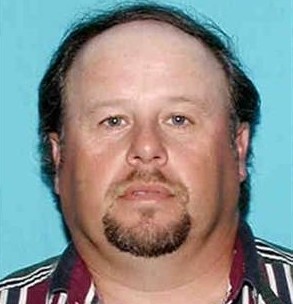 Ronald Dominique
Serial killer · USA · 1997
Ronald Joseph Dominique (born 1964) was an American serial killer from the Bayo…
23 victims
Ronald Dominique
Serial killer · USA · 1997
Ronald Joseph Dominique (born 1964) was an American serial killer from the Bayo…
23 victims
 Maury Troy Travis
Serial killer · USA · 2001
Maury Troy Travis (born October 25, 1965; died June 10, 2002) was an American s…
17 victims
Maury Troy Travis
Serial killer · USA · 2001
Maury Troy Travis (born October 25, 1965; died June 10, 2002) was an American s…
17 victims
 Anthony Sowell
Serial killer · USA · 2007
Anthony Edward Sowell (born August 19, 1959) was an American serial killer iden…
11 victims
Anthony Sowell
Serial killer · USA · 2007
Anthony Edward Sowell (born August 19, 1959) was an American serial killer iden…
11 victims
 Alfred Gaynor
Serial killer · USA · 1995
Alfred Gaynor was a serial killer from western Massachusetts who was convicted…
9 victims
Alfred Gaynor
Serial killer · USA · 1995
Alfred Gaynor was a serial killer from western Massachusetts who was convicted…
9 victims
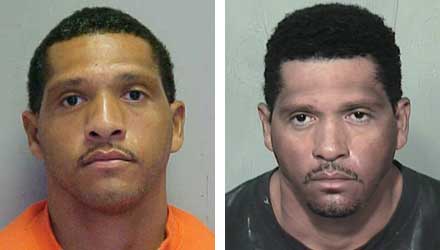 Mark Goudeau
Serial killer · USA · 2005
Mark Goudeau was a suspected serial killer from Phoenix, Arizona, who was charg…
9 victims
Mark Goudeau
Serial killer · USA · 2005
Mark Goudeau was a suspected serial killer from Phoenix, Arizona, who was charg…
9 victims
 Theresa Riggi
Murderer · United Kingdom · 2010
Theresa Riggi was a mother who killed her three young children at their home in…
3 victims
Theresa Riggi
Murderer · United Kingdom · 2010
Theresa Riggi was a mother who killed her three young children at their home in…
3 victims
 Richard Crafts
Murderer · USA · 1986
Richard Crafts was sentenced to 50 years in prison on January 9, 1990. Helle Cr…
1 victim
Richard Crafts
Murderer · USA · 1986
Richard Crafts was sentenced to 50 years in prison on January 9, 1990. Helle Cr…
1 victim
 Eric Alan Stoneman
Homicide · USA · 2005
Eric Alan Stoneman was the 14-year-old defendant who was sentenced in December…
1 victim
Eric Alan Stoneman
Homicide · USA · 2005
Eric Alan Stoneman was the 14-year-old defendant who was sentenced in December…
1 victim
 Gary Roland Welch
Murderer · USA · 1994
Defendant: Gary Roland Welch (also referenced as Gary Welch and Gary Roland Wel…
1 victim
Gary Roland Welch
Murderer · USA · 1994
Defendant: Gary Roland Welch (also referenced as Gary Welch and Gary Roland Wel…
1 victim
 John Reginald Birchall
Murderer · 1890
John Reginald Birchall was born 25 May 1866 in Accrington, England. He was the…
1 victim
John Reginald Birchall
Murderer · 1890
John Reginald Birchall was born 25 May 1866 in Accrington, England. He was the…
1 victim
 Billy Ray Irick
Murderer · USA · 1985
Billy Ray Irick was convicted for the 1985 rape and murder of 7-year-old Paula…
1 victim
Billy Ray Irick
Murderer · USA · 1985
Billy Ray Irick was convicted for the 1985 rape and murder of 7-year-old Paula…
1 victim
- Gender
- male
- Country
- USA
- Location
- Syracuse, Onondaga County, New York, USA
- Date of birth
- 1962
- Age at first offence
- 42
- Characteristics
- serial rapist, rape
- Victim profile
- Tammy Passineau, 17 (her body was never found) / Hannah Finnerty, 22 / Lottie Thompson, 31
- Method of murder
- St abbing with knife
- Date(s) of murder
- April-May 2004
- Years active
- 2004
- Date of arrest
- June 2, 2004
- Status
-
Life imprisonment
Sentenced to life in prison without the possibility of parole in October 2006; conviction upheld on appeal in 2009
Case record: Nicholas Wiley
Background
Nicholas Wiley was a high-risk Level 3 sex offender and worked as a handyman in the West Onondaga Street apartment complex where Tammy Passineau, Hannah Finnerty, and Lottie Thompson were killed.
In 1979, at the age of sixteen, Wiley was convicted of sexually assaulting and stabbing a 25-year-old woman and spent four years in prison.
Four years later, in 1983, Wiley was charged with entering a home on Niagara Street and beating a 67-year-old woman in the head with a claw hammer. Wiley got away with sixty dollars and six dollars in food stamps. An appeals court overturned his sentence and reduced his jail time, and after spending seven years in prison for that crime, he moved to Hawley Avenue.
Later, he was convicted of raping and sodomizing a sixteen-year-old girl. He served twelve years before an appeals court once again overturned and reduced that sentence.
The offence
Wiley was convicted of first- and second-degree murder for the killings of three women in Syracuse, involving Tammy Passineau, Hannah Finnerty, and Lottie Thompson.
Thompson was found dead in her apartment in the same West Onondaga Street building where Wiley lived. Finnerty’s body was discovered in a trash bin outside the apartment building.
Authorities believed that Passineau’s body was never found and that Wiley disposed of it in the trash bin; it was hauled away to the county trash-burning plant. The investigation also included the possibility of other victims discussed by Wiley after his arrest.
Investigation
A joint effort was launched between the Criminal Investigation Division and the Missing Persons Division.
The appellate court later upheld a finding that Wiley committed the three murders in a similar fashion.
The Rochester appellate court rejected Wiley’s contention that his confession was the result of psychological coercion by police.
Arrest
On June 3, 2004, Syracuse police arrested the 41-year-old Wiley in connection with a double murder at a West Onondaga Street apartment complex.
Monday: 31-year-old Lottie Thompson was found stabbed to death in her apartment. Her body was discovered by a building manager. Investigators said she had been dead for several days. They said it was Wiley who tipped the building manager off to an odor coming from Thompson’s apartment.
After Thompson’s body was discovered, police began their investigation in her apartment and worked their way outdoors.
Tuesday: investigators discovered the body of 22-year-old Hannah Finnerty in a dumpster.
Wednesday: investigators confirmed that Finnerty was five months pregnant. Like Thompson, she died as the result of multiple stab wounds.
Police said Wiley lived in the apartment complex and worked there as a handyman. Wiley was arrested following the discovery of Thompson’s body.
After hours of interrogation, investigators said Wiley admitted to the murders of Thompson and Finnerty and discussed the possibility of other victims.
Wiley entered a mandatory plea of not guilty for two charges of murder in the second degree. Wiley was assigned an attorney, Tom Miller, and was held without bail. In addition to Miller, a representative of the Capital Defenders Office was present in court Wednesday.
If a third victim was found, Wiley may be charged with murder in the first degree and the DA will seek the death penalty.
Trial
A County Court jury convicted Wiley of first- and second-degree murder charges for the deaths of Tammy Passineau, Hannah Finnerty and Lottie Thompson in April and May 2004.
Sentencing
In October 2006, County Judge Joseph Fahey sentenced Wiley to serve life in prison without the possibility of parole.
Fahey told the defendant:
“You’re one of those creatures that occasionally slips through the gates of hell and walks among us causing death, pain and destruction.”
Appeals
The state Supreme Court Appellate Division in Rochester upheld Wiley’s conviction in 2009 and found there was sufficient evidence to support the conclusion that Wiley committed the three murders in a similar fashion.
The Rochester court rejected Wiley’s contention that his confession was the result of psychological coercion by police.
The Rochester court agreed only to overturn fines Fahey imposed on weapons charges involved in the three deaths.
First Chief Assistant District Attorney Rick Trunfio called the appellate court decision “really gratifying” given a prior history in which Wiley had been “freakishly successful” in appealing convictions in earlier cases:
“really gratifying” “freakishly successful”
The Rochester court overturned Wiley’s conviction in two earlier cases: a 1983 conviction involving striking a 67-year-old woman in the head with a claw hammer, and a 1991 conviction involving beating and sexually assaulting a 16-year-old girl. Wiley went back to prison in both cases with shorter sentences.
Outcome
The appellate court upheld Wiley’s conviction for the murders of Tammy Passineau, Hannah Finnerty and Lottie Thompson. Authorities believed Passineau’s body was never found and had been disposed of in the trash bin and hauled away to the county trash-burning plant.
Aftermath
Wiley’s conviction resulted in public concern among people living in his neighborhood, who were furious that they were not notified that a Level 3 sex offender was living in their area.
The New York State Senate passed a bill that forces law enforcement agencies to give out information about Level 3 sex offenders to entities with vulnerable populations, and the law would make it mandatory to release the exact name and any alias of the offender. The material stated that, right then, it was up to law enforcement agencies to decide whether or not it was necessary to inform those areas about the offender.
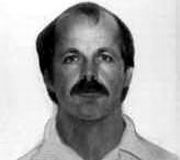

Spotted an error, or have more information about this case?