Christina Johansdotter
Murderer Christine Schürrer
Murderer · Sweden · 2008
Christine Schürrer (born June 30, 1976, in Hanover) was a German citizen who mu…
2 victims
Christine Schürrer
Murderer · Sweden · 2008
Christine Schürrer (born June 30, 1976, in Hanover) was a German citizen who mu…
2 victims
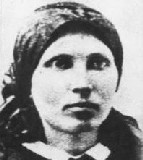 Anna Mansdotter
Murderer · Sweden · 1889
Anna Månsdotter was executed by beheading with an axe in Kristianstad on August…
1 victim
Anna Mansdotter
Murderer · Sweden · 1889
Anna Månsdotter was executed by beheading with an axe in Kristianstad on August…
1 victim
 Juha Valjakkala
Murderer · Sweden · 1988
Juha Veikko Valjakkala (born June 13, 1965) was convicted of the murder of a fa…
3 victims
Juha Valjakkala
Murderer · Sweden · 1988
Juha Veikko Valjakkala (born June 13, 1965) was convicted of the murder of a fa…
3 victims
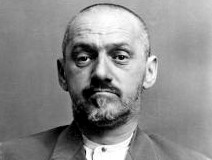 Mohammed Hadjetlaché
Murderer · Sweden · 1918
Mohammed Beck Hadjetlaché (20 May 1868, he also sometimes stated 1870 or 1872,…
3 victims
Mohammed Hadjetlaché
Murderer · Sweden · 1918
Mohammed Beck Hadjetlaché (20 May 1868, he also sometimes stated 1870 or 1872,…
3 victims
 Norman Thorne
Murderer · United Kingdom · 1924
Norman Thorne — defendant; electrical engineer; murdered Elsie Emily Cameron; l…
1 victim
Norman Thorne
Murderer · United Kingdom · 1924
Norman Thorne — defendant; electrical engineer; murdered Elsie Emily Cameron; l…
1 victim
 Jesusa Tatad
Murderer · USA · 2011
Jesusa Tatad was 41 years old at the time of her sentencing. She had divorced R…
1 victim
Jesusa Tatad
Murderer · USA · 2011
Jesusa Tatad was 41 years old at the time of her sentencing. She had divorced R…
1 victim
 Anzel Keon Jones
Homicide · USA · 1995
Anzel Keon Jones was a 17-year-old at the time of his arrest for the May 1995 m…
1 victim
Anzel Keon Jones
Homicide · USA · 1995
Anzel Keon Jones was a 17-year-old at the time of his arrest for the May 1995 m…
1 victim
 Timothy Dawson
Murderer · USA · 2004
Timothy Dawson — husband of Julia Dawson; defendant. · Julia Dawson — wife of T…
1 victim
Timothy Dawson
Murderer · USA · 2004
Timothy Dawson — husband of Julia Dawson; defendant. · Julia Dawson — wife of T…
1 victim
 Susan Smith
Murderer · USA · 1994
Susan Vaughan Smith, also known as Susan Leigh Vaughan Smith, was an American w…
2 victims
Susan Smith
Murderer · USA · 1994
Susan Vaughan Smith, also known as Susan Leigh Vaughan Smith, was an American w…
2 victims
- Gender
- female
- Country
- Sweden
- Location
- Stockholm, Sweden
- Date of birth
- ????
- Characteristics
- infanticide
- Victim profile
- T he infant of a friend
- Method of murder
- Decapitating with an axe
- Date(s) of murder
- 1740
- Years active
- 1740
- Date of arrest
- —
- Status
-
Executed
Executed by decapitation, after which the corpse was to be publicly burned at the stake, in 1740
Case record: Christina Johansdotter
Background
Christina Johansdotter (died 1740) was a Swedish murderer who killed a child in Stockholm with the purpose of being executed.
She was an example of those who sought suicide through execution by committing a murder. The motive was tied to religious beliefs about suicide and execution.
The offence
Christina Johansdotter murdered an infant of a friend by decapitating it with an axe.
She had often contemplated suicide. She stated that if she committed suicide, she would go to hell and would never see her fiancé again, because he was surely in heaven.
She therefore decided to commit a murder so that she could confess, repent, and be executed in order to reunite with her fiancé in heaven.
With this intent, she went to a friend and asked her to lend her the infant in order to show it off to an acquaintance on a visit from the country. She then took the infant outside and chopped its head off with an ax.
Investigation
The case was brought before the court Södra Förstads kämnärsrätt in Stockholm in 1740. She was accused of having murdered the infant of a friend by decapitating it with an axe.
Trial
In 1740, the case was heard in Stockholm before the court Södra Förstads kämnärsrätt.
Christina Johansdotter freely admitted her crime and openly declared that she was guilty of what she was accused of. She explained her motive to the court, including her feelings of being deeply in love with her fiancé, his death, and her loss of all will to live and desire to follow him in his grave.
She said that she was at a loss as to how to solve her predicament until she witnessed the decapitation of a woman sentenced for infanticide. She took that execution as the solution and concluded that decapitation after confessing and repenting would allow her to go straight to heaven.
She also stated that while the murder of a grown-up did not always lead to a death sentence, the murder of a child always did. She explained that after confessing and repenting, even murderers were forgiven for their sin.
Sentencing
The punishment for the murder of a child in Sweden at this time was decapitation. After decapitation, the corpse was to be publicly burned at the stake.
Outcome
Christina Johansdotter was executed by decapitation in 1740. After the execution, the corpse was to be publicly burned at the stake.
Aftermath
The religious logic behind suicide-executions was described as follows: suicide was believed to send the soul to hell, while an executed person who confessed and repented was believed to go straight to heaven.
Children were described as being used as victims because they were believed to be free of sin and did not have to receive absolution before death in order to go to Paradise. It was also described that children were seen as easy preys due to their disadvantage in size and strength.
In 18th century Sweden, a desire to commit suicide was described as the most common reason for murdering a child, second only to unmarried women suffocating their newly-born infants after their secret birth. These “suicide-executions” were described as having developed customs and culture.
Executions in Stockholm at the end of the 17th century were described as having a theatrical character: condemned people and their families bought special costumes to escort the condemned to the place of execution at Skanstull. The authorities disapproved of these performances because the purpose of an execution was to put fear in people, a purpose said to be destroyed by theatrical performances that gave the audience sympathy for the condemned, especially if the condemned were female.
A new law was issued to abolish this execution culture and restore the intended deterrent effect of executions. The new law was put into effect in 1754, fourteen years after the execution of Johansdotter and in the middle of this execution culture.
After that law, everyone suspected of committing murder with the motive of committing suicide by execution was to stand on the schavott for two days with the crime stated on a board and whipped, and was taken to their execution blindfolded. It was stated that this did not have much effect in reality, and it was stated that King Gustav III contemplated replacing the death sentence with life in prison for female child murderers because they were given such sympathy at executions that the punishment did not have the intended deterrent effect.


Spotted an error, or have more information about this case?