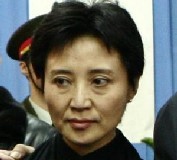
Gu Kailai
Murderer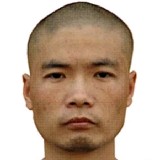 Zhou Kehua
Murderer · China · 2004
Zhou Kehua (simplified Chinese: 周克华 ; traditional Chinese: 周克華 ; pinyin: Zhōu K…
10 victims
Zhou Kehua
Murderer · China · 2004
Zhou Kehua (simplified Chinese: 周克华 ; traditional Chinese: 周克華 ; pinyin: Zhōu K…
10 victims
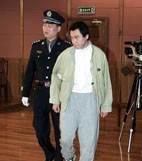 Chen Zhaofeng
Murderer · China · 2001
Chen Zhaofeng was born in Mudanjiang, a city in Northeast China’s Heilongjiang…
2 victims
Chen Zhaofeng
Murderer · China · 2001
Chen Zhaofeng was born in Mudanjiang, a city in Northeast China’s Heilongjiang…
2 victims
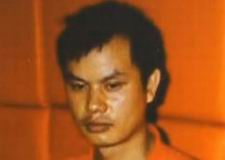 Li Hao
Murderer · China · 2009
Li Hao was convicted of murder, rape, illegal detention, organized prostitution…
2 victims
Li Hao
Murderer · China · 2009
Li Hao was convicted of murder, rape, illegal detention, organized prostitution…
2 victims
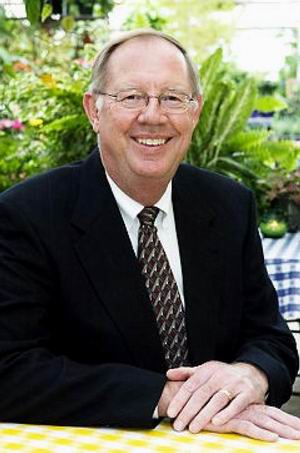 Tang Yongming
Murderer · China · 2008
Tang Yongming (47) attacked three people at the 13th-century Drum Tower in Beij…
1 victim
Tang Yongming
Murderer · China · 2008
Tang Yongming (47) attacked three people at the 13th-century Drum Tower in Beij…
1 victim
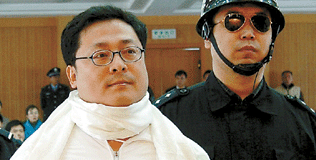 Yuan Baojing
Murderer · China · 2003
Yuan Baojing (simplified Chinese: 袁宝璟; traditional Chinese: 袁寶璟) (1966 – March…
1 victim
Yuan Baojing
Murderer · China · 2003
Yuan Baojing (simplified Chinese: 袁宝璟; traditional Chinese: 袁寶璟) (1966 – March…
1 victim
 Lila Gladys Young
Murderer · Canada · 1928
Lila Gladys Young was also named Lila Gladys Lila Coolen. Lila Gladys Young was…
100 victims
Lila Gladys Young
Murderer · Canada · 1928
Lila Gladys Young was also named Lila Gladys Lila Coolen. Lila Gladys Young was…
100 victims
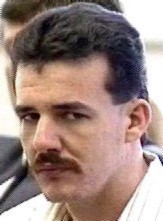 Shawn Humphries
Murderer · USA · 1994
Shawn Humphries was convicted of murder and sentenced to death for the shooting…
1 victim
Shawn Humphries
Murderer · USA · 1994
Shawn Humphries was convicted of murder and sentenced to death for the shooting…
1 victim
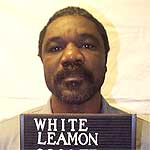 Leamon White
Murderer · USA · 1987
Leamon White was convicted of first-degree murder and sentenced to death by a M…
1 victim
Leamon White
Murderer · USA · 1987
Leamon White was convicted of first-degree murder and sentenced to death by a M…
1 victim
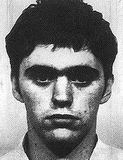 Paul Luckman
Homicide · Australia · 1982
Robin Reid — Australian criminal and co-accused in the murder of 13-year-old Br…
1 victim
Paul Luckman
Homicide · Australia · 1982
Robin Reid — Australian criminal and co-accused in the murder of 13-year-old Br…
1 victim
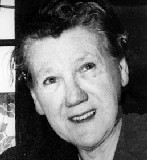 Mary Elizabeth Wilson
Serial killer · United Kingdom · 1955
Mary Elizabeth Wilson (c. 1893 - 1963), also known as the Merry widow of Windy…
4 victims
Mary Elizabeth Wilson
Serial killer · United Kingdom · 1955
Mary Elizabeth Wilson (c. 1893 - 1963), also known as the Merry widow of Windy…
4 victims
- Gender
- female
- Country
- China
- Location
- Chongqing, Sichuan province, China
- Date of birth
- November 15, 1958
- Age at first offence
- 53
- Characteristics
- poisoner, drugs, domestic dispute
- Victim profile
- Neil Heywood (British businessman)
- Method of murder
- Poisoning
- Date(s) of murder
- November 14, 2011
- Years active
- 2011
- Date of arrest
- April 10, 2012
- Status
-
Sentenced to death
Sentenced to a suspended death sentence (which is normally commuted to a life sentence after two years) on August 20, 2012
Case record: Gu Kailai
Background
Gu Kailai (born 15 November 1958) was a Chinese lawyer and businesswoman. She was the second wife of former Politburo member Bo Xilai, who was stripped of his offices in 2012.
Gu Kailai was the youngest of five daughters of General Gu Jingsheng, a prominent revolutionary before the Chinese Communist Party took power. General Gu held various government positions during early Communist rule but was imprisoned during the Cultural Revolution.
Gu Kailai was punished and was forced to work in a butcher shop and a textile factory.
Gu met Bo Xilai in 1984 while on a field trip looking into environmental art in Jin County, Liaoning, where he was the Communist Party secretary. The couple had one son, Bo Guagua.
Bo Guagua studied at Harrow School, Balliol College, Oxford, and Harvard's Kennedy School of Government.
Gu Kailai gained a degree in law and then a masters in international politics from Peking University. She founded the Kailai law firm in Beijing. She was suggested to have been the first Chinese lawyer to win a civil suit in the United States, where she represented several Dalian-area companies involved in a dispute in Mobile, Alabama. She was also the author of several books.
Gu Kailai was later forced to quit her law firm. Her husband said the law firm closure was to avoid the impression she was benefiting from his position.
After the murder charge was announced, Chinese state media said she had been in dispute with Neil Heywood over “economic interests” and that, worried by “Neil Heywood's threat to her son's personal security”, she and Mr Zhang poisoned him.
Career and views
Gu Kailai had a reputation as “charming and intelligent” and was fluent in English.
After visiting the United States, she ridiculed the U.S. justice system as inept and wrote: “They can level charges against dogs and a court can even convict a husband of raping his wife,”
She also wrote: “We don’t play with words and we adhere to the principle of ‘based on facts,’... You will be arrested, sentenced and executed as long as we determine that you killed someone."
People connected to the case
- Gu Kailai — defendant; described as a Chinese lawyer and businesswoman and the wife of Bo Xilai.
- Bo Xilai — former Politburo member; Gu Kailai’s husband; his offices were stripped in 2012.
- Bo Guagua — Gu Kailai’s son.
- Neil Heywood — British businessman; died in Chongqing; Gu Kailai was convicted of murdering him.
- Zhang Xiaojun — a Bo family aide; described as an orderly; sentenced for his involvement in the poisoning/murder of Neil Heywood.
- Wang Lijun — her husband’s deputy; fled to a U.S. consulate in Chengdu in February 2012; was described as being in charge of the investigation.
- Tang Yigan — court official who made statements about the trial and proceedings.
- Li Renting — lawyer for Zhang Xiaojun, who commented after the verdict.
- Jeremy Browne — British Foreign Office minister who met Bo Xilai a few days after Heywood’s death.
- David Cameron — UK Prime Minister; discussed the Heywood case with Li Changchun.
- Li Changchun — Chinese publicity department head; discussed the Heywood case with David Cameron.
- William Hague — Foreign Secretary; denied rumours about Heywood being employed as an agent by British intelligence.
- Xia Zeliang — Communist Party chief in Nan’an; detained for questioning in April 2012; described as a staunch ally of Bo.
- Xu Ming — Dalian based billionaire; disappeared on 14 March 2012, amid speculation about arrest.
- Wang Lulu — Heywood’s widow; visited the British Embassy in Beijing on 13 April 2012 seeking a visa to travel to the UK.
- Giles Hall — British businessman who gave a quoted statement about Gu Kailai.
- Han — a supporter who gave his name as “Mr Han” and criticized the trial process.
- Wang Zheng — Beijing woman who campaigned in Bo Xilai’s defense.
- He Weifang — law professor at Peking University who commented on options for Bo Xilai after the verdict.
- Zhou Yongkang — a Politburo Standing Committee member mentioned as being forced to make “tearful self-confessions” to Hu Jintao by the Boxun website.
- Hu Jintao — mentioned in connection with “tearful self-confessions” by Zhou Yongkang.
The offence
Neil Heywood was found dead in his hotel room in Chongqing, and the initial official reports attributed his death to alcohol poisoning.
A later reinvestigation indicated Heywood was murdered. Gu Kailai was charged with the murder of Neil Heywood and was convicted.
The prosecution alleged that Gu Kailai:
- was involved in a business dispute with Neil Heywood,
- believed he had threatened the personal safety of her son,
- decided to kill him,
- arranged for Heywood to travel to Chongqing from Beijing, accompanied by Zhang Xiaojun,
- spent the evening of 13 November with Heywood at the Nanshan Lijing Holiday Hotel, where they drank tea and alcoholic drinks,
- after Heywood became intoxicated, vomited and asked for a drink of water, poured a poison into his mouth that had been prepared beforehand and that she had given to Zhang Xiaojun to bring along, causing Heywood’s death.
In court statements, Gu Kailai admitted responsibility for Heywood’s murder and claimed her actions were due to a “mental breakdown.”
Gu Kailai alleged she would “accept and calmly face any sentence”.
A court found Gu’s actions reflected a “psychological impairment.”
Xinhua reported that Gu Kailai had been taking “a range of drugs to treat chronic insomnia, anxiety, depression and paranoia.” Xinhua said she had “developed a certain degree of physical and psychological dependence on sedative hypnotic drugs, which resulted in mental disorders.”
Investigation and lead-up
In March 2012, Gu Kailai became embroiled in a national scandal after her husband’s deputy, Wang Lijun, apparently sought refuge at the U.S. consulate in Chengdu. It was rumoured that Wang presented evidence of a corruption scandal involving Bo seeking to impede a corruption investigation against Gu.
It was alleged that Gu had been involved in a business dispute with Neil Heywood, who died in Chongqing under disputed circumstances, and Wang alleged he had been poisoned. The Wall Street Journal reported that Wang may have fallen out of favor with Bo for discussing the Heywood case.
Following the Wang Lijun incident and Bo’s removal from key Communist Party posts, Gu Kailai was placed under investigation for homicide in Heywood’s death.
On 10 April 2012, Gu Kailai was detained and “transferred to the judicial authorities” as part of the investigation.
State media appended her husband’s surname in front of her own, rendering her name as Bo Gu Kailai, described as extremely unusual for married women in the People’s Republic of China. No explanation was given.
On 26 July 2012, Gu Kailai was formally charged with murdering Heywood, based on what the prosecutor claimed was “irrefutable and substantial” evidence.
Arrest and detention
Trial
Gu Kailai’s trial was held on 9 August 2012 and lasted one day.
According to Xinhua, Gu Kailai admitted during the one-day trial that she was responsible for Heywood’s murder. She claimed her actions were due to a “mental breakdown” and stated that she would “accept and calmly face any sentence”.
A court official, Tang Yigan, said: Ms Gu and Mr Zhang “did not raise objections to the facts and the charges of intentional homicide”.
Tang Yigan also said: “Ample evidence”
Tang Yigan stated the prosecution alleged that Ms Gu had been involved in a business dispute with Mr Heywood, and believed he had “threatened the personal safety of her son... and decided to kill him”.
Tang Yigan said the prosecution alleged she arranged for Mr Heywood to travel to Chongqing from Beijing, accompanied by Mr Zhang.
Tang Yigan also said Gu had been “in good shape and mentally stable,” throughout the trial.
Tang Yigan said: “The trial committee will announce the verdict after discussion,”
In closing statements, Xinhua reported that Gu blamed her actions on a “mental breakdown,” saying she would “accept and calmly face any sentence”.
The prosecution said evidence presented in court indicated Gu had been taking drugs to treat chronic insomnia, anxiety, depression and paranoia, and that she had “developed a certain degree of physical and psychological dependence on sedative hypnotic drugs, which resulted in mental disorders.”
The trial committee concluded that the court spared her from execution, but she began a long jail term.
Sentencing
On 20 August 2012, Gu Kailai received a suspended death sentence. The suspended death sentence was described as normally commuted to a life sentence after two years, and she could be released on medical parole after serving nine years in prison.
The trial lasted one day, and Gu did not contest her charges.
Zhang Xiaojun, described as a Bo family aide, was sentenced to nine years in jail for his involvement in the murder, to which he confessed.
Following the verdict, Britain’s embassy in China stated that it welcomed the investigation and said: “[we] consistently made clear to the Chinese authorities that we wanted to see the trials in this case conform to international human rights standards and for the death penalty not to be applied.”
BBC News commented: “informed observers see the fingerprints of the Communist Party of China all over this outcome” and: “all too neat and uncannily suited to one particular agenda”
Li Renting told Reuters: “With both of the defendants declining to appeal, this marks the end of things,”
The court also said Heywood’s “threatened personal safety of her son” matter did not result in action beyond threatening words, in court official commentary.
Four policemen were also convicted of covering up and receiving jail sentences of between five and 11 years.
The text noted a claim that Gu could still face execution if she committed a new offence over the next two years, though the suspended death sentence ordinarily led to long prison terms.
Appeals
Both Zhang Xiaojun and Gu Kailai declined to exercise their right to an appeal.
Outcome
Gu Kailai was sentenced to a suspended death sentence on 20 August 2012.
The text stated claims circulated after the verdict that the woman shown in court was not Gu Kailai but a body double. Chinese authorities attempted to censor such claims.
The Financial Times cited “security experts familiar with facial recognition software” as stating the person who stood trial was not Gu Kailai, while a facial recognition expert contacted by Slate said the woman most likely was Gu.
It described “ding zui” as a practice where rich people paid others to stand trial and receive punishment in their place, saying it was relatively widespread in China.
Aftermath and related events
Two days after Heywood’s death, Gu Kailai met with Heywood’s wife and urged her to permit immediate cremation without an autopsy. Gu Kailai was accompanied by two armed guards in the exchange.
Jeremy Browne met Bo Xilai a few days later but did not raise the question of Heywood’s death.
Wang Lijun was in charge of the investigation. The text described that Wang Lijun and his lieutenants were under political pressure during the investigations, and that Wang found the murder was related to Bo Xilai, his superior for more than 10 years.
After submitting an investigation report to Bo Xilai, Wang Lijun was suspended by Bo, described as illegal in the text as only the Ministry of Public Security could suspend him. Some police officers who participated were arrested.
In February 2012, Wang Lijun fled to the U.S. consulate in Chengdu, precipitating the so-called Wang Lijun incident.
On 14 March 2012, Xu Ming disappeared and it was speculated he was under arrest. The text said reports suggested Heywood’s wife was employed by Xu.
On 15 March 2012, Bo Xilai was removed from his post of party chief for Chongqing.
On 10 April 2012, Bo Xilai was suspended from the Politburo and suspected of being involved in “serious disciplinary violations”. That day, Xinhua said reinvestigation evidence indicated Heywood was a victim of homicide, with Gu Kailai and Zhang Xiaojun “strongly suspected.” Bo was placed under house arrest in Beijing, and Gu and Zhang were both arrested.
The Communist Party chief in Nan’an, Xia Zeliang, was detained for questioning in April 2012. The text said he was arrested and allegedly confessed that he prepared the poison and handed it to an employee of Bo.
On 13 April 2012, Heywood’s widow Wang Lulu visited the British Embassy in Beijing and asked for a visa to travel to the UK with her two young children, reportedly concerned that those who had killed her husband might come after her and her family. The entrance to the family’s gated compound in Beijing was manned by troops from the People’s Liberation Army, and police ordered her not to communicate with international journalists.
A Daily Telegraph report dated 17 April 2012 stated that David Cameron would meet Li Changchun to discuss the Heywood case.
The text also said the Boxun website reported that Zhou Yongkang was forced to make “tearful self-confessions” to Hu Jintao.
Personal life and remarks
Bo Guagua was quoted in Chinese news media in 2009. He said: “Dad often talks about my mother with me, he feels that she is very great, thoughtful, creative, can do anything to the best. She had a very successful law firm, to avoid suspicion, she decided to quit at the peak of her career. Dad said, in fact, this is not only her personal loss, it is also a career's loss. He even said that, if he was stepping down to support my mother, she could have done even better! After she quit, she was living a hermit's life, didn't go to any social events, dad sometimes asked her to attend social activities, she even refused. I can totally understand her, she doesn't want to live under dad's shadow, and lost herself. Now she reads and does academic researches all day, studies "comparative culture". In March of 2012, her husband told the Chinese News Media, "my wife Kailai....she was a very successful lawyer twenty years ago, but she was afraid that people might spread rumors, so she closed her very busy law firm. Over the years, she only reads books, engages in some art activities, does house chores, accompanies me quietly."
Giles Hall was quoted as saying: “She said to me: 'You cross me - never come to China, you'll never get out of jail'. There was no mucking about,”
On 20 August, Reuters reported Gu said of the verdict: “I feel the verdict is just and fully reflects the court's special respect for the law, its special respect for reality and, in particular, its special respect for life,”
A supporter gave his name as Mr Han and said: “She should have been allowed to choose her own lawyer rather than accept one appointed by the court. "She should have been granted the right to defend herself to the media," he said. "I won't accept any verdict before I hear their side of the story."
Wang Zheng said: “This is all about politics. It's got nothing to do with some sort of rule of law,”
He Weifang said: “I think there's a range of options, such as economic crimes, concealing a crime, or obstructing justice that could all be used against him,” and: “I don't think that we can say that Bo Xilai has been cut free from this.”
A source close to Bo’s family was quoted as saying: “Bo Xilai might be tried so that he can be silenced and ensure he can't stage a comeback,” and: “But the lack of mention of his name leaves room for him to bargain on what mistakes he has to acknowledge.”
On Chinese social media, Lian Zhugen was quoted: “All the corrupt officials try their best to sing the praises of the present system, but I wonder what they say now after they have been tried!”
Additional context described in the case narrative
The text described an “official story” and an “alternative story” about motives and the sequence leading to Heywood’s death. In the official story, Neil Heywood demanded that Gu pay him $22 million after a real estate venture failed, sent an email threatening her son, and Gu decided to murder Heywood. It said that at a hotel in Chongqing Gu gave Heywood whiskey and tea, Heywood became drunk and vomited, and when he tried to go to bed Gu poured animal poison into his mouth and placed pills next to him to make it appear as though he had overdosed on drugs.
In the alternative story attributed to Reuters, at the end of 2011 Gu asked Heywood to move a large amount of money out of China, Heywood demanded a larger cut, Gu was outraged at the threat to expose what Gu was doing, and Gu decided to kill Heywood.
The text added that Wang Lijun wrote two letters to the Central Discipline Inspection Commission accusing Gu of moving several hundred millions of dollars out of the country, and that CDIC did nothing officially in response.
The text also mentioned rumours about the relationship between Gu Kailai and French architect Patrick Devillers, and it stated that he travelled to China before the trial, reportedly to act as a witness.
Neil Heywood profile as described
Neil Heywood (20 October 1970 – 14 November 2011) was a British businessman who worked in China. He was associated with Bo Xilai, the former Communist Party of China Committee Secretary for Chongqing and a member of the Chinese Politburo.
The text stated that Heywood was found dead in his hotel room in Chongqing. It said initial official reports attributed his death to alcohol poisoning, and that media reports suggested Wang Lijun may have had information about Heywood’s death.
It stated Wang Lijun fled to the US consulate in Chengdu on 6 February 2012 and allegedly told US diplomats that Heywood had been poisoned and that Bo’s family was involved in corruption. It said the Wang Lijun incident precipitated Bo’s sacking two weeks later.
The text stated that Heywood was summoned to Chongqing by Gu Kailai on 14 November and that Gu sent Zhang Xiaojun to bring him from Beijing to the Nanshan Lijing Holiday Hotel.
It described Zhang Xiaojun as an “orderly” in the Bo household and listed him as the supervisor of the Guagua Technology Company belonging to Bo Guagua. It stated that Gu Kailai was known to have hosted a banquet there but was not at the scene at the time of Heywood’s murder according to two sources quoted by The Daily Telegraph in the UK.
The text said Heywood was found in his hotel room 26 hours after his death and that cause of death was given as alcohol poisoning, with no autopsy and cremation days later.
It said internal Chinese reports confirmed Heywood died from potassium cyanide added to his drink, but that further investigations led to new findings suggesting murder by Gu Kailai.
The text described Heywood’s education and career: he attended Harrow between 1984 and 1988, graduated in international relations from the University of Warwick, served as an intermediary linking western companies to powerful figures in the Chinese political structure, and ran a company named Heywood Boddington Associates registered at his mother’s house in London. It said the company claimed to be “a multi-discipline consultancy focusing on serving the interests of UK businesses in the People’s Republic of China”.
It stated that he had clients including Beijing Aston Martin dealerships and Rolls-Royce and that he was hired occasionally by Hakluyt & Company, a consultancy firm co-founded by a former officer in Britain’s MI6 intelligence service. It said rumours that Heywood might have been employed as an agent by British intelligence were denied by Foreign Secretary William Hague.
It also stated he was married to Wang Lulu, had two children (11-year-old Olivia and seven-year-old Peter), and that they attended the Beijing branch of Dulwich College. It said they lived in a private, tree-lined compound of expensive villas on the outskirts of Beijing, and described his vehicle as an S-type Jaguar with a Union Jack bumper sticker. It also stated he was a chain smoker.
It stated that his father, Peter, died of a heart attack after drinks over dinner at his London home in 2004 at age 63, according to family members.
Legal process summary
On 26 July 2012, Gu Kailai was charged with the murder of Neil Heywood.
On 9 August 2012, the trial of Gu Kailai was held and lasted one day, as the defendant did not contest the charges.
On the same day, four policemen were formally accused of covering up the murder of Heywood and were indicted to go on trial.
On 20 August 2012, the verdict was announced, including Gu Kailai’s suspended death sentence and Zhang Xiaojun’s nine-year sentence.

Spotted an error, or have more information about this case?