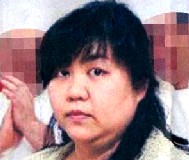
Kanae Kijima
Serial killer Miyoko Sumida
Serial killer · Japan · 2003
Miyoko Sumida was a Japanese serial killer who killed six people in a case invo…
6 victims
Miyoko Sumida
Serial killer · Japan · 2003
Miyoko Sumida was a Japanese serial killer who killed six people in a case invo…
6 victims
 Junko Ogata
Serial killer · Japan · 1996
Junko Ogata (緒方 純子 Ogata Junko, born February 25, 1962) was a Japanese woman wh…
7 victims
Junko Ogata
Serial killer · Japan · 1996
Junko Ogata (緒方 純子 Ogata Junko, born February 25, 1962) was a Japanese woman wh…
7 victims
 Hiroshi Maue
Serial killer · Japan · 2005
Hiroshi Maeue ( 前上 博 , Maeue Hiroshi ) was born August 8, 1968. He was a Japane…
3 victims
Hiroshi Maue
Serial killer · Japan · 2005
Hiroshi Maeue ( 前上 博 , Maeue Hiroshi ) was born August 8, 1968. He was a Japane…
3 victims
 Kiyotaka Katsuta
Serial killer · Japan · 1972
Kiyotaka Katsuta (勝田 清孝; Katsuta Kiyotaka; August 29, 1948 - November 30, 2000)…
22 victims
Kiyotaka Katsuta
Serial killer · Japan · 1972
Kiyotaka Katsuta (勝田 清孝; Katsuta Kiyotaka; August 29, 1948 - November 30, 2000)…
22 victims
 Irina Gaidamachuk
Serial killer · Russia · 2002
Irina Viktorovna Gaidamachuk (Russian: Ирина Викторовна Гайдамачук) was born in…
17 victims
Irina Gaidamachuk
Serial killer · Russia · 2002
Irina Viktorovna Gaidamachuk (Russian: Ирина Викторовна Гайдамачук) was born in…
17 victims
 Juana Barraza
Serial killer · Mexico · 2002
Juana Barraza (born 1958) was a Mexican professional wrestler and serial killer…
11 victims
Juana Barraza
Serial killer · Mexico · 2002
Juana Barraza (born 1958) was a Mexican professional wrestler and serial killer…
11 victims
 William Herrera
Murderer · USA · 1988
Defendant: William Herrera Victim: Caucasian (Deputy Sheriff Vernon Marconnet)…
1 victim
William Herrera
Murderer · USA · 1988
Defendant: William Herrera Victim: Caucasian (Deputy Sheriff Vernon Marconnet)…
1 victim
 Stephen Kazmierczak
Mass murderer · USA · 2008
Stephen Kazmierczak died of a self-inflicted gunshot wound during the Northern…
5 victims
Stephen Kazmierczak
Mass murderer · USA · 2008
Stephen Kazmierczak died of a self-inflicted gunshot wound during the Northern…
5 victims
 Elroy Chester
Spree killer · USA · 1997
Elroy Chester (TDCJ number 999280) was born on 6/14/1969 and was 29 at the time…
5 victims
Elroy Chester
Spree killer · USA · 1997
Elroy Chester (TDCJ number 999280) was born on 6/14/1969 and was 29 at the time…
5 victims
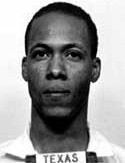 Tommy Ray Jackson
Murderer · USA · 1983
Defendant: Tommy Ray Jackson Victim: Rosalind Robison, a 24-year-old University…
1 victim
Tommy Ray Jackson
Murderer · USA · 1983
Defendant: Tommy Ray Jackson Victim: Rosalind Robison, a 24-year-old University…
1 victim
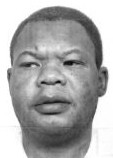 Kelsey Patterson
Homicide · USA · 1992
Kelsey Patterson was executed by lethal injection in Texas on May 18, 2004, aft…
2 victims
Kelsey Patterson
Homicide · USA · 1992
Kelsey Patterson was executed by lethal injection in Texas on May 18, 2004, aft…
2 victims
- Gender
- female
- Country
- Japan
- Location
- Saitama, Tokyo and Chiba, Japan
- Date of birth
- 1974
- Age at first offence
- 35
- Characteristics
- poisoner, attempt to collect insurance money
- Victim profile
- Hideki Maruyama, 53 / Keizo Ando, 80 / Yoshiyuki Oide, 41
- Method of murder
- Poisoning (carbon monoxide)
- Date(s) of murder
- January-August 2009
- Years active
- 2009
- Date of arrest
- November 3, 2009
- Status
-
Sentenced to death
Sentenced to death on April 13, 2012
Overview
Kanae Kijima was sentenced to death on April 13, 2012. She was convicted of three murders of three men: Yoshiyuki Oide (41), Keizo Ando (80), and Hideki Maruyama (53). The court found that she committed the crimes for selfish purposes and did not show remorse.
Timeline
- April 13, 2012 — Kanae Kijima was sentenced to death by presiding judge Kazuyuki Okuma in Saitama district court.
- April 14, 2012 — A report stated that the Saitama District Court ruled that Kanae Kijima, 37, killed three men in 2009 and attempted to disguise their deaths as suicides.
- March 13, 2012 — Prosecutors demanded the death penalty in closing arguments at the lay judge trial presided over by Kazuyuki Okuma at the Saitama District Court.
- January 11, 2012 — Kanae Kijima’s trial began in Saitama with her declaring her innocence.
- February 19, 2012 — Kanae Kijima testified in the Saitama District Court that she received nearly 100 million yen from an elderly man she had known.
- December 3, 2009 — Documents related to the investigation discussed Kijima’s associations and the suspicious deaths of multiple men.
- November 3, 2009 — Police searched Kijima’s apartment in Tokyo and found vast amounts of medicine.
- August 2009 — Yoshiyuki Oide (41) was found dead in his car in a case described as carbon monoxide poisoning.
- May 2009 — Keizo Ando (80) died in a house fire described in connection with sleeping drugs and Kijima’s presence.
- October (year not stated) — Hideki Maruyama was found face-down in a stream.
- May (year not stated) — An unnamed journalist was run down by a train.
- January 2009 to August 2009 — The bodies were found in a period described as including the deaths of multiple men.
- February (year not stated) — Takao Terada (53) died of carbon monoxide poisoning at his home in Tokyo.
The offence
Kijima was convicted of three murders of men whose deaths were described as being disguised as suicides.
The judge stated:
"There is no room for leniency as the defendant committed the crimes for selfish purposes. She reiterated irrational excuses in court and did not show any remorse."
Kijima was also described in reporting as being dubbed “Konkatsu Killer” by the media because of the konkatsu (marriage-hunting) sites she frequented.
The court and prosecutors described the method as poisoning the victims with carbon monoxide by burning charcoal briquettes after giving them sleeping pills.
Background
Kijima met men on internet dating sites and was described as posing as a prospective bride. She also sometimes played a nurse or therapist to lure specific targets. The reporting described her as portraying herself as an accomplished cook with expensive tastes in clothes and jewelry, including cropping and altering photos to make herself look more attractive.
Reporting also described her as nicknamed the “black widow” and as a serial killer who preyed on vulnerable men. Her age at sentencing was given as 37 in reporting.
Kijima’s blog and dating profiles were described as including references to an extravagant lifestyle.
A 70-year-old lover mentioned in reporting was said to be an individual who later was found dead at his home, and the email attributed to Kijima said her parents had been killed in a plane crash and that she needed money to complete her music studies in the US.
Investigation
Police searched Kijima’s apartment in Tokyo on Nov 3, 2009, and found vast amounts of medicine, including cold remedies and drugs known to induce drowsiness, that had been prescribed by at least 10 different doctors.
Traces of different sleeping medicines were found in the bodies of three other men who died in similarly suspicious circumstances. The men were described as having met Kijima through lonely heart websites.
Police also pointed to evidence that Kijima purchased items needed to cause carbon monoxide poisoning over the internet.
Trial
Charges and prosecution theory
Prosecutors said Kijima killed the men so she would not have to pay back money they had given her. They sought a death sentence.
The prosecution described that Kijima began dating the men because she wanted to live in luxury, then killed them so they could not demand repayment. The prosecution also said Kijima took money from one of the men’s bank accounts.
Prosecutors said that all three died of carbon monoxide poisoning from coal briquettes and stoves that Kijima herself prepared, and that she would meet with the men until just before their deaths.
Prosecutors also described an absence of direct evidence such as witness testimony or confession but argued circumstantial factors were sufficient for proof of guilt.
Defence theory
Kijima pleaded not guilty.
Her lawyer argued that the men committed suicide after arguing with Kijima about breaking up, or that Ando’s death was accidental. The defense also argued that they were either suicides because the victims broke up with her, or deaths by accident.
At trial, observers described that both prosecution and defense counsel strongly contested each point due to lack of direct linkage evidence between Kijima and the murders, and that the prosecution focused on suicide paraphernalia Kijima was believed to have purchased online and the money that her alleged victims transferred into her bank accounts.
Sentencing
On April 13, 2012, Kanae Kijima was sentenced to death by presiding judge Kazuyuki Okuma in Saitama district court.
The presiding judge said the following at sentencing:
"The defendant repeatedly committed quite serious crimes that claimed the lives of three people. "There is no room for leniency because the defendant committed the crimes for selfish purposes," he said. "She repeated irrational excuses in court and did not show any remorse."
The trial was described as a high-profile lay judge trial based solely on circumstantial evidence. The lay judges served for 100 days, the longest period on record since the system was introduced in 2009. Reporting stated that the lack of conclusive evidence placed pressure on the lay judges.
Victims
Yoshiyuki Oide (41)
Yoshiyuki Oide was described as a 41-year-old from Tokyo.
He was found dead in August of carbon monoxide poisoning in his car. The method was described as a common suicide method in Japan, though it was described as unusual because the keys were not in the locked vehicle.
It was reported that shortly after Oide had transferred Y5 million (£33,175) to his “fiancee,” he was found dead.
A report stated that Oide wrote on his blog less than 24 hours before his death:
“At 41, I’m actually looking forward to getting married, and today I’ll meet my partner’s family,”
Another report added additional words from the same blog post:
"Recently, we've spent all our time looking for a new place to live and talking about our new life together. This evening we're going on a two-night, three-day holiday."
An autopsy showed Oide died of carbon monoxide poisoning, and his blood contained traces of sleeping pills.
Kijima was accused of murdering Oide and as many as five other men she met via online marriage sites by drugging them with sleeping pills and disguising their deaths as suicides or accidents.
Keizo Ando (80)
Keizo Ando was described as 80 years old and an invalid.
He was reported to have died in May in a house fire. It was stated that Kijima served as his nurse and that she was seen at his home in Chiba Prefecture the day before the fire. It was also stated that she withdrew money from his bank account.
A report stated that an autopsy revealed that Ando’s body contained traces of sleeping drugs. A report described a charcoal stove found at the scene and in Ando’s system as well.
Hideki Maruyama (53)
Hideki Maruyama was described as 53 years old.
He was found face-down in a stream in October. He was one of the three men for whom Kijima received a death sentence.
Other suspected victims and related cases
Four additional victims were described as suspected.
- Sadao Fukuyama (shop manager): his naked body was found at his home in Chiba Prefecture after he had loaned Kijima Y74 million (£491,000).
- Takao Terada (53): a report described him as dying of carbon monoxide poisoning at his home in Tokyo in February.
- Kazumi Yabe: the body of Kazumi Yabe was discovered on the seabed in April after he apparently died in a fishing accident.
- An unnamed journalist: a report stated an unnamed journalist was run down by a train in May 2004.
Other details
Lay judge and trial witnesses
Reporting stated that because there was no evidence that directly linked Kijima to the murders, the prosecution focused on circumstantial details including suicide paraphernalia Kijima was believed to have purchased online and money the alleged victims transferred.
Reporting stated that 63 witnesses were to be called.
Amounts of money and relationships
Prosecutors claimed Kijima only dated the men for their money to support a luxurious lifestyle and killed them after they demanded she repay them.
Reporting described that Kijima allegedly made $2.2 million off her various paramours. Police noticed a large gap between expenditures and income from the men she allegedly deceived, with Kijima described as collecting roughly 100 million yen while using between 10 and 20 million yen to purchase an imported car and other items.
Kijima testified that she received nearly 100 million yen from an elderly man:
- She said: "I lived a luxurious life when I was young, so I can't lower the quality of my life,"
- She said the man gave her "nearly 100 million yen, I think"
- She said: "I thought the best thing would be to find a man [who would help me financially]."
- She answered questions from her lawyers, including:
"I applied for a job he posted on the Internet, because the salary was 200,000 yen a month. I cleaned and prepared his meals about once a week at first. From the second month, I received 300,000 yen in addition to my salary. I gradually stopped hesitating, and I think I received nearly 100 million yen in total from the man."
"He told me it wasn't necessary for me to change, as I lived according to special values and my charm was that I wasn't aware of it."
"I thought the best thing was to find a man like him, and I joined a dating service website [before joining a matchmaking website]. I sometimes went to a hotel and received money. I had no compunction about taking it."
"I ground the pills using a mortar and pestle. I didn't want the staff at the pension where I often stayed to know what kind of medicine I took."
Police and prosecutors claimed that Oide’s case involved a component of sleeping pills detected in Oide’s body also found on a mortar and pestle police seized from Kijima’s house after Oide’s death. Reporting stated the defense was expected to claim the presence of the sleeping pill component was irrelevant.
Mental health and medication
Reporting described that Kijima visited a psychiatrist for the first time in March 2005, stating she had insomnia and was diagnosed with depression and prescribed sleeping pills.
Association with a nightclub host
Reporting from December 3, 2009 discussed that documents related to the investigation indicated Kijima had an association with a nightclub host in Tokyo’s Shinjuku Ward, and that police were building cases for murder around suspicious deaths of six men who gave her sizable sums of money.
A source close the investigation said:
“He is the most important person in the investigation,” says a source close the investigation. “He is not showing up to work now. And he might be the reason for Kijima’s crimes. The money she got from these guys was used to feed and take care of him.”
The reporting also described emails in which the host was teaching her how to use charcoal and said the advice could be considered instructions for making murder seem like suicide.
A veteran host and a representative from a public relations department were quoted in reporting:
“Although people are saying she’s been here, she has not.”
“I haven’t heard a thing about her coming here.”

Spotted an error, or have more information about this case?