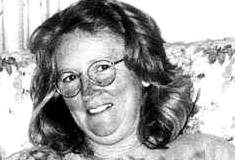
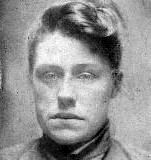
Katherine Knight
Murderer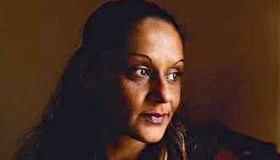 Anu Singh
Murderer · Australia · 1997
Anu Singh (born 3 September 1972) was an Australian of Indian descent who kille…
1 victim
Anu Singh
Murderer · Australia · 1997
Anu Singh (born 3 September 1972) was an Australian of Indian descent who kille…
1 victim
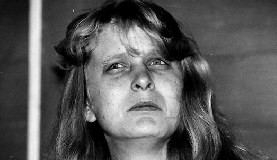 Gunn-Britt Ashfield
Murderer · Australia · 1993
Gunn-Britt Ashfield was the mother of six-year-old John Ashfield. In 2011 she w…
1 victim
Gunn-Britt Ashfield
Murderer · Australia · 1993
Gunn-Britt Ashfield was the mother of six-year-old John Ashfield. In 2011 she w…
1 victim
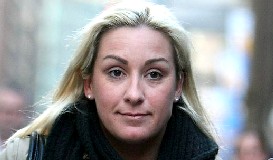 Keli Lane
Murderer · Australia · 1996
Keli Lane (born 21 March 1975) was a former Australian water polo player. She w…
1 victim
Keli Lane
Murderer · Australia · 1996
Keli Lane (born 21 March 1975) was a former Australian water polo player. She w…
1 victim
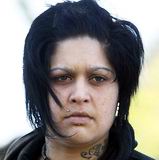 Kristi Abrahams
Murderer · Australia · 2010
Kristi Anne Abrahams — mother of Kiesha Weippeart; pleaded guilty to murder and…
1 victim
Kristi Abrahams
Murderer · Australia · 2010
Kristi Anne Abrahams — mother of Kiesha Weippeart; pleaded guilty to murder and…
1 victim
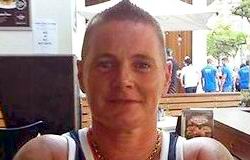 Storm Brooke
Murderer · Australia · 1990
Storm Brooke was an Australian prisoner who stabbed fellow prisoner Debbie Dick…
1 victim
Storm Brooke
Murderer · Australia · 1990
Storm Brooke was an Australian prisoner who stabbed fellow prisoner Debbie Dick…
1 victim
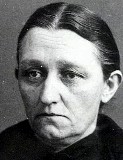 Sarah Makin
Murderer · Australia · 1892
Sarah Makin was also known as Sarah Jane Makin. John Makin (14 February 1845 –…
12 victims
Sarah Makin
Murderer · Australia · 1892
Sarah Makin was also known as Sarah Jane Makin. John Makin (14 February 1845 –…
12 victims
 William Smedley
Murderer · United Kingdom · 1947
William Smedley was executed by hanging at Armley Gaol on August 14, 1947. Stev…
1 victim
William Smedley
Murderer · United Kingdom · 1947
William Smedley was executed by hanging at Armley Gaol on August 14, 1947. Stev…
1 victim
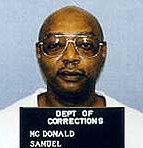 Samuel Lee McDonald
Murderer · USA · 1981
Name: Samuel Lee McDonald · Case citation: State of Missouri v. Samuel Lee McDo…
1 victim
Samuel Lee McDonald
Murderer · USA · 1981
Name: Samuel Lee McDonald · Case citation: State of Missouri v. Samuel Lee McDo…
1 victim
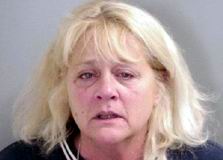 Cynthia Galens
Murderer · USA · 2009
Cynthia Galens was convicted in Ontario County Court of first-degree manslaught…
1 victim
Cynthia Galens
Murderer · USA · 2009
Cynthia Galens was convicted in Ontario County Court of first-degree manslaught…
1 victim
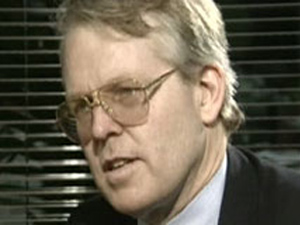 John Barlow
Murderer · New Zealand · 1994
16 February 1994 — Financial dealers Eugene and Gene Thomas, father and son, we…
2 victims
John Barlow
Murderer · New Zealand · 1994
16 February 1994 — Financial dealers Eugene and Gene Thomas, father and son, we…
2 victims
- Gender
- female
- Country
- Australia
- Location
- Aberdeen, New South Wales, Australia
- Date of birth
- October 24, 1955
- Age at first offence
- 45
- Characteristics
- cannibalism, dismemberment, parricide
- Victim profile
- John Charles Thomas Price, 44 (her de facto husband)
- Method of murder
- Stabbing with knife (37 times)
- Date(s) of murder
- February 29, 2000
- Years active
- 2000
- Date of arrest
- Next day (suicide attempt)
- Status
-
Life imprisonment
Sentenced to life imprisonment without parole on November 9, 2001
Case overview
Katherine Mary Knight (born 24 October 1955) was the first Australian woman to be sentenced to life imprisonment without parole. She was convicted of the murder of her partner, John Charles Thomas Price (born 6 January 1955) in October 2001, and was detained in Silverwater Women's Correctional Centre.
People
- Katherine Mary Knight — defendant; partner of John Charles Thomas Price.
- John Charles Thomas Price — deceased; Knight’s partner.
- Barbara Roughan (née Thorley) — Knight’s mother.
- Ken Knight — Knight’s father; an abattoir slaughterman.
- Jack Roughan — Knight’s father’s relationship; died in 1959.
- Ken — a co-worker of Jack Roughan; implicated in the relationship described involving Barbara Roughan.
- Oscar Knight — Knight’s uncle; committed suicide in 1969.
- Joy — Knight’s twin sister.
- Patrick, Martin, Neville, Barry, Charlie, Shane — siblings mentioned in biographical material.
- David Kellett — Knight’s husband; hard drinking co-worker.
- Melissa Ann — Knight and David Kellett’s child.
- Natasha Maree — Knight and David Kellett’s child (second daughter mentioned).
- David Saunders — miner; partner after leaving Kellett.
- Sarah — Knight and David Saunders’s child.
- John Chillingworth — 43-year-old former abattoir co-worker; Knight’s partner; father of Eric.
- Eric — Knight and John Chillingworth’s child.
- John Price (“Pricey” Price) — referenced as John Charles Thomas Price.
- Detective Senior Constable Peter Anthony Muscio — crime scene investigator.
- Detective Sergeant Neil Raymond — present at scene.
- Duty officer Graham Furlonger — present at scene.
- Detective Sergeant Bob Wells — present at scene.
- Senior Constable Michael Prentice — present at scene.
- Dr. Timothy Lyons — forensic pathologist who performed an autopsy.
- Justice Barry O’Keefe — sentencing judge.
- Justices Peter McClellan, Michael Adams, and Megan Latham — dismissed the appeal in the NSW Court of Criminal Appeal.
- Justice McClellan — wrote a judgment quoting “This was an appalling crime, almost beyond contemplation in a civilized society.”
Timeline
- 9 August 1976 — Knight was released into the care of her mother-in-law.
- 6 March 1980 — Knight and David Saunders had another daughter, Natasha Maree.
- 1995 — Knight moved into John Price’s house.
- February 2000 — assaults on John Price culminated with Knight stabbing Price in the chest.
- 29 February — John Price stopped at the Scone Magistrate’s Court and took out a restraining order to keep Knight away from him and his children.
- 11pm — John Price spent the evening with his neighbors before going to bed at 11pm.
- 6am (next morning after 11pm) — a neighbor became concerned that Price’s car was still in the driveway; an employer sent a worker to see what was wrong.
- 8am — police arrived after noticing blood on the front door.
- 8 November 2001 — Justice Barry O’Keefe sentenced Knight to life imprisonment without the possibility of parole.
- 9 November 2001 — sentencing date stated as “Sentenced to life imprisonment without parole”.
- September (year stated as June 2006 appeal and September dismissal) — the NSW Court of Criminal Appeal dismissed the appeal; Justices Peter McClellan, Michael Adams and Megan Latham dismissed it.
Background
Katherine Mary Knight was originally from the town of Aberdeen in New South Wales’ Hunter Valley. Barbara Roughan (née Thorley) was forced to move to Moree after beginning a relationship with Ken Knight, a co-worker of her husband Jack Roughan. The families were well known in the conservative rural town.
Two of Roughan’s four children remained with their father while the two youngest were sent to live with an aunt in Sydney.
Knight was the younger of twins born to Barbara and her de facto partner Ken on 24 October 1955 in Tenterfield, New South Wales.
Jack Roughan died in 1959, and the two children who had lived with him moved in with the Knight family. Barbara’s grandmother was apparently an Indigenous Australian from the Moree area who married an Irishman. She liked to think of her own family as Aboriginal, and this was kept a family secret because of racism in the area.
Knight’s uncle Oscar Knight was described as a champion horseman, and Knight was devastated when he committed suicide in 1969 and maintained that his ghost visited her.
Knight attended Muswellbrook high school, became a loner, was remembered as a bully who stood over smaller children, and assaulted at least one boy at school with a weapon. She was also once injured by a teacher who was found to have acted in self-defense. When not in a rage, she was described as a model student and earning awards for good behaviour.
On leaving school at 15 without having learned to read or write, Knight gained employment as a cutter in a clothing factory. Twelve months later, she left to start her “dream job”, cutting up offal at the local abattoir; she was promoted to boning and given her own set of butcher knives, which she hung over her bed so they “would always be handy if I needed them”, continuing the habit until her incarceration.
Knight’s father Ken was described as an alcoholic who used violence and intimidation to rape her mother up to ten times a day. Knight’s mother was described as telling her daughters intimate details of her sex life and how much she hated sex and men. When Knight complained to her mother that one of her partners wanted her to take part in a sex act she didn’t want to do, Barbara told her to “put up with it and stop complaining”.
Knight claimed she was frequently sexually abused by several members of her family (though not by her father) until she was 11. Psychiatrists accepted her claim because all her family members confirmed the abuse happened.
It was also said that Katherine experienced uncontrollably murderous rages in response to minor upsets.
The offence
John Charles Thomas Price was murdered by Katherine Knight.
Investigation and evidence
Police found John Price’s body after a neighbor and worker tried to wake him. Police were alerted after noticing blood on the front door, forced entry through the rear door, and found Price’s exterior layers of skin hanging from a hook in a doorway arch into the lounge room and Price’s decapitated remains on the lounge room floor near a small foyer leading to the front door. Police also located Katherine Knight snoring loudly in a comatose condition on a double bed at the end of the house and removed her.
Crime scene investigator Detective Senior Constable Peter Anthony Muscio described the premises at 84 St Andrews Street, Aberdeen as a single storey, three bedroom dwelling with vehicles in the rear yard including a white Toyota 4WD, a white Ford sedan, and a white Toyota Landcruiser utility, plus two galvanised steel garden sheds and a brick barbeque against the eastern boundary.
He collected a piece of cooked meat from the rear lawn in front of the white Ford sedan and took photographs. In the kitchen he saw a large section of what appeared to be human skin hanging from the top architrave of the doorway leading into the lounge room. He saw a headless and skinless human body in the lounge room and noted an extreme amount of blood pooled in the entry foyer.
Muscio described items in the dining room, including clothing on chairs and medication boxes: Felodur ER 5mg (two empty boxes and one full strip containing 15 tablets), Prinivil (empty box), and Dapa-Tabs (empty box stated to contain 90 tablets when full at 2.5mg). In the kitchen he described an electric cook top with a baking dish and an aluminum boiler, and he described the boiler as warm to touch when he lifted the lid.
Muscio stated that in the aluminum boiler there was liquid and he could identify a skinned human head and cooked vegetables, along with two prepared meals each with “baked potato, baked pumpkin, zucchini, cabbage, yellow squash and gravy”, with kitchen paper beneath each meal with names written on them. He stated the word “Beaky” was written in blue ink pen on one piece while “Jonathon” was on the other.
Muscio described a blood trail from the lounge room into the kitchen towards the cook top near the aluminum boiler, blood-stained utensils and other items, a bloodied footprint in the kitchen, blood staining on the fridge handle and surfaces consistent with opening the fridge with bloodied hands, and described the kitchen and lounge room layout and contents including honing steel and Winfield Blue cigarettes at the chair near the deceased’s shoulders.
Muscio described the lounge room scene where the skinned and headless body of John Charles Price was in a supine position with legs protruding into the entry foyer, with his legs crossed at the feet, and noted the presence of an empty plastic 1.25 litre Shelleys Club Lemon Squash bottle under the left wrist of the extended arm, and a blood-stained knife adjacent to the right arm.
Muscio stated that the body had been skinned prior to being decapitated, and he described the decapitation as cleanly removed with a sharp instrument. He described that the skin had been removed in a manner indicating skill.
Muscio described a blood stained watch and broken picture frame with a blood stained hand written note and another broken picture. He transcribed the handwritten note verbatim as follows:
"Time got you back Johathon for rapping (raping) my douter (daughter). You to Beck for Ross — for Little John.' 'Now play with little Johns Dick John Price.' (These allegations were baseless.) "
He also described blood splatter marks on the walls as indicative of each attack and described, in a quoted account attributed to him, how the victim was stabbed repeatedly and attempted to escape:
"I remember walking down the hallway and at about shoulder height there were all these blood splatter marks on the walls. To me, it's indicative of each attack... He's absolutely fighting for his life. The bloke's just had a bonk (sexual intercourse) in the bed when he wakes up, then stab, stab, stab. He's getting up, there is arterial spurting on the robe and the bed, and on the doorway there's a bloodied handprint or swipe on the western side of the door near the dressing table, and blood around the light switch. It looks like he's tried to turn the light switch on. And then all down the hallway they're (bloody handprints) everywhere. And he's almost made it, he's opened the front door, the screen door is shut, there is blood staining, trajectory again, flicking out across the front door, he's almost made it... but he wouldn't have survived. He would have been absolutely horrified, terrified — probably terrified more than horrified — trying to get out and all the time being stabbed."
An autopsy revealed that the victim was dead when he was skinned.
Muscio described the cutting as precise, including a straight cut under his collarbone across to shoulder to shoulder, a T cut involving the chest, stomach to the pubic hair line, and further detailed description of cuts over the thighs, knees and to his feet, then moving up the body and peeling the skin off including the head, hair, face, ears, nose, mouth and genitals and exposing intestines. He described the decapitation as at the C3-C4 junction at the top of the shoulders, and described the entire skin in one piece.
Forensic pathologist Dr. Timothy Lyons performed the autopsy and stated the whole procedure would have taken about 40 minutes:
(Procedure would have taken about 40 minutes.)
Trial
Knight initially offered to plead guilty to manslaughter, but the offer was rejected. She was arraigned on 2 February 2001 on the charge of murdering John Price and entered a plea of not guilty.
Her trial was initially fixed for 23 July 2001 but was adjourned due to her counsel’s illness and was re-fixed for 15 October 2001.
When the trial commenced, Justice Barry O’Keefe offered the 60 jury prospects the option of being excused due to the nature of the photographic evidence; five accepted. When the witness list was read out to the prospects, several more dropped out, and the jury was empanelled. Knight’s attorneys spoke to the judge who adjourned to the following day.
The next morning, Knight changed her plea to guilty and the jury was dismissed. It was made public that Justice O’Keefe had been advised of the plea change the day before. He adjourned the trial and ordered a psychiatric assessment overnight to determine if Knight understood the consequences of a guilty plea and was fit to make such a plea.
Knight’s legal team had planned to defend by claiming amnesia and dissociation, supported by most psychiatrists although they considered her sane. No reason was given for the guilty plea, and despite giving it, Knight refused to accept responsibility for her actions.
At the sentencing hearing, Knight’s lawyers requested that she be excused to avoid hearing some facts, but the application was refused.
When Dr. Timothy Lyons took the stand and described the skinning and decapitation, Knight became hysterical and had to be sedated.
Sentencing
On 8 November, Justice Barry O’Keefe sentenced Knight to life imprisonment, refused to fix a non-parole period, and ordered that her papers be marked “never to be released”, the first time that this had been imposed on a woman in Australian history.
In the sentencing narrative, it was stated that:
"Katherine Mary Knight, you have pleaded guilty and been convicted of the murder of John Charles Price at Aberdeen on or about February 29, 2000, in respect of your crime, I sentence you to imprisonment for life."
Appeals
In June 2006, Knight appealed the life sentence, claiming that a penalty of life in jail without possibility of parole was too severe for the killing.
The NSW Court of Criminal Appeal dismissed the appeal in September. Justices were Peter McClellan, Michael Adams and Megan Latham. Justice McClellan wrote:
"This was an appalling crime, almost beyond contemplation in a civilized society."
Outcome
Knight was sentenced to life imprisonment without parole.
Aftermath and custody
Knight was detained in Silverwater Women’s Correctional Centre. The record also stated that in Mulawa Women’s Correctional Centre she worked as a cleaner in the governor’s office. It also stated she was “a good cook”, although it was described as highly unlikely she would get a job in the kitchen.
Other details
Relationship history and reported prior behaviour
The record described violent and possessive behaviour in Knight’s relationships, including:
- Knight’s husband David Kellett; it stated she tried to strangle him on their wedding night.
- A pregnancy and subsequent incidents involving Melissa Ann: Knight was admitted to St Elmo’s Hospital in Tamworth, diagnosed with postnatal depression, and later placed a two-month-old Melissa on a railway line shortly before the train was due; she was arrested and taken back to hospital and signed herself out the following day.
- An incident involving a woman at a later time where Knight slashed a woman’s face with one of her knives and demanded she drive her to Queensland to find Kellett; the woman escaped and Knight took a little boy hostage, threatening him with the knife; she was disarmed when police attacked her with brooms and admitted to Morisset Psychiatric Hospital.
- An incident involving David Saunders where she cut the throat of his two-month-old dingo pup and then knocked him unconscious with a frying pan.
- The record described that Saunders returned home and found that Knight had gone to the police and told them she was afraid of him, leading to an Apprehended Violence Order (AVO) issued against him.
- The record described that Knight became pregnant by John Chillingworth and gave birth to Eric in 1991; their relationship lasted three years.
- The record described that Knight left Chillingworth for John Price.
Apprehended Violence Order and bank withdrawal details
The record stated that on 29 February, John Price took out a restraining order against Knight. It also stated that after the murder, Knight went into Aberdeen and withdrew $1,000 from Price’s ATM account.
Drugs and medication described at scene
Crime scene evidence described medication boxes and missing tablets in the dining room and on-site items including blister packs labeled “Luvox”, “Aropax”, and a blister packet labeled “Promethazine”.
Allegations in a note
Accusations in the handwritten note were described as found to be groundless.
Quote attributed to Justice O’Keefe on terror and enjoyment
A passage attributed to Justice O’Keefe stated:
"The last minutes of his (John Price) life must have been a time of abject terror for him as they were a time of utter enjoyment for her...she has not expressed any contrition or remorse and if released she poses a serious threat to the security of society."
Prison work description repeated in different places
The record stated Knight was detained in Silverwater Women’s Correctional Centre and also described work as a cleaner in the governor’s office in Mulawa Women’s Correctional Centre.
Spotted an error, or have more information about this case?