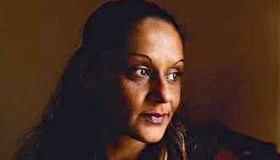
Anu Singh
Murderer Kathleen Folbigg
Murderer · Australia · 1989
Kathleen Megan Folbigg (née Donovan) was an Australian child killer. She was co…
4 victims
Kathleen Folbigg
Murderer · Australia · 1989
Kathleen Megan Folbigg (née Donovan) was an Australian child killer. She was co…
4 victims
 Gunn-Britt Ashfield
Murderer · Australia · 1993
Gunn-Britt Ashfield was the mother of six-year-old John Ashfield. In 2011 she w…
1 victim
Gunn-Britt Ashfield
Murderer · Australia · 1993
Gunn-Britt Ashfield was the mother of six-year-old John Ashfield. In 2011 she w…
1 victim
 Katherine Knight
Murderer · Australia · 2000
Katherine Mary Knight (born 24 October 1955) was the first Australian woman to…
1 victim
Katherine Knight
Murderer · Australia · 2000
Katherine Mary Knight (born 24 October 1955) was the first Australian woman to…
1 victim
 Keli Lane
Murderer · Australia · 1996
Keli Lane (born 21 March 1975) was a former Australian water polo player. She w…
1 victim
Keli Lane
Murderer · Australia · 1996
Keli Lane (born 21 March 1975) was a former Australian water polo player. She w…
1 victim
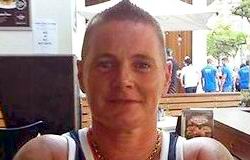 Storm Brooke
Murderer · Australia · 1990
Storm Brooke was an Australian prisoner who stabbed fellow prisoner Debbie Dick…
1 victim
Storm Brooke
Murderer · Australia · 1990
Storm Brooke was an Australian prisoner who stabbed fellow prisoner Debbie Dick…
1 victim
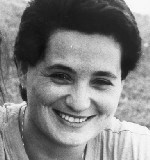 Tracey Wigginton
Murderer · Australia · 1989
Tracey Wigginton (born 1965) was an Australian murderer who achieved notoriety…
1 victim
Tracey Wigginton
Murderer · Australia · 1989
Tracey Wigginton (born 1965) was an Australian murderer who achieved notoriety…
1 victim
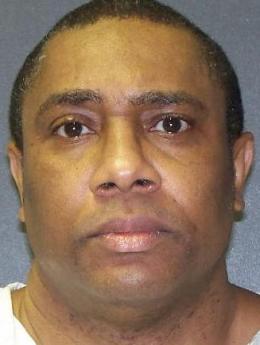 Kenneth Mosley
Murderer · USA · 1997
Kenneth Mosley was convicted of capital murder and was executed by lethal injec…
1 victim
Kenneth Mosley
Murderer · USA · 1997
Kenneth Mosley was convicted of capital murder and was executed by lethal injec…
1 victim
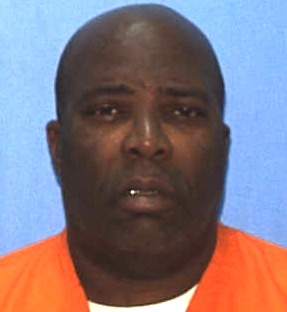 Charles L. Anderson
Murderer · USA · 1994
Charles L. Anderson was convicted and sentenced to death for the January 16, 19…
1 victim
Charles L. Anderson
Murderer · USA · 1994
Charles L. Anderson was convicted and sentenced to death for the January 16, 19…
1 victim
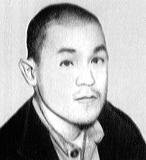 Yoshio Kodaira
Serial killer · Japan · 1932
Yoshio Kodaira ( 小平 義雄 , Kodaira Yoshio , January 28, 1905 - October 5, 1949) w…
10 victims
Yoshio Kodaira
Serial killer · Japan · 1932
Yoshio Kodaira ( 小平 義雄 , Kodaira Yoshio , January 28, 1905 - October 5, 1949) w…
10 victims
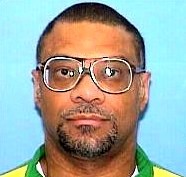 Henry Brisbon
Homicide - Murderer · USA · 1973
Henry Brisbon was a juvenile (17) when he was convicted for double murder. The…
3 victims
Henry Brisbon
Homicide - Murderer · USA · 1973
Henry Brisbon was a juvenile (17) when he was convicted for double murder. The…
3 victims
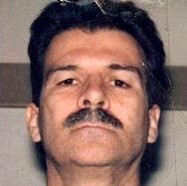 William Mentzer
Murderer · USA · 1983
William Mentzer was a contract killer with ties to drug syndicates. He was also…
5 victims
William Mentzer
Murderer · USA · 1983
William Mentzer was a contract killer with ties to drug syndicates. He was also…
5 victims
- Gender
- female
- Country
- Australia
- Location
- Canberra, Australia
- Date of birth
- September 3, 1972
- Age at first offence
- 25
- Characteristics
- abuse, drug addict, drug dealer, drugs, rape?
- Victim profile
- Joe Cinque, 26 (her boyfriend)
- Method of murder
- Poisoning ( massive dose of heroin)
- Date(s) of murder
- October 26, 1997
- Years active
- 1997
- Date of arrest
- Next day
- Status
-
Released
Found not guilty of murder due to diminished responsibility; guilty of manslaughter on April 23, 1999. Sentenced to ten years' imprisonment with four years of non-parole period on June 24, 1999. Released on parole in October 2001
Case record: Anu Singh
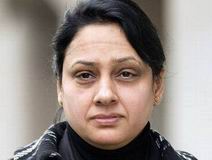
Anu Singh (born 3 September 1972) was an Australian of Indian descent who killed her boyfriend, Joe Cinque.
The offence
In 1997, while living with Joe Cinque in Canberra, Singh killed him. Singh laced Cinque’s coffee with Rohypnol and then injected him with heroin. Toxicology reports showed high levels of heroin and Rohypnol in his body.
Singh had previously been obsessed with her body starting from 1991 and had briefly taken Ipecac after Cinque mentioned it, something she was later angry with him for. In May 1997, Singh told a friend that she wanted to kill a number of people, including Cinque and her doctors.
In October 1997, Singh’s close friend Madhavi Rao invited acquaintances to two dinner parties and told them that a terrible crime would be committed. A witness reported that the first dinner party on 24 October was normal and that Singh and Cinque appeared loving. Another witness told the court that Rao had told her afterwards that Singh had tried to kill Cinque that evening but could not deliver a sufficient dose, and that the witness had threatened to go to the police.
The day after the first dinner party, Singh and Rao went to a friend, Len Mancini, and told him they had given Cinque drugs the previous evening. Cinque died on 26 October 1997, the morning after the second dinner party. Singh called an ambulance for Cinque at 12:10pm on 26 October. The ambulance officers found that Cinque had had a cardiac arrest.
Singh made it difficult for the ambulance to respond quickly by giving false information about where she lived. When police arrived at the scene, Singh was hysterical and struggled with police and ambulance officers when they took her away from Cinque’s body. Singh told police at the scene that she had administered drugs to Cinque.
During the period around Cinque’s death, witness Ross Manley claimed that Singh bought further heroin from Manley’s friend on the morning of 26 October.
Investigation
After Singh called for an ambulance at 12:10pm on 26 October, ambulance officers found that Cinque had had a cardiac arrest. Police reported Singh struggled with officers when they took her away from Cinque’s body.
Arrest
Singh first appeared in court on 28 October 1997 charged with murder.
Trial
Singh had told police that she had injected Cinque with heroin so that he would not interfere with a suicide attempt.
Madhavi Rao was charged with conspiracy to commit murder and released on bail on 5 November. In court, the prosecutor noted that both Singh and Rao had been indiscreet about their actions.
Singh applied for bail in December, and a psychiatrist presented evidence of a personality disorder. Singh and Rao were tried jointly in October and November 1998, but that trial was aborted on 11 November. Justice Ken Crispin said that one of the pieces of evidence was problematic as it was unclear as to which of Singh or Rao it was admissible against.
For her second trial, Singh elected to stand trial by judge alone, forgoing a jury. Crispin J ruled that Singh and Rao had to have separate trials in the interest of fairness.
In Singh’s 1999 trial, Singh’s defence presented evidence that Singh was mentally ill and had diminished responsibility. The prosecutors called an expert witness to testify that Singh had appeared rational and assertive on the night she was arrested.
On 23 April, Crispin J found Singh not guilty of murder due to diminished responsibility, but guilty of manslaughter.
Singh was sentenced on 24 June.
Madhavi Rao’s separate trial
Rao was tried separately in late 1999 on charges of murder, manslaughter, attempted murder and administering a stupefying drug. On 10 December, Rao was found not guilty of all charges against her.
Crispin J found that there was reasonable doubt that she had assisted in the attempt and rejected the prosecutor's argument that Rao had a legal duty of care to Cinque. As of 2004, Rao was married and no longer lived in Australia.
Sentencing
On 24 June 1999, Singh was sentenced to ten years’ imprisonment with four years of non-parole period, including the time she had served since 1997.
Outcome
Singh was released on parole in October 2001.
After release, Singh returned to jail in April 2004 after breaching her parole conditions by smoking marijuana. She was released on 5 August 2004.
Aftermath
Cinque’s mother and Cinque’s family were unhappy with aspects of the proceedings and sentence. The public were reassured that Singh’s employment was on a time-limited project and was not employed to distribute clean injecting equipment.
In literature and theatre, Singh’s actions were the subject of fiction and non-fiction in Australia. Helen Garner’s book Joe Cinque's Consolation, published 2004, was widely publicised and included the Cinque family’s response. A play, Criminology by Tom Wright and Lally Katz, was performed at Melbourne’s Malthouse Theatre in August 2007.
After Singh’s release and around the time of publication, Singh gave interviews. She recounted her own memories of the killing and expressed regret at not agreeing to an interview by Garner. She told interviewers that she wished to redress some of the book’s imbalance towards her.
Singh completed a masters in criminology at Sydney University, having attended classes on day release from Emu Plains Correctional Centre. Her research involved offending women and included a thesis described as focusing on female criminality. In June 2005, concern was expressed in the New South Wales Parliament about Singh’s employment with the Cabramatta Community Centre. In 2005, a documentary was being made about Singh by James Ricketson, reportedly to be called Atonement.
In interviews and quotations, Singh compared killing her boyfriend with completing a university assignment, saying:
“like doing a university assignment”
Maria Cinque described Singh as:
“It’s another way to put herself in the paper,” Mrs Cinque said. “It’s another way to make herself noticed. “She says she wants to help people, but that is rubbish. “She should get a job and start repaying society for all the money they spent on her.”
Maria Cinque also said:
“She will never forgive Ms Singh.”
In letters that emerged during Singh’s 1999 trial, Singh wrote:
“I had the perfect life,” she wrote. “Attractive, money, law career, everything. Now, nothing, because of my utter, utter stupidity. I bet everyone is laughing at me now.”
Singh told Radio National’s Phillip Adams:
“It’s a terrible situation having to face the demon, essentially. It’s taken me a long time to even come to grips with what happened . . . and even to this day I still grapple with the many whys.”
Singh also told interviewer Susan Wyndham:
“it seems to perpetuate this notion that people who commit crimes are bad, are evil. "It furthers this 'us versus them' mentality.”
Singh described her state of mind and explanation during interviews:
“There’s no legitimate explanation to be made”
Singh described the time after the killing:
“in some different land, some sort of fantasy dream world, a dissociated state, not even considering the ramifications, not really thinking about death”
Singh also said:
“I still grapple with the whys,”
“It’s really difficult seven years down the track, not being mentally ill, to go back to that state of mind and grapple with what I was going through.”
“But with hindsight I can recognise what I was thinking and think, how could you even have thought that?”
In relation to delusions, Singh said:
“paranoid thoughts: the delusion I was under that Joe was in some way to blame for everything that was going wrong in my life.”
Singh stated about a plan she discussed with others:
“You'd be amazed at how many people I spoke to who had seriously contemplated suicide. Most people said, 'I sort of understand how you feel and if you want to do it you should.' Everyone I spoke to was well aware I was physically unwell, which is what I thought, so if someone has a degenerative illness would it be better dying than living like this?”
Singh said about the period leading up to her actions:
Singh described her acceptance of the factual account from court and reconstructed in the book, while disagreeing about the naming of the crime, saying:
“There was an amazing opportunity to be able to illuminate why things occur. To downplay the mental health stuff is a real shame considering so many girls are in jail for that very reason.”
Singh described her view of the blame:
“It's my fault entirely. I was hysterical and she just loved me and wanted to help me. What would sending her to jail have really done? Would it have eased Maria and Nino's pain any more? It seems it's perpetuating sorrow on so many people.”
Singh also said:
“I don't put any blame on Madhavi.”
In discussion of remorse and the question left open in Garner’s writing, Garner said:
“I've purposely left the question of her remorse wide open. There's no way I would have closed off that possibility without having spoken to her. That would be so impertinent and wrong. It would fly in the face of everything I believe in. Nothing would please me more than to know her version of the story - I'm very glad she's found a way to start telling it.”
Other details
Singh and Cinque lived together in Canberra. Cinque was an engineer. Joe Cinque was 26.
A friend of Singh’s told the court at Singh’s 1998 trial that Singh had been obsessed with her body starting from 1991 and had briefly taken Ipecac after Cinque mentioned it.
Singh’s close friend Madhavi Rao helped Singh to buy Rohypnol and heroin and organise two “send-off” dinner parties. After the second “send-off” dinner party, Singh drugged Cinque’s coffee and injected him with heroin.
Singh said she could not remember how she spent Saturday night and Sunday morning and later began to panic and rang a friend who urged her to call an ambulance.
Singh’s parents included Paddy Singh and Surinder, and Singh’s parents were described as having taken her to doctors and a psychiatrist. They said psychotic drugs had been recommended but Singh refused because they would make her fat. They tried to have her hospitalised but were told it would take a tribunal decision to do so. They wished Rao or someone had told them about the suicide-murder plan before they got a call from police.
Singh remained on the antidepressant Zoloft.
The Cinques were described as Italian immigrants, with Nino and Maria Cinque as Joe Cinque’s parents.
Ken Marslew, described as founder of victim support group Enough is Enough, claimed Singh showed up at his office with documentary maker James Ricketson in tow. Singh claimed she wanted to help prison inmates, and Marslew said he told her that if she genuinely wanted to help people it was fine but if she was making a film he did not want a bar of it.
Singh was writing a PhD thesis at the University of Sydney on Offending Women - Toward a Greater Understanding of Female Criminality.
There was reported parliamentary concern in New South Wales about Singh’s employment with the Cabramatta Community Centre and that the public were reassured she was not employed to distribute clean injecting equipment.
A documentary reportedly was to be called Atonement.
Spotted an error, or have more information about this case?