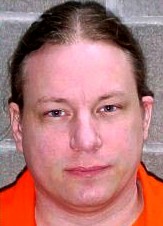
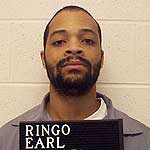
Timothy Stuart Ring
Murderer Brian Kevin Rosenfeld
Murderer · USA · 1985
Brian Kevin Rosenfeld Brian Kevin Rosenfeld was sentenced to three concurrent l…
23 victims
Brian Kevin Rosenfeld
Murderer · USA · 1985
Brian Kevin Rosenfeld Brian Kevin Rosenfeld was sentenced to three concurrent l…
23 victims
 Russell Ellwood
Murderer · USA · 1991
Russell Ellwood was a former taxi driver. Authorities suspected him of killing…
20 victims
Russell Ellwood
Murderer · USA · 1991
Russell Ellwood was a former taxi driver. Authorities suspected him of killing…
20 victims
 Robert Martines Perez
Murderer · USA · 1994
Name: Robert Martines Perez · Other name used in proceedings: Robert Martinez P…
15 victims
Robert Martines Perez
Murderer · USA · 1994
Name: Robert Martines Perez · Other name used in proceedings: Robert Martinez P…
15 victims
 Billy Frank Vickers
Murderer · USA · 1993
Billy Frank Vickers Vickers was executed by lethal injection in Texas on Januar…
14 victims
Billy Frank Vickers
Murderer · USA · 1993
Billy Frank Vickers Vickers was executed by lethal injection in Texas on Januar…
14 victims
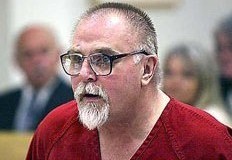 James Dwight Canaday
Serial killer · USA · 1968
James Dwight Canaday was a prisoner serving two life sentences for murder and l…
3 victims
James Dwight Canaday
Serial killer · USA · 1968
James Dwight Canaday was a prisoner serving two life sentences for murder and l…
3 victims
 Darlie Routier
Murderer · USA · 1996
Name: Darlie Routier Born: January 4, 1970 Country/State: American woman from R…
2 victims
Darlie Routier
Murderer · USA · 1996
Name: Darlie Routier Born: January 4, 1970 Country/State: American woman from R…
2 victims
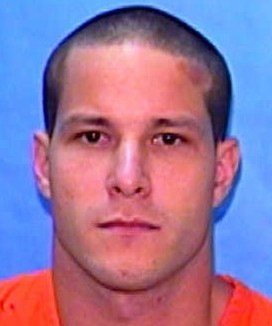 Adam Davis
Murderer · USA · 1998
Adam Davis was convicted of first-degree murder for the killing of Vicki Robins…
1 victim
Adam Davis
Murderer · USA · 1998
Adam Davis was convicted of first-degree murder for the killing of Vicki Robins…
1 victim
- Gender
- male
- Country
- USA
- Location
- Maricopa County, Arizona, USA
- Date of birth
- October 29, 1964
- Age at first offence
- 30
- Characteristics
- armed robbery, police officer, murder for hire, attempt to collect insurance money, alcohol, former mental patient
- Victim profile
- John Magoch (armored car driver)
- Method of murder
- Shooting
- Date(s) of murder
- November 28, 1994
- Years active
- 1994
- Date of arrest
- February 16, 1995
- Status
-
Sentenced to death
Sentenced to death on October 29, 1997
Overview
Timothy Stuart Ring was a former Department of Corrections officer who participated in an armored car robbery targeting a Wells Fargo van driven by John Magoch. During the robbery, Ring shot Magoch, who later died from a fatal gunshot wound to the head. Ring was convicted of first-degree murder, conspiracy to commit armed robbery, armed robbery, first-degree burglary and theft, and he was sentenced to death.
Timeline
- November 28, 1994 — Ring, James Greenham, and William Ferguson executed their plan to rob an armored car. They robbed a Wells Fargo van driven by John Magoch; Magoch was shot and killed after he opened the driver's side door to smoke.
- February 16, 1995 — Ring was arrested.
- Dec. 6, 1996 — Ring was convicted.
- Oct. 29, 1997 — Ring was sentenced to death.
- Jan. 11, 2002 — The U.S. Supreme Court accepted certiorari in Ring's case.
- Jan. 23, 2002 — The U.S. Supreme Court stayed the execution of Florida death-row inmate Amos King, who was scheduled to die the next day.
- June 24, 2002 — The U.S. Supreme Court held that the sentences of those sentenced to die by judges not juries cannot stand in Ring v. Arizona.
Background
Timothy Ring was described as a former Department of Corrections officer. James Greenham was described as a former corrections officer, and William Ferguson was described as a former City of Phoenix police officer. The three plotted to rob an armored car.
An informant tipped police off to Timothy Ring and two of his friends after they had recently made expensive purchases such as a new truck. Police eventually discovered that Ring was the ringleader of the operation.
The offence
On November 28, 1994, an armored car parked in front of Arrowhead Mall in Glendale, Arizona, was robbed. The driver, John Magoch, was shot in the head as he exited the van to smoke.
One of the robbers drove the van to a church in nearby Sun City, where they transferred money and checks. The robbers made off with $562,000 in cash and $271,000 in personal checks. Police later found Magoch inside the van, dead from a fatal gunshot wound to the head.
Investigation
David Moss was described as the messenger (also known as a “hopper”), who made the deliveries and pickups from various businesses throughout the day. At 1:27 p.m., about halfway through their route, the van stopped at the curb outside the Dillard’s store at Arrowhead Mall. Moss went into the Dillard’s store, and Magoch opened the driver’s side door to smoke a cigarette.
Ring, described as an expert marksman, shot Magoch from the parking lot. Greenham pushed Magoch over, got into the armored van, and drove it away. Ring and Ferguson followed in separate vehicles.
After the robbery, the trio met at a church parking lot, where they transferred the money into Ring’s truck. About 6:00 p.m. that day, a churchgoer called 911 after noticing that the van looked like one he had seen in a television report earlier that day.
A Wells Fargo investigator determined that the van had contained a total of $833,798.12, including $562,877.91 in cash and $132,259.60 in coins recovered with the van.
Police found additional evidence at Ring’s residence. When police executed a search warrant on Ring’s residence, they found, inside a cabinet in the garage, a green duffel bag with a nametag for Timothy S. Ring. Inside the bag, they found “bundles of U.S. currency” totaling $271,681.
Police also found a note in Ring’s headboard with the number $575,995 and the word “splits” and the letters “F,” “Y” and “T.” Police surmised that “F” was for “Ferguson,” “Y” for “Yoda,” and “T,” for “Tim.”
Based on the accumulation of circumstantial evidence—no bullet was found, so Ring’s Ruger could not be tied to the crime—a jury found Ring guilty.
Arrest
Ring was arrested on February 16, 1995.
Two days later, police showed up with a search warrant at Ring’s home, where they found a Ruger 1022 rifle outfitted with a homemade sound suppressor, as well as a duffel bag with Ring’s name on it. Police found the $271,681 in cash inside the bag.
Trial
Ring was tried separately from his co-defendants.
A jury found Ring guilty of first-degree murder, conspiracy to commit armed robbery, armed robbery, first-degree burglary and theft. Under Arizona law, a judge had to decide whether someone convicted of murder got death or life imprisonment, and a jury alone could not.
The case included a special sentencing hearing conducted without a jury. James Greenham, who made a deal with prosecutors and pleaded guilty to second-degree murder and armed robbery, testified at Ring’s special sentencing hearing. Greenham fingered Ring as the shooter and said Ring wanted to be congratulated on his shot the day after the killing.
In Ring’s sentencing hearing, the judge ruled that Ring “is the one who killed Mr. Magoch” and that he showed “reckless disregard for human life.”
Sentencing
After a sentencing hearing in which Ring’s accomplices testified, a judge found two aggravating factors applied:
- that Ring had committed the murder in expectation of pecuniary gain; and
- that Ring had committed the murder in an especially heinous, cruel or depraved manner.
The judge found that Ring had a “minimal” criminal record but concluded that it did not outweigh the aggravating factors, and Ring was sentenced to death on October 29, 1997.
Appeals
On automatic direct appeal to the Arizona Supreme Court, the state's highest court affirmed the sentence, rejecting a clutch of arguments for a new trial.
The Arizona Supreme Court’s opinion was associated with Justice Stanley Feldman, who wrote the opinion. The opinion acknowledged that in light of U.S. Supreme Court decisions in Jones v. U.S. and Apprendi v. New Jersey, those cases seemed to overrule Walton v. Arizona, and Feldman wrote:
"While the state is correct in noting that neither Jones nor Apprendi overruled Walton, we must acknowledge that both cases raise some question about the continued viability of Walton."
Justice Sandra Day O’Connor expressed concerns in dissent. She wrote:
"baffling, to say the least" and "demonstrably untrue."
O’Connor wrote:
"A defendant convicted of first-degree murder in Arizona cannot receive a death sentence unless a judge makes the factual determination that a statutory aggravating factor exists?. If the court does not intend to overrule Walton, one would be hard pressed to tell from the opinion it issues today."
The Arizona Supreme Court regarded the law as constitutional and affirmed Ring’s sentence because the majority opinion in Apprendi explicitly indicated that the Court did not mean to overturn Walton.
The U.S. Supreme Court accepted certiorari in Ring’s case on Jan. 11, 2002.
The U.S. Supreme Court later ruled on June 24, 2002, by a 7-2 vote, siding with Ring.
Justice Ruth Bader Ginsburg wrote the lead majority opinion, and Justice Sandra Day O’Connor and Chief Justice William Rehnquist dissented. Ginsburg wrote:
"We overrule Walton to the extent that it allows a sentencing judge, sitting without a jury, to find an aggravating circumstance necessary for imposition of the death penalty."
Ginsburg also wrote:
"Capital defendants, no less than non-capital defendants, we conclude are entitled to a jury determination of any fact on which the legislature conditions an increase in their maximum punishment," Ginsburg wrote.
Ginsburg wrote:
"the required finding [of an aggravated circumstance] expose[d] [Ring] to a greater punishment that authorized by the jury's guilty verdict."
The Court decided that, if Apprendi were to be applied, the required finding of an aggravated circumstance exposed Ring to a greater punishment than authorized by the jury’s guilty verdict, and it stated the governing constitutional rule as:
"Sixth Amendment does not permit a defendant to be 'expose[d]? to a penalty exceeding the maximum he would receive if punished according to the facts reflected in the jury alone'."
Justice O’Connor argued the decision would open the way to challenges by convicted defendants and wrote that:
"Apprendi's rule that any fact that increases the maximum penalty must be treated as an element of the crime, is not required by the Constitution, by history, or by our prior cases. And it ignores the 'significant history in this country of ? discretionary sentencing by judges,'" she wrote.
Justice Antonin Scalia concurred with hesitation and wrote:
"has mistakenly said that the Constitution requires state law to impose such 'aggravating factors'."
Scalia also wrote:
"whether or not the States have been erroneously coerced into the adoption of 'aggravating factors,' wherever those factors exist they must be subject to the usual requirements of the common law, and to the requirements enshrined in our Constitution, in our criminal cases: they must be found by the jury beyond a reasonable doubt."
Scalia wrote:
While I am, as always, pleased to travel in Justice Breyer's company, the unfortunate fact is that today's judgment has nothing to do with jury sentencing. What today's decision says is that the jury must find the existence of the fact that an aggravating factor existed. Those States that leave the ultimate life-or-death decision to the judge may continue to do so — by requiring a prior jury finding of aggravating factor in the sentencing phase or, more simply, by placing the aggravating-factor determination (where it logically belongs anyway) in the guilt phase. There is really no way in which Justice Breyer can travel with the happy band that reaches today's result unless he says yes to Apprendi. Concisely put, Justice Breyer is on the wrong flight; he should either get off before the doors close, or buy a ticket to Apprendi-land.
Outcome
Ring’s conviction and death sentence were later subject to U.S. Supreme Court review in Ring v. Arizona. The U.S. Supreme Court held that sentences of those sentenced to die by judges not juries cannot stand. The Court overruled Walton to the extent that it allowed a sentencing judge, sitting without a jury, to find an aggravating circumstance necessary for imposition of the death penalty.
Other details
- Ring’s case involved robbery and murder of John Magoch, who was described as a Wells Fargo armored van driver.
- Ring’s role was described as shooting Magoch from the parking lot.
- Ring and Ferguson followed Greenham separately after Greenham drove away in the armored van.
- The record stated that an armored car parked in front of Arrowhead Mall in Glendale, Arizona, was robbed, and the van was associated with Sun City.
- A bicyclist reported that a white van followed by a red pickup truck ran a stop sign on the afternoon of the robbery and murder.
- Police issued press releases, and police hoped that news coverage would make the suspects talk.
- Ring called Ferguson and said: “There was a couple of incontinuities [sic] to their story?. They showed a suppressed revolver of all things.”
- Police also listened to phone calls in which Ring and Greenham discussed plans to disappear “up north” and negotiate payments, and police heard that Ring was apparently holding Greenham’s share in addition to his own.
- After a detective left his card on Greenham’s door, Greenham made a panicked call to Ring, and Ring called another man, William Ferguson, saying: “I don't know what to think of it. Um, [Greenham's] house is clean. Mine, on the other hand, contains a very large bag.”
- Greenham pleaded guilty to second-degree murder and armed robbery.
- At Ring’s special sentencing hearing, Greenham testified that Ring “is the one who killed Mr. Magoch” and that Ring showed “reckless disregard for human life.”
- The U.S. Supreme Court decision was cited as Ring v. Arizona, 536 U.S. 584 (2002), and the case applied the rule of Apprendi v. New Jersey, 530 U.S. 466 (2000), to capital sentencing schemes.
- The record stated that the Court overruled a portion of Walton v. Arizona, 497 U.S. 639 (1990).
Spotted an error, or have more information about this case?