Major Lisenba
Murderer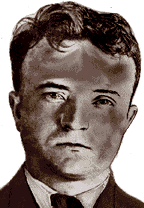 Paul Jaworski
Murderer · USA · 1926
Paul Jaworski was born in Poland as Paul Poluszynski in 1900. He later immigrat…
20 victims
Paul Jaworski
Murderer · USA · 1926
Paul Jaworski was born in Poland as Paul Poluszynski in 1900. He later immigrat…
20 victims
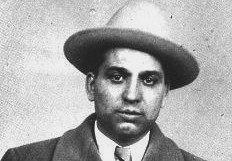 Harry Maione
Murderer · USA · 1937
Harry “Happy” Maione (1908 – February 19, 1942) was a New York mobster who serv…
12 victims
Harry Maione
Murderer · USA · 1937
Harry “Happy” Maione (1908 – February 19, 1942) was a New York mobster who serv…
12 victims
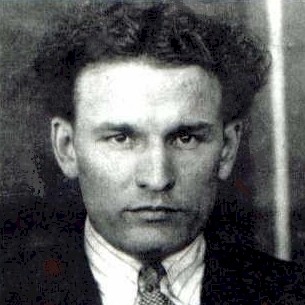 William Kenneth Wagner
Murderer · USA · 1924
William Kenneth (Kinnie) Wagner (born February 18, 1903 in Scott County, VA) wa…
6 victims
William Kenneth Wagner
Murderer · USA · 1924
William Kenneth (Kinnie) Wagner (born February 18, 1903 in Scott County, VA) wa…
6 victims
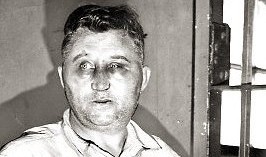 Harry Powers
Murderer · USA · 1931
Harry Powers was executed by hanging on March 18, 1932, at the West Virginia Pe…
5 victims
Harry Powers
Murderer · USA · 1931
Harry Powers was executed by hanging on March 18, 1932, at the West Virginia Pe…
5 victims
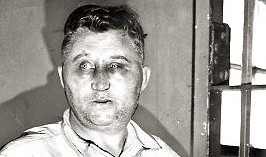 Herman Drenth
Murderer · USA · 1931
Herman Drenth was also known by the aliases Harry F. Powers and Cornelius O. Pi…
5 victims
Herman Drenth
Murderer · USA · 1931
Herman Drenth was also known by the aliases Harry F. Powers and Cornelius O. Pi…
5 victims
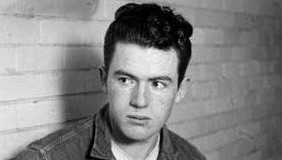 William Edward Hickman
Murderer · USA · 1926
William Edward Hickman was a man who tried to solve his financial problems by k…
5 victims
William Edward Hickman
Murderer · USA · 1926
William Edward Hickman was a man who tried to solve his financial problems by k…
5 victims
 Kenneth Dunn
Murderer · USA · 1980
Kenneth Dwayne Dunn, a Texas death row inmate, was executed by lethal injection…
1 victim
Kenneth Dunn
Murderer · USA · 1980
Kenneth Dwayne Dunn, a Texas death row inmate, was executed by lethal injection…
1 victim
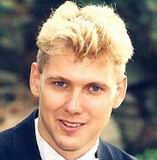 Paul Bernardo
Serial killer · Canada · 1990
Paul Kenneth Bernardo (born August 27, 1964 in Toronto, Ontario) was a Canadian…
3 victims
Paul Bernardo
Serial killer · Canada · 1990
Paul Kenneth Bernardo (born August 27, 1964 in Toronto, Ontario) was a Canadian…
3 victims
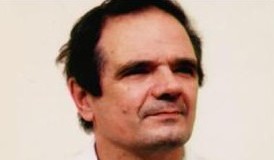 Michael Sams
Murderer · United Kingdom · 1991
Michael Sams was sentenced to life in prison in 1992. Michael Sams (born August…
1 victim
Michael Sams
Murderer · United Kingdom · 1991
Michael Sams was sentenced to life in prison in 1992. Michael Sams (born August…
1 victim
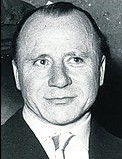 Max Gufler
Serial killer · Austria · 1946
Max Gufler was described as Austria’s “Bluebeard.” He lived in a lower Austrian…
18 victims
Max Gufler
Serial killer · Austria · 1946
Max Gufler was described as Austria’s “Bluebeard.” He lived in a lower Austrian…
18 victims
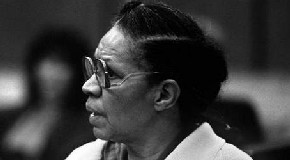 Priscilla Ford
Mass murderer · USA · 1980
Priscilla Ford was sentenced to death for killing six people and injuring 23 mo…
6 victims
Priscilla Ford
Mass murderer · USA · 1980
Priscilla Ford was sentenced to death for killing six people and injuring 23 mo…
6 victims
- Gender
- male
- Country
- USA
- Location
- Colorado/California, USA
- Date of birth
- 1895
- Age at first offence
- 37
- Characteristics
- attempted rape, torture
- Victim profile
- Winona Wallace (his wife) / Cornelius Wright (his accident-prone nephew) / Mary Busch (his wife)
- Method of murder
- Poisoning (rattlesnake) - Drowning
- Date(s) of murder
- 1932 - 1935
- Years active
- 1932–1935
- Date of arrest
- April 19, 1936
- Status
-
Executed
Executed by hanging at San Quentin State Prison in California on May 9, 1942
Overview
Major Lisenba (also known as Raymond Lisenba and Robert S. James) was executed by hanging for the murder of his wife Mary Busch in California. He purchased life insurance on Mary and attempted to kill her using rattlesnakes, after which he drowned her and attempted to make her death appear accidental.
Timeline
- 1935 — Lisenba purchased a life insurance policy on his wife Mary Busch.
- August 3, 1935 — A snake handler named Joe Houtenbrink, also known as “Snake Joe,” delivered rattlesnakes that were to be used to kill Mary Emma.
- August 4, 1935 — Lisenba blindfolded Mary Emma, tied her to the kitchen table, and thrust her foot into a box containing two rattlesnakes; after the snake venom did not kill her, he drowned her and later had her body placed in a fish pond.
- March 21, 1939 — The Supreme Court of California affirmed the judgment with two judges dissenting.
- October 5, 1939 — The Supreme Court of California reaffirmed the decision and adopted the former opinion with two justices dissenting.
- April 8, 1941 — The United States Supreme Court denied a petition involving Lisenba’s case after a 4-to-4 vote on a fair trial question.
- December 8, 1941 — Lisenba v. People of State of California (314 U.S. 219) was decided.
- Feb. 2, 1942 — Rehearing was denied.
- May 1, 1942 — Lisenba was executed by hanging at San Quentin State Prison in California.
- May 9, 1942 — Lisenba was executed by hanging at San Quentin State Prison in California.
Background
Ray Lisenba worked as a barber in the area of present day La Cañada Flintridge, California in the 1930s. His wife in those years was a manicurist named Mary Busch.
In 1935, he purchased a life insurance policy on his wife Mary Busch. The couple later discovered that Mary was pregnant. Mary insisted on an abortion. Lisenba persuaded a friend, Charlie Hope, to pose as a doctor. Lisenba and Hope procured rattlesnakes and Hope helped with the plan to kill Mary.
After Mary’s death and after the case attracted attention, police checked Lisenba’s background and found evidence from a prior marriage in which one of his prior wives had died under similar circumstances.
The offence
Murder of Mary Busch / Mary Emma James
Lisenba blindfolded Mary and tied her to the kitchen table. Her eyes and mouth were taped shut. He persuaded Hope to pose as a doctor and then told Charles Hope that he was getting Mary ready for “perform some kind of operation on her for pregnancy.”
Lisenba then introduced Mary’s foot into the box containing the rattlesnakes. The rattlesnakes were described as “hot” diamond-backed rattlesnakes. Mary was bitten by the rattlesnakes.
After the rattlesnakes did not kill Mary, Lisenba decided to drown her. He drowned her in a bathtub and then dragged her body to a lily pond in the garden, leaving her face down in the water so that her death could be discovered later as an apparent accidental drowning.
Lisenba attempted to make the drowning appear accidental. Investigators initially believed Mary had got drunk and had drowned herself.
Related claims and outcomes involving other deaths
The narrative included multiple other deaths involving people connected to Lisenba:
- Lisenba reported to police in Colorado Springs: “My poor wife has drowned in the bathtub. She must have been dizzy from the car crash and slipped unconscious beneath the water.”
- His accident-prone nephew, Cornelius Wright, took his car, drove off a cliff, and killed himself.
- Lisenba’s nephew was linked to an insurance policy taken out on the youngster’s life.
Investigation and arrest
Police believed Mary had got drunk and accidentally drowned, but later arrested Lisenba for a different crime. After a subsequent investigation, police landed him at San Quentin for Mary’s murder.
Lisenba was arrested and charged with incest. The charge was connected to suspicion that he was sleeping with his niece. He was arrested on April 19, 1936, and booked on the incest charge on the morning of April 21.
Trial
Charlie Hope testified at trial and helped demonstrate how Mary’s feet were introduced into the deadly box. At trial, Hope also described that Lisenba had blindfolded Mary’s eyes, tied her to a table, and had Hope bring a snake into the room, causing the reptile to bite her foot.
At the trial, the jury heard evidence including testimony and expert evidence regarding the body’s condition. The trial included evidence about the death of a former wife of James in 1932, involving an accident on Pike’s Peak Highway and a later drowning in a bathtub.
Verdict and sentencing
The jury returned a verdict finding the defendant Major Raymond Lisenba, also known as Robert James, guilty of murder in the first degree.
He received the death penalty. Charles Hope was sentenced to life in prison.
Quotes from the trial coverage and statements
In coverage of the verdict, the following quotation was included:
- “We find the defendant, Major Raymond Lisenba, also known as Robert James, guilty of murder in the first degree”.
Lisenba was described as having said:
- “I can Take It”
Lisenba was quoted as saying:
- “I want to thank you Russell, for all you've done”
Appeals
The case proceeded through California courts and was appealed to the United States Supreme Court.
The following item of procedural information was included:
- Lisenba v. 219) was decided on December 8, 1941.
- The rehearing was denied on Feb. 2, 1942.
- The Supreme Court affirmed the judgments, and the judgments were affirmed.
The United States Supreme Court’s opinion included the statement:
- “The petitioner's contentions, based upon the Fourteenth Amendment, are: that the conduct of the prosecuting officials and police officers denied him the equal protection of the laws; that his conviction deprived him of his life without due process, because the testimony of Hope, an accomplice, was not corroborated as required by the Penal Code of California and was, therefore, insufficient to sustain a conviction; because Hope's affidavits filed since the trial showed that his testimony was obtained by deceit, fraud, collusion, and coercion and was known to the prosecutor to be false and hence the trial was a mere pretense; because the alleged occurrences in Colorado were wholly disconnected from the crime charged and petitioner was afforded no opportunity to answer the State's evidence respecting them; because the production of the rattlesnakes in the court was solely for the purpose of inflaming the jury; and because physical violence, threats, and other coercive means produced the confessions, and denial of requested opportunity to consult counsel preceded and accompanied their procurement.”
The decision also included:
- “The judgments are affirmed.”
A dissent included statements:
- “I believe the confession used to convict James was the result of coercion and compulsion, and that the judgment should be reversed for that reason.”
- “Due process of law, preserved for all by our Constitution, commands that no such practice as that disclosed by this record shall send any accused to his death.”
Outcome
Lisenba was executed by hanging at San Quentin State Prison in California.
Aftermath
A description of the execution included that it was a botch job, and that it took over ten minutes for him to die due to the rope being the wrong length.
His execution was described in relation to being the last man to be executed by hanging in California and included that it took more than 10 minutes for him to die at the end of the rope.
Other details
Names and aliases
Lisenba was also known as Rattlesnake James and Robert S. James. The name Major Raymond Lisemba appeared in the sentencing/verdict coverage and in the United States Supreme Court materials.
The insurance scheme
The apparent motive included $14,000 on Mary’s life policy after he collected $14,000 and divorced her.
The narrative also included a statement that the apparent motive was $20,000 in life insurance coverage on Mary.
Prior-wife account and related quote
A 1939 legal document quoted in the narrative included:
- “...while driving down Pike’s Peak, their automobile went off the road. James went for aid. When the persons called upon reached the automobile they found James’ wife lying partly outside the car with her head badly crushed and a bloody hammer in the back of the car. James appeared unhurt.”
The narrative included a police-station statement by Lisenba:
- “Wright promptly drove off a cliff, killing himself. The mechanic who towed the wreck back to James told him that something was wrong with the steering wheel...”
Medical and autopsy details
At the coroner’s inquest, medical examiner George B. Gilmore testified that Lisenba told him Mary’s drowning was the result of ignoring physician’s orders to avoid washing her hair because of the head wound.
For Mary’s earlier death, an autopsy finding included:
- fractures of the skull from two blows, one on the side and the other on the front of the head;
- the fractures were caused by a hard, moving object being projected against the head and not by the head being projected against a hard, stationary object;
- the blow on the side of the head had been received first.
Incest arrest and confession timing
Lisenba was arrested and charged with incest on April 19, 1936. The United States Supreme Court materials included that:
- Hope pleaded guilty and was sentenced to life imprisonment.
- James pleaded not guilty, was tried, convicted, and sentenced to death.
- Lisenba made statements on May 2 and 3.
The narrative included a quote attributed to Lisenba about the timing and confession:
- “That is that”
Execution report quote
In addition to the execution outcome, the narrative stated:
- “James became the last man to die on the gallows in California.”
- “It was a botch job – it took more than 10 minutes for him to die.”
Spotted an error, or have more information about this case?