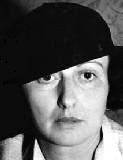
Nellie May Madison
Murderer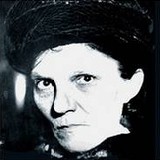 Martha Wise
Murderer · USA · 1924
Martha Wise (born 1885; died June 28, 1971), also known as “the Borgia of Ameri…
3 victims
Martha Wise
Murderer · USA · 1924
Martha Wise (born 1885; died June 28, 1971), also known as “the Borgia of Ameri…
3 victims
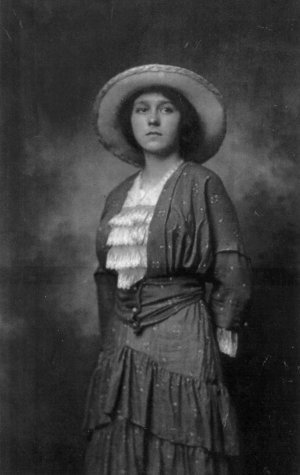 Inez Palmer
Murderer · USA · 1926
Inez Palmer — defendant; lived at the Stout farmhouse and pleaded guilty to a f…
2 victims
Inez Palmer
Murderer · USA · 1926
Inez Palmer — defendant; lived at the Stout farmhouse and pleaded guilty to a f…
2 victims
 Winnie Ruth Judd
Murderer · USA · 1931
Winnie Ruth Judd (January 29, 1905 – October 23, 1998) was a Phoenix, Arizona m…
2 victims
Winnie Ruth Judd
Murderer · USA · 1931
Winnie Ruth Judd (January 29, 1905 – October 23, 1998) was a Phoenix, Arizona m…
2 victims
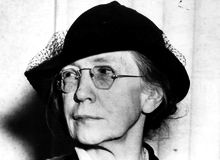 Alice Wynekoop
Murderer · USA · 1933
Name: Alice Wynekoop Alice Wynekoop was sentenced to 25 years in prison on Marc…
1 victim
Alice Wynekoop
Murderer · USA · 1933
Name: Alice Wynekoop Alice Wynekoop was sentenced to 25 years in prison on Marc…
1 victim
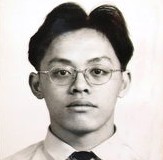 Chiang Kuo-ching
Innocent · Taiwan · 1996
Chiang Kuo-ching (江國慶) A military court acquitted Chiang Kuo-ching in a posthum…
0 victims
Chiang Kuo-ching
Innocent · Taiwan · 1996
Chiang Kuo-ching (江國慶) A military court acquitted Chiang Kuo-ching in a posthum…
0 victims
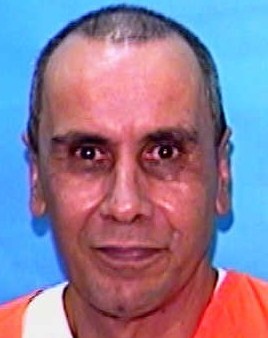 Milo Rose
Murderer · USA · 1982
Milo Rose (DOB: 01/25/50) was sentenced to death on July 8, 1983, for the murde…
1 victim
Milo Rose
Murderer · USA · 1982
Milo Rose (DOB: 01/25/50) was sentenced to death on July 8, 1983, for the murde…
1 victim
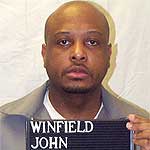 John Winfield
Murderer · USA · 1996
Name: John Winfield · Case name (Missouri Supreme Court): State of Missouri, Re…
2 victims
John Winfield
Murderer · USA · 1996
Name: John Winfield · Case name (Missouri Supreme Court): State of Missouri, Re…
2 victims
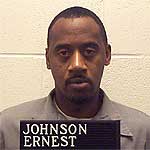 Ernest Lee Johnson
Murderer · USA · 1994
Name: Ernest Lee Johnson Case style: State of Missouri v. Earnest Lee Johnson C…
3 victims
Ernest Lee Johnson
Murderer · USA · 1994
Name: Ernest Lee Johnson Case style: State of Missouri v. Earnest Lee Johnson C…
3 victims
 Mark Rogowski
Murderer · USA · 1991
Mark “Gator” Rogowski was born in 1966 in New York City. He became known as “Ga…
1 victim
Mark Rogowski
Murderer · USA · 1991
Mark “Gator” Rogowski was born in 1966 in New York City. He became known as “Ga…
1 victim
 David Chmiel
Murderer · USA · 1983
Mary Drake was a day nurse hired to attend to James Lunario. After the killings…
3 victims
David Chmiel
Murderer · USA · 1983
Mary Drake was a day nurse hired to attend to James Lunario. After the killings…
3 victims
- Gender
- female
- Country
- USA
- Location
- Burbank, California, USA
- Date of birth
- April 5, 1895
- Age at first offence
- 39
- Characteristics
- abuse, parricide
- Victim profile
- Eric D. Madison (her husband)
- Method of murder
- Shooting
- Date(s) of murder
- March 24, 1934
- Years active
- 1934
- Date of arrest
- 2 days after
- Status
-
Died in custody
Sentenced to death on June 23, 1934; commuted to life in prison on September 16, 1935; released on March 24, 1943; died in 1953
Case record: Nellie May Madison
Background
Nellie May Madison (1895-1953) was an American woman who was convicted of murder in 1934 for killing her husband, Eric D. Madison. She was the first woman to be sentenced to death in the state of California.
Nellie May Madison was born Nellie May Mooney in Red Rock, Montana, the daughter of Edward Mooney and Catherine Doherty Mooney. The Mooneys emigrated to the United States from Ireland in the 1880s. They took advantage of the federal government’s homestead program in the 1890s and operated a sheep ranch a dozen miles (nineteen kilometers) south of Dillon, Montana. She was the youngest of their three children.
Her religious instruction relied on sporadic visits from a priest who rode horseback to minister to parishioners in a far-flung territory. She learned to ride and to shoot and became locally renowned as a “crack shot” even before her teens. Even as a teenager, she was described as impulsive and drawn to flashy, brash men.
She first married at thirteen, in October 1908, when she eloped to Ogden, Utah, with Ralph Brothers, a twenty-four-year-old cowboy. Her parents had the marriage annulled. In 1912 she moved to Boise, Idaho, where she enrolled in Links Business College. In Boise she married the firefighter Clarence Kennedy in 1917; it was unclear whether they divorced. In 1919 she married the mechanic Wilbert “Earl” Trask. The couple moved to Los Angeles the next year and divorced soon after. In 1925 she married William Brown, a locally prominent lawyer. In 1930 they divorced.
In the spring of 1933, she met Eric Madison. The couple married in July 1933 in Salt Lake City and then left for Dillon, Montana, where she collected a one-thousand-dollar inheritance. Seven months later, the Madisons returned to Southern California.
Both went to work in the commissary of Warner Bros. Studios, in Burbank, and moved into an apartment across the street from the studio’s back lot.
The offence
On March 24, 1934, at their home in Burbank, California, Nellie Madison shot Eric D. Madison, killing him.
The Supreme Court of California described the victim’s body as found at about 4 o’clock on Sunday afternoon, March 25, 1934, in the room occupied by the couple in an apartment house in the city of Burbank in Los Angeles County. The evidence also showed that four out of six bullets fired from a 32-20 Colt revolver pierced the body. The shots were shown to have been fired at close range. One pierced the head, coming out at the corner of the left eye near the nose. Another entered the back and passed through the great aorta into the liver. Some pierced the mattress and bedding and lodged in the floor beneath the bed. Others lodged in the wall. The body of the deceased was found clad only in underwear, lying partly on the floor with the left arm over a chair. There were large blood stains on the bed linen, and the underclothing on the deceased was blood stained. The evidence established that the body had been dead more than twelve hours.
The Supreme Court also described that on the previous Friday, March 23, about noontime, the defendant purchased a 32-20 calibre Spanish revolver from a second-hand dealer. She stated that she and her husband were going on a trip and wanted a gun. She rejected a 25 Colt automatic, stating she “was not used to automatics”. She signed an application for the Spanish gun, paid a deposit, and returned for the gun the next day a little before noon. She received the gun and a few shells, the remains of a broken package.
About noontime Saturday, she took the Spanish gun to a hardware store and asked for some shells that could be fired from it. She was told the gun would have to be repaired before it could be fired. She then purchased a 32-20 calibre Colt revolver and shells. She did not have sufficient money to pay the bill of $31 and said she would have to get more money from her husband. About three-quarters of an hour later she returned with the money. She explained that she and her husband wanted the gun for target practice on a week-end trip to Frazier Mountain Park and did not want to wait the required 24-hour period before she could have possession of the gun.
At the store she called up the police department and asked for two persons by name, who were not available. She then went to the upstairs telephone and, when she came down, reported that “Lew” had authorized her to take the gun. She left the shells for the Spanish gun at this store and departed with both guns and shells for the Colt revolver in her possession.
At 8 o’clock on Saturday evening, she sat in the lobby of the apartment house where she and her husband resided. The caretaker testified that he asked where her husband was and she replied, in substance, that he was out and might be home at 10, or 12, or 1, or not at all. The caretaker testified he said, in a manner of “kidding”, “What, another woman?” and she replied, “Yes, another woman”.
About ten minutes past ten, her husband came into the lobby, spoke to the caretaker, and then passed into their apartment without speaking to his wife. The record indicated that this was the last time Eric D. Madison was seen alive.
That night about fifteen minutes to 12, loud sharp noises or “cracks” which sounded like pistol shots were heard by several other residents. Several people gathered in the hall in the vicinity of the Madison apartment looking for the source of the sounds. Some testified that they heard five shots with an interval of a few seconds before the last four, and others testified that there were six shots, with such an interval. In evidence, an agonizing scream was heard. The occupant of the adjoining apartment testified the sounds seemed to originate right outside her door, and that, besides the scream, she heard some moans or groans at the termination of the succession of “cracks” or shots. The jury could believe the vocal sounds were made by a man’s voice. Others testified that the shooting was “right down the hall”, meaning in the direction of the Madison apartment.
The manager commenced a check-up of the apartments. She knocked on Mrs. Madison’s door and asked if she had heard the shooting and whether she was all right. Mrs. Madison answered in the affirmative. Mrs. Madison then came out into the hall and pulled the door shut behind her. She said the noise was down underneath her, joined the others in the hall, and stated “perhaps it was from an automobile passing; that just last week an automobile had gone by with a girl screaming for help; that it was a weird place to live in and most anything was liable to happen”. Mrs. Madison appeared calm and serene. She was asked if she was afraid and answered “No,” and that her husband would be home in about ten minutes.
The Supreme Court also described that Warner Brothers studio was situated in the neighborhood about 500 to 1,000 feet distant from the apartment house. The deceased had been employed in the coffee shop of the studio and usually returned home about 6 o’clock. The defendant was occasionally employed at the studio. That Saturday night, the studio was taking a gun shooting scene in a film, and the shooting of guns was noticeable about 1,000 feet away. Work had continued on the picture until about midnight. Animals and fowl were kept on studio premises; peacocks sometimes gave shrill cries or screams. Such sounds were often heard from the studio, and often the neighborhood did not settle into quiet until past midnight. Witnesses were not disturbed by sounds coming from the studio.
The fears of those gathered in the hall were finally allayed by a suggestion that the noises might emanate from the Warner studio.
Mrs. Madison was seen leaving her apartment at half-past 8 the next morning dressed for the street and carrying a paper wrapped parcel. A “Please do not disturb. I will get my laundry later.” sign was later hanged on her apartment door. No one else was seen to leave or enter the Madison apartment until about a quarter to 4 Sunday afternoon. At that time two persons carrying a suitcase called on the manager of the apartment house and stated that Mrs. Madison had arranged to reserve an apartment for one of them. The manager had not so been informed and proceeded to Mrs. Madison’s room. The manager received no response to her knock and opened the door with her passkey. The body of Eric D. Madison was discovered in the described condition.
Investigation and arrest
About midafternoon of the following day, three officers arrived at the Cuddy ranch, eleven miles west of the Ridge Route highway in Kern County. The Supreme Court described that they found the defendant sitting on a suitcase behind the clothes in a clothes closet off the bedroom, with a coat placed over her knees.
Cuddy, described as having been drinking during the weekend, said: “Nellie, why didn’t you tell me it was murder?” The defendant had arrived at the Cuddy ranch on Sunday alone. Cuddy testified that on Monday afternoon he and the defendant were sitting in the living room and he asked her what was the matter, and she replied she had had “a little trouble” with her husband and expected officers to come after her. Cuddy testified that about twenty minutes later, when the officers appeared in the driveway, she said, “Here they come now.” When she was found in the clothes closet, she explained that she had been changing her shoes.
The sales slips for the guns purchased by the defendant were found in her purse. The Supreme Court described that the Spanish gun and some cartridge shells wrapped in brown wrapping paper were found in her car. The Colt revolver purchased by her was never found.
The Supreme Court also described the defendant’s testimony. She explained she purchased the guns at her husband’s suggestion because he had been threatened and because they wanted to use them on a trip to Arrowhead or the Cuddy ranch. She described that on Saturday night he came in but did not take off his clothes, prepared to leave again to see a man from Bakersfield about a job, and that if he did not come back that night she should meet him on Sunday at the Cuddy ranch where he would stop on his way from Bakersfield. She testified she had given him the two guns in a package on Saturday afternoon when they were out driving and he had put them in a pocket of the car. She stated she could not identify photographs introduced in evidence depicting the body found in her apartment and that she believed Eric D. Madison was still alive.
Outside the Supreme Court description, public accounts described that the neighbors awoke to gunfire, that Eric Madison’s bullet-riddled body was discovered on the apartment floor, and that Nellie Madison had disappeared. It was described that Burbank police, acting on a tip, arrested her the afternoon of March 26 while hiding in the closet of a mountain cabin eighty miles north of Los Angeles. Dozens of reporters attended her interrogation at the Burbank police station. She denied killing her husband but was forced to reveal a checkered marital history.
Trial
Nellie Madison was charged with first-degree murder and jailed while awaiting trial.
The Supreme Court of California described the appellate posture: the defendant was convicted of murder of her husband, Eric D. Madison; the jury returned a verdict of first degree murder without recommendation; and the court imposed the death penalty in accordance with law. She appealed from the judgment of conviction and from an order denying her motion for a new trial.
The Supreme Court stated that it had considered claimed errors in jury instructions and evidentiary rulings and concluded the judgment should be affirmed.
Jury verdict and sentencing at trial
On June 23, 1934, an eight-man, four-woman jury found Nellie Madison guilty of murder and sentenced her to hang. The Supreme Court also described that on June 23, 1934, she was sentenced to death. On July 12 she was driven to the California Institution for Women, Tehachapi, and placed into a specially constructed death row to await execution.
The Supreme Court described that the jury returned a verdict of first degree murder without recommendation and the court imposed the death penalty in accordance with law.
Appeals
After sentencing, the Supreme Court of California upheld the conviction.
In its discussion of issues on appeal, the Supreme Court addressed multiple contentions, including:
- whether the trial court erred in giving an instruction on flight (the court held there was sufficient testimony to provide a foundation);
- refusal to give a requested instruction about marital presumption of love;
- refusal to give additional instructions on presumption of innocence beyond what she was entitled to;
- refusal to instruct the jury that twelve of their number had to agree on verdict for the offence charged “or of a lesser degree” (the court found no evidence to support a lesser crime verdict);
- an instruction given pursuant to section 1105 of the Penal Code, and comparison with People v. Post;
- instructions regarding circumstantial evidence and certain language requiring that the evidence produce reasonable and moral certainty and “and that no other person” committed the offense;
- instructions on motive, including that absence of proof of motive is a circumstance in favor of the accused;
- evidence rulings about impeachment of her testimony concerning firearms, including examination about prior possession and that a former husband had shot at a former husband, and admission of prior contradictory statements contained in a verified complaint for divorce filed by the former husband; the Supreme Court concluded there was no reversible error;
- a contention that the trial judge improperly testified; the Supreme Court held the judge was competent to testify regarding an interval timed by the judge;
- evidentiary and procedural challenges including ballistic expert and mortician testimony;
- objections about exhibiting gory physical evidences including the “bed and bedding from the Madison apartment”; the Supreme Court stated it could not say exhibition was beyond propriety and found no basis that the verdict was the product of inflammation;
- objections about modification of the judgment to indicate guilt of a lesser degree under section 1181(6) of the Penal Code; the Supreme Court found there was no evidence to support modification and concluded the other specifications lacked merit.
The Supreme Court concluded: “The judgment and order are affirmed.” Thompson, J., Waste, C.J., and Curtis, J., concurred.
Sentencing and post-sentencing relief
After sentencing, letters and affidavits were sent seeking reprieve and commutation.
In September 1935, Governor Frank Merriam commuted Madison’s sentence to life in prison. The status field describes that Governor Frank Merriam commuted her sentence on September 16, 1935.
While she was incarcerated, she engaged in a letter-writing campaign to reduce her sentence.
Governor Culbert Olson freed her from prison on March 24, 1943, exactly nine years after the murder. After release, in the fall of 1943 she settled in San Bernardino and married John Wagner, a house painter. She remained in that marriage until her death in July 1953 from a stroke.
The status field summarized her release and death as: released on March 24, 1943; died in 1953.
Other details
People and names appearing in the case narrative
- Eric D. Madison: husband and victim; body found in the apartment.
- Nellie May Madison: defendant and appellant.
- Buron Fitts: District Attorney.
- Charles Fricke: Judge; described in narrative as refusing to reduce the sentence and dismissing allegations of domestic violence as “ridiculous”.
- Joseph W. Ryan and Frank J. Ryan: counsel for appellant.
- U.S. Webb: Attorney-General.
- Eugene M. Elson: Deputy Attorney-General.
- Tracy Chatfield Becker: Deputy Deputy Attorney-General.
- Governor Frank Merriam: commuted the death sentence.
- Governor Culbert Olson: freed her from prison.
- Georgia Madison: Eric Madison’s former wife; narrative described her emerging with a similar story of abuse.
- Aggie Underwood: a prominent journalist described as providing support and as having worked through press and publications.
- Ralph Brothers: first husband named as a twenty-four-year-old cowboy.
- Clarence Kennedy: married in Boise in 1917; described as firefighter.
- Wilbert “Earl” Trask: married in 1919; described as mechanic.
- William Brown: lawyer; married in 1925; divorced in 1930; earlier husband; narrative also described ex-husband William Brown urged her to tell the truth.
- John Wagner: house painter; last marriage after release.
- Cuddy: witness in Supreme Court description; drinking during the weekend; statement to defendant.
Verbatim quotations included
- “was not used to automatics”
- “Lew” had authorized her to take the gun
- “What, another woman?”
- “Yes, another woman”
- “right down the hall”
- “perhaps it was from an automobile passing; that just last week an automobile had gone by with a girl screaming for help; that it was a weird place to live in and most anything was liable to happen”
- “No,”
- “Nellie, why didn’t you tell me it was murder?”
- “a little trouble”
- “Here they come now”
- “ridiculous”
Media and courtroom atmosphere (narrative)
The narrative described massive coverage by reporters, comparisons to femme fatales, and courtroom exhibits including the “death bed,” complete with bloody sheets. It also described a “hanging judge” known to favor prosecutors.
The narrative described that on 6 June 1934, the Los Angeles County district attorney announced intention to seek the death penalty and stated, “No woman had ever been executed by the state of California.” It also described that the trial began the following day.
The narrative described that after sentencing, Madison did not hang and that she appealed, fired her trial attorney, and hired new counsel; it described that she confessed on 21 June 1935, citing extreme abuse—physical and mental—and that authorities were initially skeptical. It also described that all jurors who convicted her petitioned Governor Frank Merriam to commute the sentence.
Supreme Court case citation text
The Supreme Court of California captioned the matter as: “Supreme Court of California People v. Madison 3 Cal.2d 668”. It included: “THE PEOPLE, Respondent, v. NELLIE MAY MADISON, Appellant. [Crim. No. 3826. In Bank. May 27, 1935.]” Counsel listed Joseph W. Ryan and Frank J. Ryan for Appellant, and U.S. Webb, Attorney-General, Eugene M. Elson, Deputy Attorney-General, Buron Fitts, District Attorney, and Tracy Chatfield Becker, Deputy District Attorney, for Respondent. The opinion was by ShenK, J.
“The judgment and order are affirmed.”
Thompson, J., Waste, C.J., and Curtis, J., concurred.

Spotted an error, or have more information about this case?