
Melanie Alix
Murderer Tooba Yahya
Murderer · Canada · 2009
Tooba Yahya was a 41-year-old second wife in the polygamous Shafia household. H…
4 victims
Tooba Yahya
Murderer · Canada · 2009
Tooba Yahya was a 41-year-old second wife in the polygamous Shafia household. H…
4 victims
 Allyson McConnell
Murderer · Canada · 2010
Allyson McConnell was convicted of manslaughter in the bathtub drowning of her…
2 victims
Allyson McConnell
Murderer · Canada · 2010
Allyson McConnell was convicted of manslaughter in the bathtub drowning of her…
2 victims
 Cherrylle Dell
Murderer · Canada · 1995
Cherrylle Dell poisoned her husband, Scott Dell, with antifreeze-laced wine. Sc…
2 victims
Cherrylle Dell
Murderer · Canada · 1995
Cherrylle Dell poisoned her husband, Scott Dell, with antifreeze-laced wine. Sc…
2 victims
 Jane LaMarsh
Murderer · Canada · 2009
Name: Jane LaMarsh Jane LaMarsh was a 50-year-old woman from Wallaceburg, Ontar…
2 victims
Jane LaMarsh
Murderer · Canada · 2009
Name: Jane LaMarsh Jane LaMarsh was a 50-year-old woman from Wallaceburg, Ontar…
2 victims
 Aset Magomadova
Murderer · Canada · 2007
Aset Magomadova was convicted of manslaughter for strangling her daughter, Amin…
1 victim
Aset Magomadova
Murderer · Canada · 2007
Aset Magomadova was convicted of manslaughter for strangling her daughter, Amin…
1 victim
 Catherine Andrus
Murderer · Canada · 2009
Catherine Andrus — common-law wife of Michel Leblanc; pleaded guilty to second-…
1 victim
Catherine Andrus
Murderer · Canada · 2009
Catherine Andrus — common-law wife of Michel Leblanc; pleaded guilty to second-…
1 victim
 Yu Hagino
Murderer · Japan · 2005
Yu Hagino (萩野 裕, Hagino Yū, born 1982) was a teacher at a cram school in Uji, K…
1 victim
Yu Hagino
Murderer · Japan · 2005
Yu Hagino (萩野 裕, Hagino Yū, born 1982) was a teacher at a cram school in Uji, K…
1 victim
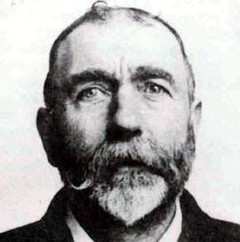 Samuel Herbert Dougal
Murderer · United Kingdom · 1898
Samuel Herbert Dougal was tried for the murder of Camille Cecile Holland, a qui…
1 victim
Samuel Herbert Dougal
Murderer · United Kingdom · 1898
Samuel Herbert Dougal was tried for the murder of Camille Cecile Holland, a qui…
1 victim
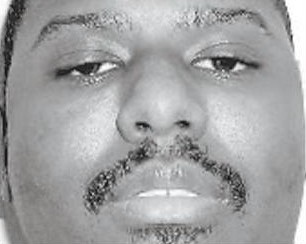 Christopher Goins
Mass murderer · USA · 1994
Christopher Goins · October 14, 1994 — Christopher Goins and his friend Barry S…
5 victims
Christopher Goins
Mass murderer · USA · 1994
Christopher Goins · October 14, 1994 — Christopher Goins and his friend Barry S…
5 victims
 Lydia Sherman
Murderer · USA · 1864
Lydia Sherman was also known as “The Derby Poisoner.” She was born in 1824 in B…
10 victims
Lydia Sherman
Murderer · USA · 1864
Lydia Sherman was also known as “The Derby Poisoner.” She was born in 1824 in B…
10 victims
 Kevin Lee Zimmerman
Murderer · USA · 1987
Defendant: Kevin Lee Zimmerman Victim: Leslie Gilbert Hooks, Jr. (33) Place: Mo…
1 victim
Kevin Lee Zimmerman
Murderer · USA · 1987
Defendant: Kevin Lee Zimmerman Victim: Leslie Gilbert Hooks, Jr. (33) Place: Mo…
1 victim
- Gender
- female
- Country
- Canada
- Location
- Montreal, Quebec, Canada
- Date of birth
- 1 974
- Characteristics
- parricide, arson
- Victim profile
- Her wheelchair-bound mother, Francine Levesque / Her one-year-old son, Matisse Alix-Leblanc
- Method of murder
- Smoke inhalation
- Date(s) of murder
- January 31, 2001 / May 12, 2003
- Years active
- 2001–2003
- Date of arrest
- May 16, 2003
- Status
-
Life imprisonment
Sentenced to life in prison with no chance of parole for 25 years for the two murders on December 22, 2005
Case record: Melanie Alix
Background
Melanie Alix was a South Shore resident. Her brother, Francois Alix, was 18 months older than her, and he was 31-year-old at the time described. Melanie Alix maintained a remorseless demeanour as Quebec Superior Court Justice France Charbonneau sentenced her.
Francois Alix said that, as far back as he could remember, his sister was manipulative and mean. He said of her, “She's very dangerous,” and “There's no limit to what she'll do.” He also said that he would be having a nice Christmas and a “vacation” for the next 25 years that his sister was behind bars. He added that he felt threatened by her and knew she’d have no reaction because she “doesn't feel responsible for what happened.”
Stephane Leblanc was the ex-boyfriend of Melanie Alix. After Alix was led out of the prisoner's box, Stephane Leblanc said: “I saw her face when she was sentenced and she looked disappointed, and that made me happy.”
The offence
Melanie Alix was charged and convicted of arson and first-degree murder in the death of her wheelchair-bound mother, Francine Levesque, in a 2001 house fire in l'Acadie, a town just west of St. Jean sur Richelieu.
Melanie Alix was also charged and convicted of arson and first-degree murder in the death of her one-year-old son, Matisse Alix-Leblanc, in a separate fire two years later, in a blaze in St. Blaise, south of St. Jean.
The jury also declared her guilty of a charge of attempted murder against another person who could not be named. The attempted murder charge was separate from the two first-degree murder convictions.
Prosecutor Julie Beauchesne said after the verdict that the case hinged on evidence showing that both Levesque and Matisse perished of smoke inhalation long before firefighters and paramedics arrived. Beauchesne said: “It wasn't just the cause of death, it was the time of death that was important in this case,” and also: “There were also eerie and inexplicable similarities between the two cases that went far beyond coincidence,” and: “I find it unfair that the finger was pointed at Stephane Leblanc, the father of this child, who was not there that day, and at Francois Alix, who lost his mother in the fire,”
Both fires were deliberately set, and investigations determined both Levesque and Matisse were found to have been drugged with the sleep-inducing antidepressant oxazepam, for which Alix had a prescription.
The origin and timing details described during the trial included that, at Levesque's L'Acadie home, one fire flared and died on Jan. 31, 2001, allowing the air to cool enough for soot to settle on her prostrate body before a major inferno attracted calls to 911.
At Alix's white clapboard home in St. Blaise, fire scene analysts said there were six separate sites of origin for the May 12, 2003 blaze. Firefighters discovered two charred chairs had been set alight in the living room but were already cold by the time they responded to a larger fire started on the stovetop.
During her testimony, Melanie Alix blamed her brother for the death of their wheelchair-bound mother, Francine Levesque, in the 2001 house fire, and she blamed Stephane Leblanc for their son's death in the 2003 fire.
Under cross-examination, Alix described fighting thick smoke to reach Matisse's crib, but leaving the room without him because she’d written him off as already dead.
Investigation
Investigators determined that both fires were deliberately set.
Both Levesque and Matisse were found to have been drugged with oxazepam, a sleep-inducing antidepressant for which Alix had a prescription.
The prosecutor described similarities between the two cases that went beyond coincidence, and the prosecutor said the jury's decision turned on Alix's credibility.
Trial
Melanie Alix's trial in Longueuil lasted more than two months. The jury deliberated for six days. The jury consisted of seven women and five men, and it listened for almost two weeks as Alix recounted her troubled life in detail.
The jury found Alix guilty as charged of arson and first-degree murder in the death of her wheelchair-bound mother, Francine Levesque, in a 2001 house fire.
The jury also found her guilty of arson and first-degree murder in the death of her one-year-old son, Matisse Alix-Leblanc, in a separate fire two years later.
The jury also declared her guilty of the charge of attempted murder against another person who could not be named.
In her defence, Melanie Alix's defence team described her mother's death as a fatal accident, while also casting suspicion on others for both deaths.
During her testimony, Melanie Alix portrayed herself as a perpetual victim, including of childhood sexual abuse at the hands of her grandfather, of adolescent sexual abuse by her brother, of rape and continual physical abuse by her ex-lover, and of car accidents and police torture.
Melanie Alix had a videotaped confession to police during an interrogation the day after Matisse's funeral. The prosecutor said Alix contradicted herself many times when confronted with that videotaped confession.
The prosecutor stated that Alix admitted to investigators in 2003 that she had drugged her children before setting a fire on the stovetop fed by oil from the fryer. In court, Alix said the detective put words in her mouth and that she gave her children oxazepam only to calm them because they were concerned for her safety after their father threatened her with death.
Melanie Alix wrote a will the night before her son died. In her testimony, she said it was to make sure her children got her money if her ex killed her. The prosecutor pointed out that the only mention of her children was that she wanted to be buried with them in the family plot.
After the jury was sequestered, Alix phoned the Journal de Montreal and declared herself the victim of an unfair trial, saying a prosecutor was too congenial with the media and a judge she characterized as mean. She also told the newspaper she would appeal any guilty verdict, bring a complaint against Quebec Superior Court Justice France Charbonneau, and ask for an inquiry into the Surete du Quebec's handling of her case.
The jury also did not hear that Alix set her clothes on fire while at Tanguay prison in a failed attempt at self-immolation, and that she once was suspected of setting fire to Leblanc's Jeep.
Sentencing
On December 22, 2005, Quebec Superior Court Justice France Charbonneau sentenced Melanie Alix to the mandatory penalty of life in prison with no chance of parole for 25 years for the two murders.
Justice Charbonneau also sentenced her to eight years in prison for the attempted murder of another person who could not be named. Once time Alix had already served was deducted, the sentence for attempted murder ended up being five years and two months. The sentences were to be served concurrently.
Justice Charbonneau stayed two arson charges.
Appeals
Melanie Alix said that she would appeal any guilty verdict.
Outcome
The jury found Melanie Alix guilty as charged of arson and first-degree murder in the death of her wheelchair-bound mother, Francine Levesque, in a 2001 house fire.
The jury found Melanie Alix guilty of arson and first-degree murder in the death of her one-year-old son, Matisse Alix-Leblanc, in a separate fire in 2003.
The jury also found her guilty of attempted murder against another person who could not be named.
Aftermath
After Stephane Leblanc learned that Alix was led out of the prisoner's box, he said he saw her face when she was sentenced and that she looked disappointed, and “that made me happy.”
Melanie Alix maintained her remorseless demeanour as she was sentenced to life in prison with no chance of parole for 25 years.
Francois Alix said he would have a nice Christmas and a “vacation” for the next 25 years that his sister was behind bars.
Melanie Alix said she was the victim of an unfair trial and said she would bring a complaint against Quebec Superior Court Justice France Charbonneau and ask for an inquiry into the Surete du Quebec's handling of her case.


Spotted an error, or have more information about this case?