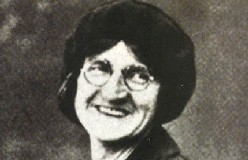
Ethel Major
Murderer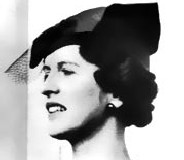 Florence Ransom
Murderer · United Kingdom · 1940
Florence Ransom was a middle-aged woman who was described as physically beautif…
3 victims
Florence Ransom
Murderer · United Kingdom · 1940
Florence Ransom was a middle-aged woman who was described as physically beautif…
3 victims
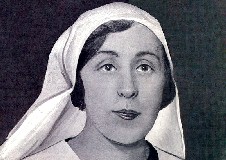 Dorothea Waddingham
Murderer · United Kingdom · 1935
Dorothea Waddingham (also referred to as Dorothea Nancy Waddingham) was born in…
2 victims
Dorothea Waddingham
Murderer · United Kingdom · 1935
Dorothea Waddingham (also referred to as Dorothea Nancy Waddingham) was born in…
2 victims
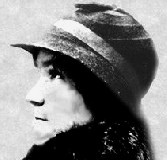 Charlotte Bryant
Murderer · United Kingdom · 1935
Charlotte Bryant, also known as Charlotte McHugh, was born in Londonderry in 19…
1 victim
Charlotte Bryant
Murderer · United Kingdom · 1935
Charlotte Bryant, also known as Charlotte McHugh, was born in Londonderry in 19…
1 victim
 Elizabeth Jones
Murderer · United Kingdom · 1944
Elizabeth Jones was born in Neath, Wales, in 1926. At the age of thirteen, she…
1 victim
Elizabeth Jones
Murderer · United Kingdom · 1944
Elizabeth Jones was born in Neath, Wales, in 1926. At the age of thirteen, she…
1 victim
 Jeannie Donald
Murderer · United Kingdom · 1934
Jeannie Donald was tried in July 1934 for the murder of Helen Priestly. Helen P…
1 victim
Jeannie Donald
Murderer · United Kingdom · 1934
Jeannie Donald was tried in July 1934 for the murder of Helen Priestly. Helen P…
1 victim
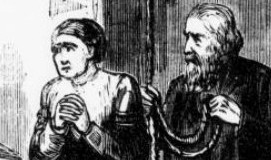 Margaret Waters
Murderer · United Kingdom · 1866
Margaret Waters was an English murderess who was hanged by executioner William…
19 victims
Margaret Waters
Murderer · United Kingdom · 1866
Margaret Waters was an English murderess who was hanged by executioner William…
19 victims
 Amy Hebert
Murderer · USA · 2007
August 9, 1991 — Amy Hebert and Chad Hebert married. · July of 2005 — Amy Heber…
2 victims
Amy Hebert
Murderer · USA · 2007
August 9, 1991 — Amy Hebert and Chad Hebert married. · July of 2005 — Amy Heber…
2 victims
 Michael Slobodian
Homicide · Canada · 1975
Michael Slobodian committed suicide by shooting himself on the same day as the…
2 victims
Michael Slobodian
Homicide · Canada · 1975
Michael Slobodian committed suicide by shooting himself on the same day as the…
2 victims
 Tracey Grissom
Murderer · USA · 2012
Tracey Grissom was convicted of the murder of her ex-husband, Hunter Grissom. S…
1 victim
Tracey Grissom
Murderer · USA · 2012
Tracey Grissom was convicted of the murder of her ex-husband, Hunter Grissom. S…
1 victim
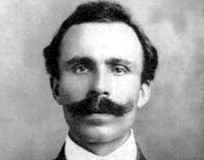 Bartolomeo Vanzetti
Murderer? · USA · 1920
Bartolomeo Vanzetti (June 11, 1888–August 23, 1927) was an anarchist who was co…
2 victims
Bartolomeo Vanzetti
Murderer? · USA · 1920
Bartolomeo Vanzetti (June 11, 1888–August 23, 1927) was an anarchist who was co…
2 victims
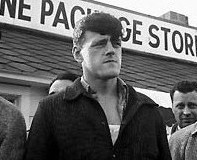 Joseph Taborsky
Spree killer · USA · 1951
Joseph “Mad Dog” Taborsky (March 23, 1924 – May 17, 1960) was a murderer who wa…
7 victims
Joseph Taborsky
Spree killer · USA · 1951
Joseph “Mad Dog” Taborsky (March 23, 1924 – May 17, 1960) was a murderer who wa…
7 victims
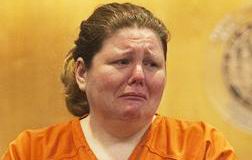 Karen Biraghi
Murderer · USA · 2011
Karen Lyn Biraghi was sentenced to life in prison on March 28, 2013 for shootin…
1 victim
Karen Biraghi
Murderer · USA · 2011
Karen Lyn Biraghi was sentenced to life in prison on March 28, 2013 for shootin…
1 victim
- Gender
- female
- Country
- United Kingdom
- Location
- Kirkby-on-Bain, Lincolnshire, England , United Kingdom
- Date of birth
- 1892
- Age at first offence
- 42
- Characteristics
- parricide, poisoner
- Victim profile
- Arthur Major, 44 (her husband)
- Method of murder
- Poisoning (strychnine)
- Date(s) of murder
- May 24, 1934
- Years active
- 1934
- Date of arrest
- Next day
- Status
-
Executed
Executed by hanging at Hull Prison on December 19, 1934
Case record: Ethel Major
Background
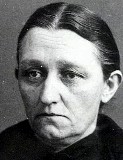
Ethel Major was executed by hanging at Hull Prison on December 19, 1934 for the murder of her husband Arthur Major.
Ethel Lillie Major was born in 1891. She was the only daughter of a Lincolnshire gamekeeper and was brought up in a good home with her three brothers on the estate of Sir Henry Hawley. When she left school she worked as a dressmaker.
In 1914, Ethel became pregnant. To avoid the stigma, her parents brought up the child, Auriel, as Ethel’s sister.
In 1918, Ethel met Arthur Major, who had returned a hero from the Great War but with serious wounds. The couple married on 1 June 1918. Their son, Lawrence, was born the next year. In 1929, the family moved to Kirkby-on-Bain.
By 1934, Ethel had become a cantankerous, bad tempered woman who was disliked throughout the neighbourhood.
Arthur Major began to hear rumours circulating about Ethel’s younger “sister”. When he confronted Ethel about it, Ethel admitted the rumours were true but refused to name the father. After this, Ethel would only spend the evening hours with Arthur, travelling with her son to her father’s house to spend the night there.
Ethel accused her husband of having an affair with a neighbour, Rose Kettleborough, and produced letters to her husband that she said the woman had written. Every indication was that Ethel had written them herself.
Arthur retaliated by declaring in the Horncastle News that he would not be held responsible for any debts incurred by his wife.
Ethel took steps that indicated conflict with her husband, including complaining to the police he was drunk in charge of his lorry, attempting to dispossess him of the house and become the tenant, and endeavouring to have him sacked from his job. She also accused him of always being drunk when driving.
Arthur responded by announcing that he would no longer be responsible for his wife’s debts. When she confronted him with the love letters and asked what he was going to do about it, he replied: “Nothing. You’d better do something about it yourself.”
Ethel also arranged the funeral service for her husband quickly, wanting him buried as soon as possible.
The offence
On 23 May 1934, Arthur Major came home from work feeling unwell, retired to bed, and a doctor was called. Ethel told the doctor that she had given her husband some corned beef and that he had been liable to fits for a couple of years.
The doctor concluded that Arthur was suffering from a mild form of epilepsy and prescribed a sedative.
After Ethel told the doctor that Arthur had died the next day, she began making plans for the funeral.
A key part of the offence involved strychnine poisoning. On the day Arthur sat to eat his lunch at the gravel pit, he commented: “I'm damned sure that woman is trying to poison me.” He threw away his sandwich and birds flew down to peck at it, then “promptly fell dead.”
Later, after Arthur died, a post-mortem examination found “a more than lethal amount of strychnine” in Arthur’s body. The Home Office pathologist determined that both Arthur and the dog had died from strychnine poisoning.
Ethel was linked to access to the poison through a key situation involving her father’s locked box.
Investigation
On 23 May 1934 (the next day after Ethel told the doctor Arthur had died), police received a note that said:
“Sir, Have you ever heard of a wife poisoning her husband? Look further into the death (by heart failure) of Mr Major of Kirkby-on-Bain. Why did he complain of his food tasting nasty and throw it to a neighbour's dog, which has since died? Ask the undertaker if he looked natural after death. Why did he stiffen so quickly? Why was he so jerky when dying? I myself have heard her threaten to poison him years ago. In the name of the law, I beg you to analyse the contents of his stomach.”
The note was signed “Fairplay.”
Police obtained a coroner’s order postponing the funeral. The dog and parts of Arthur’s body were sent to Dr Roche Lynch of St Mary’s Hospital, Paddington.
Ethel was interviewed by Chief Inspector Hugh Young. She pointed out that she suspected that the corned beef had caused food poisoning and that she had nothing to do with preparing her husband’s food. She insisted that she would have nothing to do with corned beef and told Chief Inspector Hugh Young: “I hate corned beef and I think it is a waste of money to buy such rubbish.”
When Ethel was interviewed again, she was said to have given herself away by referring to strychnine. Chief Inspector Hugh Young replied: “I never mentioned strychnine, how did you know that?” Ethel replied: “Oh, I'm sorry.” She said she must have made a mistake.
The house was searched but nothing untoward was found. Backing a hunch, Young contacted Ethel’s father, Mr Brown. Mr Brown admitted that he kept strychnine that he used to kill vermin. It was kept in a locked box to which he had the only key. He remembered there had been another key, but that it had been lost some ten years previously.
The Major house was searched again. An old key was found that fitted none of the locks in the house. It was taken back to the Brown home where it was found to fit the locked poisons box. Ethel was also associated with the missing key being in her handbag.
Ethel told Detective Inspector Young: “I didn’t know my husband died of strychnine poisoning …”
In another exchange, the detective confronted Ethel with strychnine. The detective told her: “I have never mentioned strychnine,” and asked how she knew her husband died from strychnine poisoning. Ethel replied: “Oh, I am sorry,” adding: “I must have made a mistake.” She also said: “I did not know my husband died from strychnine poisoning …”
Ethel’s statements included claims about her husband’s condition and their living arrangements. She told investigators she could not bear to sleep in the same room as him because of the smell, saying: “I could not stand it. From the smell of him he had a disease.”
She also said: “He was a detestable man and I feel very much better in health that he has gone …”
Arrest
Ethel was arrested and charged with her husband’s murder.
During police questioning, Ethel said: “I have never had any strychnine poison.” When the detective interviewing her told her: “I have never mentioned strychnine,” she replied: “How did you know your husband died from strychnine poisoning?” and Ethel answered: “Oh, I am sorry,” saying: “I must have made a mistake.”
Trial
Ethel Major’s trial was at Lincoln Assizes in November 1934. She was defended by Norman Birkett. It was said that Birkett had never lost a murder case in his long and distinguished career. Ethel was found guilty, though the jury added a recommendation to mercy.
In a later account, Ethel was described as facing a jury at Lincoln Assizes on October 29, with villagers from Kirkby-on-Bain hiring their own coach to take them there. The jury took less than an hour to reach its verdict.
After hearing the verdict, Ethel collapsed and had to be virtually carried from the court.
The jury recommended mercy, but this recommendation was ignored, and she was sentenced to death. No reprieve was forthcoming.
During the court proceedings, the prosecution described Ethel’s troubled marriage. It was said that, on discovering her husband’s affair, Ethel told her doctor: “Now you understand why I have been ill. A man like that is not fit to live. I will do him in!”
The court also heard Ethel’s statements to police during questioning, including: “I have never had any strychnine poison,” and her replies when confronted about strychnine.
Ethel’s defence included a suggestion that her solicitor had told her that strychnine poisoning was suspected, and that Ethel’s “mistake” in responding during questioning registered with the jury.
Sentencing
Ethel Major was sentenced to death after her conviction. The jury’s recommendation to mercy was ignored.
No reprieve was forthcoming.
Appeals
No appeal information was included in the provided material.
Outcome
Ethel Lillie Major was executed by hanging at Hull Prison on December 19, 1934.
Her execution was carried out by Thomas Pierrepoint.
The material described that she was the first woman to be hung at Hull Prison, and the first to face the ultimate penalty since 1926. She died at precisely 9am.
In connection with the execution, it was said that Sir John Gilmour did not grant the mercy plea, and a telegram was sent to Buckingham Palace by the Lord Major, Ald Stark, asking the King and Queen to intervene, telling them that the execution was causing great distress in Hull, particularly among women who did not wish to see a woman and mother walk to the gallows.
Aftermath / Other details
Arthur Major was described as 44 years old. The material also stated that he was a lorry-driver and a heavy drinker, and it included allegations that he assaulted his wife.
Ethel and Arthur Major had a son, Lawrence.
Ethel had previously brought up Auriel as Ethel’s sister after her pregnancy in 1914.
A key point in the case involved a dog and an anonymous letter. The anonymous letter claimed a neighbour’s dog had died after eating scraps put out by Mrs Major, and it named Mrs Major in that context.
The materials also included a quotation attributed to Ethel at the time of questioning: “I am not guilty, sir.”
Ethel’s statement about her inability to sleep in the same room as Arthur included the quote: “I could not stand it.
Additional quotes from Arthur Major included: “Nothing.

Spotted an error, or have more information about this case?