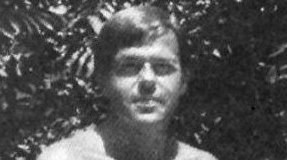
Kenneth Halliwell
Murderer David McGreavy
Murderer · United Kingdom · 1973
David McGreavy was born in 1950 or 1951. He was an English convicted murderer w…
3 victims
David McGreavy
Murderer · United Kingdom · 1973
David McGreavy was born in 1950 or 1951. He was an English convicted murderer w…
3 victims
 Harry Maurice Roberts
Murderer · United Kingdom · 1966
Name: Harry Maurice Roberts Birth year: 1936 Birthplace: Kennington, London, En…
3 victims
Harry Maurice Roberts
Murderer · United Kingdom · 1966
Name: Harry Maurice Roberts Birth year: 1936 Birthplace: Kennington, London, En…
3 victims
 Ronald Jebson
Murderer · United Kingdom · 1970
Ronald Jebson (born 1939) was a convicted pedophile who was also known as Ronal…
3 victims
Ronald Jebson
Murderer · United Kingdom · 1970
Ronald Jebson (born 1939) was a convicted pedophile who was also known as Ronal…
3 victims
 William Balfour
Murderer · USA · 2008
William Balfour was sentenced to three consecutive life sentences plus 120 year…
3 victims
William Balfour
Murderer · USA · 2008
William Balfour was sentenced to three consecutive life sentences plus 120 year…
3 victims
 Barbara Graham
Murderer · USA · 1953
Barbara Graham (June 26, 1923 – June 3, 1955) was an American criminal and conv…
1 victim
Barbara Graham
Murderer · USA · 1953
Barbara Graham (June 26, 1923 – June 3, 1955) was an American criminal and conv…
1 victim
 Wesley Higdon
Mass murderer · USA · 2008
Wesley Neal Higdon was a 25-year-old press operator from Henderson. He was desc…
5 victims
Wesley Higdon
Mass murderer · USA · 2008
Wesley Neal Higdon was a 25-year-old press operator from Henderson. He was desc…
5 victims
 Frederick Bywaters
Murderer · United Kingdom · 1922
Frederick Edward Francis Bywaters (27 June 1902 – 9 January 1923) and Edith Jes…
1 victim
Frederick Bywaters
Murderer · United Kingdom · 1922
Frederick Edward Francis Bywaters (27 June 1902 – 9 January 1923) and Edith Jes…
1 victim
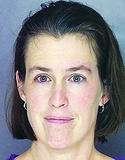 Laurel Schlemmer
Murderer · Pennsylvania · 2014
Laurel Michelle Schlemmer was accused of drowning two young boys in a bathtub i…
2 victims
Laurel Schlemmer
Murderer · Pennsylvania · 2014
Laurel Michelle Schlemmer was accused of drowning two young boys in a bathtub i…
2 victims
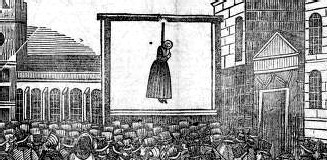 Catherine Wilson
Murderer · United Kingdom · 1854
Catherine Wilson was a British nurse who poisoned victims after befriending the…
7 victims
Catherine Wilson
Murderer · United Kingdom · 1854
Catherine Wilson was a British nurse who poisoned victims after befriending the…
7 victims
- Gender
- male
- Country
- United Kingdom
- Location
- Islington, London, England, United Kingdom
- Date of birth
- J une 23, 1926
- Age at first offence
- 41
- Characteristics
- jealousy
- Victim profile
- John Kingsley ("Joe") Orton, 34 (English playwright)
- Method of murder
- Nine hammer blows to the head
- Date(s) of murder
- August 9, 1967
- Years active
- 1967
- Date of arrest
- —
- Status
-
Died in custody
Committed suicide the same day by overdose on Nembutal sleeping pills
Case record: Kenneth Halliwell
Overview
Kenneth Halliwell (born in 1926, died August 9, 1967) was a British actor and writer. He was the mentor, partner and eventual murderer of playwright Joe Orton.
Halliwell was raised in a somewhat split household, where his father ignored him and his mother coddled him. His mother died when he was a young boy, and her death was described as a negative turning point in his life. In 1949, at the age of 23, he found his father dead after his father had committed suicide by putting his head in a gas oven. Halliwell determined his father was dead, performed a few household tasks, and then called for an ambulance.
Halliwell later met Joe Orton at the Royal Academy of Dramatic Art (RADA). Both men became struggling writers after being struggling actors. They collaborated on novels including The Boy Hairdresser, which were not published until after their deaths. In 1962, along with Orton, Halliwell was imprisoned for six months for the theft and defacement of books in Islington Library.
Their relationship developed distance after Orton’s emerging success following their release from prison, and Halliwell found it difficult to handle. Towards the end of his life, Halliwell was on regular courses of anti-depressants.
On the night of August 8 and the early morning hours of August 9, 1967, Halliwell killed Orton by nine blows to his head with a hammer, and then overdosed on prescription medication shortly afterwards. Despite the violence of the murder, it was stated that Halliwell died first.
Timeline
- August 9, 1967 — Halliwell killed Joe Orton with nine hammer blows to the head and then committed suicide by overdose on Nembutal sleeping pills.
- 1949 — Halliwell found his father dead after his father committed suicide by putting his head in a gas oven.
- 1944 — Halliwell gained three HSC’s at Wirral Grammar School.
- 1951 — Halliwell met Joe Orton at RADA; Orton moved into a West Hampstead flat with Halliwell and two other students in June 1951.
- 1957 — The rejection of The Last Days of Sodom in 1957 led to solo works for Orton and Halliwell.
- 1959 — Orton and Halliwell moved into a small, austere flat at 25 Noel Road in Islington.
- 1962 — Halliwell and Orton were imprisoned for six months for the theft and defacement of books in Islington Library; released September 1962; fined £262.
- May 1962 — They were discovered and prosecuted in May 1962.
- September 1962 — Orton and Halliwell were released from prison.
- 31 August 1964 — BBC broadcast of the radio play The Ruffian on the Stair.
- 6 May 1964 — Entertaining Mr. Sloane premiered at the New Arts Theatre under the direction of Michael Codron.
- December 1963 — Orton sent a copy of Entertaining Mr. Sloane to theatre agent Peggy Ramsay.
- 1 February — Loot opened in Cambridge with scathing reviews.
- 27 September 1966 — Loot premiered in London at the end of its revised run and moved to the Criterion Theatre in November.
- 26 August 1968 — The Seven Deadly Virtues aired on Yorkshire Television posthumously.
- 4 December 2008 — Curve officially opened with development of the “cultural quarter” including a pedestrian concourse named “Orton Square.”
Background
Halliwell was described as being raised in a somewhat split household, ignored by his father and coddled by his mother. His mother’s death, which occurred when he was a young boy, was described as a great negative turning point.
Halliwell was described as a classics scholar at Wirral Grammar School, where he gained three HSC’s in 1944. He was called up for war service that year but registered as a conscientious objector rather than serve in the military. It was stated that he was forced to go down the pits as a Bevin boy coalminer. After being discharged in 1946, he acted for a while in Scotland and then returned home to act in Birkenhead.
Halliwell’s father died in 1949 (committed suicide). Halliwell moved to London to study drama at RADA having inherited the family fortune.
It was stated that at RADA in 1951, Halliwell met Orton, who was seven years younger than him. Orton moved into a West Hampstead flat with Halliwell and two other students in June 1951. The relationship was described as lovers, forming a strong relationship.
After graduating, both Orton and Halliwell went into regional repertory work: Orton spent four months in Ipswich as an assistant stage manager; Halliwell acted in Llandudno, Wales. Both returned to London and became writers.
They collaborated on unpublished novels and had little success. The rejection of their hope The Last Days of Sodom in 1957 led them to solo works. Orton returned to the books for ideas, and many of Orton’s stage-play style glimpses were described as appearing from that work.
Confident of their “specialness,” Orton and Halliwell refused to work for long periods. They subsisted on Halliwell’s money and unemployment benefits and were forced to follow an ascetic life in order to restrict their outgoings to £5 a week. From 1957–1959, they worked in six-month stretches at Cadbury’s to raise money for a new flat. They moved into a small, austere flat at 25 Noel Road in Islington in 1959.
He was also described as increasingly depressed, argumentative, and plagued with mystery ailments.
The offence
On 9 August 1967, Halliwell killed Joe Orton with nine hammer blows to the head at their home in Islington, London. After the killing, he overdosed on Nembutal sleeping pills. The overdose was described as consisting of 22 Nembutal tablets washed down with the juice from canned grapefruit.
Halliwell left a suicide note, informing police that all would be explained if they read Orton’s diaries, “especially the latter part”.
Investigation
It was stated that investigators determined Halliwell died first because Orton’s body was still warm.
The last person to speak to Halliwell was his doctor, who arranged for a psychiatrist to see him the following morning. The doctor spoke to Halliwell three times on the telephone, and the last call was at 10 o’clock. Halliwell took the psychiatrist’s address and said: “Don’t worry, I’m feeling better now. I’ll go and see the doctor tomorrow morning.”
It was stated that Halliwell had felt increasingly threatened and isolated by Orton’s success and had come to rely on anti-depressants and barbiturates.
Halliwell’s suicide note referred to the contents of Orton’s diary as an explanation for his actions:
“If you read his diary, all will be explained. KH PS: Especially the latter part.”
Aftermath
The bodies of Halliwell and Orton were discovered late the following morning, when a chauffeur came to the door of their Noel Road flat in Islington to collect Orton for a meeting with The Beatles regarding a screenplay he had written for them.
Orton’s diaries had “since been published.” Orton had been described as having promiscuity, and it was stated that the diary contained numerous incidents of cottaging in public lavatories and other sexual relationships.
Orton was cremated at the Golders Green Crematorium, with his maroon cloth-draped coffin brought into the west chapel to a recording of The Beatles song “A Day in the Life”. Harold Pinter read the eulogy, concluding with:
“He was a bloody marvellous writer.”
According to Dennis Dewsnap’s memoir, What’s Sex Got To Do With It (The Syden Press, 2004), Orton and Halliwell had their ashes mixed and were buried together. Dewsnap was quoted describing the scattering of Joe’s and Kenneth’s ashes and the statements made by Orton’s sister and Peggy Ramsay:
“At the scattering of Joe's and Kenneth's ashes, his sister took a handful from both urns and said, 'A little bit of Joe, and a little bit of Kenneth. I think perhaps a little bit more of our Joe, and then some more of Kenneth.' At which Peggy snapped, 'Come on, dearie, it's only a gesture, not a recipe,' a line surely worthy of Joe himself, though indicative of the contempt in which Ramsey held the Orton family.”
It was stated that Ramsay described them as simply “the little people in Leicester,” and she left a cold, nondescript note and bouquet at the funeral on their behalf.
Orton’s legacy was described as continuing in Leicester, with the “cultural quarter” development and the new Theatre, Curve, whose main entrance has a new pedestrian concourse named “Orton Square.” Curve officially opened 4 December 2008.
Trial
Halliwell was imprisoned for six months in 1962 for theft and defacement of books in Islington Library. The incident was reported in Daily Mirror as “Gorilla in the Roses”.
Halliwell and Orton were charged with five counts of theft and malicious damage, and it was stated that they admitted damaging more than 70 books. They were jailed for six months (released September 1962) and fined £262.
It was stated that Orton and Halliwell felt that that sentence was unduly harsh because “we were queers.”
Appeals
No appeal information was provided.
Other details
Halliwell was portrayed in Prick Up Your Ears (the 1987 film based on Orton’s life) by Alfred Molina.
British experimental music group Coil recorded three tracks titled “The Halliwell Hammers” for their 1995 album Worship The Glitch.
The works attributed to Halliwell included:
- The Protagonist (circa 1949), unproduced and unpublished play about Edmund Kean.
- The Silver Bucket (1953)
- The Mechanical Womb (1955)
- The Last Days of Sodom (1955)
- Priapus in the Shrubbery (1959), solo novel, unpublished and now lost.
- Lord Cucumber and The Boy Hairdresser, novels co-written with Orton, published in 2001.
Joe Orton’s biography details included that William and Elsie Orton married in 1931, with Elsie working in the local footwear industry until tuberculosis cost her a lung and William working for Leicester Council as a gardener. Their eldest son John was born at Causeway Lane Maternity Hospital, Leicester, and when he was two moved from 261 Avenue Road Extension in Clarendon Park, Leicester, to the Saffron Lane council estate. Joe had a younger brother Douglas and two younger sisters, Marilyn and Leonie.
Joe Orton attended Marriot Road Primary School but failed the eleven-plus exam after extended bouts of asthma, and took a secretarial course at Clark’s College in Leicester from 1945 to 1947. He began working as a junior clerk on £3 a week. He later applied for a scholarship at RADA in November 1950 and was accepted; his entrance into RADA was delayed until May 1951 by appendicitis.
Joe Orton’s last works and broadcast history included that:
- The BBC paid £65 for the radio play The Ruffian on the Stair, broadcast on 31 August 1964.
- Entertaining Mr. Sloane premiered at the New Arts Theatre on 6 May 1964 under the direction of Michael Codron.
- Entertaining Mr Sloane was transferred to Wyndham’s Theatre at the end of June and to the Queen’s Theatre in October.
- Loot first draft was written between June and October 1964, and it later opened in Cambridge on 1 February (year not specified in the provided text).
- Loot premiered in London on 27 September 1966 to rave reviews.
- The Good and Faithful Servant was completed by June 1964 and first broadcast on 6 April 1967 by Associated-Rediffusion.
- The Erpingham Camp was broadcast on 27 June 1966 as the “pride” segment in Seven Deadly Sins.
- The Seven Deadly Virtues was made as part of Yorkshire Television and broadcast posthumously on 26 August 1968.
Popular culture references included that the 1987 film adaptation is based on Orton’s diaries and on Lahr’s research, directed by Stephen Frears, and starring Gary Oldman as Orton, Alfred Molina as Halliwell, and Vanessa Redgrave as Peggy Ramsay. It also stated that Alan Bennett wrote the screenplay.
Additional film and performance references included that Joe Orton was played by Kenny Doughty in the BBC film Kenneth Williams: Fantabulosa!, with Michael Sheen as Kenneth Williams.
Two archive recordings of Orton were described as surviving: a short BBC radio interview first transmitted in August 1967 and a video recording held by the British Film Institute of his appearance on Eamonn Andrews’ ITV chat show transmitted 23 April 1967.
Spotted an error, or have more information about this case?