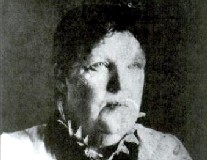
Elizabeth Potts
Murderer Sarah Whiteling
Murderer · USA · 1888
Sarah Jane Whiteling was a 41 year old white woman from Philadelphia, Pennsylva…
3 victims
Sarah Whiteling
Murderer · USA · 1888
Sarah Jane Whiteling was a 41 year old white woman from Philadelphia, Pennsylva…
3 victims
 Cordelia Botkin
Murderer · USA · 1898
Cordelia Botkin was a stocky woman of 44 who left her own husband and started a…
2 victims
Cordelia Botkin
Murderer · USA · 1898
Cordelia Botkin was a stocky woman of 44 who left her own husband and started a…
2 victims
 Alice Mitchell
Murderer · USA · 1892
Alice Mitchell was tried for murder and entered a plea of “present insanity,” m…
1 victim
Alice Mitchell
Murderer · USA · 1892
Alice Mitchell was tried for murder and entered a plea of “present insanity,” m…
1 victim
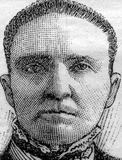 Emeline Meaker
Murderer · USA · 1880
Emeline Meaker (sometimes reported as Lucy Emeline Meaker) was convicted of mur…
1 victim
Emeline Meaker
Murderer · USA · 1880
Emeline Meaker (sometimes reported as Lucy Emeline Meaker) was convicted of mur…
1 victim
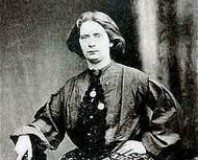 Maria Barbella
Murderer · USA · 1895
Maria Barbella was a seamstress in Manhattan's Little Italy. She lived with her…
1 victim
Maria Barbella
Murderer · USA · 1895
Maria Barbella was a seamstress in Manhattan's Little Italy. She lived with her…
1 victim
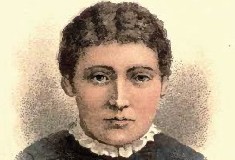 Roxalana Druse
Murderer · USA · 1884
Roxalana Druse (1847 – February 28, 1887) was the wife of William Druse and was…
1 victim
Roxalana Druse
Murderer · USA · 1884
Roxalana Druse (1847 – February 28, 1887) was the wife of William Druse and was…
1 victim
 Kanae Kijima
Serial killer · Japan · 2009
Kanae Kijima was sentenced to death on April 13, 2012. She was convicted of thr…
3 victims
Kanae Kijima
Serial killer · Japan · 2009
Kanae Kijima was sentenced to death on April 13, 2012. She was convicted of thr…
3 victims
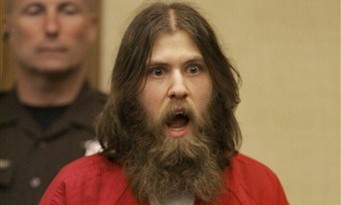 William Morva
Murderer · USA · 2006
William Morva was sentenced to death on June 23, 2008. William Charles Morva (b…
2 victims
William Morva
Murderer · USA · 2006
William Morva was sentenced to death on June 23, 2008. William Charles Morva (b…
2 victims
 Leslie Galloway
Murderer · USA · 2008
Leslie Galloway III, also known as Leslie Galloway and Leslie “Bo” Galloway, II…
1 victim
Leslie Galloway
Murderer · USA · 2008
Leslie Galloway III, also known as Leslie Galloway and Leslie “Bo” Galloway, II…
1 victim
 James Malicoat
Murderer · USA · 1997
James Patrick Malicoat was executed in Oklahoma in August 2006 after being conv…
1 victim
James Malicoat
Murderer · USA · 1997
James Patrick Malicoat was executed in Oklahoma in August 2006 after being conv…
1 victim
 Domingo Salazar
Mass murderer · Philippines · 1956
Domingo Salazar was resentenced to reclusion perpetua on June 30, 1959, after h…
16 victims
Domingo Salazar
Mass murderer · Philippines · 1956
Domingo Salazar was resentenced to reclusion perpetua on June 30, 1959, after h…
16 victims
 Wellington Menezes de Oliveira
Mass murderer · Brazil · 2011
Wellington Menezes de Oliveira (July 13, 1987 - April 7, 2011) carried out a sh…
12 victims
Wellington Menezes de Oliveira
Mass murderer · Brazil · 2011
Wellington Menezes de Oliveira (July 13, 1987 - April 7, 2011) carried out a sh…
12 victims
- Gender
- female
- Country
- USA
- Location
- Carlin, Elko County, Nevada , USA
- Date of birth
- December 21, 1846
- Age at first offence
- 42
- Characteristics
- dismemberment, torture, rape, attempt to collect insurance money, financial gain
- Victim profile
- Miles Faucett, 57
- Method of murder
- Shooting
- Date(s) of murder
- January 1, 1888
- Years active
- 1888
- Date of arrest
- February 16, 1889
- Status
-
Executed
Executed by hanging in Elko, Nevada, on June 20, 1890
Case record: Elizabeth Potts
Names and identities
Elizabeth Potts (née Atherton) was convicted of murder in 1889 and was hanged the following year. Her dates were December 21, 1846 – June 20, 1890. Her husband was Josiah Potts, executed simultaneously on June 20, 1890. Josiah Potts’s dates were 1842–1890.
Background
Josiah Potts and Elizabeth Atherton (Elizabeth Potts) were both born in Manchester, England. They married in 1863 and immigrated to the United States two years later, settling in Milwaukee, Wisconsin.
They became parents to at least five and as many as seven children (sources differed on the number). The children included a son named Charley, age 17 in 1890; a daughter who was 13 in 1890; and a daughter named Edith, born July 4, 1883.
The family moved west after Josiah got a job with the Central Pacific Railroad. They first lived in Terrace, Utah, and then in 1886 in Carlin, Nevada.
While living in Carlin, Elizabeth temporarily separated from Josiah, possibly due to financial hardships. During the separation she traveled to Fresno, California, where she entered into a bigamous marriage with Miles Faucett, a carpenter also native of England. The story of the marriage was not revealed publicly until it was uncovered by a San Francisco journalist some time after the Pottses had been executed for Faucett's murder.
As of 1887, Elizabeth had returned to her home in Carlin.
The offence
Miles Faucett went to Carlin and became a boarder in the Potts household. He bought a nearby ranch and moved to his property but visited the Potts home regularly. Elizabeth provided him with bread and washed his laundry.
On January 1, 1888, Faucett told a friend, J.P. Linebarger, that he intended to visit the Potts to collect some money they owed him, and that he had knowledge about Elizabeth’s past that he could use to convince her to pay the debt.
Faucett and Linebarger arrived together at the Pottses’ home. Elizabeth invited Faucett to spend the night. Faucett accepted; Linebarger departed. Faucett was not seen alive again.
In the days thereafter, when questioned about Faucett’s disappearance, Josiah Potts said that Faucett had been called away on business in another state.
The remains of Faucett were later discovered in the home’s cellar after the Pottses moved. In January 1889, George Brewer discovered mutilated human remains in the home’s cellar. The remains were identified as those of Miles Faucett. Elizabeth and Josiah Potts were arrested for the murder.
Investigation
The Pottses moved in the summer of 1888 to Rock Springs, Wyoming. Their house in Carlin was rented to a family named Brewer. Amelia Brewer wrote in the Elko Free Press on January 5, 1888, under the pen name of “Busy Bee” about “a veritable haunted house.” She described a ghost in the house and “cut up in the cellar.”
Amelia Brewer’s writing included the following verbatim passage:
"It is a little exciting when one has the good luck to move into a veritable haunted house. So far, the ghost hasn't scared any of us, but he is here just the same. Sometimes he taps on the head board of the bed; other times he stalks across the kitchen floor, and anon (sic) he hammers away at the door and nobody's there. But the gayest of capers of all is cut up in the cellar. There he holds high revels, and upsets the pickles and carries on generally..."
George Brewer decided to investigate. Armed with an iron rod, he went down into the cellar under the house and prodded around. He found a soft spot and guessed that the floor had been dug up sometime in the past. After returning a week later, he found what he described as:
"I saw something that looked like a rotten turnip. I pulled up some hair and the smell came with it."
He contacted Deputy George McIntosh, who telegraphed Sheriff Lou Barnard over in Elko. Law officers unearthed mutilated remains of a man. The body had been cut into several pieces. Brewer said:
"The head looked as though it was cut off right straight across below the ears."
The remains included a partially crushed, charred skull “without flesh,” and pieces identified as arms and legs. Burning and burial in damp ground left the cadaver unidentifiable. An old knife discovered in one of the dead man’s trouser pockets was recognized as having belonged to Miles Faucett, a Carlin miner and rancher who had not been around the past year.
Suspicion centered on Josiah and Elizabeth Potts, earlier residents of the house and former friends of Faucett. The Potts family had left Carlin in 1887 and moved to Rock Springs, Wyoming with their two children. Sheriff Barnard and Constable Joe Triplett traveled to Wyoming and returned the family to Elko.
On the trip back to Nevada, Josiah Potts confessed to dismembering and burying Faucett’s body, claiming that Miles had committed suicide in their house. He was afraid he would be charged with murder so he got rid of the body. The confession would later be used in their legal efforts.
Deputy McIntosh had earlier visited Hot Springs Ranch. The door was found wide open; everything of value was gone. Some missing items were later found at the Potts’ house. Nothing suggested foul play at that time, and a brief investigation closed until remains were dug up about a year later.
Arrest
Elizabeth and Josiah Potts were arrested for the murder after the remains were identified in January 1889.
Trial
The Pottses were indicted for murder in the first degree and tried together. They both entered a not guilty plea. Elizabeth and Josiah were indicted after District Attorney W.C. Love presented evidence to the Grand Jury in Elko.
On February 16, 1889, the couple entered a not guilty plea and were taken to jail to wait for trial.
On March 12, 1889, Judge R.R. Bigelow opened the case. J.A. Plummer, a court-appointed attorney, represented the Potts. Jury selection took most of the day. Linebarger was the State’s first witness. He testified that he went with Faucett to the Potts’ house, that Mrs. Potts persuaded Miles to stay overnight, and that Miles told him he was staying the night to collect money owed and that he knew enough about Elizabeth’s past life to force them to pay the debt. Linebarger also testified he saw Faucett’s purse earlier and that it contained as much as one hundred dollars in twenty-dollar gold pieces.
The Brewers described finding the partially-burned body in their cellar. Deputy McIntosh detailed his visit to Hot Springs Ranch where he found the place ransacked. This comprised the State’s case against the Potts.
Sixteen-year-old Charley Potts was the first defense witness. He testified that he heard loud talk on the evening of January 1 and got out of bed to see what was going on. He stated he opened the kitchen door just as Faucett shot himself. He then returned to bed and said the family never discussed the incident after that. He insisted his parents had not told him what to say on the witness stand.
Elizabeth testified that Faucett came to their house to pick up his washing. Since it was New Year’s Day, she invited Miles and Linebarger in to have a drink of whiskey. After two drinks Linebarger left. She claimed that around nine o’clock in the evening, her husband was searching in her trunk for a postage stamp to send for a catalog and found a letter she had written to Deputy McIntosh but never mailed.
The letter described an occurrence in the summer of 1886 when Miles lived in their barn while he was mining nights and before moving to his ranch. Elizabeth testified that she noticed little Edith was missing. While searching for the child, she found Faucett in the barn sitting on the edge of his bed. Edith was sitting astride his legs with her drawers unbuttoned. Elizabeth stated:
"You old wretch!"
She then testified she said:
"I'll have you tarred and feathered for that at least."
Elizabeth testified that Faucett threw the little girl on the bed and grabbed Elizabeth and choked her until she was black in the face. She testified she said:
"By the way he looked he would kill me if I did not."
She further testified that Faucett forced her to promise to say nothing about what happened and that she kept baking and washing as usual but kept brooding over it. She testified she did not tell Josiah.
Elizabeth testified that she wrote an account intending to mail it to Deputy McIntosh when they moved away so it would prevent Miles from molesting a child again. She testified that this letter was found by Josiah on the fateful evening.
Josiah confronted Faucett. Elizabeth testified that Faucett claimed he was only playing with the child. She testified Josiah screamed:
"To hell with your note!"
Elizabeth testified that Faucett offered to give the Potts everything he owned in payment of a $180 debt for board, washing, and lodging. Elizabeth composed a bill of sale which Faucett signed.
Elizabeth then testified that Faucett reached up with his left hand, grasped a revolver off a shelf, held it to the left side of his head, and laughed saying:
"You folks will be blamed for this."
She testified that he fired and sank down without a word. Elizabeth testified that at her husband’s request she went to the bedroom for the rest of the night to hear Josiah’s story.
Josiah testified corroborating Elizabeth’s testimony. He explained that he sent his wife and Charley out of the room and closed the door. He stated he sat with the body most of the night wondering what to do with it. He testified he knew they would be blamed for Faucett’s end and that prompted him to hide the corpse. Josiah testified he wrapped Faucett in blankets, carried the body down to the cellar, dug a shallow grave, and placed the remains in it, including putting a pillow under Faucett’s head.
Josiah testified that three months later he dug up the cadaver to destroy the corpse. He testified in his words:
"I cut up the body in pieces. I cut off the head and feet. I mashed the head with an ax in order to burn it. I chopped the feet up a little with an ax. I succeeded in burning a little of the skull and a little of his foot. I had to give it up and could not finish on account of the smell."
He testified he gathered up the body pieces and reburied them.
Continuing, Josiah claimed Faucett shot himself behind the ear and that the bullet lodged in his right eye. He also stated that Elizabeth did not in any way help him with the body and that he took nothing, money nor papers, from the body.
The defense case ended after the four-day trial. The jury found both Josiah and Elizabeth guilty of first degree murder. The jury deliberated about four hours. When the verdict was read, Josiah bowed his head and kept his eyes on the courtroom floor; Elizabeth maintained calm and looked straight ahead without a visible muscle twitch.
Sentencing
On March 22, 1889, the courtroom was crowded to overflowing. Judge Bigelow sentenced Josiah and Elizabeth to be hanged by the neck until dead. Their execution date was set for May 17, 1889.
Appeals
Their sentence was appealed and a stay of execution was ordered.
In November 1889, Nevada Supreme Court justices affirmed Bigelow’s sentence and set Friday, June 20, 1890 as the new date for their execution.
A petition signed by 267 residents was sent to the State Board of Pardons asking that the death sentence be commuted to life imprisonment. The Board of Pardons denied it.
Bigelow and Deputy Sheriff A.G. Dawley appealed on behalf of the Potts to avoid hanging a woman; that request was turned down. The preparations for execution continued.
Outcome
The double gallows manufactured in Placerville, California, was obtained for the hanging. Invitations were issued for attendance at the June 20, 1890 event. Elizabeth and Josiah Potts were hanged simultaneously before an audience of 52 men.
The execution included preparations: a scaffold was transported in sections from California, assembled at the prison yard, and tested with sandbags. Barely a week before the hanging, the double gallows was put back together behind the old courthouse and stood ready for its job. A tall board fence was built at the front and back ends of the jail yard between the courthouse and jail. The gallows waited in the southeast corner where it was tested with bags of sand.
On Thursday morning, the day before the execution, Elizabeth cut her wrists with a small penknife she had hidden. She climbed onto her cot, covered herself with a blanket, and called to the jailer, Stanley Taber, to play her a tune. Taber pulled the cover back, a doctor stopped the bleeding, and she screamed, ranted, and blasphemed until she fainted from loss of blood.
On Friday morning, June 20, 1890, many people came to town, mostly reporters, sheriffs and ex-sheriffs. Of those invited to the event, 52 came to witness the hanging. No ladies attended because requests for jail passes were denied.
At 10:30 a.m. officers offered the condemned a small bottle of booze. The alcohol was taken after a brief prayer by Reverend C.J. Porter.
When the death warrants were read, Mrs. Potts lifted her right hand and said:
"Innocent, so help me God. We are innocent, that's all we can say; we are innocent from first to last."
They were given another drink then led from the jail to the yard. They began climbing the steps of the gallows. Elizabeth was dressed in a white dress with black silk bows at her throat and wrists; Josiah was in a business suit. They were bound, shoes removed, and legs strapped. They leaned forward and kissed affectionately before black hoods were pulled over their heads and nooses adjusted around their necks.
Josiah murmured:
"Lord have mercy on me."
Elizabeth appealed:
"Lord have mercy on my soul."
Barnard tripped the trap at 10:44 a.m. Blood was seen oozing and streaming down the front of Elizabeth’s dress and dripping into a pool at her feet. Her head was described as almost severed due to the drop and weight. Josiah’s body rotated slowly on the rope; his legs contracted once.
At 11:08 Elizabeth was cut down and turned over to the undertaker. Josiah was placed in a coffin next to hers in the back of a wagon and they were taken to the cemetery.
Their bodies were buried in Elko Cemetery. The bodies were later reinterred in a common grave when the cemetery was relocated.
San Francisco Daily Report editors wrote:
"It is to the credit of Elko, Nevada, that it hangs a woman guilty of murder. It is a dreadful thing to hang a woman but not so dreadful as for a woman to be a murderer. Evidently Elko possesses citizens who, when on a jury have some respect for their oath. In San Francisco Mrs. Potts would have walked out of court a free woman."
Aftermath
The hanging of Josiah and Elizabeth was described as the second and last legal execution in Elko County. The hanging of Elizabeth Potts was described as the first and last time a woman was lawfully executed in Nevada. It was also described as the first legal execution of a woman in the entire Pacific Coast region.
The record also stated that 52 men witnessed the hanging and that women who applied for jail passes were denied their requests.
It was stated that the hanging was the last legal execution in Elko County and that a state law passed in 1901 ended the practice of conducting executions in Nevada’s county seats.
A later interview with Charles Paul Keyser was included. Keyser was described as having climbed a pole to watch the hanging as a teenager, and he was described as hitching a ride on the wagon carrying the caskets to the cemetery. When asked whether he thought the Pottses were guilty, Keyser said:
"Hell, yes! Everybody knew they did it!"

Spotted an error, or have more information about this case?