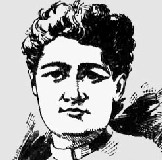
Sarah Whiteling
Murderer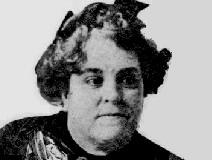 Cordelia Botkin
Murderer · USA · 1898
Cordelia Botkin was a stocky woman of 44 who left her own husband and started a…
2 victims
Cordelia Botkin
Murderer · USA · 1898
Cordelia Botkin was a stocky woman of 44 who left her own husband and started a…
2 victims
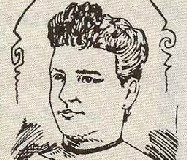 Alice Mitchell
Murderer · USA · 1892
Alice Mitchell was tried for murder and entered a plea of “present insanity,” m…
1 victim
Alice Mitchell
Murderer · USA · 1892
Alice Mitchell was tried for murder and entered a plea of “present insanity,” m…
1 victim
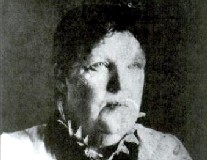 Elizabeth Potts
Murderer · USA · 1888
Elizabeth Potts (née Atherton) was convicted of murder in 1889 and was hanged t…
1 victim
Elizabeth Potts
Murderer · USA · 1888
Elizabeth Potts (née Atherton) was convicted of murder in 1889 and was hanged t…
1 victim
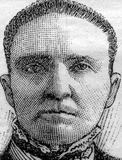 Emeline Meaker
Murderer · USA · 1880
Emeline Meaker (sometimes reported as Lucy Emeline Meaker) was convicted of mur…
1 victim
Emeline Meaker
Murderer · USA · 1880
Emeline Meaker (sometimes reported as Lucy Emeline Meaker) was convicted of mur…
1 victim
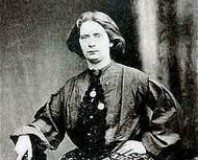 Maria Barbella
Murderer · USA · 1895
Maria Barbella was a seamstress in Manhattan's Little Italy. She lived with her…
1 victim
Maria Barbella
Murderer · USA · 1895
Maria Barbella was a seamstress in Manhattan's Little Italy. She lived with her…
1 victim
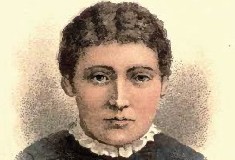 Roxalana Druse
Murderer · USA · 1884
Roxalana Druse (1847 – February 28, 1887) was the wife of William Druse and was…
1 victim
Roxalana Druse
Murderer · USA · 1884
Roxalana Druse (1847 – February 28, 1887) was the wife of William Druse and was…
1 victim
 Robert Wayne Vickers
Murderer · USA · 1978
Robert Wayne Vickers Robert Wayne Vickers was executed by lethal injection in A…
2 victims
Robert Wayne Vickers
Murderer · USA · 1978
Robert Wayne Vickers Robert Wayne Vickers was executed by lethal injection in A…
2 victims
 Rennie Pratt
Murderer · USA · 2009
Rennie Pratt was convicted of voluntary manslaughter in the shooting death of h…
1 victim
Rennie Pratt
Murderer · USA · 2009
Rennie Pratt was convicted of voluntary manslaughter in the shooting death of h…
1 victim
 Jeffrey Havard
Murderer · USA · 2002
Defendant: Jeffrey Havard Victim: Chloe Britt, six-month-old · February 21, 200…
1 victim
Jeffrey Havard
Murderer · USA · 2002
Defendant: Jeffrey Havard Victim: Chloe Britt, six-month-old · February 21, 200…
1 victim
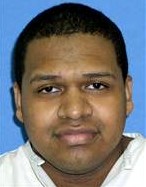 Carlton Akee Turner
Murderer · USA · 1998
Carlton Akee Turner was a Black male who was 19 years old on August 8, 1998 whe…
2 victims
Carlton Akee Turner
Murderer · USA · 1998
Carlton Akee Turner was a Black male who was 19 years old on August 8, 1998 whe…
2 victims
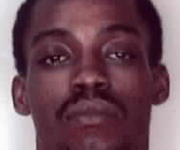 Dexter Alonzo Levingston
Mass murderer · USA · 2000
Dexter Levingston was accused of five bloody murders in October 2000 and pleade…
5 victims
Dexter Alonzo Levingston
Mass murderer · USA · 2000
Dexter Levingston was accused of five bloody murders in October 2000 and pleade…
5 victims
- Gender
- female
- Country
- USA
- Location
- Philadelphia, Pennsylvania , USA
- Date of birth
- 1848
- Age at first offence
- 40
- Characteristics
- poisoner, parricide
- Victim profile
- John Whiteling, 38 (her husband) / Bertha Whiteling, 9 (her daughter) / Willie Whiteling, 2 (her son)
- Method of murder
- Poisoning (arsenic)
- Date(s) of murder
- March 20/April 25/May 26, 1888
- Years active
- 1888
- Date of arrest
- —
- Status
-
Executed
Executed by hanging in Philadelphia on June 25, 1889
Case record: Sarah Whiteling
Background
Sarah Jane Whiteling was a 41 year old white woman from Philadelphia, Pennsylvania. She was charged with the murders by arsenic poisoning of her husband, son and daughter.
The deaths were later described as a three-part killing of her husband, her daughter Bertha, and her son Willie. An insurance existed on the lives of each victim, ranging from $200 down to $50, and the later trial reporting described the total insurances on her victims as amounting to over $350.
Sarah Jane Whiteling mounted a defense of insanity brought on by menopause, but this was rejected by the jury.
The offence
Sarah Jane Whiteling purchased a box of “Rough on Rats” arsenic poison in 1888. She did not administer poison to rats that may have infested her home, but administered it to her husband and two children, Willie and Bertha.
John Whiteling (her husband) was described as “sickly” and died first. After the husband died, the two children died.
A later report stated that Sarah Whiteling said her husband committed suicide. She gave the children the poison and then summoned a physician, but did not administer the medicine prescribed.
In her confession, Sarah Whiteling said she intended to take her own life after completing her deadly work with all the other members of the family, but her courage failed her.
In a later confession account, she said she could not go out washing with a baby and resolved to get rid of Willie. She also said she was afraid Bertha would grow up a bad woman and that she had better die, and that if she poisoned them all at once she would be found out. She later said her conscience was clear and that she would meet her dear children in heaven.
Investigation
Philadlphia Detective Frank Geyer began to investigate after being alarmed by the triple death. When he asked Sarah Jane Whiteling, she told the detective that perhaps some contamined water had killed them.
Geyer had the three bodies exhmed and autopsies performed, and high levels of arsenic were immediately found in all three. Geyer again confronted Sarah Jane Whiteling.
In the investigation account, Coroner Ashbridge’s vigilance and accidental hearing of the case aroused his suspicions, leading to exhumation of the bodies and a chemical analysis of the intestines that found arsenic in all.
Arrest
After denying all knowledge of the crime, Sarah Whiteling made a full confession when she was “sent for by the coroner.”
Trial
Sarah Jane Whiteling went on trial on Monday, November 26, 1888.
Henry Paxson and George Arundel defended Sarah Jane. The prosecution had “too much evidence against her.” After three days of testimony, the jury rejected the insanity defense and convicted Sarah Jane Whiteling of murder and sentenced her to die.
John W. Bailey, Sarah Jane’s own brother, testified that his sister had “always something wrong” about her.
Dr. Alice Bennett of the Northwestern Hospital examined Sarah Jane and reported to the Court that Sarah Jane had “low mental organization” and was “undoubtedly insane”. Drs. Charles Mills and John Chapin further testified to her insanity.
Sarah Jane’s behavior in the courtroom did not contradict the official testimony. She “gnawed her fingernails and wiped her inflamed eyes” and, in doing so, offered a portrait of a guilty woman to the impressionable jury.
A separate trial report stated that the jury brought in a verdict of murder in the first degree after being out two hours.
This report described the charge as causing the death of her nine-year old daughter by administering poison in April last. It also described the case as a series of three with which she was charged, alleging that she murdered her daughter Bertha, her husband John Whiteling, aged thirty-eight, and their baby boy William Whiteling, aged two years. That trial report stated she collected insurances on the lives of her victims amounting in the aggregate to over $350.
On the back of a letter written to her attorney, George Arundel, Sarah Jane wrote:
It is not Death to close your eyes long dimmed by tears
Sentencing
The jury rejected the insanity defense and convicted Sarah Jane Whiteling of murder and sentenced her to die.
Appeals
No appeal information was provided in the material.
Outcome
Sarah Jane Whiteling was executed by hanging in Philadelphia on June 25, 1889.
Some 30 witnesses saw the trap fall at 10:07 a.m., less than a minute after Sarah had mounted it.
In late June 1889, Sarah Jane was taken from the women’s side of Moyamensing Prison to the gallows. Shortly after 10 a.m. on June 25, 1889, the trap doors opened and Sarah Jane was hanged.
The Philadelphia Inquirer noted that Sarah Jane was “callous-hearted to the last.”
Aftermath
Many Philadelphians were appalled that a woman would be executed.
Mrs. Carrie B. Kilgore wrote to the editors of the Philadelphia Inquirer:
No human sane mother could have done these deeds to the children wich she had carefully nurtured
Kilgore’s letter also stated that Sarah Jane’s execution will lessen “the respect for women and womanhood”.
Despite these pleas to spare her life, Sarah Jane Whiteling invited death. When told of the execution’s postponement, she was bitterly dejected.
Other details
A contemporaneous report stated that John Whiteling died on March 20; Bertha on April 25; and Willie on May 26.
The deaths were described in that report as having certificates of death respectively for “inflammation of the bowels,” “gastric fever,” and “congestion of the bowels.”
In the confession account, Sarah Whiteling was said to have stated she was born in Germany and married a man in Iowa named Tom Brown, and that Brown died in prison. It also stated that in 1880 she married John Whiteling in this city. It further stated that her daughter Bertha was the child of a man named Story.
The confession account also described Sarah Whiteling as having come to Philadelphia just after the Chicago fire in 1872 and having lived in houses of assignation both in Philadelphia and in Chicago.
A trial-era description characterized her as “frivolous in manner” and stated she was only brought to the consciousness of her position when confronted with the evidence of her crime.
An inquest was stated to be held on the bodies on Friday next in the earlier investigation account.

Spotted an error, or have more information about this case?