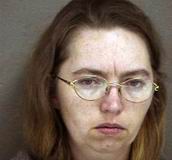
Lisa Montgomery
Murderer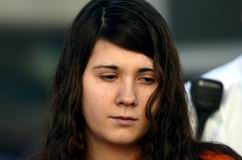 Miranda Barbour
Murderer · USA · 2013
Miranda Barbour, 19, defendant. · Elytte Barbour, 22, defendant and husband of…
100 victims
Miranda Barbour
Murderer · USA · 2013
Miranda Barbour, 19, defendant. · Elytte Barbour, 22, defendant and husband of…
100 victims
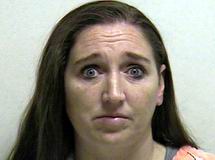 Megan Huntsman
Murderer · USA · 1996
Megan Huntsman was 40 at sentencing. She was a mother of three children who wer…
6 victims
Megan Huntsman
Murderer · USA · 1996
Megan Huntsman was 40 at sentencing. She was a mother of three children who wer…
6 victims
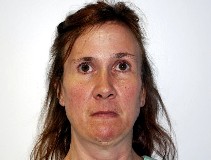 Michele Kalina
Murderer · USA · 1996
Michele Kalina pleaded guilty to murder for one of five infants she initially w…
5 victims
Michele Kalina
Murderer · USA · 1996
Michele Kalina pleaded guilty to murder for one of five infants she initially w…
5 victims
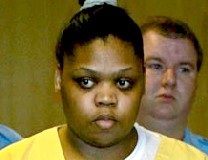 Tiffany Hall
Murderer · USA · 2006
Tiffany Hall was 24 when she was charged in September 2006. She later entered a…
5 victims
Tiffany Hall
Murderer · USA · 2006
Tiffany Hall was 24 when she was charged in September 2006. She later entered a…
5 victims
 Banita Jacks
Murderer · USA · 2007
Banita Jacks was a Washington, DC resident convicted of murdering her four daug…
4 victims
Banita Jacks
Murderer · USA · 2007
Banita Jacks was a Washington, DC resident convicted of murdering her four daug…
4 victims
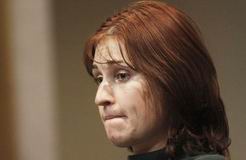 Holly Grigsby
Murderer · USA · 2011
Holly Grigsby was sentenced to life in prison without parole on July 15, 2014.…
4 victims
Holly Grigsby
Murderer · USA · 2011
Holly Grigsby was sentenced to life in prison without parole on July 15, 2014.…
4 victims
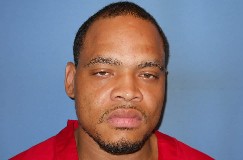 Leslie Galloway
Murderer · USA · 2008
Leslie Galloway III, also known as Leslie Galloway and Leslie “Bo” Galloway, II…
1 victim
Leslie Galloway
Murderer · USA · 2008
Leslie Galloway III, also known as Leslie Galloway and Leslie “Bo” Galloway, II…
1 victim
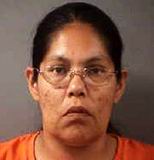 Tomahawk Whiteshield
Murderer · USA · 2013
Name: Tomahawk Whiteshield Also known as: Hope Louise Tomahawk Whiteshield; Hop…
1 victim
Tomahawk Whiteshield
Murderer · USA · 2013
Name: Tomahawk Whiteshield Also known as: Hope Louise Tomahawk Whiteshield; Hop…
1 victim
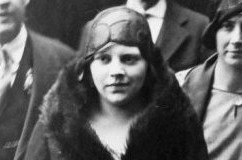 Irene Schroeder
Murderer · USA · 1929
Irene Schroeder (née Crawford) was an American criminal. · February 17, 1909 —…
1 victim
Irene Schroeder
Murderer · USA · 1929
Irene Schroeder (née Crawford) was an American criminal. · February 17, 1909 —…
1 victim
 Robert Gene Will
Murderer · USA · 2000
Robert Gene Will, II (TDCJ Number 999402) was convicted of capital murder and s…
1 victim
Robert Gene Will
Murderer · USA · 2000
Robert Gene Will, II (TDCJ Number 999402) was convicted of capital murder and s…
1 victim
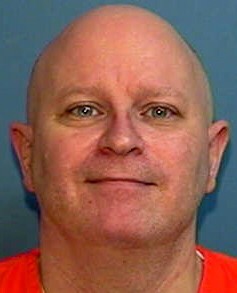 Newton Carlton Slawson
Mass murderer · USA · 1989
Newton Carlton Slawson Slawson was executed by lethal injection in Florida on M…
4 victims
Newton Carlton Slawson
Mass murderer · USA · 1989
Newton Carlton Slawson Slawson was executed by lethal injection in Florida on M…
4 victims
- Gender
- female
- Country
- USA
- Location
- Skidmore, Nodaway County, Missouri, USA
- Date of birth
- February 27, 1968
- Age at first offence
- 36
- Characteristics
- kidnapping, abuse, history of mental illness, rape
- Victim profile
- Bobbie Jo Stinnett, 23
- Method of murder
- Strangulation with a pink neon rope
- Date(s) of murder
- December 16, 2004
- Years active
- 2004
- Date of arrest
- Next day
- Status
-
Sentenced to death
Sentenced to death on April 4, 2008
Case record: United States v. Lisa M. Montgomery
Background
Lisa Marie Montgomery (born February 27, 1968) was an American woman from Melvern, Kansas. She was convicted of the 2004 murder of Bobbie Jo Stinnett.
Bobbie Jo Stinnett was born December 4, 1981, and was 23 years old at the time of the offence. Stinnett was a pregnant woman who was found brutally slain in her home in Skidmore, Missouri on December 16, 2004. The unborn child was eight months into gestation.
Victoria Jo Stinnett was born during the incident and survived the procedure. The infant was later named Victoria Jo Stinnett and was returned to the care of her father, Zeb Stinnett.
Stinnett’s mother was Becky Harper. Stinnett’s husband was Zeb Stinnett. Montgomery’s husband was Kevin Montgomery.
Bonnie Emily Brown Heady was executed in Missouri on December 18, 1953. Ethel Rosenberg was executed for espionage at Sing Sing Prison in New York State on June 19, 1953. Julius Rosenberg was referenced in relation to the execution of Ethel Rosenberg.
Lisa Montgomery was registered for the Federal Bureau of Prisons under number 11072-031. She was being held at Federal Medical Center, Carswell in Fort Worth, Texas.
The offence
Montgomery met Stinnett online in a rat terrier chatroom called "Ratter Chatter." Posing as "Darlene Fischer," Montgomery told Stinnett that she, too, was pregnant. The two women chatted online and exchanged e-mails about their pregnancies.
Montgomery then arranged a meeting at Stinnett's home under the pretext of wanting to buy a rat terrier.
On December 16, 2004, Montgomery strangled the pregnant woman in her home in Skidmore, Missouri, and cut the premature infant from her womb. Montgomery later attempted to pass the infant girl off as her own child.
Authorities later believed that Montgomery, posing as a customer, arranged to visit her alleged victim's home at about the time of the murder. There was no sign of forced entry.
During the assault, Stinnett was strangled into unconsciousness, regained consciousness while the incision was being made, struggled with her attacker, and was strangled a second time. Stinnett died of strangulation and loss of blood. Stinnett suffered cuts on the hands while defending herself and was struck on the bridge of the nose and the right side of the head during the struggle.
Forensic evidence described rope ligature markings left by a rope used to choke Stinnett twice. The pathologist testified that nylon rope stained with dried blood was "very consistent with the ligature markings here." Stinnett either had to be lying on her back with her feet drawn up or standing to get the blood on the soles, and both positions implied she was conscious. Blood already on the floor meant she was stabbed before she regained consciousness, and there was enough blood on the floor to come up between her toes and soak into her toenails.
Montgomery cried and her hands shook so much she could not hold the notebook she had written in during the trial.
Montgomery used a kitchen knife to cut the baby girl from the womb. Prosecutors said Stinnett was conscious and trying to defend herself as Montgomery used a kitchen knife to cut the baby from the womb.
The child was not found at the scene of the murder.
Both bred rat terriers and may have attended dog shows together.
Investigation
Stinnett was discovered by her mother, Becky Harper, in a pool of blood about an hour after the assault.
Harper immediately called 911, describing the wounds inflicted upon her daughter as appearing as if her "stomach had exploded".
Attempts by paramedics to revive Stinnett were unsuccessful. Stinnett was pronounced dead at St. Francis Hospital in Maryville, Missouri.
The investigation involved computer forensics that tracked Montgomery and Stinnett's online communication with one another. The investigation was also aided by the issuance of an AMBER alert to enlist the public's help and DNA testing to confirm the infant's identity. The case also drew an enormous amount of media attention.
Authorities found Montgomery and the infant a day later; the quick recovery and capture was attributed, in part, to computer forensics tracking online communication.
An FBI affidavit stated that Montgomery confessed to the crime not long after she was in custody.
Authorities learned that Stinnett was expecting the arrival of prospective buyers for a terrier at about the time of her murder.
Arrest
On December 17, 2004, Montgomery was at her farmhouse when she was arrested.
Montgomery had been arrested after spending the morning showing off the infant as her own in her hometown of Melvern, Kansas.
Trial
Montgomery was charged under the Federal Kidnapping Act, intended to make it easier for federal authorities to respond to kidnappings once they cross state lines.
She was tried and convicted for "kidnapping resulting in death," in Title 18, United States Code 1201.
U.S. attorney Todd Graves stated that federal jurisdiction is established when a person dies as a result of a kidnapping. Violations of Title 18, USC 1201 may result in capital punishment and/or any sentence up to life imprisonment.
At the trial in federal court, her defense attorneys asserted she suffered from pseudocyesis, a mental condition that causes a woman to falsely believe she is pregnant and exhibit outward signs of pregnancy.
A neuropsychologist testified that head injuries she had suffered some years before could have damaged the part of the brain which controls aggression.
Noted neuroscientist V. S. Ramachandran gave expert testimony that Montgomery suffered from severe pseudocyesis delusion. According to Ramachandran, Montgomery's childhood sexual abuse and post-traumatic stress disorder predisposed her to pseudocyesis. Ramachandran testified that Montgomery's stories about her actions fluctuated because her delusional state fluctuated. Ramachandran stated that Montgomery was suffering from a severe mental disease or defect when she committed the crime and that she was unable to appreciate the nature and quality of her acts.
Federal prosecutor Roseann Ketchmark characterized Ramachandran's theory linking the murder/kidnapping to pseudocyesis as "voodoo science."
Forensic psychiatrist Park Dietz testified for the prosecution. Dietz testified Montgomery did not suffer from pseudocyesis and dismissed Ramachandran's theory as outrageous.
During Dietz’s testimony, he said: "It is my opinion within a reasonable medical certainty that at the time of the charged homicide and kidnapping, the defendant did not suffer from a serious mental disease or defect."
Dietz had worked with prosecutors on other high-profile cases, including those of serial killer Jeffrey Dahmer and "Unabomber" Ted Kaczynski, as well as two women, Andrea Yates and Susan Smith, who had killed their own children. Andrea Yates was found not guilty by reason of insanity.
Dietz testified that Montgomery malingered her 2004 pregnancy and that Montgomery knew her actions were wrong. Dietz testified that when investigators questioned her after they found the infant in her arms at her rural Melvern home, she asked them why they were so nice to her considering what she had done.
Dietz testified Montgomery had brought a length of white rope in her coat pocket to strangle Bobbie Jo Stinnett and a stainless steel knife to cut out her baby. Dietz testified: "It's total proof this wasn't impulsive."
Dietz testified that an ultrasound photograph of a baby Montgomery had copied from the Internet, doctoring it so her name was on it and then showing it to her family, was an important part of the case. Dietz testified: "The ultrasound is one of the most important smoking guns to show this defendant knew she wasn't pregnant in 2004."
The defense rested their case at 3:45 p.m. Wednesday after Montgomery, under oath, told U.S. District Judge Gary Fenner she didn't want to testify though she understood she had the right to do so.
Jurors convicted Montgomery on October 22, 2007. The jury recommended a death sentence on October 26, 2007.
Judge Gary A. Fenner formally gave the death sentence to Montgomery.
The jury deliberated for about four hours before rejecting Montgomery’s insanity defense.
Federal prosecutor Roseann Ketchmark called the pseudocyesis claim “voodoo science” during closing arguments and said: "It’s not pseudocyesis or post-traumatic stress disorder," and "And even if you wrap them up and put delusions around them, it’s not insanity." Ketchmark also said: "She knows she’s not pregnant," and "It’s no delusion. It’s deceit and manipulation."
Defense attorneys asserted Montgomery was suffering from pseudocyesis, post-traumatic stress disorder, and severe mental illness linked to sexual abuse in her childhood. They argued she entered a dreamlike state when the killing took place.
During the trial, U.S. attorney John F. Wood made a statement that the only good thing that comes from the tragedy is that the infant was healthy and reunited with her family. Wood said: "The only good thing that comes from this tragedy is that little Victoria is a healthy baby and is reunited with her family," as reported.
After initially denying the crime, Montgomery told investigators she had taken a knife, rope and umbilical cord clamp with her to Stinnett’s home. Montgomery said she thought she was leaving when “something out of character” happened and “then this took place.”
People and testimony during the trial
Dr. Mary Case, chief medical examiner for St. Louis County, Missouri, testified as a forensic pathologist.
Dr. Park Dietz testified as a rebuttal witness called by the U.S. attorney.
Dr. Daniel Martell testified for the defense as a forensic psychologist. Martell said Montgomery scored well below being psychotic. Martell testified Montgomery was cunning and manipulative, was a pathological liar, lacked remorse, was irresponsible, failed to accept responsibility and exhibited promiscuous sexual behavior. Martell acknowledged she was the victim of sexual assaults as a young teen by a stepfather.
Martell testified Montgomery had poor behavioral controls, was impulsive and lacked empathy. Martell testified that she pretended to have a memory problem and a mood disorder, including depression.
During testimony referenced in the trial coverage, an officer who went to the Montgomery house testified there were dog and rodent droppings inside.
Dr. Park Dietz testified Montgomery was sterilized in 1990 and that she falsely reported being pregnant after the tubal ligation. Dietz testified Montgomery told her husband, children, other family members and friends she was pregnant and would deliver the child within days of when Stinnett was killed and her baby was kidnapped.
Dr. Vilayanur S. Ramachandran, director of the Center of Brain and Cognition at the University of California in San Diego, testified for the defense.
Fred Duchardt was identified as lead defense attorney.
Matt Whitworth was identified as assistant U.S. attorney during testimony.
Jason Dawson testified as a rat terrier breeder on Dec. 15, 2004, when he introduced Montgomery, using an alias, to Stinnett via the internet. Dawson testified that an e-mail from "Darlene Fischer," Montgomery's alias, indicated a desire to get a rat terrier and identified herself as wanting a rat terrier. Dawson testified his email address was posted on a web site focusing on the breed and he passed along Stinnett's e-mail address and phone number to Fischer and suggested she buy a red dog in a litter of rat terrier pups that Stinnett had.
Dawson testified: "I felt betrayed and absolutely sickened," and "Bobbie Jo was such an incredible young lady. It yanked everything in my heart right out."
Jennifer Sage testified that she was working in the county clerk's office in the Osage County Courthouse in Lyndon, Kansas, when Montgomery and her husband showed off the baby there on Dec. 17, 2004. Sage testified: "My suspicion was that (Montgomery had been) in Skidmore, that she did kill Bobbie Jo, and that she took that child and was passing it off as her own." Sage testified: "Knowing what I thought was going on, it was too weird for me."
Kevin Montgomery testified. He testified that he saw a sport utility vehicle with Shawnee County, Kansas license plates parked a quarter mile from his home when he drove up in a red Toyota Corolla. He testified that officers from that vehicle asked to question the Montgomerys because they heard the couple had a newborn baby in the house, referencing the Amber alert. Kevin Montgomery testified about Lisa Montgomery telling him she had been shopping in Topeka and gone into labor and delivered the infant at the Birth and Growth Center at S.W. 6th and Washburn.
Kevin Montgomery testified about the questions asked during questioning, including an assistant U.S. attorney asking: "Did you have anything to do with the death of Bobbie Jo Stinnett?" and Kevin answering: "No." Kevin also testified he was asked: "The Montgomerys went around Melvern showing off the baby on Dec. 17, 2004, when in fact Lisa Montgomery had killed Bobbie Jo Stinnett the day before, correct?" and he answered: "Correct."
Kevin Montgomery testified he believed Lisa Montgomery’s pregnancy claims from 2001 to 2004 because her abdomen became large, her periods stopped, she was cranky, she had morning sickness, she took prenatal vitamins and her breasts were enlarged, and that he admitted she lied to him when she told him she was pregnant. When asked: "Yet you still stand by your wife?" Kevin answered: "Do I love my wife? Yes."
Kevin Montgomery testified that the two were wed in 2000 and remained married.
Sentencing
On October 26, 2007, the jury recommended the death penalty.
On April 4, 2008, a judge upheld the jury's recommendation for death.
A federal death sentence was imposed by U.S. District Judge Gary A. Fenner on April 4, 2008.
U.S. Attorney John Wood made a statement at sentencing. Wood said: "I hope that today's sentence will bring some measure of closure to the family of Bobbie Jo Stinnett," and "Seeking the ultimate penalty is not something we take lightly, but this outcome serves the cause of justice and honors the memory of Bobbie Jo Stinnett."
Montgomery declined Fenner's offer to speak before her sentencing and sat quietly as Fenner announced the death sentence.
Duchardt stated: "The thing that happened here is horrible and we can't say anything differently about that and wouldn't even try, but what we've tried to express to everybody who would listen is just the sweet person she is."
Duchardt also said: “There's so much in the (court) tapes about Lisa's sorrow about what happened, but the trouble with her mental condition is that she can't even go back there, can't even resurrect those memories of what happened," as reported.
Bonnie Emily Brown Heady was executed in Missouri on December 18, 1953, and Ethel Rosenberg was executed on June 19, 1953; the comparison was mentioned in the sentencing-related discussion.
Appeals
On March 19, 2012, the U.S. Supreme Court denied Montgomery's certiorari petition.
Federal appeals courts upheld Montgomery’s conviction and sentence in 2011.
A later court filing described friction among original defense team members and contended that Montgomery’s conviction and death sentence should be set aside and a new federal trial ordered. The filing described a dinner meeting in November 2005 at a Kansas City restaurant in which defense team conflicts occurred between David Owen, Susan Hunt and Judy Clarke. The filing included statements attributed to Clarke and Hunt and recalled by Owen.
Judy Clarke was described as a federal defender who had saved murderers from death row, including Susan Smith, Theodore Kaczynski, and Eric Rudolph.
The filing stated that Fenner removed Clarke after hearing complaints about conflicts in April 2006. Hunt dropped out a few weeks later.
Assistant U.S. Attorney Roseann A. Ketchmark characterized collateral appeal arguments as "second-guessing" of trial attorneys and wrote: "Montgomery gave her defense team virtually nothing to work with."
The filing described that Fenner appointed John P. O’Connor and Fred Duchardt to assist Owen in May 2006. It stated that O’Connor was a former prosecutor and that some would argue she had a local “dream team.” It also described that O’Connor and Duchardt offered a pseudocyesis insanity defense in the trial.
The later motion seeking a new trial attributed to Lisa Nouri described the pseudocyesis defense as "the exotic and misguided" and argued that the true story of Lisa Montgomery’s life, history of abuse, mental illness and brain damage should have been presented. The filing quoted language that the motion said.
Deborah Denno said: “The fact that he was bringing in neuroscience evidence speaks well for him,” and “He’s a sophisticated lawyer.”
A later discussion noted that Fenner said legal bills for the appeal were nudging close to a $550,000 cap he established earlier and that he trimmed one lawyer from Montgomery’s appeal team.
Montgomery wrote in an affidavit: “The news that the court is trying to take away one of my lawyers has shaken my confidence in how my case will be handled from here on out.”
Outcome
Montgomery was convicted of kidnapping resulting in death. She was sentenced to death.
The infant, since named Victoria Jo Stinnett, was reunited with her family, including her father Zeb.
Other details
Montgomery met Stinnett in a rat terrier chatroom called "Ratter Chatter." Montgomery used the alias "Darlene Fischer."
Stinnett was discovered in a pool of blood about an hour after the assault and was pronounced dead at St.
Stinnett's baby was brought to Melvern, Kansas, by her abductor and was claimed by Montgomery as her own. Authorities found them a day later.
Montgomery had a tubal ligation in 1990. Patty Baldwin, a sister of Lisa Montgomery, told Kevin Montgomery that Lisa Montgomery could not have children because she had had a procedure done in October 1990 to make her sterile after she had a difficult pregnancy when she was 22.
The defense portrayed Montgomery’s internet searches about Stinnett and researching different aspects of child birth as evidence that she believed she was pregnant, while prosecutors called them proof of premeditation.
The defense said Montgomery’s PTSD stemmed from physical and sexual abuse as a child and a teen.
Forensic psychiatrists and psychologists discussed Montgomery’s mental state, including claims of bipolar disorder and major depression and scoring related to psychosis tests.
The trial coverage also referenced that Montgomery’s attorneys planned to argue whether she deserved the death penalty.
It was stated that the case was detailed in the 2006 books Baby Be Mine by Diane Fanning and Murder in the Heartland by M. William Phelps.
The case was referenced as "fetal abduction case" and discussed alongside a later 2015 appeal-related conflict account.
"I stated matter-of-factly that he did not know enough to be the leader of the team and that he needed to relinquish control …. I explained that the attorney on the team with the least experience should not be in control of the case." — Judy Clarke “Ms. Clarke told Mr. Owen that he should not be setting priorities and didn’t have enough experience to make decisions about priorities.” — Susan Hunt Owen recalled Clarke saying: “You are too stupid to set priorities and don’t have enough trial experience to make any decisions.” — David Owen

Spotted an error, or have more information about this case?