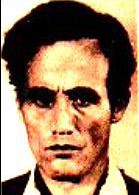
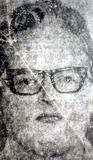
William MacDonald
Serial killer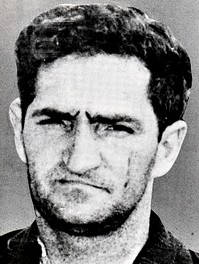 Eric Edgar Cooke
Serial killer · Australia · 1959
Eric Edgar Cooke (25 February 1931 – 26 October 1964) was an Australian serial…
8 victims
Eric Edgar Cooke
Serial killer · Australia · 1959
Eric Edgar Cooke (25 February 1931 – 26 October 1964) was an Australian serial…
8 victims
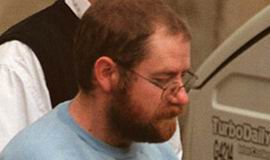 John Justin Bunting
Serial killer · Australia · 1992
John Justin Bunting (born 4 September 1966 in Inala, Queensland) was an Austral…
11 victims
John Justin Bunting
Serial killer · Australia · 1992
John Justin Bunting (born 4 September 1966 in Inala, Queensland) was an Austral…
11 victims
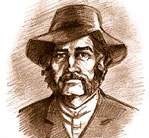 John Lynch
Serial killer · Australia · 1835
John Lynch murdered multiple people in the Berrima district in New South Wales,…
10 victims
John Lynch
Serial killer · Australia · 1835
John Lynch murdered multiple people in the Berrima district in New South Wales,…
10 victims
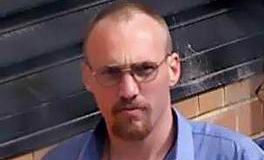 Robert Joe Wagner
Serial killer · Australia · 1992
Robert Joe Wagner (born 28 November 1971 in Parramatta, New South Wales) was an…
10 victims
Robert Joe Wagner
Serial killer · Australia · 1992
Robert Joe Wagner (born 28 November 1971 in Parramatta, New South Wales) was an…
10 victims
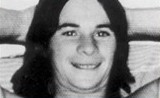 Christopher Worrell
Serial killer · Australia · 1976
Christopher Worrell was described as a rapist and was later killed in a car acc…
7 victims
Christopher Worrell
Serial killer · Australia · 1976
Christopher Worrell was described as a rapist and was later killed in a car acc…
7 victims
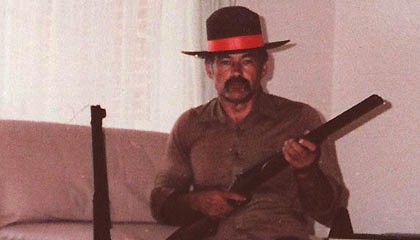 Ivan Milat
Serial killer · Australia · 1989
Ivan Milat was convicted of seven murders and received multiple life sentences.…
7 victims
Ivan Milat
Serial killer · Australia · 1989
Ivan Milat was convicted of seven murders and received multiple life sentences.…
7 victims
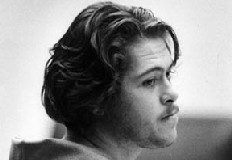 Gregory Sturm
Murderer · USA · 1990
Gregory Allen Sturm · Aug. 19, 1990 — Gregory A. Sturm convicted in the deaths…
3 victims
Gregory Sturm
Murderer · USA · 1990
Gregory Allen Sturm · Aug. 19, 1990 — Gregory A. Sturm convicted in the deaths…
3 victims
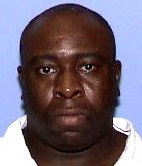 Gregory Ruseau
Murderer · USA · 2001
Gregory Russeau (Gregory Lynn Russeau, “Gregory Russeau, Appellant”) was receiv…
1 victim
Gregory Ruseau
Murderer · USA · 2001
Gregory Russeau (Gregory Lynn Russeau, “Gregory Russeau, Appellant”) was receiv…
1 victim
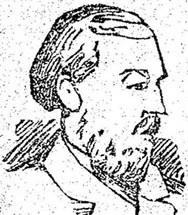 William Henry Bury
Murderer · United Kingdom · 1888
William Henry Bury was executed by hanging in Dundee on April 24, 1889. He was…
2 victims
William Henry Bury
Murderer · United Kingdom · 1888
William Henry Bury was executed by hanging in Dundee on April 24, 1889. He was…
2 victims
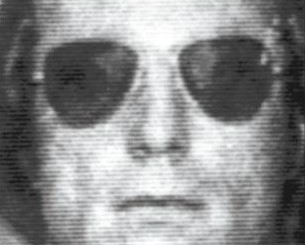 Frank James Coppola
Murderer · USA · 1978
Frank James Coppola (1944–August 10, 1982) was a former police officer from Por…
1 victim
Frank James Coppola
Murderer · USA · 1978
Frank James Coppola (1944–August 10, 1982) was a former police officer from Por…
1 victim
- Gender
- male
- Country
- Australia
- Location
- Sydney, New South Wales, Australia
- Date of birth
- 1926
- Age at first offence
- 35
- Characteristics
- mutilation, serial rapist, torture
- Victim profile
- Amos Hurst, 55 / Alfred Reginald Greenfield, 41 / Ernest William Cobbin, 41 / Frank Gladstone McLean / Patrick James Hackett, 42
- Method of murder
- St abbing with knife
- Date(s) of murder
- 1961 - 1962
- Years active
- 1961–1962
- Date of arrest
- May 1963
- Status
-
Released
Sentenced to life imprisonment with the strong recommendation that he never be released in 1963; he was held in Sydney’s Long Bay Correctional Centre and later transferred to Cessnock prison’s protective custody section and Morriset Home for the Criminally Insane
Case details
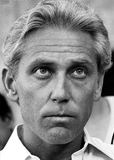
William MacDonald was an Australian serial murderer who was dubbed the “Sydney Mutilator”. He murdered four male victims in Sydney, Australia, between June 1961 and April 1963.
He stabbed his victims repeatedly, and mutilated their genitals. The victims were men, and the murders took place in public locations including public bath houses and public toilets.
MacDonald was convicted of four counts of murder, sentenced to prison for life, and received a strong recommendation that he never be released. He was later held in Long Bay Correctional Centre, transferred to Morriset Home for the Criminally Insane, and was later in the protective custody section of Cessnock prison.
Timeline
- June 4, 1961 — A man's nude, mutilated body was found at the Sydney Domain Baths, with the genitals hacked off.
- November 21, 1961 — A man’s body was found stabbed and mutilated in a public restroom at Moore Park.
- March 31, 1962 — Frank Gladstone McLean was found mortally wounded in suburban Darlinghurst after an assault by a man walking with his wife and child; McLean died from his injuries without providing information about his attacker.
- June 6, 1962 — Patrick James Hackett was killed at a wine saloon in Pitt Street, Sydney, after being brought back to MacDonald’s residence.
- April 22, 1963 — A former co-worker sighted MacDonald on a Sydney street.
- September 1963 — The trial began; MacDonald pleaded not guilty on the grounds of insanity.
- 1963 — MacDonald was sentenced to prison for life with the strong recommendation that he never be released.
The offence
Method
MacDonald’s killings involved violently stabbing victims dozens of times about the head and neck with a long-bladed knife. He severed victims’ testicles and penis. The genitals were removed and were sometimes placed in plastic bags and disposed of afterward.
Victims were lured into dark places including parks, public bath houses, and public toilets, then attacked.
Victims and killings
Amos Hurst (Victim 1)
MacDonald befriended a fifty-five-year-old man named Amos Hurst outside the Roma Street Transit Center. After a long drinking session at a local pub, they went back to Hurst’s apartment where they consumed more alcohol. When Hurst became intoxicated, William began to strangle him. Hurst hemorrhaged, with blood pouring from his mouth onto MacDonald’s hands. MacDonald punched Hurst in the face, killing him. Five days later, MacDonald found Hurst’s name in the obituary column, which said Amos Hurst had died accidentally.
Alfred Reginald Greenfield (Victim 2)
On June 4, 1961, police were summoned to the Sydney Domain Baths. A man’s nude corpse was found savagely stabbed over 30 times with his genitalia completely severed from his body. Alfred Greenfield became the second victim claimed by the killer soon to be dubbed the “Sydney Mutilator”.
Alfred Reginald Greenfield was sitting on a park bench in Green Park, across the road from St Vincent’s Hospital in Darlinghurst. MacDonald offered Greenfield a drink and lured him to the nearby Domain Baths on the pretext of more alcohol. MacDonald waited until Greenfield had fallen asleep, then stabbed Greenfield approximately thirty times. The ferocity of the first blow severed arteries in Greenfield’s neck.
MacDonald pulled down Greenfield’s pants and underwear, lifted the victim’s testicles and penis, and severed them from the scrotum. MacDonald threw the genitals into Sydney Harbour.
William Cobbin (Victim 3)
A third victim, William Cobbin, was found dead in a public toilet at Moore Park. On the night of the killing, MacDonald met Cobbin, a fifty-five-year-old man, while walking down South Dowling Street. MacDonald lured his victim to Moore Park and drank beer with him in a public toilet.
MacDonald put on a plastic raincoat. Using an uppercut motion, he struck Cobbin in the neck with a knife, severing his jugular vein. Blood splattered all over MacDonald’s arms, face and plastic raincoat. Cobbin tried to defend himself by raising his arms. Even after his victim died, MacDonald continued to stab him multiple times.
Once the toilet cubicle was covered in blood, MacDonald pulled down Cobbin’s pants, lifted Cobbin’s penis and testicles, and severed them. MacDonald put the genitals into a plastic bag along with his knife and departed the scene. On the way home, he washed the blood off his hands and face.
Frank Gladstone McLean (Victim 4)
On March 31, 1962, in suburban Darlinghurst, Frank McLean was found mortally wounded after an unfinished assault by a man walking with his wife and child. The man found McLean still breathing but bleeding heavily and went to get police.
On that day, MacDonald bought a knife from the Mick Simmons sports store in Sydney. That night he left the Oxford Hotel in Darlinghurst and followed McLean down Bourke Street past the local police station. MacDonald initiated conversation and suggested a drinking session around the corner in Bourke Lane.
As they entered Bourke Lane, MacDonald plunged his knife into McLean’s throat. McLean tried to fight off the attack but was too intoxicated. MacDonald stabbed him once again in the face and then punched him, forcing him off balance. When McLean fell to the ground, MacDonald stabbed him about the head, neck, throat, face, chest, belly and abdomen until he was interrupted by a young family approaching. MacDonald hid himself when he heard voices and a baby’s cry.
After the family left to get police, MacDonald returned to the barely alive McLean and continued to stab him until he was dead. He pulled down McLean’s trousers and sliced off his genitals. MacDonald put the genitals into a plastic bag, took them home, and disposed of them the next day.
Police thought the killer could have been a deranged surgeon due to the manner in which McLean’s genitals were removed. Doctors were investigated.
Patrick James Hackett (Victim 5)
MacDonald went to a wine saloon in Pitt Street Sydney. While at the bar, he met forty-two-year-old James Hackett, described as a thief and derelict who had recently been released from prison. They went back to MacDonald’s residence and continued to drink alcohol. After a short period, Hackett fell asleep on the floor. MacDonald used a boning knife from his delicatessen, stabbed Hackett in the neck, and the blow went straight through. After Hackett woke up and tried to shield the next blow, the knife cut MacDonald’s hand severely.
MacDonald then brought the knife down into Hackett’s heart, killing him instantly, and continued to stab the victim until he stopped for breath. Hackett’s blood was splattered all over the walls while MacDonald sat in a pool of blood next to the victim’s body.
MacDonald removed Hackett’s genitals. The knife was blunt due to the blade passing through Hackett’s bones. MacDonald hacked around the penis and testicles a few times and then gave up because he was too tired to go downstairs to get another knife. He sat head to toe covered in blood and fell asleep where he sat.
When MacDonald woke the following morning, he found himself lying next to the victim’s body covered in sticky, drying blood. The pools of blood had soaked through the floorboards and almost onto the counter in his shop downstairs.
After cleaning himself of blood, MacDonald went to the hospital and had the wound in his hand stitched by a doctor. He told the doctor that he had cut himself in his shop. He then cleaned up pools of blood and dragged the dead Hackett underneath his shop.
MacDonald became paranoid he would be caught, thinking police would come and see the blood-stained floorboards and walls. He fled to Brisbane.
Three weeks later, residents complained about a putrefying smell from a shop owned by MacDonald, purchased under an assumed name (Alan Edward Brennan). Neighbors called the health department, which called the police. The police kicked the front door in, and the smell led them to a rotting corpse beneath the shop. Further investigation uncovered a nude body so decomposed it could not be identified. The body belonged to someone in their forties, the same age as the missing Brennan, and the body was buried on hospital grounds.
Later, the corpse was identified as James Hackett rather than William MacDonald or Alan Brennan.
Investigation
Police received reports of bodies being found in public bath houses and public toilets, with victims stabbed and mutilated. Police circulated pictures of William MacDonald seeking someone to recognize him.
At a train station in Melbourne, two porters recognized MacDonald. He was picked up by police and admitted to the four murders.
Police later reviewed clues from the corpse mistaken as Brennan. After media coverage of the “walking corpse” case, police reopened the investigation and exhume the corpse. Police examined fingerprints and identified the body as belonging to James Hackett, not William MacDonald.
Police also used an identikit picture of MacDonald that was circulated in every newspaper in the nation.
Arrest and custody
MacDonald took a job on the Melbourne railways and tried to disguise himself by dying his hair and growing a mustache, but he was recognized by workmates. When MacDonald was about to collect his pay for that week, the police arrived and took him into custody. Under questioning, MacDonald readily admitted to the killings and blamed them on an irresistible urge to kill.
Trial
Plea and defences
The trial began in September 1963. MacDonald pleaded not guilty on the grounds of insanity.
MacDonald admitted to the murders during questioning and later spoke in detail about the killings during trial testimony. Some jurors fainted during the trial when MacDonald spoke in detail about the murders and mutilation.
MacDonald described his motive as revenge, claiming he was the victim of a teenage homosexual rape and that he was inflicting revenge on victims chosen at what appeared to be random.
A jury found him guilty of four counts of murder. The jury also chose not to go with public opinion and found him to have been sane at the time of the murders.
Sentencing
Before passing sentence, Mr Justice McLennan said this was the most barbaric case of murder and total disregard for human life that had come before him in his many years on the bench. MacDonald showed no signs of remorse and made clear that, if he were free, he would go on killing as often as the urges came about.
MacDonald was sentenced to prison for life with the strong recommendation that he never be released.
Appeals
No appeals were described.
Outcome
MacDonald was convicted of four counts of murder and sentenced to life imprisonment, with the strong recommendation that he never be released.
He was later transferred to Morriset Home for the Criminally Insane after being declared insane following an attack on another prisoner almost to death with a slops bucket in Long Bay Jail.
He was later found sane enough to be released back into mainstream prison society in 1980. He was in protective custody at Cessnock prison and lived a reclusive existence, reading and listening to classical music.
Aftermath
In prison, MacDonald was known as Bill or “old Bill”. He was described as institutionalised after decades in custody and was considered the longest current serving inmate in the New South Wales prison system at the time described. He also reportedly had staff records marked “Likely to offend again”.
A later interview described MacDonald’s views about prison and safety outside prison. He described himself as homosexual and said he had never had sex with a woman or anyone for at least 37 years.
MacDonald was reportedly in Long Bay Hospital as of 2007.
Other details
Birth and aliases
William MacDonald was born in Liverpool, England, in 1924.
MacDonald used an assumed name, Alan Edward Brennan, in Sydney. He also used the name “David Allan” in Melbourne and was born described as Allan Ginsberg in at least one account. His hair and moustache were used as disguises when he worked on the Melbourne railways.
Prior events and background
MacDonald said that he was raped in an air-raid shelter by a corporal in his army service. He said that, as a result, he began to consider homosexuality as an option and later became an active homosexual, soliciting men in public toilets and pubs.
MacDonald emigrated from England to Canada in 1949 and then to Australia in 1955.
Shortly after his arrival in Australia, he was arrested and charged for touching a detective’s penis in a public toilet. For this he was placed on a two-year good behavior bond.
MacDonald was classed as Australia’s first true serial murderer in the narrative provided.
Workplace and life
He was enlisted in the army and transferred to the Lancashire Fusiliers.
He lived in a residence above a store in Burwood, New South Wales, where he made sandwiches and sold various small goods.
He was employed as a letter sorter with the Postal Department under an assumed name.
He also took a job on the Melbourne railways.
Statements and quoted material
Two quoted lines about the mysterious killer and the case were included:
- “They caught the Mutilator at the airport yesterday. He was looking for Ansett’s (a local airline) hangars (hangers)”
- “To find that bloke’s body parts in the harbour they had to send down four (fore) skin divers”
A quote attributed to MacDonald in later described circumstances was included:
- “I am institutionalised now,”
- “I have no desire to go and live on the outside. I wouldn’t last five minutes. I am too old and besides, I have everything I could ever want where I am.”
In a coroner’s quotation about the circumstances of the corpse found under the shop, the following was included verbatim:
“It seems extraordinary that the body of Mr Brennan should have been found in the position and in the condition in which it was found. According to the evidence, the deceased had neither his trousers on, nor his boots, or shoes, or singlet. He was clad only in his socks, with his coat and trousers alongside him. Nothing was found to indicate to any degree of certainty that the deceased had taken his own life, even if it were his intention to do so. It seems to me an extraordinary thing that the deceased should have gone under the house to commit an act that would result in his death. It could have been that the deceased was the victim of foul play, although the police report said there was nothing to indicate foul play. But I cannot altogether exclude that possibility.”
Spotted an error, or have more information about this case?