Josefa Rodriguez
Murderer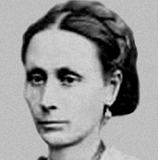 Lydia Sherman
Murderer · USA · 1864
Lydia Sherman was also known as “The Derby Poisoner.” She was born in 1824 in B…
10 victims
Lydia Sherman
Murderer · USA · 1864
Lydia Sherman was also known as “The Derby Poisoner.” She was born in 1824 in B…
10 victims
 Martha Grinder
Murderer · USA · 1864
Martha Grinder was convicted of murder in the first degree for poisoning Mary C…
2 victims
Martha Grinder
Murderer · USA · 1864
Martha Grinder was convicted of murder in the first degree for poisoning Mary C…
2 victims
 Ann Bilansky
Murderer · USA · 1859
Ann Bilansky was executed by hanging in Minnesota on March 23, 1860 for the ars…
1 victim
Ann Bilansky
Murderer · USA · 1859
Ann Bilansky was executed by hanging in Minnesota on March 23, 1860 for the ars…
1 victim
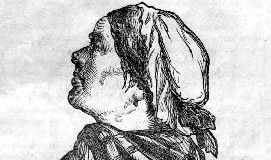 Bridget Durgan
Murderer · USA · 1867
Bridget Durgan was an Irish domestic who was hanged on August 30, 1867. She was…
1 victim
Bridget Durgan
Murderer · USA · 1867
Bridget Durgan was an Irish domestic who was hanged on August 30, 1867. She was…
1 victim
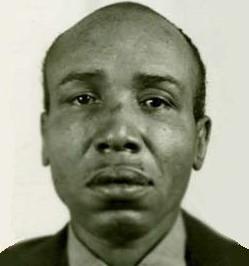 Jake Bird
Serial killer · USA · 1930
October 30, 1947 — Jake Bird broke into the home of Bertha Kludt and her daught…
44 victims
Jake Bird
Serial killer · USA · 1930
October 30, 1947 — Jake Bird broke into the home of Bertha Kludt and her daught…
44 victims
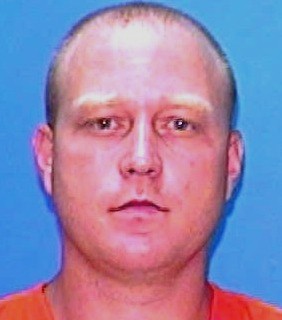 Eric Simmons
Murderer · USA · 2001
Name: Eric Simmons · Date of birth: 11/23/74 · Supreme Court of Florida opinion…
1 victim
Eric Simmons
Murderer · USA · 2001
Name: Eric Simmons · Date of birth: 11/23/74 · Supreme Court of Florida opinion…
1 victim
 Ricky Don Blackmon
Murderer · USA · 1987
Ricky Don Blackmon was convicted of capital murder and sentenced to death by le…
3 victims
Ricky Don Blackmon
Murderer · USA · 1987
Ricky Don Blackmon was convicted of capital murder and sentenced to death by le…
3 victims
 Jose Luis Calva Zepeda
Serial killer · Mexico · 2004
Jose Luis Calva Zepeda was an aspiring horror writer in Mexico City who was acc…
3 victims
Jose Luis Calva Zepeda
Serial killer · Mexico · 2004
Jose Luis Calva Zepeda was an aspiring horror writer in Mexico City who was acc…
3 victims
 Anton Probst
Mass murderer · USA · 1866
Anton Probst was born in Germany in 1843 and came to the United States in 1863,…
8 victims
Anton Probst
Mass murderer · USA · 1866
Anton Probst was born in Germany in 1843 and came to the United States in 1863,…
8 victims
 Velma Ogden-Whitehead
Murderer · USA · 2005
Velma Ogden-Whitehead pleaded guilty to first-degree murder in the 2005 killing…
1 victim
Velma Ogden-Whitehead
Murderer · USA · 2005
Velma Ogden-Whitehead pleaded guilty to first-degree murder in the 2005 killing…
1 victim
- Gender
- female
- Country
- USA
- Location
- San Patricio County, Texas, USA
- Date of birth
- December 30, 1799?
- Age at first offence
- 64
- Characteristics
- robbery
- Victim profile
- John Savage
- Method of murder
- Hitting with an axe
- Date(s) of murder
- August 1863
- Years active
- 1863
- Date of arrest
- —
- Status
-
Executed
Executed by hanging on November 13, 1863
Case record: Josefa “Chipita” Rodriguez
Status and identifiers
Josefa “Chipita” Rodriguez was executed by hanging on November 13, 1863.
She was also known as Josefa “Chipita” Rodriguez and “Chipita.” “Chipita” was described as a nickname derived from Josefa. Her last words were quoted as: "No soy culpable" (I am not guilty).
Background
Josefa “Chipita” Rodriguez was born December 30, 1799, or about that date, in Mexico. She was described as a Mexican-American woman from the South Texas town of San Patricio.
Her father was Pedro Rodríguez. He was said to have fled from Antonio López de Santa Anna and joined Texas forces, after which he was killed in the fighting. Josefa “Chipita” Rodriguez was said to have moved with her father to San Patricio de Hibernia, Texas, while quite young.
For many years after Rodríguez’s death, she was described as having furnished travelers with meals and a cot on the porch of her lean-to shack on the Aransas River.
Various stories circulated about her early life. Some stories said she married young and had a son, and that her husband, a white trader, left taking her young son with him. Other stories said Juan Silvera may have been her illegitimate son, and other accounts said she may have had one or maybe two sons.
The offence
Rodriguez was accused of robbing and murdering a trader named John Savage with an axe.
Savage was described as having stayed the night of August 23, and as having been murdered with an axe. Two servants from the Welder ranch, washing clothes in the river, found Savage’s body in a burlap bag. Savage’s head was said to have been split with an axe, and his body was discovered in a burlap bag.
Rodriguez was accused on circumstantial evidence, and the motive for the killing was supposed to be robbery. Savage’s $600 in gold was described as being found down river or in his saddlebags, and in one account it was described as untouched.
Blood was found on Rodriguez’s porch. She said the blood was from a chicken she had butchered. In one account, the sheriff found blood on her porch and assumed Savage had been hacked to death with the same ax that Rodriguez split her wood.
Investigation
Sheriff “Pole” Means investigated the case. His duty was described as investigating the case.
The gold was found down river, and Savage’s body was discovered in a burlap bag. Recovery of the gold from the Aransas River north of San Patricio, where Savage’s body was found in a burlap bag, was described as raising substantial doubt about the motive.
Rodriguez maintained her innocence.
A witness to the hanging claimed to have heard a moan from the coffin; the coffin was placed in an unmarked grave.
Arrest
Rodriguez and Juan Silvera were arrested. In one account, Sheriff Means arrested them on the spot after the body was found close to Rodriguez’s inn.
Trial
Rodriguez and Juan Silvera were indicted on circumstantial evidence.
They were tried before the 14th District Court judge Benjamin F. Neal at San Patricio. In one account, the trial was said to have been before Fourteenth District Court judge Benjamin F. Neal at San Patricio.
Rodriguez refused to testify in her defense and remained silent throughout the trial. She pleaded not guilty, and in one account her sole defense was the words "not guilty." She would say nothing, and in multiple accounts she was quoted with: "No soy culpable."
The prosecutor was named as John S. Givens, with no relation to Murphy Givens. The trial was described as quick and as speedy and questionable. The prosecutor John S. Givens and judge Benjamin F. Neal presided.
Sheriff Means served on the grand jury that indicted her. The trial jury was described as being people rounded up off the streets, and there was said to have been no jury panel for the trial. Four members of the jury had been indicted for felonies, one for murder, and at least three members of the grand jury also served on the trial jury. The foreman of the grand jury was described as the sheriff who arrested her, and the trial jury foreman was described as a close associate of the sheriff.
Silvera was found guilty of second-degree murder, and Rodriguez was found guilty of first-degree murder.
The jury urged clemency for Rodriguez, but Judge Neal did not agree and ordered her executed.
Some accounts stated that trial records were burned in a fire in 1889, except for a week of transcripts, and that court records were burned in a courthouse fire or lost in a flood. There were described discrepancies in trial accounts, and it was stated that there was no list of qualified jurors and the sheriff was instructed to produce "at least twenty qualified men," producing closer to thirty.
In one account, there was no appeal or motion in arrest of judgment, and although some talk of a retrial may have occurred, none took place.
Sentencing
Judge Benjamin F. Neal ordered Rodriguez executed. The jury recommended mercy, and Neal ordered her executed.
Rodriguez was hanged from a mesquite tree on Friday, November 13, 1863.
In one account, Rodriguez was described as being held at sheriff William Means’s home in Meansville, where two attempts by a lynching mob were thwarted. Another account described local children bringing her candy and shucks to make cigarettes, and that she was described as "very old" or "about ninety," but probably in her sixties. Those details were not tied to a distinct dated event in the material.
Appeals
There was no appeal or motion in arrest of judgment described in one account, and no retrial took place in the material provided.
Outcome
Rodriguez was executed by hanging on November 13, 1863.
After the hanging, the hangman cut her down and buried her in the cypress coffin at the foot of a mesquite. The burial was described as an unmarked grave in connection with the coffin moan.
Aftermath and legacy
A century later, on June 13, 1985, the Texas Legislature passed a resolution noting that Rodriguez did not receive a fair trial. The resolution was signed by Governor Mark White on June 13, 1985. State senator Carlos Truan of Corpus Christi asked the Texas legislature to absolve Chipita Rodríguez of murder.
Rodriguez was described as being the last woman executed in Texas before Karla Faye Tucker, preceding her by over 130 years. Another account stated that she was for many years considered the only woman legally hanged in Texas.
Rodriguez was the subject of two operas, numerous books, newspaper articles, and magazine accounts.
Rachel Bluntzer Hebert’s epic-length poem “Shadows on the Nueces” and Teresa Palomo Acosta’s poem “Chipita” both portrayed Rodriguez as a heroine.
In 1993, the University of Texas music department performed the opera, "Chipita Rodriguez", composed by Texas A&M University-Corpus Christi professor Lawrence Weiner.
In 2010, a screenplay was written by Del Mar College and Texas A&M University-Corpus Christi student screenwriter Cary Cadena.
Rodriguez was described as a folk legend and her ghost was said to haunt San Patricio, especially when a woman was to be executed. She was pictured as a spectre with a noose around her neck, riding through the mesquite trees or wailing from the riverbottoms. In one account, from the 1930s there were numerous alleged sightings of her ghost along the Aransas River where she was hanged.
The Corpus Christi paper, The Ranchero, expressed sentiments including: "Mexicans should not have the same rights in this state as Americans." It complimented the judge and jury for finding Chipita guilty and said, "We are decidedly pleased with our neighbors in San Patricio."
Timeline
- December 30, 1799 — Josefa “Chipita” Rodriguez was born in Mexico.
- August 23, 1863 — John Savage stayed the night at Rodriguez’s inn before disappearing.
- November 13, 1863 — Rodriguez was executed by hanging.
- June 13, 1985 — The Texas Legislature passed a resolution noting Rodriguez did not receive a fair trial; it was signed by Governor Mark White.
Other details
A horse trader named John Savage was also described as a “horse trader” in the material.
In one account, the newspaper The Ranchero was dated to relate to November 13, 1863.
In one account, the hangman was John Gilpin, and it was said that legend held that resident Kate McCumber drove off the hangman when he came for her wagon to transport Chipita to the hanging tree.
In one account, the hangman tried to borrow a wagon, was turned down, and was forced to confiscate it. Betty McCumber’s wagon and team of oxen were mentioned in the context of transporting Rodriguez to the hanging tree.
Rodriguez was described as sitting on a box made of cypress planks that had been nailed together that morning during the transport to the hanging.
A woman watched and fainted, and a young boy ran away crying. A man turned his back and said, "I've had enough of this."
Rodriguez was said to have been taken to the hanging tree under a mesquite by the river.
At least one witness claimed to have later heard a moan from the coffin in an unmarked grave.
Jane Elkins was mentioned as a slave convicted of murder who was hanged on May 27, 1853, in Dallas; she was described as the first woman legally hanged in the state.

Spotted an error, or have more information about this case?