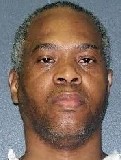
Robert Maurice Bloom
Murderer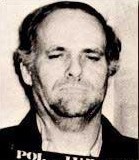 Ervil LeBaron
Murderer · USA · 1972
Ervil Morrell LeBaron (1925 to August 16, 1981) was the leader of a polygamous…
35 victims
Ervil LeBaron
Murderer · USA · 1972
Ervil Morrell LeBaron (1925 to August 16, 1981) was the leader of a polygamous…
35 victims
 Brian Kevin Rosenfeld
Murderer · USA · 1985
Brian Kevin Rosenfeld Brian Kevin Rosenfeld was sentenced to three concurrent l…
23 victims
Brian Kevin Rosenfeld
Murderer · USA · 1985
Brian Kevin Rosenfeld Brian Kevin Rosenfeld was sentenced to three concurrent l…
23 victims
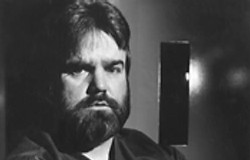 Marvin Gray
Murderer · USA · 1975
Marvin Gray was convicted killer who claimed responsibility for 23 slayings and…
23 victims
Marvin Gray
Murderer · USA · 1975
Marvin Gray was convicted killer who claimed responsibility for 23 slayings and…
23 victims
 Yahweh ben Yahweh
Murderer · USA · 1980
Yahweh ben Yahweh was born and legally named Hulon Mitchell Jr. (October 27, 19…
23 victims
Yahweh ben Yahweh
Murderer · USA · 1980
Yahweh ben Yahweh was born and legally named Hulon Mitchell Jr. (October 27, 19…
23 victims
 Russell Ellwood
Murderer · USA · 1991
Russell Ellwood was a former taxi driver. Authorities suspected him of killing…
20 victims
Russell Ellwood
Murderer · USA · 1991
Russell Ellwood was a former taxi driver. Authorities suspected him of killing…
20 victims
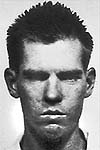 Kenneth Albert Brock
Murderer · USA · 1974
Kenneth Albert Brock was executed by lethal injection in Texas on June 19, 1986…
1 victim
Kenneth Albert Brock
Murderer · USA · 1974
Kenneth Albert Brock was executed by lethal injection in Texas on June 19, 1986…
1 victim
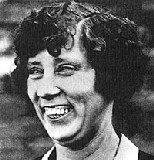 Eva Rablen
Murderer · USA · 1929
Eva Rablen was accused in 1929 in Northern California of getting rid of her dea…
1 victim
Eva Rablen
Murderer · USA · 1929
Eva Rablen was accused in 1929 in Northern California of getting rid of her dea…
1 victim
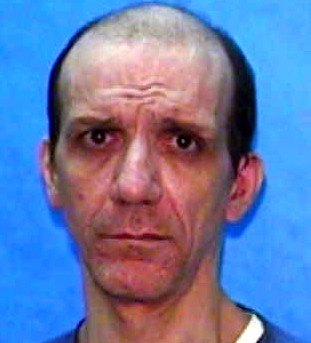 Francisco del Junco
Serial killer · USA · 1995
Francisco del Junco came to Miami in the 1980 Mariel boat lift. He was describe…
4 victims
Francisco del Junco
Serial killer · USA · 1995
Francisco del Junco came to Miami in the 1980 Mariel boat lift. He was describe…
4 victims
 Charlotte Bryant
Murderer · United Kingdom · 1935
Charlotte Bryant, also known as Charlotte McHugh, was born in Londonderry in 19…
1 victim
Charlotte Bryant
Murderer · United Kingdom · 1935
Charlotte Bryant, also known as Charlotte McHugh, was born in Londonderry in 19…
1 victim
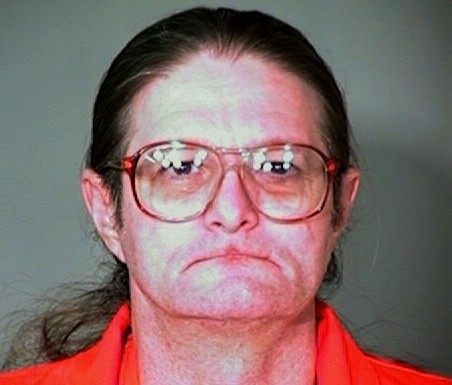 Joe Leonard Lambright
Murderer · USA · 1980
Joe Leonard Lambright was a defendant in a joint trial with Robert Douglas Smit…
1 victim
Joe Leonard Lambright
Murderer · USA · 1980
Joe Leonard Lambright was a defendant in a joint trial with Robert Douglas Smit…
1 victim
- Gender
- male
- Country
- USA
- Location
- Sun Valley, California, USA
- Date of birth
- 1964
- Age at first offence
- 18
- Characteristics
- parricide
- Victim profile
- His father, Robert Bloom Sr. , his stepmother, Josephine Lou Bloom, and stepsister, Sandra Hughes, 8
- Method of murder
- Shooting (.22-caliber rifle)
- Date(s) of murder
- April 22, 1982
- Years active
- 1982
- Date of arrest
- Same day
- Status
-
Life imprisonment
Sentenced to death in 1983; resentenced to life in prison in 2000
Case record: Robert Maurice Bloom
Status and procedural posture
Robert Maurice Bloom was sentenced to death in 1983 and was resentenced to life in prison in 2000. A jury later recommended the execution for the second time.
Background
Robert Maurice Bloom was convicted by a jury of three counts of first degree murder, involving the shooting death of his father, Robert Bloom Sr., and the shooting and stabbing death of his stepmother, Josephine Lou Bloom, and his eight-year-old stepsister, Sandra Hughes. Bloom was eighteen years old at the time of the murders.
The case included allegations of severe childhood abuse. The appellate discussion described it as “yet another case of severe childhood abuse ending in tragedy.”
The offence
Bloom’s trial involved an account in which he killed his father, Josephine, and Sandra during an April 22, 1982 rampage.
Shooting and killing of Robert Bloom Sr.
On April 22, 1982, at about 4:00 a.m., David Hughes, who lived next door to Bloom Sr., heard Bloom Sr. shout: “Robert, Robert. Come back.” Hughes looked out the window and saw Bloom Sr. standing at the end of the driveway. Bloom Sr. then ran down the street toward Bloom. Moises Gameros testified he then saw Bloom Sr. and Bloom arguing in the street. Gameros heard Bloom Sr. say: “That's it. I'm going to call the police.” Bloom Sr. and Bloom returned to Bloom Sr.'s house and entered the house. Bloom was carrying a rifle but was not pointing it at anyone.
Minutes later, Hughes heard shouting. Hughes saw Bloom Sr. standing in the driveway and heard him ask Bloom to come back again. Hughes and Gameros then heard popping which they recognized as gunfire. Bloom Sr. began screaming, grabbed his midsection, and ran to his house. Bloom followed Bloom Sr. and continued to shoot him. Bloom Sr. eventually fell on his back in the doorway. Bloom then stood over him and shot him twice in the head. Bloom appeared to reload the rifle before he reentered the house.
Shooting of Josephine Lou Bloom and killing of Sandra Hughes
Hughes heard a woman’s scream followed by two shots. After a short pause, Hughes heard a third shot. Bloom walked out of the house, placed the rifle in a car belonging to Josephine, and drove off. Police officers arrived shortly thereafter.
Bloom Sr. and Josephine were dead. Sandra was still alive but critically wounded. Sandra had been shot in the head and had also suffered twenty-three “sharp force” stab wounds to her forehead, neck, right arm, and left back. These wounds apparently were made by scissors which were located near her body. Sandra died the next day.
Weapon and missing rifle detail
A witness testified that approximately a week before the murders Bloom asked him if he could buy a gun because he was going to kill someone. The witness agreed to obtain a gun for Bloom but never did so.
Another witness testified that two days before the murders Bloom told his father on the telephone, “You are running my life now but you won't be for long.”
At the time of the murders Bloom was living with his girlfriend, Christine Waller. She testified that two days before the murders she observed Bloom walking in a field behind her house carrying a rifle. Waller's brother owned a .22-caliber semiautomatic rifle. The rifle was missing after the murders and, to date, has not been found. The victims were shot with bullets from such a rifle.
Investigation
Bloom was arrested within an hour after the murders. He had blood on his hands and shoes. He was not in possession of a rifle. Although the murder weapon was never found, there is no dispute that the victims were shot with a .22-caliber rifle.
Arrest
Trial
Plea history
Bloom initially pleaded not guilty to the three murders. Before trial, he changed his plea to the murder of Sandra to not guilty by reason of insanity.
Evidence presented at trial
At trial, Bloom testified that on the morning of the murder he took the rifle and chased some “cholos.” He followed them until he was near Bloom Sr.'s house. He went inside the house and placed the rifle on a chair. Bloom Sr. and Josephine were arguing because she wanted a divorce.
According to Bloom’s testimony, Bloom Sr. then shot Josephine in the face and, as she was walking toward Bloom, Bloom Sr. shot her a second time. Bloom testified he picked up the rifle, left the house, and agreed to return only after Bloom Sr. agreed to call the police. When they reentered the house, Bloom Sr. refused to call the police, Bloom left the house, and after Bloom Sr. made a remark about Sandra, Bloom shot him. Bloom said he did not remember anything else until he was arrested.
Verdict on guilt phase
The jury found Bloom guilty of all three counts of first degree murder. The appellate opinion later stated that a jury convicted Bloom of three counts of first degree murder and imposed the death penalty.
The separate factual account also described that jurors found Bloom guilty of the first-degree murder of his father, and the second-degree murders of his stepmother and stepsister. Those findings were part of the retrial described in 2000 and related narrative, and the appellate opinion described the overall conviction as three counts of first degree murder.
Representation and self-representation during retrial
For the retrial described in the later narrative, Bloom fired his court-appointed attorneys and dropped his insanity plea. The later account stated he represented himself after firing his attorneys and dropping his insanity plea, and he had heard the verdict concluding his three-month retrial.
During the penalty phase of the earlier trial described in the appellate opinion, after the jury returned its verdict, Bloom withdrew his insanity plea and asked the court to let him represent himself during the penalty phase. He told the court he intended to ask the jury to return a verdict of death. The court granted his request.
During the later retrial narrative, Bloom allegedly cross-examined witnesses, subpoenaed a judge, used legal terminology, and made frequent objections. He also allegedly told jurors he felt no remorse for killing his father and called the deaths of his stepmother and stepsister a “necessary evil.” He also allegedly said that “he would be ‘a better killer.’”
Penalty phase on the first trial described in the appellate opinion
During the penalty phase, the prosecution presented evidence of a prior arrest for attempted robbery and for concealing a weapon. Bloom presented no mitigating evidence. In his closing argument, he told the jurors there were no mitigating circumstances and asked them to impose the death penalty.
After four hours of deliberation, the jury returned a verdict of death. After the jury’s verdict in the penalty phase, Bloom was involved in a violent jail incident. He was relieved of his self-representation status and a hearing was held to determine his competency. A jury found him to be competent. The state trial court then declined to modify the jury’s verdict and sentenced Bloom to death.
Violent jail incident after penalty verdict
After the jury’s death verdict, Bloom was involved in a violent jail incident, after which he was relieved of his self-representation status and a competency hearing was held.
Sentencing
The state trial court sentenced Bloom to death after the jury returned a verdict of death and after a competency determination.
Appeals
State direct appeal and state habeas
The California Supreme Court consolidated Bloom’s direct appeal with his appeal from the denial of his first state habeas corpus petition. The California Supreme Court affirmed Bloom’s convictions, his death sentence, and affirmed the denial of his state habeas petition. The appellate case described this as People v. Bloom, 48 Cal.3d 1194, 774 P.2d 698, 259 Cal.Rptr. 669 (1989).
The United States Supreme Court denied certiorari in Bloom v. California, 494 U.S. 1039, 110 S.Ct. 1503, 108 L.Ed.2d 638 (1990).
Federal habeas and Ninth Circuit decision
Bloom filed a first federal habeas corpus petition. The district court denied the petition (described as Bloom v. Vasquez, 840 F.Supp. 1362 (C.D.Cal.1993)), and Bloom appealed.
The appellate opinion was titled: Robert Maurice BLOOM, Petitioner-Appellant, v. Arthur CALDERON, Warden; Attorney General of the State of California, Respondents-Appellees. No. 95-99005. United States Court of Appeals, Ninth Circuit. The panel included REINHARDT, THOMPSON and HAWKINS, Circuit Judges, with David R. Thompson as the Circuit Judge.
The court described arguments Bloom made: an actual conflict of interest adversely affected his state trial counsel’s representation; he received ineffective assistance of counsel during the guilt phase; he was entitled to a new penalty phase trial based on counsel’s alleged ineffective assistance during the guilt phase; and his jury considered extrinsic evidence during their deliberations in the penalty phase.
The Ninth Circuit stated it reversed, concluding Bloom received constitutionally ineffective assistance of counsel during the guilt phase. The court did not reach the other arguments. It reversed the district court’s denial of Bloom’s habeas petition and remanded with instructions to grant the writ unless the State retried Bloom within a reasonable time. The opinion stated: “REVERSED AND REMANDED.”
Ineffective assistance of counsel findings discussed on appeal
The appellate discussion held that counsel’s performance was constitutionally deficient due to a lack of effort to obtain a psychiatric expert until days before trial, and failure to adequately prepare the expert and present him as a trial witness.
The appellate discussion described appointment and preparation delays:
- Bloom’s trial counsel was appointed on August 5, 1982.
- In September 1982, counsel moved for appointment of a psychiatrist and a neurologist for an electroencephalogram.
- On October 7, 1982, the court granted the motion and told counsel to “fill out the form.”
- The trial date was continued to January 20, 1983, and then continued again in January.
- By March 1983, counsel had still not taken steps to obtain a psychiatrist or neurologist, and had informed the court a continuance was needed because he was “not through with psychiatric and clinical testing as well as neurological evaluation.”
- The trial was continued again in May and June 1983 due to counsel’s civil trials and his representation the case was complex.
- In April 1983, counsel obtained an order directing the sheriff to deliver Bloom to Dr. Sergio Fuenzalida for a neurological exam.
- In May 1983, Cathy Drury drafted the order appointing Dr. Kling, without guidance from counsel. The order asked Kling to opine about the capacity for specific intent, deliberation, premeditation, malice, and meaningfully and maturely reflect upon the gravity of the acts.
- Counsel asked Drury to contact Kling on August 4, 1983, and Drury was told by Kling: “had never heard of Robert Bloom” and had not been appointed.
- Drury wrote counsel a note stating that she needed to draft a letter to Kling outlining the theory of defense, and testified she asked counsel for assistance because she “didn't know what the theory of defense of the case was....”
- The letter was never written.
The appellate discussion described the materials provided to Kling and the limitations of that information, including a “Make Believe Interview” about drugs and an essay about crime; a letter from Bloom’s mother Melanie Bloom complaining about counsel during the preliminary hearing; a document titled “Things I saw Robert H. Bloom Do,” describing minor issues; a statement from Melanie Bloom including physical fights, hatred, an attempted suicide, “grand mal,” and a pool incident; telegrams and letters from Bloom Sr. to Bloom while Bloom Sr. was in jail; a home economics scholastic award; a certificate of honorary discharge; and Dr. Fuenzalida’s neurological report.
The appellate discussion described Kling’s report as “devastating,” including the following verbatim language from the opinion:
I would speculate that the reason he did kill his father may not have been because he found out about his father molesting [Sandra] but because his father would not let him marry or continue the relationship with [Bloom's girlfriend]. ... I speculate further that the defendant may have killed his stepmother and his stepsister, [Sandra], to prevent them from testifying to the murder.... ... Most remarkable is his lack of guilt, remorse, or feelings regarding his act or any of the anti-social behavior he had been engaged in. He attempts to justify everything he did without insight or judgment. His verbal ability is excellent and he has clearly no evidence of intellectual deficiency or cognitive deficit. Finally, there is no evidence of paranoid thinking or delusions or disorganized thinking which would have led to a misperception of the reality that he describes.
The appellate discussion also reproduced Kling’s verbatim letter content regarding Sandra:
[T]here was no indication of any motive for him to be responsible for [Sandra's] death except for the possibility that she was a witness. ... [I]t would not seem unlikely, considering the extent of the injuries of Sandra Hughes and the circumstances surrounding the event, that the defendant was at the time unable to control his behavior as well as being unable to know what he was doing in a rational manner. It is not unlikely that the defendant was in a state of extreme stress, mental disorganization, and anxiety resulting from the shooting of [his] father so that the subsequent events resulting from amnesia would be in keeping with his disorganized mental state at the time.
The appellate discussion further described Kling’s second report and trial testimony:
- Kling testified he believed Bloom had a “schizotypal personality disorder” and could experience “transient psychotic episodes.”
- Kling testified Bloom might suffer amnesia and “might not be aware of what it is [he is] doing.”
The appellate discussion stated trial counsel did not refer to Kling’s first report or attempt to diffuse it, and on cross-examination the prosecution focused on Kling’s original opinion. The prosecution read parts of the report and emphasized to the jury that Bloom’s “own doctor says he was sane and that he could form the malice and premeditation and deliberation necessary for murder in the first degree.” The appellate discussion stated the prosecutor’s use of the first report helped secure guilty verdicts of first degree murder with special circumstances on all three counts.
The appellate discussion described additional evidence presented by current counsel during post-conviction proceedings, including declarations and background material about severe childhood abuse, mental illness history, medication exposure, attempted suicide, hallucinations, and neurological findings. It described:
- A psychiatrist named Dr. Richard Naham prepared a report after a November 1981 incident involving an attempted robbery for which Bloom was arrested.
- Dr. Naham’s opinions in that report included: (1) The defendant is a potential danger to himself and to others; (2) he would benefit from inpatient psychiatric treatment in a state psychiatric hospital; (3) he was not suitable for outpatient treatment.
- Dr. Naham’s report included the conclusion: “There is no doubt in my mind that without suitable inpatient psychiatric treatment he will continue to present an inordinate danger to others. (Emphasis in original).”
- Jail psychologist reports showed auditory and visual hallucinations and that Bloom could “see things in the future.”
It also described declarations from doctors and other experts:
- Dr. Kling declared the documents provided by current counsel were “critical to any reliable assessment of [Bloom's] mental functioning at the time of the offenses....” Kling stated he had not been briefed on mental state issues and, after reviewing new information, opined:
Mr. Bloom's actions were triggered and governed by a predictable and intense emotional response to years of abuse and victimization by his father. Mr. Bloom's actions were not the result of deliberate reflection, thoughtful judgment, or even remote consideration of the consequences of his deeds. ... [A]t the time he shot his stepmother and shot and stabbed his stepsister, he was very likely in a state of mental disorganization. These latter two homicides were surely not the product of careful thought, reflection, or a weighing of consequences....
- Dr. Fuenzalida declared he expected to be consulted about the purpose of the neurological examination and was not told the charges; he stated the evaluation had been “incomplete and misleading,” and he explained:
My neurological evaluation and preliminary diagnosis should not and may not be read to exclude the possibility that Mr. Bloom may have had brain damage at the time of my examination. ... Indeed, unaware of the purpose of my evaluation, I assumed--incorrectly--that my services were sought to determine whether Mr. Bloom suffered from a seizure disorder. The focus of my evaluation was skewed because [trial counsel] failed to provide me with background information relevant to Mr. Bloom's mental functioning. ... Because I lacked even rudimentary information about the purpose of my evaluation and Mr. Bloom's history, I was forced to rely entirely on Mr. Bloom's self-reporting for this critical information. Thus, I was unable to tailor my evaluation accordingly or to interpret accurately the information provided me by Mr. Bloom. [The information provided by current counsel] would have provided me with further avenues of inquiry, and more specifically they would have alerted me that Mr. Bloom's blackouts were not a result of seizure activity, but rather had psychiatric origins.
- Dr. Julian Kivowitz declared his evaluation at the time of insanity determination was “critically relevant” in information he did not have, and he stated his original evaluation “was not only irrelevant but also drastically misleading.” Kivowitz opined:
Mr. Bloom's actions on the day of the offense resulted from overwhelming terror that any reasonable person would experience if subjected to years of similar abuse as a child. ... [F]ollowing the firing of the first shot at his father, Mr. Bloom was in a transitory dissociative state, and experiencing an episode of intermittent altered mental state. Thus, due to his mental impairments and dissociative disorder, Mr. Bloom did not have the mental capacity to deliberate, to premeditate, to harbor malice, nor did Mr. Bloom have the mental capacity to meaningfully and maturely reflect upon the gravity of his contemplated acts.
- Dr. William Vicary opined Bloom was competent to be sentenced and later stated he would have altered his conclusions if given background information. Vicary’s declarations included:
Mr. Bloom's family, social, and medical history offers compelling evidence that he suffers from serious mental disorders and brain damage.
and: At the time of the offenses for which Mr. Bloom has been convicted, sufficient data existed to show that his actions were the result of an explosive outburst that was precipitated by his deep terror and resentment of his father. Any reasonable person in a similar situation would react similarly. He had no plan to harm his stepmother or stepsister. - Dr. Dale Watson’s neuropsychological test battery finding was quoted:
The neuropsychological battery gave striking, consistent and clear evidence of cognitive sensori-motor deficits, brain dysfunction and brain damage. (Emphasis in original).
Watson also opined: this brain damage is long-standing and pre-dates the instant offenses. - Esther Horney’s statements included:
I was appalled by [trial counsel's] behavior in this case. Soon after my first visit with [Bloom], I began to try to get in touch with [trial counsel] to inform him about [Bloom's] mental problems. I continued to try to contact [trial counsel] on a weekly basis until I retired.
The appellate opinion concluded that the deficient performance prejudiced Bloom during the trial phase, undermining confidence in the outcome, and reversed the denial of habeas relief.
Timeline
- August 5, 1982 — Bloom’s trial counsel was appointed.
- October 7, 1982 — The court granted a motion to appoint a psychiatrist and a neurologist for an electroencephalogram and instructed counsel to “fill out the form.”
- April 22, 1982 — Bloom committed the murders described in the case narrative.
- January 20, 1983 — The trial date was continued to January 20, 1983.
- August 24, 1983 — Trial was to begin on August 24 after appointment problems were discovered.
- April 22, 1982, about 4:00 a.m. — David Hughes heard “Robert, Robert. Come back,” and shootings followed.
- April 22, 1982 — Bloom Sr. and Josephine were killed; Sandra was critically wounded and died the next day.
- within an hour after the murders — Bloom was arrested with blood on his hands and shoes.
- Oct. 31, 1997 — The appellate panel argued the federal appeal.
- Dec. 24, 1997 — The federal appellate court decided the appeal.
- 2000 — A retrial culminated in a jury recommendation of execution for the second time, and Bloom was resentenced to life in prison in 2000.
- December 22, 2000 — A Van Nuys, California jury recommended execution for the second time of Robert Bloom Jr.
Outcome
The Ninth Circuit reversed the district court’s denial of Bloom’s habeas petition based on constitutionally ineffective assistance of counsel during the guilt phase and remanded with instructions to grant the writ unless the State retried Bloom within a reasonable time.
In the later retrial described in the narrative, a Van Nuys, California jury recommended execution for the second time.
Bloom was resentenced to life in prison in 2000 after the death sentence was described as being recommended for the second time.
Aftermath
New counsel during post-conviction, post-sentencing proceedings presented significant evidence relating to Bloom’s mental state at the time of the murders, including evidence of severe childhood abuse, psychiatric evaluations, attempted suicide, hallucinations, neurological findings, and declarations from multiple experts.
Other details
People named
- Robert Maurice Bloom — defendant.
- Robert Bloom Jr. — referenced as Bloom in the later narrative.
- Robert Bloom Sr. — Bloom’s father; murder victim.
- Josephine Lou Bloom — Bloom’s stepmother; murder victim.
- Sandra Hughes — Bloom’s eight-year-old stepsister; murder victim.
- David Hughes — neighbor who heard Bloom Sr. shout; witness.
- Moises Gameros — witness who saw and heard an argument; witness.
- Christine Waller — Bloom’s girlfriend at the time of the murders; witness.
- Waller’s brother — owner of a .22-caliber semiautomatic rifle referenced as missing after the murders.
- Melanie Bostic — Bloom’s mother in the narrative; witness/person.
- Deputy Dist. Atty. Dmitry Gorin — prosecutor quoted in the narrative; named official.
- Melanie Bloom — referenced as Bloom’s mother in the appellate discussion; mother and writer of letters and statements.
- Arthur CALDERON — named as Warden in the case caption.
- Attorney General of the State of California — named as respondent in the case caption.
- J. Spencer Letts — District Judge, presiding, in the appellate caption.
- REINHARDT, THOMPSON and HAWKINS — Circuit Judges.
- DAVID R. THOMPSON — Circuit Judge writing in the opinion.
- Arthur S. Kling, M.D. — psychiatrist appointed as defense expert; also issued reports and declarations.
- Dr. Sergio Fuenzalida — neurologist who performed the neurological evaluation.
- Cathy Drury — law student who drafted the appointment order and testified in evidentiary proceedings.
- Dr. Richard Naham — psychiatrist who prepared a report after a November 1981 incident.
- Dr. Julian Kivowitz — doctor appointed after Bloom entered a plea of not guilty by reason of insanity.
- Dr. William Vicary — doctor appointed to determine competency to be sentenced.
- Dr. Dale Watson — psychologist who evaluated Bloom with neuropsychological tests.
- Esther Horney — social worker who worked with Bloom while awaiting trial.
- Harold Babich — none; not named in provided material.
- David R. Thompson — no additional; already named as circuit judge.
- “Sanders v. Ratelle,” “Hendricks v. Calderon,” “Harris v. Wood,” “Strickland v. Washington,” and “Card v. Dugger” — cases cited in the appellate discussion; not additional individuals.
Verbatim quotations embedded in record
The record included these verbatim quotes:
- “Robert, Robert. Come back.”
- “That's it. I'm going to call the police.”
- “You are running my life now but you won't be for long.”
- “Describing [counsel's] conduct as 'strategic' strips that term of all substance.”
- “not through with psychiatric and clinical testing as well as neurological evaluation.”
- “My son's mentally ill and should be in a mental hospital, not a gas chamber,”
- “He has double personalities.”
- “He's evil,”
- “He's a complete danger to society.”
- “necessary evil.”
- “a better killer.”
- “had never heard of Robert Bloom”
- “didn't know what the theory of defense of the case was....”
- “critical to any reliable assessment of [Bloom's] mental functioning at the time of the offenses....”
- “Mr. Bloom's actions were triggered and governed by a predictable and intense emotional response to years of abuse and victimization by his father.”
- “might not be aware of what it is [he is] doing.”
- “The neuropsychological battery gave striking, consistent and clear evidence of cognitive sensori-motor deficits, brain dysfunction and brain damage. (Emphasis in original).”
- “I was appalled by [trial counsel's] behavior in this case. Soon after my first visit with [Bloom], I began to try to get in touch with [trial counsel] to inform him about [Bloom's] mental problems. I continued to try to contact [trial counsel] on a weekly basis until I retired.”
- “REVERSED AND REMANDED.”
Competency determination
The narrative described that after the penalty verdict and a violent jail incident, a competency hearing was held and a jury found Bloom competent. The appellate discussion also described the later appointment of Dr. William Vicary for competency to be sentenced, and Vicary opined Bloom was competent.
Spotted an error, or have more information about this case?