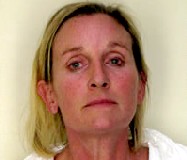
Gail Savage
Murderer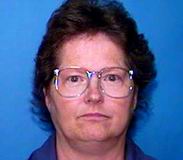 Bobbie Sue Terrell
Murderer · USA · 1984
Bobbie Sue Dudley Terrell was a Pinellas County nurse and worked as the night s…
12 victims
Bobbie Sue Terrell
Murderer · USA · 1984
Bobbie Sue Dudley Terrell was a Pinellas County nurse and worked as the night s…
12 victims
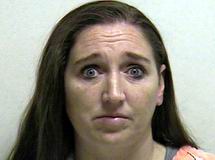 Megan Huntsman
Murderer · USA · 1996
Megan Huntsman was 40 at sentencing. She was a mother of three children who wer…
6 victims
Megan Huntsman
Murderer · USA · 1996
Megan Huntsman was 40 at sentencing. She was a mother of three children who wer…
6 victims
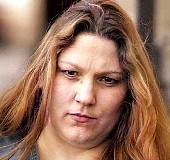 Angela Johnson
Murderer · USA · 1993
Angela Jane Johnson was convicted in federal court of aiding and abetting the m…
5 victims
Angela Johnson
Murderer · USA · 1993
Angela Jane Johnson was convicted in federal court of aiding and abetting the m…
5 victims
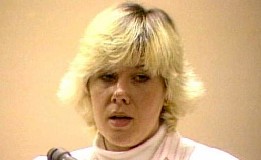 Catherine May Wood
Murderer · USA · 1987
Catherine May Wood was an American caregiver who worked at the Alpine Manor Nur…
5 victims
Catherine May Wood
Murderer · USA · 1987
Catherine May Wood was an American caregiver who worked at the Alpine Manor Nur…
5 victims
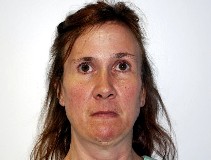 Michele Kalina
Murderer · USA · 1996
Michele Kalina pleaded guilty to murder for one of five infants she initially w…
5 victims
Michele Kalina
Murderer · USA · 1996
Michele Kalina pleaded guilty to murder for one of five infants she initially w…
5 victims
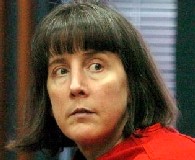 Amy Bishop
Murderer · USA · 1986
Amy Bishop — biology professor and perpetrator · James Anderson — Bishop’s husb…
4 victims
Amy Bishop
Murderer · USA · 1986
Amy Bishop — biology professor and perpetrator · James Anderson — Bishop’s husb…
4 victims
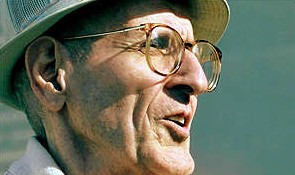 Jack Kevorkian
Homicide · USA · 1990
Jack Kevorkian (born May 26, 1928) was a controversial American pathologist. He…
130 victims
Jack Kevorkian
Homicide · USA · 1990
Jack Kevorkian (born May 26, 1928) was a controversial American pathologist. He…
130 victims
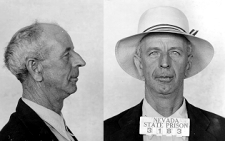 John Hall
Murderer · USA · 1931
John Hall was executed by asphyxiation-gas in Nevada on November 28, 1932. His…
1 victim
John Hall
Murderer · USA · 1931
John Hall was executed by asphyxiation-gas in Nevada on November 28, 1932. His…
1 victim
 Eric Christopher Houston
Spree killer · USA · 1992
Eric Christopher Houston was a 20-year-old former student at Lindhurst High Sch…
4 victims
Eric Christopher Houston
Spree killer · USA · 1992
Eric Christopher Houston was a 20-year-old former student at Lindhurst High Sch…
4 victims
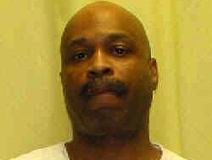 Clarence Carter
Murderer · USA · 1988
Defendant: Clarence Carter Sex: Male Race: Black Victim: Johnny Allen Victim ag…
2 victims
Clarence Carter
Murderer · USA · 1988
Defendant: Clarence Carter Sex: Male Race: Black Victim: Johnny Allen Victim ag…
2 victims
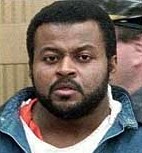 Colin Ferguson
Mass murderer · USA · 1993
Colin Ferguson was convicted of the December 7, 1993 shooting of 25 people aboa…
6 victims
Colin Ferguson
Mass murderer · USA · 1993
Colin Ferguson was convicted of the December 7, 1993 shooting of 25 people aboa…
6 victims
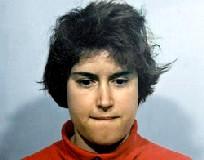 Laurie Dann
Murderer · USA · 1988
Laurie Dann (also referred to as Laurie Wasserman; née Wasserman; born c. 1958;…
1 victim
Laurie Dann
Murderer · USA · 1988
Laurie Dann (also referred to as Laurie Wasserman; née Wasserman; born c. 1958;…
1 victim
- Gender
- female
- Country
- USA
- Location
- Waukonda, Lake County, Illinois, USA
- Date of birth
- 1963
- Age at first offence
- 27
- Characteristics
- parricide
- Victim profile
- Michael, 6-week-old / Amber, 22 days old / Cynthia, 5-month-old (her children)
- Method of murder
- Smothering with a blanket
- Date(s) of murder
- November 5, 1990 / February 25, 1992 / June 28, 1993
- Years active
- 1990–1993
- Date of arrest
- September 8, 1993
- Status
-
Imprisoned
Sentenced to 20 years in prison on May 30, 1994
Case record: Gail Savage
Background
Gail Savage was a 31-year-old woman from Wauconda. She was described as withdrawn by former work colleagues, acquaintances, and neighbors. She was a secretary for her father’s drywall company. She attended Wauconda High School in the late 1970s and early 1980s, and her yearbook did not list her as being active in any extracurricular activities. The Savages periodically attended the Evangelical Free Church in Wauconda, and parishioners were supportive after Cynthia’s death. Rev. Christopher Barnes said: "I can't hardly believe it," and "I have no reason to suspect it is true." He also said: "These are not savvy people," and "They're not sophisticated. . . . I just think maybe they could have boxed her into saying something."
Gail Savage’s husband was James Savage. He was not involved in the killings, authorities said. After Gail Savage’s arrest, James Savage defended her, insisting he was convinced the children died from Sudden Infant Death Syndrome (SIDS), also known as crib death. James Savage said: "Because they can't explain these deaths, and there were three of them, they don't want to believe they were SIDS deaths." He also said: "This is tearing me apart because in my heart I believe they were SIDS deaths." In later proceedings after the agreement, James Savage said: "She knew she wasn't guilty, and she wouldn't plead guilty," and "But she knew that emotionally, she can't withstand another trial." He added: "We left it up to her," and "It wasn't a decision I wanted to make, but I said I would stand by her no matter what she decided to do."
Andrea Morris, a neighbor on Dunbar Road, said her son died of a metabolic disorder just a week before Michael Savage’s death, so she had extra sympathy for the family. After learning of Gail Savage’s arrest, Morris said: "I just picked up my daughter and squeezed her. . . . After losing one of your own, it's hard to believe someone would do that intentionally."
Gail Savage collected literature and attended support groups about Sudden Infant Death Syndrome.
The offence
Gail Savage killed three children in her family. Cynthia was 5 months old at the time of the June 28, 1993 death. Michael was 6 weeks old when he died on Nov. 5, 1990. Amber was 22 days old when she died on Feb. 25, 1992.
During the investigation and trial proceedings, Gail Savage made statements admitting to suffocating her children with a blanket. In her statement, she said she took a white receiving blanket decorated with animals from a dresser drawer and held it against Cynthia’s face until she stopped breathing. She said she remembered less about Amber and Michael’s deaths but also had covered their faces with blankets.
At trial, the question of whether the children could have died from SIDS was disputed. Jurors were asked to consider the possibility of Sudden Infant Death Syndrome. Three prominent SIDS researchers testified: two for the defense and one for the prosecution. Dorothy Kelly, an associate professor of pediatrics at Harvard Medical School, testified about an issue of whether multiple SIDS deaths can occur in the same family. Dorothy Kelly said: "Most families who have a child die of SIDS do not have another child die of SIDS," and "But there are families with multiple SIDS." She also said: "They just don't come together as one verdict." She stated: "They showed signs of dying of SIDS." She said that in a 1986 study, among families where two children died of SIDS, "Of the 27 families who had two children die of SIDS, five subsequently lost their third child to the mysterious ailment." Dorothy Kelly stated: "The likelihood of multiple SIDS deaths within the same family is one of many issues under debate among SIDS experts, and various studies set the risk at anywhere from as high as Kelly's findings of 18 percent to 0.5 percent or even lower." She also said: "Of the five children in the study who died, only one was on a monitor at the time of death." She said Gail Savage and James Savage removed Cynthia from a monitor against advice of at least three pediatricians, and they told doctors they didn’t believe it could save Cynthia from dying of SIDS.
Two forensic pathologists testified that they found it highly improbable that three children in the same family could die of SIDS. The pathologists said they found no evidence of physical trauma to the children, and the testimony stated that infants can be suffocated without leaving any trace.
Gail Savage later recanted her confession. Her confession was described as the most damning evidence. Prosecutors also argued that the confession was enough to convict her. Her attorney argued that she had falsely confessed.
Her attorney, Robert Hauser, said her limited intelligence and vulnerability to suggestion meant she was convinced she had killed the children due to guilt and despair after losing her children to SIDS. Hauser depicted her as an introverted, borderline mentally retarded woman with thick glasses. He also argued that she was coerced into making the confession after investigators used threats and psychological pressure, including threats to show autopsy photographs and exhume her children.
In court, Gail Savage testified that investigators threatened to show her autopsy photographs and exhume her children if she didn’t confess and denied the detectives said these allegations. She said she believed them even though she knew she hadn’t done anything. She said: "I believed them even though I knew I hadn't done anything," and "They kept saying I had a disease. They didn't believe me." She also testified that she was scared and bullied into a false confession by investigators who said "bad things" to her.
Robert Hauser’s position included an argument that Gail Savage was despondent after the children’s deaths and that she attempted to commit suicide a month after Michael’s death by taking an overdose of the medication used to control her epilepsy.
Investigation
Authorities investigated the children’s deaths as suspected murder after multiple deaths within the same family. Gail Savage’s first child, Michael Andrew, died on Nov. 5, 1990, when he was six weeks old. Gail Savage told paramedics she discovered his lifeless body in his crib after putting him down for a nap. Lake County Coroner Barbara Richardson said the cause of death was SIDS.
Gail Savage’s second child, Amber Lynn, died at 22 days old on Feb. 25, 1992. Gail Savage summoned paramedics again and said she found the child dead in her crib. At that time, Richardson listed the cause of death as "undetermined," described as a euphemism when there are suspicions of homicide. Dr. Marie Valdes-Dapena, a pediatric forensic pathologist at the University of Miami, said: "It is a kind of red flag; it says, `I'm not sure what happened here and something is not right,' " and that it indicates something might be wrong.
Gail Savage’s third call to Wauconda paramedics came June 28, 1993. Her third child, Cynthia Gail, was born Jan. 23. Richardson said that when she learned about Cynthia’s birth in April, she was immediately concerned that something might happen to her. Richardson said that when she arrived and learned Gail Savage had found Cynthia lying motionless in her crib with her skin chalky and cold, Richardson said: "I was sick. I felt like this wasn't right," and "I even told (an assistant) that this is not SIDS, to get the police involved right away."
Richardson initiated what she said was the biggest investigation by the Lake County Coroner’s Office in recent history. Investigators tested the water and air in the Savages’ home and the emissions of their car and examined the baby’s crib for defects. Lake County authorities sent tissue samples to labs across the country to search for medical answers. The Epilepsy Foundation was contacted because Gail Savage suffered from epilepsy, and investigators checked for cystic fibrosis because it runs in James Savage’s family. Both inquiries brought negative results.
In July, Dr. Marie Valdes-Dapena examined tissue samples from Cynthia Savage’s body. She found nothing to indicate the child was murdered but refused to accept SIDS as an explanation. She said: "I was not ready to sign it out as SIDS," and "I didn't have any evidence that it wasn't except that this was the third child to die in that family while in the company of the mother. That was good enough."
With investigators seeking to distinguish SIDS from suffocation deaths, the difficulty of differentiating was discussed in testimony. Valdes-Dapena said: "It is not just difficult to tell the difference between a child who died from SIDS and one who is suffocated, it is impossible." The public discussion described that suffocation sometimes leaves little or no physical or medical evidence. Investigators feared a lack of evidence could mean the crime might go unpunished.
Investigators tested and examined multiple aspects of the home environment and collected samples, including sending tissue samples across the country. They also checked for medical conditions.
Arrest and confession
On Sept. 8, Lake County Sheriff’s Detective Portia Wallace and Illinois Department of Children and Family Services investigator Mark Pleasant interviewed Gail Savage alone for the first time. Within three hours, she allegedly confessed.
In the September 1993 account of the confession, authorities said Savage admitted to killing all three children after forensic tests proved the babies could not have died from natural causes. The alleged confession came Wednesday evening, after investigators ushered her into an interrogation room at the Lake County Sheriff’s Office in Waukegan. Authorities said she incriminated herself after being told about the forensic tests. Prosecutors publicly would not say what prompted the killings, but privately, top law enforcement sources said she suffocated the children because she was frustrated by their crying. Lake County State’s Atty. Michael Waller said: "I don't think you could ever come up with a motive for the murders of three small children like this."
A brief court appearance followed in which a judge ordered Gail Savage held without bond. If convicted of murder, she faced a mandatory life sentence.
The investigation involved the use of a grand jury strategy. James Savage was subpoenaed at his workplace at 10 a.m. Wednesday, then he went home, changed clothes, got his wife, and they drove together to the Lake County Building in Waukegan. James Savage was ushered behind closed doors of a Lake County grand jury room, leaving Gail Savage to sit alone in the hallway. Investigators then approached Gail Savage and said they wanted to speak to her further about the deaths of her babies. She agreed to accompany them to the sheriff’s office a block away. Authorities said she was told the deaths did not appear to be the result of SIDS or other natural causes and that investigators suspected she may have killed them. Hours later, prosecutors said she incriminated herself.
Later trial testimony addressed recording of the alleged confession. The morning after she allegedly admitted smothering her three children, Gail Savage wouldn’t allow authorities to tape her confession. The issue of her typewritten statement dominated the fourth day of the trial for first-degree murder in the death of her 5-month-old daughter, Cynthia. Prosecutors said they visited her and asked to videotape, audiotape, or have a court reporter record Savage’s statements, and she said no. Under cross-examination, Jeff Pavletic, supervisor of the state’s attorney’s felony review division, testified they did not ask to tape until they had already talked to her for about three hours, and by that time she had been in custody for about 20 hours. Pavletic said: "I didn't think, using my common sense, that walking in with a tape recorder in my hand and sticking a video camera in her face, that it would be real conducive to what we were doing." He also testified: Savage agreed to each sentence as investigators read the statement back to her. Pavletic testified Savage said she was scared because she didn’t know why she killed her children. He also testified that at one point she said she didn’t think she had killed them because doctors told her the children died of SIDS. Pavletic also testified about suicide attempts, saying Savage told him she tried to commit suicide in 1985 after moving into an apartment by herself and feeling alone. He said: "She said she had moved into an apartment by herself for the first time and was feeling alone."
Trial
Charges and trials faced
Gail Savage was charged with three counts of first-degree murder. Prosecutors said she was scheduled to stand trial in July for Amber’s murder, and she faced separate trials on the deaths of Michael and Amber.
She was on trial for first-degree murder charges in the June 28, 1993 death of Cynthia. She also faced separate trials on charges of killing Michael in 1990 and Amber in 1992.
The verdict for Cynthia’s death was reached after more than 14 hours of deliberation. A Lake County jury found her innocent of murder but guilty of involuntary manslaughter and reckless conduct in the 1993 smothering of her 5-month-old daughter, Cynthia. Savage collapsed sobbing onto the defendant’s table when the verdict was read, and her husband James also wept. Robert Hauser said her sentence could range from probation to 14 years in prison. Sentencing for Cynthia’s case was set for May 31.
The jury declined to comment about the verdict, as did prosecutors, citing a gag order issued by Judge Charles Scott.
Testimony on confession and IQ/susceptibility
At trial, Gail Savage’s attorney, Robert Hauser, argued she was intellectually limited, easily pressured, and convinced she had killed the children. Psychologist Michael Gelbort testified after interviewing Savage several times in jail and running tests. Gelbort diagnosed Savage as a "dependent personality" who felt uncomfortable around people and avoided confrontations by deferring to others. Gelbort said she changed 13 of her 20 answers on a susceptibility test and described her responses to subtle pressure. Gelbort said: "I was impressed by how easily swayed she was by what was only subtle pressure," and "She was trying to appease the examiner."
Prosecutors questioned Gelbort’s findings. Assistant State’s Atty. Matthew Chancey asked: "Are you suggesting that if people initially deny committing a crime, police should just stop asking them questions?"
Gelbort testified that tests determined Savage’s IQ was 75, which he described as "borderline." Gelbort also said mental retardation is generally considered to be an IQ of less than 70. Identical IQ tests run by a psychologist hired by the Lake County state’s attorney’s office set Savage’s IQ at 76, according to testimony earlier in the day.
When Savage testified, she described being scared and bullied into a false confession by investigators who said "bad things." She said she believed investigators even though she knew she hadn’t done anything and said: "They kept saying I had a disease. They didn't believe me." She said: "I believed them even though I knew I hadn't done anything."
SIDS testimony and competing explanations
The experts testified about difficulty distinguishing SIDS from murder and about whether multiple SIDS deaths in the same family are likely. Hauser’s theory in the trial included that SIDS might explain the deaths and that the confession was coerced.
The experts agreed that no one had determined what caused SIDS, that it was diagnosed only after deaths, and that it often can be difficult to distinguish SIDS from murder. Dorothy Kelly stated: "Most families who have a child die of SIDS do not have another child die of SIDS," and "But there are families with multiple SIDS." She also said: "They showed signs of dying of SIDS," and described the confession and medical findings as not coming together in a single verdict. She said: "They just don't come together as one verdict."
Trial outcome for Cynthia
The jury focused on Gail Savage’s words about using a receiving blanket to suffocate her children because they wouldn’t quiet down and on her testimony that she had been scared and bullied into a false confession. The jury’s decision was described as focusing on those elements. The verdict remained: innocent of murder but guilty of involuntary manslaughter and reckless conduct in the 1993 smothering of Cynthia.
Sentencing
On April 30, 1994, Savage was convicted by a jury of killing Cynthia in June 1993. She was scheduled to stand trial in July for Amber’s murder.
On May 30, 1994, Savage entered a legally complicated settlement arrangement that ended the proceedings for all three deaths. She agreed to an arrangement that sent her to prison for 20 years for killing all three children.
The settlement involved stipulated bench trials in the deaths of Michael and Amber. Gail Savage did not plead guilty to killing Michael and Amber who died in 1990 and 1992. She agreed that there was enough evidence to convict her of involuntary manslaughter for their deaths and accepted the sentence issued by Lake County Circuit Judge Charles Scott.
The arrangement was proposed more than three weeks earlier at Judge Charles Scott’s request. It was described as a settlement urged by the judge to avoid a second trial. Robert Hauser said that after a second conference Tuesday, Savage acquiesced to the agreement. Albert W. Alschuler said it was "virtually the same as a guilty plea," and that it was recorded as a trial, not a plea.
Savage waived all rights to appeal under the arrangement.
In sentencing terms described in the outcome, she served two 10-year terms for killing Cynthia and Amber, and a 5-year sentence ran concurrently for Michael’s death. She will serve two 10-year terms for killing Cynthia and Amber. A 5-year sentence ran concurrently for Michael’s death, considered the weakest of the three cases. Because she had been jailed since September and could reduce her sentence by earning "good time," Savage could be released from prison in less than nine years. Robert Hauser said: "Basically, we were able to give her back most of her life."
During the Tuesday proceeding, Savage cried once but remained impassive through most of it, as she did during the trial.
After the sentencing agreement, Lake County State’s Attorney Michael Waller commented that his office had not been able to win a murder verdict in its strongest case, and said: "We had to take that into consideration." Assistant State’s Attorney Matthew Chancey said: "We set out to prove that she killed her children, and we've done that." He also said: "We're still a little baffled by the jury's determination in the first place, but given that they made that finding, we're satisfied with the outcome." He further compared the agreement with other plea types, saying: "in a no contest, you're saying I'm not guilty, but I'm not fighting it. But in this she's going on to agree in advance that the evidence was sufficient for the judge to find her guilty."
Former Cook County Circuit Judge Louis Garippo said such settlements could happen in cases where there was pressure from victims or families not to conduct another trial or where prosecutors could not reduce charges because of publicity. Garippo said: "In this particular case, it might be the ideal way to dispose of it," and "It wasn't that she pleaded guilty. She went to trial and was convicted."
Appeals
The settlement involved Gail Savage waiving all rights to appeal, which concluded the saga described around the case. After Tuesday’s hearing and in connection with the settlement, Savage remained in Lake County Jail and was scheduled to return to the courtroom Thursday to determine protective custody and her preference where to serve her sentence.
Spotted an error, or have more information about this case?