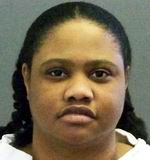
Erica Sheppard
Murderer Bobbie Sue Terrell
Murderer · USA · 1984
Bobbie Sue Dudley Terrell was a Pinellas County nurse and worked as the night s…
12 victims
Bobbie Sue Terrell
Murderer · USA · 1984
Bobbie Sue Dudley Terrell was a Pinellas County nurse and worked as the night s…
12 victims
 Megan Huntsman
Murderer · USA · 1996
Megan Huntsman was 40 at sentencing. She was a mother of three children who wer…
6 victims
Megan Huntsman
Murderer · USA · 1996
Megan Huntsman was 40 at sentencing. She was a mother of three children who wer…
6 victims
 Angela Johnson
Murderer · USA · 1993
Angela Jane Johnson was convicted in federal court of aiding and abetting the m…
5 victims
Angela Johnson
Murderer · USA · 1993
Angela Jane Johnson was convicted in federal court of aiding and abetting the m…
5 victims
 Catherine May Wood
Murderer · USA · 1987
Catherine May Wood was an American caregiver who worked at the Alpine Manor Nur…
5 victims
Catherine May Wood
Murderer · USA · 1987
Catherine May Wood was an American caregiver who worked at the Alpine Manor Nur…
5 victims
 Michele Kalina
Murderer · USA · 1996
Michele Kalina pleaded guilty to murder for one of five infants she initially w…
5 victims
Michele Kalina
Murderer · USA · 1996
Michele Kalina pleaded guilty to murder for one of five infants she initially w…
5 victims
 Amy Bishop
Murderer · USA · 1986
Amy Bishop — biology professor and perpetrator · James Anderson — Bishop’s husb…
4 victims
Amy Bishop
Murderer · USA · 1986
Amy Bishop — biology professor and perpetrator · James Anderson — Bishop’s husb…
4 victims
 Robert South
Murderer · USA · 1983
Robert South was executed in South Carolina on May 31, 1996. He was aged 51 at…
1 victim
Robert South
Murderer · USA · 1983
Robert South was executed in South Carolina on May 31, 1996. He was aged 51 at…
1 victim
 Karen Tobie
Murderer · USA · 2004
Karen Tobie was convicted of paying a man $4,000 to kill her husband, John Cata…
1 victim
Karen Tobie
Murderer · USA · 2004
Karen Tobie was convicted of paying a man $4,000 to kill her husband, John Cata…
1 victim
 Krishna Maharaj
Murderer · USA · 1986
Krishna Maharaj (born January 26, 1939) was a Trinidad and Tobago-born British…
2 victims
Krishna Maharaj
Murderer · USA · 1986
Krishna Maharaj (born January 26, 1939) was a Trinidad and Tobago-born British…
2 victims
 Mark Arlo Sheppard
Murderer · USA · 1993
November 28, 1993 — Mark Arlo Sheppard and his companion Andre Graham shot and…
2 victims
Mark Arlo Sheppard
Murderer · USA · 1993
November 28, 1993 — Mark Arlo Sheppard and his companion Andre Graham shot and…
2 victims
 George Alarick Jones
Murderer · USA · 1992
April 13, 1993 — George Alarick Jones and three accomplices went to the Red Bir…
2 victims
George Alarick Jones
Murderer · USA · 1992
April 13, 1993 — George Alarick Jones and three accomplices went to the Red Bir…
2 victims
- Gender
- female
- Country
- USA
- Location
- Houston, Texas, USA
- Date of birth
- September 1, 1973
- Age at first offence
- 20
- Characteristics
- robbery
- Victim profile
- Marilyn Sage Meagher, 43
- Method of murder
- Stabbing with knife
- Date(s) of murder
- June 30, 1993
- Years active
- 1993
- Date of arrest
- —
- Status
-
Sentenced to death
Sentenced to death on March 3, 1995
Case record: Erica Sheppard
Identification
Erica Sheppard was named as the defendant in a capital murder and robbery case. Erica Sheppard also appeared as Erica Yvonne Sheppard.
Background
Erica Sheppard was born on September 1, 1973. She completed high school. She had no prior prison record. She was unemployed and described as a battered woman. At the age of 19, she was already the mother of three young children.
The case narrative also described Sheppard as an African-American and stated that she was born in Bay City, Texas.
The offence
On June 30, 1993, Sheppard and co-defendant James Dickerson spotted Marilyn Sage Meagher carrying clothing from her car into her apartment and decided to rob her of her car. Sheppard and Dickerson tackled Meagher inside her apartment. While Meagher begged for her life, they slashed her throat with knives five times. They then wrapped her head in a plastic bag and struck her in the head with a 10-pound statue.
After the attack, Sheppard and Dickerson fled in Meagher’s 1993 Mazda 626. The vehicle was later recovered in Bay City, Texas.
The case materials also described an admission by Sheppard to police. Sheppard admitted she was there for the crime and did nothing to prevent it, but she said she did not stab or beat the woman.
Victim and relationships
Marilyn Sage Meagher was described as a female and as a 43-year-old Caucasian mother of two. Another portion identified her as a 43-year-old woman stabbed and clubbed to death in her apartment on June 30, 1993.
One of Meagher’s daughters found her body.
John Sage was identified as Meagher’s brother. He said he attended St. Thomas High School and grew up in the River Oaks area. He described his younger sister, Marilyn Sage Meagher, who was slain in 1993, and described a focus on forgiveness after her death.
Other involved individuals
Co-defendant: James Dickerson
- James Dickerson died on death row from AIDS.
Korey Jordan
- Korey Jordan was described as someone who was in the apartment with Sheppard and Dickerson the night before the murder and who claimed that Sheppard and Dickerson had planned the robbery and discussed killing if necessary.
Jonathon (older brother)
- The case described that Sheppard and Dickerson were staying with Sheppard’s older brother, Jonathon, in their apartment complex.
Jerry Bryant Jr.
- Paula Allen testified that she was the ex-wife of Sheppard’s current husband, Jerry Bryant Jr.
- Griggs testified that Sheppard lured him onto the street, setting him up so Bryant could finish the job.
- The account also stated that Bryant committed a drive-by shooting on Allen’s friend Wayland Ray Griggs.
Wayland Ray Griggs
- Griggs testified regarding the circumstances involving Bryant and the alleged role attributed to Sheppard.
Paula Allen
- Paula Allen testified in the punishment phase that she was the ex-wife of Sheppard’s current husband, Jerry Bryant Jr.
- Allen said Sheppard was an accomplice to a drive-by shooting.
Investigation
The case narrative stated that an acquaintance of Sheppard provided police with the information that led them to Sheppard and Dickerson.
A fingerprint expert testified that Sheppard’s bloody handprint was found at the scene of the crime. The account stated the blood was from the victim.
An assistant medical examiner later testified that the death of Marilyn Meagher was caused by a five-and-a-half-inch deep stab wound. The narrative stated that the knife severed the jugular vein and was delivered with such force that it remained lodged in the vertebrae, and that the witness opined that the blow could possibly have been caused by two people.
The case materials included trial testimony that Sheppard’s confession was introduced at trial on February 28, 1995.
Arrest
The narrative did not give a specific arrest date.
Trial
Erica Sheppard was convicted of murder and robbery. She was described as being convicted in the robbery and murder of Marilyn Sage Meagher in Houston. The case narrative stated that Sheppard and Dickerson decided to rob Meagher’s car and that the robbery turned violent when Meagher refused their demand to turn over her car keys.
Sheppard’s court-appointed lawyers were described as Charles Brown and additional lawyers who assisted him. Charles Brown was described as having never before been lead counsel on a death-penalty case, and the other lawyers appointed to assist him were described as having even less experience.
The narrative stated that Brown “barely put on a defense,” and that the jury found Sheppard guilty of capital murder.
Evidence and witness testimony (as described in the narrative)
Confession and account of the attack The narrative described a confession attributed to Sheppard that included details about the attack. The account included statements she made about how Dickerson demanded a butcher knife, how Sheppard entered first, how Dickerson held Meagher down, and how Sheppard retrieved a butcher knife and handed it to Dickerson. It also described that after blood gushed from Meagher’s throat, Dickerson told Sheppard to hold the woman down, that Dickerson placed a plastic bag over Meagher’s face, and that Dickerson tried to suffocate her. The narrative further described that Dickerson wrapped a bedsheet around her and smashed a heavy statue over her head. The narrative included that the prosecution’s case was bolstered by Korey Jordan’s testimony about planning and willingness to kill if necessary.
Testimony about future dangerousness and mitigation The narrative described that, under Texas law, for a person to be sentenced to death, the jury in the punishment phase had to answer yes to three questions: whether the defendant acted deliberately; whether the defendant’s conduct was unreasonable in response to any provocation offered by the deceased; and whether there was a probability the defendant would commit future acts of violence posing a continuing threat to society. It also described that if the jury answered no to any one of these questions, the defendant would be sentenced to life in prison.
Punishment phase witnesses The narrative stated that the prosecution called 11 witnesses in the punishment phase. It described:
- Korey Jordan as the first witness, who testified that on the evening before the murder he saw Sheppard and Dickerson attempt to rob another woman in the complex, and that they aborted their attempt when the woman ran into her apartment.
- Paula Allen’s testimony regarding her ex-husband relationship to Sheppard’s current husband, Jerry Bryant Jr., and Sheppard’s alleged accomplice role in a drive-by shooting involving Wayland Ray Griggs.
- Griggs’s testimony that Sheppard lured him onto the street so Bryant could finish the job.
- Two jailmates who testified that Sheppard bragged about the murder of Marilyn Meagher after news accounts aired on television at the Harris County jail.
The narrative also stated that Sheppard’s attorney did not call her to the witness stand in either the guilt/innocence or punishment phase, and that Sheppard’s grandmother was called by the defense but was asked almost no questions about Sheppard’s background or character.
Sentencing
Sheppard was sentenced to death row on April 25, 1995. The case materials stated that Sheppard was sentenced to death in March 1995 and also stated that her sentence was “Sentenced to death on March 3, 1995.” The record included lethal injection as the described method of execution as the outcome after the jury’s verdict.
The narrative stated: death by lethal injection.
Appeals
Direct appeal The narrative stated that there would be an appeal to the Texas Court of Criminal Appeals. It further stated that on June 18, 1997, in an unpublished opinion, the court affirmed the conviction, stating there was no reversible error.
Habeas corpus The narrative described post-conviction relief through habeas corpus and included discussion of habeas process amendments and counsel appointment issues.
The materials stated that Sheppard’s attorney requested a new attorney for the habeas appeal and asked that his firm be appointed without compensation. They also stated that Attorney James Keegan had been appointed to handle the habeas appeal and had already been granted the case’s only 90-day extension. The materials stated the deadline for filing the petition was July 1 and that a reappointment would restart the filing timeline and give another 180 days.
The narrative described allegations regarding ineffective assistance of trial counsel and that the habeas petition included 40 grounds of error, completed on the day it was due and being 142 pages long.
The narrative described one mitigation-related matter regarding an affidavit by Paula Allen. It stated that Allen testified in the capital case and accused Sheppard, and that a separate attempted-murder case was dropped after Allen later signed an affidavit swearing she had lied to the police and had not seen either Sheppard or Bryant on the night of the shooting. The narrative stated that Brown had this affidavit but did not bring it to the jury’s attention, and that cross-examination of Allen was largely ineffective as a result.
The narrative also described Sheppard’s duress claim and asserted that duress evidence was not presented to the jury. It included that Sheppard claimed that before going inside the apartment, James Dickerson grabbed her and threatened her verbally, including “If you don't go in, I'll kill you and the baby.” It also described that after the murder, she claimed Dickerson continued to threaten her and the baby and kept her daughter with him as they made their getaway. The narrative included that on the road to Bay City, James kept the knife on her and told her he would slit her throat if she attempted to escape.
Two attorneys and investigative steps were described in relation to habeas proceedings, including investigator John Castillo and that investigator Castillo had mitigating evidence.
The narrative also described that the assistant medical examiner testimony and fingerprint testimony were part of the trial record.
Outcome
Sheppard remained on death row in the Texas Department of Criminal Justice’s Mountain View Unit in Gatesville, Texas.
Aftermath
Non-profit ministry of John Sage The narrative stated that after Meagher’s death, John Sage spent years in a dark place and later focused on forgiveness. It stated he built a nonprofit ministry called Bridges to Life, which brought crime victims into prisons to work with offenders in a class setting and aimed to reduce prison recidivism rates and reduce the number of crime victims while enhancing public safety. The narrative stated that the program’s lessons included a message of love and forgiveness found through God.
The narrative stated that John Sage’s ministry operated in prisons throughout Texas, in 10 other states and in Australia, South Africa and Mexico, and that it had more than 900 volunteers and more than 20,000 prisoners participating with about 15,000 graduating.
Letter from Erica Sheppard The narrative included a letter attributed to Erica Sheppard, Texas Death Row May 01, 1999. The letter began with:
My name is Erica Sheppard and I am a female on Death Row in the State of Texas. I have been on Death Row for 4 years and in the years that I have been here, never have I experienced such inhumane treatment; please allow me the opportunity to inform you of what's happening to us behind prison walls... On October 21, 1983 a court ordered death row plan was passed for death row inmates Civil Action Number H-78-987 by Honorable William Wayne, Justice in the United States District Court, for the southern District of Texas Houston Division. In this plan there are 2 classification of death row inmates - work capable and death row segregation; I am a death row segregated inmate, not because of anything I have done wrong, but because as a death row inmate it is by law my choice to participate in the work program or not. However behind these prison walls if you don't work, you are punished and treated differently; allow me to give you some examples if you will... 1.Every list of reasons for a death row segregated inmate is either violent or negative... a) Escape or Attempted Escape. b) Assaultiv Behavior c) Possession of a deadly weapon... etc. etc. Not 1 time does it say that it's our choice to work or not to work. It is a privilege to participate in the work program, it is not mandatory for us to work because we do not get any credit or good time for working nor do we get paid to work. 2. For recreation we are allowed 1 hour out of our cells 7 days a week, where as by court law it says we shall be allowed to recreate outside of our cells for not less than 3 hours a day. Where are our other 2 hours of recreation time? 3. We are housed in a building titled the Multipurpose Facility that also houses Psyche patients and disciplinary segregated inmates, we are often confused with the disciplinary segregated inmates, we are often confused with the disciplinary segregated inmates because we to are labeled segregated inmates. But the difference between the 2 is: We are segregated because we have a death sentence by law. They are segregated because of acting bad and not following the rules, but often times when people tour this facility they are not informed of this status. Why? Because they want to make it appear that we are here because we have disciplinary problems and that's just not true. This multipurpose facility is not set up to house death row inmates, we are supposed to have a day room equipped with at least 4 tables and 16 stools, a chinning bar and an assortment of table games such as checkers, dominoes and chess, we are also suppose to have a water fountain for drinking water, yet we have no such things. Why? There are 4 other women housed in this multipurpose facility with me who are also death row level 1 inmates, yet we are kept separated from each other with no human contact, yet in the court ordered plan it says we can recreate together so why do they keep us separated from each other? The women who do work are allowed to recreate together and they have a drinking fountain, games to play and access to other things in their day room, why the discrepancy there? 4. In the court ordered death row plan it states that death row segregated inmates shall be permitted to view the television for 15 hours a day, yet we are not allowed or given the opportunity to do this, we are being denied our proper tv time as ordered by the courts. Recently the Mountain View Unit under Warden Pamela Baggett has come out with numerous changes as a punishment for us as death row inmates, we are... 1. Handcuffed to walk across the hall to another room that would only take 2 steps to get to or from our cells, which before it was not like this, we were not to be handcuffed inside of the building at all. 2. We are handcuffed to walk from our cells to the showers that would only take about 20 steps to get to from or cells: Again it was not like this, we were not to be handcuffed inside of the building at all. 3. We are also repeatedly stripped searched when we leave our cells to go to recreation or to the showers, or appointments, or visits and when we are returned to our cells even though we have never left the presence of the officers. 4. Our cells are searched repeatedly every day, every shift even when we don't leave our cells. We are confined to our cells 23 sometimes 24 hours a day, in the process of these cell searches for contraband as the administration calls it, our possessions are destroyed and mishandled inappropriately when there is no need for these actions, yet the men on death row do not have to go through these procedures as we women do. We are confined to cells that are not properly ventilated, we continue to tell the appropriate people about it, yet no one seems to care or want to correct this inhumane treatment. There are 600 plus men on death row in the State of Texas and these men are not treated as we are, they are allowed 2-3 hours a day of recreation time out of their cells, they are allowed to view the tv the appropriate 15 hours a day as the court order states, yet we as death row women are not, why? We are all under the same court order. I ask you to please write letters to... 1. Rita Radositz - Attorney at Law - P.O. Box 296 Austin, Texas 78767 2. Judge William Wayne, Justice - Senior, U.S. District Judge, 903 San Jacinto Blvd. Suite #310, Austin TX 78701 3. Donna Brorby, 660 Market Street, #300, San Francisco, CA 94104 4. TDCJ-ID Office of Ombudsman, P.O. Box 99, Huntsville, TX 77342-0099 5. A.C.L.U., 123 W. 43rd Street New York, NY 10036 6. Dr. Pierre Duterte, 18, Rue de Bellefort, 75009 Paris, France 7. Gary Johnson and Wayne Scott, Texas Department of Criminal Justice, Institutional Division Directors Office TDCJ-ID Huntsville, TX 77342 or 77343 8. Warden Pamela Baggett, Mountain View Unit 2305, Ransom Road, Gatesville TX 76528-9399 And inform them and express your opinions about what's happening to us behind these prison walls, please! If no one speaks up on our behalf, this inhumane treatment will continue to go on. I thank your for your time and your efforts to help, God be with you all Sincerely, Ms. Erica Sheppard #999144 Mt. View Unit Death Row 2305 Ransom Road Gatesville TX 76528-9399
Names and locations mentioned in the letter included Rita Radositz, Judge William Wayne, Donna Brorby, TDCJ-ID Office of Ombudsman, A.C.L.U., Dr. Pierre Duterte, Gary Johnson, Wayne Scott, and Warden Pamela Baggett, as well as the addresses given in the letter.
Other details
Place of crime The location of the crime was Houston, Texas. The materials also referenced an apartment address of 4655 Wild Indigo.
Vehicle and location connected to the getaway Sheppard and Dickerson fled in a 1993 Mazda 626.
Execution location unit references The narrative referenced Mountain View Unit and Gatesville, Texas in connection with Sheppard’s death-row status. It also referenced the Reverend Jesse Jackson’s visit shortly before Sheppard was scheduled to die. It also included mentions of Karla Faye Tucker and that Tucker was described as having a jailhouse conversion. It also stated that Tucker would pray with Sheppard and counsel her.
Confession timing and trial date references The narrative stated that Sheppard’s confession was introduced at trial on February 28, 1995. It stated that she was sentenced to death row on April 25, 1995. It also stated a schedule for an execution date and subsequent handling of appeals, including that Sheppard wrote a letter on November 7, 1997 asking that her appeal be stopped and her execution date carried out as promptly as possible, and that the trial court scheduled her execution date for April 20, 1998. It also stated that Bianca Jagger wrote her a letter urging her to reconsider her decision. It stated that Amnesty International was referenced in relation to counsel.
Spotted an error, or have more information about this case?