Frank Guinan
Murderer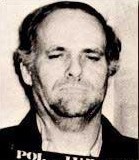 Ervil LeBaron
Murderer · USA · 1972
Ervil Morrell LeBaron (1925 to August 16, 1981) was the leader of a polygamous…
35 victims
Ervil LeBaron
Murderer · USA · 1972
Ervil Morrell LeBaron (1925 to August 16, 1981) was the leader of a polygamous…
35 victims
 Brian Kevin Rosenfeld
Murderer · USA · 1985
Brian Kevin Rosenfeld Brian Kevin Rosenfeld was sentenced to three concurrent l…
23 victims
Brian Kevin Rosenfeld
Murderer · USA · 1985
Brian Kevin Rosenfeld Brian Kevin Rosenfeld was sentenced to three concurrent l…
23 victims
 Marvin Gray
Murderer · USA · 1975
Marvin Gray was convicted killer who claimed responsibility for 23 slayings and…
23 victims
Marvin Gray
Murderer · USA · 1975
Marvin Gray was convicted killer who claimed responsibility for 23 slayings and…
23 victims
 Yahweh ben Yahweh
Murderer · USA · 1980
Yahweh ben Yahweh was born and legally named Hulon Mitchell Jr. (October 27, 19…
23 victims
Yahweh ben Yahweh
Murderer · USA · 1980
Yahweh ben Yahweh was born and legally named Hulon Mitchell Jr. (October 27, 19…
23 victims
 Russell Ellwood
Murderer · USA · 1991
Russell Ellwood was a former taxi driver. Authorities suspected him of killing…
20 victims
Russell Ellwood
Murderer · USA · 1991
Russell Ellwood was a former taxi driver. Authorities suspected him of killing…
20 victims
 Cory Morris
Serial killer · USA · 2002
Cory Morris was a part-time karaoke disc jockey. Relatives had allowed Morris t…
5 victims
Cory Morris
Serial killer · USA · 2002
Cory Morris was a part-time karaoke disc jockey. Relatives had allowed Morris t…
5 victims
 Gian Luigi Ferri
Mass murderer · USA · 1993
Gian Luigi Ferri was identified as a 55-year-old businessman and real estate sp…
8 victims
Gian Luigi Ferri
Mass murderer · USA · 1993
Gian Luigi Ferri was identified as a 55-year-old businessman and real estate sp…
8 victims
 Francisco Das Chagas
Serial killer · Brasil · 1989
Francisco das Chagas was a bicycle mechanic in Brazil. He confessed to killing…
42 victims
Francisco Das Chagas
Serial killer · Brasil · 1989
Francisco das Chagas was a bicycle mechanic in Brazil. He confessed to killing…
42 victims
 Ershad Sikder
Murderer · Bangladesh · 1990
Ershad Sikder was an influential political figure in the south-western city of…
30 victims
Ershad Sikder
Murderer · Bangladesh · 1990
Ershad Sikder was an influential political figure in the south-western city of…
30 victims
 Michael Frederick Griffin
Murderer · USA · 1993
Michael Frederick Griffin · March 4, 1994 — A jury found Michael Frederick Grif…
1 victim
Michael Frederick Griffin
Murderer · USA · 1993
Michael Frederick Griffin · March 4, 1994 — A jury found Michael Frederick Grif…
1 victim
 Russell Peeler
Murderer · USA · 1998
Defendant: Russell Peeler Jr. · Case caption: State of Connecticut v. Russell P…
3 victims
Russell Peeler
Murderer · USA · 1998
Defendant: Russell Peeler Jr. · Case caption: State of Connecticut v. Russell P…
3 victims
- Gender
- male
- Country
- USA
- Location
- Missouri, USA
- Date of birth
- November 30, 1945
- Age at first offence
- 36
- Characteristics
- revenge
- Victim profile
- John McBroom (fellow inmate) / Robert Baker (fellow death-row inmate)
- Method of murder
- St abbing with knife made from scissor halves
- Date(s) of murder
- January 25, 1981 / 1985
- Years active
- 1981–1985
- Date of arrest
- —
- Status
-
Executed
Executed by lethal injection in Missouri on October 6, 1993
Case details
Frank Joseph Guinan was tried in the State of Missouri in connection with the January 25, 1981 stabbing death of fellow inmate John McBroom at the Missouri State Penitentiary. Guinan was executed in Missouri on October 6, 1993, by lethal injection.
Timeline
- January 25, 1981 — John McBroom was stabbed and died at the prison hospital after being pronounced dead at 11:27 a.m.
- August 8, 1988 — A forensic evaluation of Frank Guinan was dated “Forensic Evaluation of Frank Guinan” by James R. Leach, D.O., & David L. Reuterfors, Ph.D.
- May 18, 1989 — The District Court denied Guinan’s petition for habeas relief in Guinan v. Armontrout.
- January 2, 1991 — Guinan brought his Rule 60(b) motion in the District Court.
- October 1, 1993 — A stay of execution was imposed in the federal case on October 1, 1993.
- September 30, 1993 — Guinan filed his petition for writ of habeas corpus under 28 U.S.C. § 2254 at 4:00 p.m.
- June 9, 1993 — The Eighth Circuit case was submitted.
- September 16, 1993 — The Eighth Circuit decided the appeal in the matter numbered 93-1953.
- October 4, 1993 — The Eighth Circuit issued an order in case No. 93-3394 regarding a stay of execution.
- October 6, 1993 — Guinan was scheduled to be executed at 12:01 a.m., and he was executed by lethal injection in Missouri.
Background
In 1981, Guinan was incarcerated at the Missouri State Penitentiary. He shared a cell on the ground floor of Housing Unit 4 with Richard Zeitvogel. John McBroom shared a cell with William Houchin on the second floor of the same housing unit.
Guinan and Zeitvogel were subject to capital-murder proceedings in connection with McBroom’s murder. The punishment phase included evidence of Guinan’s prior felony convictions and a previous stabbing incident at the prison in which Guinan was involved.
Guinan was also described as being sentenced to death for a second murder involving death-row inmate Robert Baker, and he received a second death sentence for that 1985 slaying. The record described that Baker was stabbed more than 50 times.
Psychological testing was described as finding that Guinan did not have the ability to “deliberate” at the time of the homicide. Testing concluded he had “mild to moderate” brain damage that prevented him from thinking “logically or clearly in any kind of stressful situation”… He could “act, but can’t think.” Guinan was also described as having a history of attempted suicide and having taken extensive psychotropic medications in prison. Guinan’s trial attorney was described as offering no mitigating evidence during the penalty phase.
The offence
McBroom’s murder occurred on January 25, 1981, a Sunday morning, and thus a time when only one officer was posted on duty in the housing unit.
Beginning at approximately 10:30 a.m. on January 25, 1981, the officer on duty observed Guinan and Zeitvogel make several trips to the upper levels of the unit. The officer also noticed that Houchin, who normally remained in his cell until noon, was outside the cell. The officer also observed that three other inmates had taken positions from which they could observe the officer.
Beginning at 10:55 a.m., two of these three inmates began to request that the officer ring the buzzer for “mainline.” The requests for “mainline” were treated as unusual because when “mainline” was rung, most inmates went to the cafeteria for lunch, creating noise and movement in the housing unit. The request for “mainline” was also described as suspicious because prisoners who wished to may go to the cafeteria before “mainline.”
Shortly after 11:00 a.m., and before help arrived, the officer observed Guinan and Zeitvogel emerge from McBroom’s cell. Both men were covered with blood, and each was carrying a knife fashioned from one half of a pair of scissors. As Guinan attempted to close the door to the cell while the officer watched him, both Guinan and Zeitvogel began running away from the area of McBroom’s cell.
During the flight and capture, the officer observed McBroom come out of cell 36 covered with blood and bleeding profusely. McBroom staggered out of his cell covered in blood, collapsed outside the cell, and was taken to the prison hospital where he was pronounced dead at 11:27 a.m.
McBroom had suffered at least sixteen separate stab wounds. The record described three stab wounds around the left eye that penetrated his brain, and additional stab wounds in the chest and back that severed major blood vessels in the liver and right lung. The record further described six stab wounds in his back.
Guinan was convicted of capital murder. At trial, Guinan relied on a theory of self-defense, and the jury rejected that theory.
Investigation
On January 25, 1981, Sergeant Matthias was the only correctional officer on duty in Unit 4 of the Missouri State Penitentiary because January 25, 1981 fell on a Sunday. Sergeant Matthias was located in a booth on the ground floor where he could observe all cells.
About 10:30 a.m., Sergeant Matthias began to notice what he considered unusual and suspicious behavior on the part of several inmates. The inmates Sherrill, Cleveland and Hewitt left the places where they normally “hung out” and took positions where they could watch the officer. Cleveland made requests that Sergeant Matthias ring the buzzer for “mainline.” The request for “mainline” was considered suspicious because inmates were free to go to lunch before ‘mainline" sounded.
Sergeant Matthias called his shift captain, Captain Borghardt, and told him that something was wrong and that he felt he was going to need help.
Shortly after Sergeant Matthias made the telephone call, but before assistance arrived, he saw Guinan and Zeitvogal emerge from cell 36 covered with blood and each carrying a knife made from scissor halves.
During capture, Sergeant Matthias saw inmate and victim McBroom come out of cell 36 covered with blood and bleeding profusely, and Sergeant Matthias observed that McBroom collapsed outside the cell and was taken to the prison hospital where he died as a result of massive blood loss.
Arrest
The record described the capture and subdual of Guinan and Zeitvogel after Sergeant Matthias’s reinforcements arrived and after a brief altercation. During the capture, Guinan and Zeitvogel were subdued and disarmed.
Trial
He relied on self-defense, and the jury rejected that theory.
The capital murder conviction was tied to Missouri’s capital murder statute, under which a person who “deliberately” kills another person was guilty of capital murder. Missouri law separated capital murder from second degree murder based on deliberation as an essential element.
Prior to trial, Guinan’s counsel moved for a mental examination under Mo.Rev.Stat. Sec. 552.020 (Supp.1980). Section 552.020.2 provided that “[w]henever any judge has reasonable cause to believe that the accused has a mental disease or defect excluding fitness to proceed he shall ... appoint one or more private psychiatrists ... to examine the accused or shall order the director of the department of mental health ... to have the accused examined.”
Guinan’s counsel argued that Guinan’s history of violent crime, the seriousness of the offense with which he was charged, and counsel’s doubt about Guinan’s competency supported conducting a mental examination. The state trial court denied the motion for a mental examination.
During sentencing, the state introduced evidence of Guinan’s twelve prior felony convictions, including two for assault with intent to kill with malice, and evidence of a previous stabbing incident at the prison in which Guinan was involved. Guinan did not present any evidence at the punishment phase.
The jury found three statutory aggravating factors:
- Guinan had “a substantial history of serious assaultive criminal convictions,” id. Sec. 565.012.2(1) (Supp.1980).
- The murder was “outrageously or wantonly vile, horrible or inhuman in that it involved torture, or depravity of mind,” id. Sec. 565.012.2(7) (Supp.1980).
- At the time of the murder Guinan was “in a place of lawful confinement,” id. Sec. 565.012.2(9) (Supp.1980).
The jury sentenced Guinan to death.
Sentencing
The record stated that the jury sentenced Guinan to death based on the three statutory aggravating factors.
The record also described that Guinan received a second death sentence for the 1985 slaying of death-row inmate Robert Baker, who was stabbed more than 50 times. The record described that Mr. Guinan received a second death sentence for Baker.
Appeals
Missouri Supreme Court and post-conviction proceedings
The Supreme Court of Missouri affirmed Guinan’s conviction and sentence on appeal in Guinan, 665 S.W.2d 325.
Guinan sought post-conviction relief under Rule 27.26 of the Missouri Supreme Court Rules, arguing, inter alia, ineffective assistance of trial counsel for failing to investigate adequately a possible defense based on mental disease and failing to present mitigating evidence at the punishment phase. The state trial court denied the Rule 27.26 motion, and the Missouri Court of Appeals affirmed that denial in Guinan v. State, 726 S.W.2d 754 (Mo.Ct.App.1986), cert. denied, 484 U.S. 873, 108 S.Ct.2d 161 (1987).
Federal habeas and related proceedings
Guinan sought federal habeas relief under 28 U.S.C. Sec. 2254, raising ineffective assistance of trial counsel for mental-status investigation and the failure to present mitigating evidence.
The District Court ordered a psychiatric evaluation of Guinan and heard evidence from the psychiatrist and the psychologist who conducted the evaluation. Guinan was diagnosed as having antisocial personality disorder, which the psychiatrist described as “a diagnosis that does not infer a severe mental disease. It's really personality characteristics that meet certain criteria....” Another evaluation characterization was that Guinan was “overcontrolled,” explained as: “a diagnosis that does not infer a severe mental disease. It's really personality characteristics that meet certain criteria....” and further described as meaning that Guinan “may bottle up his frustrations rather than finding some way of dispelling them and then after they have kind of accumulated for a period of time, they burst forth in an overly aggressive an [sic] inappropriate way.” The examiners concluded there was no reason to believe that Guinan suffered from any mental illness either at the time of the examination or in January 1981 when the murder was committed. The evaluation was dated “Aug. 8, 1988.”
The District Court denied Guinan’s petition for habeas relief, finding “there was no prejudice by omission of this evidence even if the Court assumes that counsel was ineffective for failing to further investigate this area.” The District Court reasoned that Guinan’s mental problems did not constitute a mental disease or defect significant enough to excuse responsibility for the crime or to undermine confidence in the outcome of the sentencing determination.
Guinan appealed the denial of habeas relief, and the Eighth Circuit affirmed the judgment in Guinan, 909 F.2d 1224.
Guinan then filed a motion pursuant to Rule 60(b) of the Federal Rules of Civil Procedure seeking relief from the District Court’s judgment. The basis for that Rule 60(b) motion was a new mental evaluation by William O’Connor, a psychologist, who concluded that Guinan suffers from organic mental disorder.
The District Court held an evidentiary hearing on the Rule 60(b) motion, at which O’Connor testified. The Eighth Circuit later described that O’Connor agreed with Leach and Reuterfors that Guinan did not suffer from any psychosis, that Guinan was not insane at the time of the murder, and that Guinan was competent to stand trial. According to O’Connor, Guinan had “mild to moderate” organic brain damage dating back to before the time of the murder. That brain damage impaired Guinan’s “ability to think in a logical organized fashion or plan and anticipate in a logical fashion rapidly.”
O’Connor stated: “[i]n a prison fight or similar stressful situation, Mr. Guinan's reaction would have been to act without thinking.”
O’Connor also stated that, at the time of the murder, Guinan “was incapable of considering the taking of another's life with a cool and deliberate state of mind.”
The District Court treated the Rule 60(b) motion as a second habeas petition, found the claims barred under rules applicable to successive petitions, and denied the motion. Guinan also filed a Rule 59(e) motion asking the District Court to alter or amend its judgment, which the District Court denied. Guinan appealed from the denial of his Rule 60(b) motion.
Eighth Circuit decision (No. 93-1953, decided Sept. 16, 1993)
In the Eighth Circuit, Frank J. Guinan appealed from the District Court’s denial of his Rule 60(b) motion seeking relief from the District Court’s denial of his 28 U.S.C. Sec. 2254 petition for a writ of habeas corpus. The Eighth Circuit affirmed the denial of the Rule 60(b) motion and held that the District Court correctly treated it as a second habeas petition and that Guinan’s claims were barred under successive-petition principles.
The Eighth Circuit stated that Rule 60(b) could relieve a party from final judgment in certain circumstances, but that Guinan’s motion based on new evidence was untimely under Rule 60(b)’s one-year limit for newly discovered evidence and was therefore properly treated as a second habeas petition.
The Eighth Circuit further reasoned that, even if timely, the Rule 60(b) motion would still be treated as a second habeas petition because it sought to raise claims that could have been raised in Guinan’s original habeas petition or were raised and adjudicated there.
Regarding Guinan’s “deliberation” claim, the Eighth Circuit noted that the argument was made for the first time in Guinan’s Rule 59(e) motion and that Guinan appealed only from denial of the Rule 60(b) motion, so the issue was not properly before the court. The Eighth Circuit further explained that the claim would be barred absent cause and prejudice or miscarriage of justice, and Guinan failed to show clear and convincing evidence that no reasonable juror would have found him guilty of capital murder.
The Eighth Circuit addressed a sentencing-phase ineffective assistance argument tied to the same O’Connor evaluation and concluded it was barred as successive or abusive unless a miscarriage of justice would result. It concluded that under Sawyer principles, Guinan could not show the absence of aggravating circumstances or eligibility conditions because the jury had found statutory aggravating factors and the O’Connor evaluation was irrelevant to at least two aggravating factors. The Eighth Circuit also described O’Connor’s evaluation as additional mitigating evidence.
At the end of the decision, the Eighth Circuit denied the State of Missouri’s motion to quash the certificate of probable cause as moot, granted the motion to vacate the stay of execution, vacated the stay, and affirmed the District Court’s judgment.
Eighth Circuit order (No. 93-3394, Oct. 4, 1993)
In a separate Eighth Circuit order, the court addressed the State’s motion to vacate the District Court’s stay of execution imposed on October 1, 1993.
The Eighth Circuit stated that Frank J. Guinan had been sentenced to death for the January 1981 stabbing death of John McBroom at the Missouri State Penitentiary. The court stated he was scheduled to be executed on October 6, 1993, at 12:01 a.m.
The Eighth Circuit stated that Guinan’s motion for a stay of execution was filed with his habeas corpus petition on September 30, 1993, at 4:00 p.m. The Eighth Circuit stated this was Guinan’s third federal habeas petition, referencing Guinan v. Armontrout and Guinan v. Delo.
The Eighth Circuit described a newly raised claim that Guinan was not in John McBroom’s cell when McBroom was stabbed to death and had nothing to do with the murder except possibly to try and prevent it. It described Guinan’s actual innocence claim as supported by eight affidavits from other prisoners convicted of murder and other violent offenses, and an affidavit from Dr. Richard Heimburger, a plastic surgeon who performed surgery on Guinan’s hand.
The Eighth Circuit stated that the claims in the petition for a writ of habeas corpus had not been raised earlier and were abusive, and that Guinan made no showing of cause. It stated it appeared the claims were withheld deliberately until virtually the last minute.
The Eighth Circuit quoted an applicable standard and referred to Sawyer v. Whitley, and held that Guinan must show by clear and convincing evidence that, but for a constitutional error, no reasonable juror would have found petitioner guilty of capital murder under the applicable state law.
The court discussed the late-blooming statements from fellow prisoners as inconsistent with prior sworn testimony, inconsistent with each other, inconsistent with the bulk of evidence at trial, and inconsistent with defenses previously asserted. It also stated that explanations for the eleven-year delay were nonexistent or unpersuasive. It said some contentions were not new at all and that some affidavits reported inadmissible hearsay.
The Eighth Circuit described that some affidavits repeated statements of Guinan’s innocence allegedly overheard by affiants and supposedly made by Richard Zeitvogel, who already had testified at Guinan’s trial that he committed the murder without Guinan’s assistance.
Regarding Dr. Heimburger’s affidavit, the Eighth Circuit stated that Heimburger repaired tendons in Guinan’s right hand nearly eight weeks before the murder, examined the hand approximately two and one-half weeks after the murder, and followed up for months. The Eighth Circuit described Heimburger’s statement: “that it would have been somewhat difficult and painful” for Guinan to have participated in the murder (presuming, “we assume, Guinan would have used his right hand”), and the court described concluding that “somewhat difficult” was not equivalent to stating it would not be possible. It also stated that this was not newly discovered evidence because Guinan knew of his surgery at the time and introduced hospital records at his trial.
The Eighth Circuit stated that applying the prevailing legal standard it was “particularly egregious” to enter a stay on second or subsequent habeas petitions unless “there are substantial grounds upon which relief might be granted.” The court cited Delo v. Blair and Herrera v. Collins.
The Eighth Circuit referenced the Missouri Supreme Court’s recitation of facts and overwhelming evidence of guilt and concluded that even if Guinan’s “newly discovered evidence” had been presented to the jury, it could not be said that no reasonable juror would have found petitioner guilty of capital murder. Accordingly, the court held the claim was barred from federal court review and that the stay of execution must be vacated, and it vacated the stay.
Other details
Sentencing related remarks and execution interview details
The record described that Guinan went to his death just after midnight at the Potosi Correctional Center, hours after the Supreme Court denied a stay of execution. His wife, Penny, waved goodbye and mouthed, “I love you,” several times from a window, and Guinan responded, though his words could not be heard.
In an interview in The St. Louis Post-Dispatch on Tuesday, the record described Guinan saying he had walked into McBroom’s cell to find Zeitvogel stabbing McBroom. Guinan said: “I told Rich to stop, but it was too late.”
Jury considerations and eyewitness references
The record included claims that the trial jury did not have the opportunity to consider evidence from four eyewitnesses who saw the stabbing of McBroom and would have testified that another inmate wielded the knife. The record also stated that at least one of these eyewitnesses had sworn he was intimidated by prison officials into not testifying to what he saw. It further stated that other witnesses not called at the trial would testify that it was common knowledge among inmates and corrections officials at the Missouri State Penitentiary that Richard Zeitvogel rather than Guinan had killed McBroom.
Mental health and evaluation specifics
The record described that psychological testing in 1990 and 1991 found Guinan did not have the ability to “deliberate” at the time of the homicide, describing “mild to moderate” brain damage that prevented him from thinking “logically or clearly in any kind of stressful situation”… and describing that he could “act, but can’t think.”
The record described that Guinan had a history of attempted suicide and had taken extensive psychotropic medications in prison.
The record described that Guinan’s trial attorney offered no mitigating evidence during the penalty phase.
The Eighth Circuit order and decision included multiple direct quotes from O’Connor’s affidavit and testimony, including:
- “ability to think in a logical organized fashion or plan and anticipate in a logical fashion rapidly.”
- “[i]n a prison fight or similar stressful situation, Mr.
- “was incapable of considering the taking of another's life with a cool and deliberate state of mind.”
The Eighth Circuit decision also included quotations defining deliberation under Missouri law:
- “Deliberation means the defendant considered the taking of another's life while in a cool and deliberate state of mind.”
- “means the defendant considered the taking of another's life while in a cool and deliberate state of mind.”
- “may be proved by indirect evidence and inferences reasonably drawn from circumstances surrounding the slaying.”
The Eighth Circuit decision also referenced that Missouri law allowed evidence of mental derangement short of insanity as evidence of lack of deliberate design, and it cited State v. Anderson for that proposition.
Statutory and procedural references appearing in the record
The record described the motion for mental examination under Mo.Rev.Stat. Sec. 552.020 (Supp.1980) and included quoted statutory language about “mental disease or defect excluding fitness to proceed.”
The record described that Guinan’s Rule 60(b) motion was based on new evidence and was subject to the one-year limit in Fed.R.Civ.P. 60(b).
The record also described that Guinan’s Rule 60(b) claims were barred as successive petitions and abusive claims, and it referenced standards for miscarriage of justice and actual innocence, including the Sawyer standard and McCoy v. Lockhart.

Spotted an error, or have more information about this case?