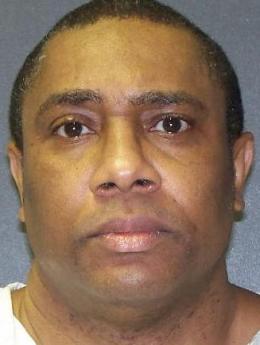
Kenneth Mosley
Murderer Russell Ellwood
Murderer · USA · 1991
Russell Ellwood was a former taxi driver. Authorities suspected him of killing…
20 victims
Russell Ellwood
Murderer · USA · 1991
Russell Ellwood was a former taxi driver. Authorities suspected him of killing…
20 victims
 Robert Martines Perez
Murderer · USA · 1994
Name: Robert Martines Perez · Other name used in proceedings: Robert Martinez P…
15 victims
Robert Martines Perez
Murderer · USA · 1994
Name: Robert Martines Perez · Other name used in proceedings: Robert Martinez P…
15 victims
 Billy Frank Vickers
Murderer · USA · 1993
Billy Frank Vickers Vickers was executed by lethal injection in Texas on Januar…
14 victims
Billy Frank Vickers
Murderer · USA · 1993
Billy Frank Vickers Vickers was executed by lethal injection in Texas on Januar…
14 victims
 Peter Zimmer
Homicide · USA · 1983
Peter Zimmer pleaded no contest to the killings in 1983 and was found delinquen…
3 victims
Peter Zimmer
Homicide · USA · 1983
Peter Zimmer pleaded no contest to the killings in 1983 and was found delinquen…
3 victims
 Emanuel Johnson
Murderer · USA · 1988
Emanuel Johnson was convicted of First-Degree Murder and was sentenced to death…
2 victims
Emanuel Johnson
Murderer · USA · 1988
Emanuel Johnson was convicted of First-Degree Murder and was sentenced to death…
2 victims
 Henry Eugene Hodges
Murderer · USA · 1989
Defendant: Henry Eugene Hodges (appellant) · Victim: Ronald A. Bassett (Nashvil…
3 victims
Henry Eugene Hodges
Murderer · USA · 1989
Defendant: Henry Eugene Hodges (appellant) · Victim: Ronald A. Bassett (Nashvil…
3 victims
 Chante Mallard
Murderer · USA · 2001
Chante Jawan Mallard was convicted of murder and tampering with evidence in Tar…
1 victim
Chante Mallard
Murderer · USA · 2001
Chante Jawan Mallard was convicted of murder and tampering with evidence in Tar…
1 victim
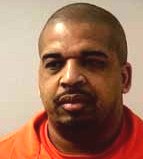 Robert Gattis
Murderer · USA · 1990
Robert Gattis (DOB: 11/18/1961) was a Black male. Gattis was convicted in Octob…
1 victim
Robert Gattis
Murderer · USA · 1990
Robert Gattis (DOB: 11/18/1961) was a Black male. Gattis was convicted in Octob…
1 victim
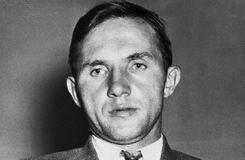 Bruno Hauptmann
Murderer? · USA · 1932
Bruno Hauptmann was a German carpenter and former criminal. He was sentenced to…
1 victim
Bruno Hauptmann
Murderer? · USA · 1932
Bruno Hauptmann was a German carpenter and former criminal. He was sentenced to…
1 victim
- Gender
- male
- Country
- USA
- Location
- Dallas County, Texas, USA
- Date of birth
- September 7, 1958
- Age at first offence
- 39
- Characteristics
- bank r obbery
- Victim profile
- Michael David Moore, 32 (Garland police officer)
- Method of murder
- Shooting
- Date(s) of murder
- February 15, 1997
- Years active
- 1997
- Date of arrest
- Same day (wounded by police)
- Status
-
Executed
Executed by lethal injection in Texas on January 7, 2010
Case identification
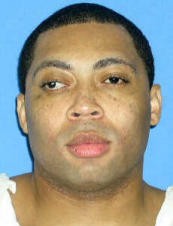
Kenneth Mosley was convicted of capital murder and was executed by lethal injection in Texas on January 7, 2010.
Timeline
- February 15, 1997 — Kenneth Mosley entered a Bank One in Garland dressed in long dark clothing and a dark toboggan-style cap, and a struggle occurred with Officer Michael David Moore during the attempted robbery.
- March 18, 1997 — A Dallas County grand jury indicted Kenneth Mosley for capital murder in the death of Officer Michael Moore.
- October 14, 1997 — A Dallas County jury found Mosley guilty of capital murder.
- October 16, 1997 — After a separate sentencing hearing, Mosley was sentenced to death.
- May 10, 2000 — The Texas Court of Criminal Appeals affirmed the conviction and sentence.
- June 25, 2003 — On rehearing, the appeals court withdrew a portion of its opinion and substituted another opinion reaffirming all points of error.
- July 2, 2003 — The Texas Court of Criminal Appeals denied habeas relief.
- February 23, 2004 — The United States Supreme Court denied certiorari.
- February 22, 2005 — Mosley filed a federal habeas petition in a Dallas federal district court.
- March 6, 2008 — The district court adopted the recommendation and denied Mosley habeas relief.
- December 23, 2008 — The United States Court of Appeals for the Fifth Circuit denied permission to appeal.
- April 23, 2009 — Mosley filed a petition for writ of certiorari in the Supreme Court.
- June 29, 2009 — Mosley filed a motion for stay of execution.
- September 23, 2009 — The Supreme Court granted a stay of execution pending disposition of Mosley’s petition for certiorari.
- October 20, 2009 — The Supreme Court denied Mosley’s petition for writ of certiorari, lifting the stay.
- January 7, 2010 — Mosley was executed by lethal injection in Texas.
Background
Kenneth Mosley was scheduled for execution after 6 p.m. on January 7, 2010. Mosley was convicted and sentenced to die for the murder of Garland police officer Michael David Moore.
During the trial’s punishment phase, the State presented evidence that Mosley had raped a woman but had not been convicted for it. The State also introduced evidence of prior robberies and thefts committed by Mosley, including a previous robbery of the same bank where Officer Moore’s murder occurred. Further, the State presented evidence that Mosley was disruptive in jail and threatened jailers, specifically saying on one occasion that “it would make my day to kill another cop.”
Mosley testified at his trial that he did not intentionally kill Officer Moore, even though the officer was shot five times. Mosley concluded his testimony with an extremely profane and graphic comment to the jury, and at that point he was removed from the courtroom.
During the trial, Vicki Hall testified as an expert for the prosecution and concluded, based on trace evidence analysis, that the final gunshot that struck Officer Moore was fired from more than one foot away.
The offence
On February 15, 1997, Mosley entered a Bank One in Garland dressed in long dark clothing and a dark toboggan-style cap. Because it was a hot day, several people noticed his unusual dress. One of the tellers recognized Mosley from a previous robbery at the bank.
A bank manager pushed the alarm button and called 9-1-1. Multiple witnesses watched as Officer Moore, who responded to the alarm, approached Mosley and said, “I would like to speak with you.” Mosley and Officer Moore began to struggle. Mosley pulled a gun from underneath his shirt. Several shots rang out. Officer Moore shoved Mosley through a nearby window, and the two fell to the ground into one of the drive-through lanes.
A witness from across the street saw Mosley pause to look around, point a gun at Officer Moore, and shoot him. Moore was shot five times in the run of events described, and at least four bullet wounds to the torso were also described. One bullet struck over the top edge of his protective vest. Officer Moore died the afternoon of the shooting.
Mosley began to walk away from the bank but was spotted by another police officer who ordered Mosley to stop, drop the gun, and get on the ground. Mosley turned as if to shoot. The officer shot Mosley once in the wrist, and Mosley dropped the gun. Mosley then complied with the officer’s directive to get on the ground and was handcuffed. Authorities searched Mosley and found a holdup note.
Mosley claimed at trial that he walked into the bank unaware that he had a gun in his pocket and then “remembered” that he had it when Officer Moore asked what was in his hand. Mosley claimed he tried to pull the gun only to “get rid of it,” and that in the struggle he shot the officer. The later account in the habeas discussion described Mosley as testifying that he was attempting to surrender his gun to Officer Moore when the gun accidentally discharged five times, hitting Officer Moore four times and killing him. Another description in the trial discussion stated that Mosley pointed his gun at the officer and shot him several times while he was on the ground outside the bank after the struggle took them through the window.
One account stated that Mosley admitted he was aware of the risks involved in pulling a gun in a crowded bank in front of a police officer.
Investigation
Employees called police after noticing Mosley inside the bank acting suspicious. The teller recognized Mosley from a previous bank robbery, and the bank manager returned to a management office, pushed the alarm button, and called bank security and 9-1-1. The manager also described Mosley to Officer Moore.
During the punishment phase, the State presented evidence of prior robberies and thefts committed by Mosley, including a previous robbery of the same bank where Officer Moore’s murder occurred. The State also presented testimony that, while in jail, Mosley once said, “it would make my day to kill another cop.”
Arrest and custody
After the wrist shot, Mosley dropped the gun and complied with the directive to get on the ground. Mosley was handcuffed. Paramedics arrived at the scene within minutes, but Officer Moore was already dead.
Mosley later remained in jail, where the State presented evidence that he threatened jailers.
Trial
Charges
Kenneth Mosley was indicted by a Dallas County grand jury for capital murder in the death of Officer Michael Moore.
Conviction
A Dallas County jury found Mosley guilty of capital murder on October 14, 1997.
Sentencing
After a separate sentencing hearing, on October 16, 1997, Mosley was sentenced to death.
Lesser-included instruction issue (deadly conduct)
On original submission, the Texas Court of Criminal Appeals affirmed the trial court’s judgment. In a motion for rehearing, Mosley complained that the court erred in resolving point of error twelve about his request for a lesser-included offense instruction on deadly conduct. The court granted rehearing, withdrew the portion of its opinion discussing point of error twelve, substituted an opinion dated June 25, 2003, and left the remainder intact, affirming.
The June 25, 2003 opinion discussed Texas Penal Code §22.05 for deadly conduct and addressed whether the defendant, if guilty, was guilty only of deadly conduct. The court described Mosley’s testimony claim that he walked into the bank unaware he had a gun in his pocket and then “remembered” that he had it when Officer Moore asked what was in his hand, and that he tried to pull the gun only to “get rid of it,” shooting the officer during the struggle.
The appellate court stated that Mosley pointed his gun at the officer and shot him several times while he was on the ground outside the bank. The court noted that Mosley admitted he was aware of the risks involved in pulling a gun in a crowded bank in front of a police officer. The court concluded this showed Mosley was at least reckless as to the risk of causing the victim’s death and that Mosley did not deny he caused the victim’s death. It therefore concluded Mosley was not entitled to a lesser-included offense instruction on deadly conduct.
The court overruled point of error twelve. The opinion was dated June 25, 2003.
Evidence of future dangerousness and rape allegation
During the punishment phase, the State presented evidence that Mosley raped a woman but was not convicted for it. The State presented evidence of prior robberies and thefts and also presented evidence of jail threats. Mosley’s testimony rejected intentional killing, and he was removed after a profane and graphic comment to the jury.
Witness testimony and prior consistent statement
In later habeas proceedings, a federal appellate decision described an ineffective assistance claim about a witness’s prior consistent statement given by Brandy Johnson. Johnson testified for the prosecution and described observing a man meeting Mosley’s description standing over another man on the ground, watching the standing man’s hand recoil as he fired a pistol at the man on the ground, and then watching the standing man walk away.
On cross-examination, Johnson confirmed she did not see Mosley fire shots back into the bank. Defense counsel questioned Johnson about a written statement she gave police that day. Johnson conceded the statement indicated she saw a shot fired at the downward angle toward the body on the ground. Johnson testified on redirect that four days after the offense she told a detective that she saw a shot fired at a downward angle toward the body on the ground.
The state habeas analysis described the trial court’s determination that Johnson’s prior consistent statement occurred before her contact with the prosecutors, so motive to fabricate had not yet arisen, making the statement admissible to rebut a charge of recent fabrication.
Expert investigation and limiting instruction
Another later habeas discussion described trial counsel admitting “every scrap of paper” produced by the prosecution expert Vicki Hall’s investigation without limiting the use to cross-examination purposes. Mosley’s later strategy explanation stated that “all of Hall’s investigation was admitted without a limiting instruction because juries do not generally understand a limiting instruction and, instead, they might believe counsel is trying to hide something.”
The habeas discussion stated that the prosecution did not mention Hall’s investigatory materials during closing arguments and that the expert testified in detail about what her investigation included.
Appeals and post-conviction proceedings
Direct appeal
Mosley appealed to the Texas Court of Criminal Appeals, which affirmed the conviction and sentence on May 10, 2000.
Mosley then filed a motion for rehearing, which was granted. On rehearing, the appeals court withdrew a portion of its opinion and substituted another opinion on June 25, 2003, which reaffirmed all points of error. The remainder of the original opinion was left intact.
Mosley filed a petition for writ of certiorari with the United States Supreme Court, which was denied on February 23, 2004.
State habeas
Concurrent with direct appeal, Mosley filed an application for writ of habeas corpus in the trial court on July 17, 2000. The trial court filed findings of fact and conclusions of law recommending denial of relief. The Texas Court of Criminal Appeals adopted those findings and conclusions with a few noted exceptions and denied habeas relief on July 2, 2003.
Federal habeas
Mosley filed a federal habeas petition in a Dallas federal district court on February 22, 2005. On July 23, 2007, a federal magistrate recommended that the district court deny Mosley’s petition. The district court adopted that recommendation and denied Mosley habeas relief on March 6, 2008.
Mosley then sought permission to appeal from the United States Court of Appeals for the Fifth Circuit, but the appellate court denied permission on December 23, 2008.
Mosley filed a petition for writ of certiorari in the Supreme Court on April 23, 2009, and a motion for stay of execution on June 29, 2009. On September 23, 2009, the Supreme Court granted a stay pending disposition of the certiorari petition. The Supreme Court denied the petition on October 20, 2009, lifting the stay. The trial court later entered an order rescheduling the execution for January 7, 2010.
Certificate of appealability denial (federal appellate decision)
In federal habeas proceedings, Mosley requested a certificate of appealability to appeal the district court’s denial of several claims. The Court of Appeals held that its jurisdiction existed to consider the application for a certificate of appealability, and denied the certificate of appealability.
The federal appellate decision addressed six ineffective assistance claims and denied a certificate of appealability on each:
- Mosley’s claim that counsel was ineffective by failing to investigate and present mitigating evidence at sentencing.
- Mosley’s claim that counsel was ineffective by failing to object to alleged victim impact evidence during the guilt phase.
- Mosley’s claim that counsel was ineffective by failing to object to admission of a witness’s prior consistent statement given by Brandy Johnson.
- Mosley’s claim that counsel was ineffective by failing to seek a limiting instruction when admitting the entirety of an expert’s investigation into evidence.
- Mosley’s claim that appellate counsel was ineffective by failing to challenge the prosecution’s cross-examination of Jaspar Mallard.
- Mosley’s claim that appellate counsel was ineffective by failing to challenge the jury’s parole instruction regarding eligibility for parole if sentenced to life; the federal court described this claim as procedurally defaulted.
In describing the victim-impact claim, the federal appellate decision described testimony by Sheila Moore, the victim’s wife, and concluded no victim impact evidence was admitted and, regardless, Mosley failed to show prejudice. It described her testimony as contextual about how she learned of her husband’s death and that she did not testify about effects of the crime on herself or her family in a way characterized as victim impact testimony.
In describing the prior consistent statement claim, the federal appellate decision stated that a prior statement is not hearsay if consistent and offered to rebut an implied charge of recent fabrication, improper influence, or improper motive, and it discussed the requirement that the prior consistent statement must have been made before the alleged improper influence occurred. It concluded the prior statement predated the contact where motive to fabricate arose.
In describing the expert investigation limiting instruction claim, the federal appellate decision stated trial counsel explained admitting the materials without limiting instruction and described a strategy. It concluded Mosley failed to show prejudice in light of the evidence.
In describing the cross-examination of Jaspar Mallard, the federal appellate decision stated the prosecution questioned Mallard about bipolar condition and medication at the time of the shooting; it also stated Mallard testified on redirect that the medications did not affect his vision or memory. It concluded appellate counsel was not deficient and Mosley failed to show prejudice.
Outcome
Kenneth Mosley was executed by lethal injection in Texas on January 7, 2010.
Aftermath
Sheila Moore, the victim’s widow, witnessed the execution of Kenneth Mosley “just in case,” and she intended to witness in case he wanted to ask for forgiveness. Her statement was read by her brother about 15 minutes after Mosley died:
“While earthly justice was served, it does not change what happened almost 13 years ago,” his widow said in a statement read by her brother about 15 minutes after Mosley died. “There will always be an empty place in our hearts for our husband, father and friend. We pray for healing for everyone involved.”
During the execution, Mosley was wearing black-framed glasses and his arms and chest were strapped to a gurney. He shook his head once when asked by a warden if he had any final statement. When asked if he wanted to make a statement, he mouthed the word, “No.” He remained silent and kept his eyes mostly closed as he seemed to wait for the drugs to take effect. It took less than 15 minutes, and at 6:16 p.m. CST he was pronounced dead.
A snapshot of Mosley’s activities during a 72-hour “death watch” period included sleeping, reading, pacing his cell, and showering. His last meal, served at 4 p.m., included three pieces of chicken, two pork chops, a cheeseburger, 10 pieces of bacon, French fries, okra, green tomatoes and apple cobbler. He saw his last visitor, who was not identified, on Tuesday for a five-hour visit that included lunch. Mosley’s execution was attended by Sheila Moore and by Garland police captain Bill Cortez.
Moore’s three children also made the trip but did not witness the execution. The youngest, Zachary, was 9 months old when his father died at age 32. Moore had wanted her son, now 13, to be part of a police vigil outside prison walls so he would have a memory related to his father.
Garland police chief Mitch Bates was quoted as saying, “no doubt that Mosley would have seriously injured or killed some other citizens and or police officers during his continued life of violent crime.”
Garland Capt. Bill Cortez was quoted as saying he was surprised the execution occurred so quietly and that it seemed “just too easy, too easy of a punishment.”
Matt Leigeber was quoted as saying Mosley’s sister, Sheila Moore, and her children had gone through “an emotional roller coaster” waiting for the execution, and that “We lost a husband, a father and a friend, but also a policeman and a Marine.”
Sheila Moore had been hesitant about the death penalty since Mosley was convicted and given the punishment.
Moore had been killed while responding to a 911 call about a bank robbery.
Spotted an error, or have more information about this case?