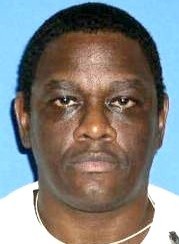
James Lewis Jackson
Murderer Russell Ellwood
Murderer · USA · 1991
Russell Ellwood was a former taxi driver. Authorities suspected him of killing…
20 victims
Russell Ellwood
Murderer · USA · 1991
Russell Ellwood was a former taxi driver. Authorities suspected him of killing…
20 victims
 Robert Martines Perez
Murderer · USA · 1994
Name: Robert Martines Perez · Other name used in proceedings: Robert Martinez P…
15 victims
Robert Martines Perez
Murderer · USA · 1994
Name: Robert Martines Perez · Other name used in proceedings: Robert Martinez P…
15 victims
 Billy Frank Vickers
Murderer · USA · 1993
Billy Frank Vickers Vickers was executed by lethal injection in Texas on Januar…
14 victims
Billy Frank Vickers
Murderer · USA · 1993
Billy Frank Vickers Vickers was executed by lethal injection in Texas on Januar…
14 victims
 August Spies
Mass murderer? · USA · 1886
August Vincent Theodore Spies (December 10, 1855 – November 11, 1887) was an an…
7 victims
August Spies
Mass murderer? · USA · 1886
August Vincent Theodore Spies (December 10, 1855 – November 11, 1887) was an an…
7 victims
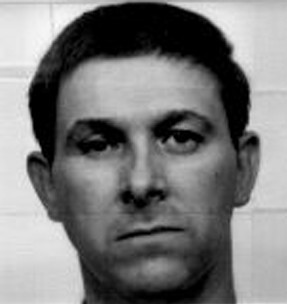 Gary James Johnson
Murderer · USA · 1986
Gary James Johnson was executed by lethal injection in Texas on January 12, 201…
2 victims
Gary James Johnson
Murderer · USA · 1986
Gary James Johnson was executed by lethal injection in Texas on January 12, 201…
2 victims
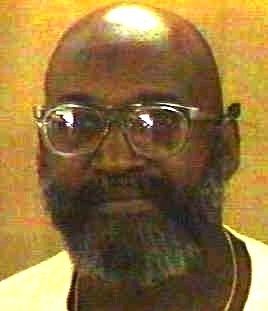 David Junior Brown
Murderer · USA · 1980
David Junior Brown changed his name in prison after his conversion to Islam. Du…
2 victims
David Junior Brown
Murderer · USA · 1980
David Junior Brown changed his name in prison after his conversion to Islam. Du…
2 victims
 Donald Lavell Craig
Murderer · USA · 1995
Donald Lavell Craig was tried and convicted in Ohio for the rape and aggravated…
2 victims
Donald Lavell Craig
Murderer · USA · 1995
Donald Lavell Craig was tried and convicted in Ohio for the rape and aggravated…
2 victims
- Gender
- male
- Country
- USA
- Location
- Harris County, Texas, USA
- Date of birth
- J une 13, 1959
- Age at first offence
- 38
- Characteristics
- parricide, rape, crack addict
- Victim profile
- Sharon Jackson (wife) and Ericka and Soncercia Mayes (stepdaughters)
- Method of murder
- Strangulation
- Date(s) of murder
- April 8, 1997
- Years active
- 1997
- Date of arrest
- Same day
- Status
-
Executed
Executed by lethal injection in Texas on February 7, 2007
Case overview
James Lewis Jackson was convicted of capital murder involving the strangling deaths of his wife and his two stepdaughters, Ericka Mayes and Soncercia Mayes, after his wife intended to divorce him. A jury found him guilty of capital murder and assessed his punishment at death. After procedural history extending through state and federal habeas proceedings and certiorari petitions, Jackson was executed by lethal injection in Texas on February 7, 2007.
Timeline
- March 1994 — Jackson was paroled to Harris County.
- February 1989 — Jackson introduced Wanda Wallace’s daughter to drugs, taking Wallace and their three-year-old daughter to a “drug house,” and later shot Wallace, hitting her car trunk; a second shot struck her father in the face and ear.
- 1995 — Jackson married Sharon Jackson and became the stepfather of her two teen-age daughters, Soncercia (“Sonny”) and Ericka.
- April 6, 1997 — Jackson and Sharon Jackson argued about his unemployment.
- April 7, 1997 — Jackson and Sharon Jackson continued arguing about his unemployment.
- April 8, 1997 — Date of offence listed in the case summary.
- Wednesday, April 9, 1997 — The murders occurred at the Jacksons’ apartment in Harris County, Texas, and victims’ bodies were later found in their beds; Jackson was arrested when he returned to the apartment and confessed to the murders.
- June 26, 1997 — Jackson was indicted by a Harris County grand jury for the capital murders of Ericka and Soncercia Mayes.
- July 6, 2000 — Jackson filed a state application for writ of habeas corpus in the trial court.
- December 13, 2000 — The Texas Court of Criminal Appeals affirmed the conviction and sentence.
- January 28, 1998 — A jury found Jackson guilty of capital murder.
- January 29, 1998 — After a separate punishment hearing, the court assessed Jackson’s punishment at death.
- June 4, 2001 — The U.S. Supreme Court denied Jackson’s petition for writ of certiorari.
- September 11, 2002 — The Texas Court of Criminal Appeals adopted the trial court’s findings and conclusions and denied habeas relief.
- August 20, 2003 — Jackson filed a habeas petition in a Houston U.S. District Court.
- June 14, 2005 — The federal district court denied Jackson’s petition.
- May 30, 2006 — The 5th U.S. Circuit Court of Appeals denied Jackson’s request to appeal the district court’s denial of relief.
- January 8, 2007 — The U.S. Supreme Court denied Jackson’s petition for certiorari review.
- February 7, 2007 — Jackson was executed by lethal injection; he was pronounced dead at 6:18 p.m.
Background
Personal history and marriage
James Lewis Jackson married Sharon Jackson in 1995 and became the stepfather of her two teen-age daughters, Soncercia (“Sonny”) and Ericka. By 1997, Jackson’s drug addiction, sporadic employment, and controlling nature caused problems in his marriage.
Education and occupation
Jackson had 12 years of education and worked as a gardener.
Prior criminal history
During the penalty phase, the State presented evidence that Jackson had been convicted in Dallas County for the felony offense of injuring an elderly person. Jackson shot the victim, described as a former girlfriend’s elderly father, in the face with a shotgun, rendering the father deaf in one ear. Jackson was sentenced to ten years in prison for this offense and was paroled to Harris County in March 1994.
During the punishment phase, the State also presented testimony from Wanda Wallace. Wallace testified that Jackson dated Wallace’s daughter and fathered three children by her. Wallace testified that in February 1989 Jackson introduced the woman to drugs, taking the woman and their three-year-old daughter over to a “drug house.” Wallace went to retrieve the child and returned with the child. Wallace testified that when she arrived home, her husband and father were charging a car battery with jumper cables; Wallace testified that her sister called “Look out, he got a gun,” and Jackson fired a pellet at Wallace, hitting her car trunk. Wallace testified that Jackson’s second shot struck Wallace’s father in the face and ear, and the third shot went over Wallace’s head and hit the windows of the apartment behind her. Wallace testified that Jackson was charged with the felony offense of injury to the elderly and received ten years in prison. Wallace testified that when her daughter became pregnant with their first child, Jackson was married to another woman and Wallace’s husband later died. The Texas Court of Criminal Appeals described these events as part of Jackson’s prior criminal record.
The offence
Victims and their relationship to Jackson
Sharon Jackson was Jackson’s wife. Sharon’s daughters were Soncercia (“Sonny”) Mayes and Ericka Mayes. Jackson killed his wife and his two stepdaughters.
Offence summary as established at trial
In April 1997, Jackson’s marriage problems escalated after Sharon planned to divorce him. Jackson confessed to the murders of Sharon Jackson, Ericka Mayes, and Soncercia Mayes, and evidence at trial included a confession introduced into evidence and the handwritten note found at the scene.
A friend of Sharon Jackson became concerned on April 9, 1997, when Sharon failed to pick her up for work. The friend contacted Sharon’s sister, and Sharon’s sister and mother went to the Jacksons’ apartment and entered the residence. They found Sonny’s and Ericka’s bodies in one bedroom and Sharon’s body in another bedroom. They had been choked to death. Prosecutors said Jackson strangled the women one at a time as they arrived at their apartment.
Jackson’s handwritten note
Detective Anthony Rossi discovered a handwritten note on top of a chest of drawers. The note read: “I love Sharon, Sonny, Ericka. I could not take care of my family. I don’t have a job. I gave them back to God. He and they will understand. James.”
The note was described in subsequent accounts as signed by Jackson.
Jackson’s confession and later accounts
Jackson ultimately confessed to killing his wife and stepdaughters. In his confession, Jackson said he and his wife had been arguing for several days over his unemployment and that she intended to divorce him. He stated that during the day of the killings he was out gambling and got high, and when he returned home the next morning, police took him into custody.
The confession described the sequence of killings: Jackson said he killed Sonceria (“Sonnie”) Mayes when she came home in the afternoon, then killed her sister about 30 minutes later when she arrived home. He stated he called his wife at work at the Harris County clerk’s office to pick her up, told her the girls were sleeping, then killed her when they got home.
Evidence showed he pawned Sharon’s sewing machine and used the money to buy drugs. Jackson later asserted that the handwritten note was a prayer left weeks earlier in a Bible study folder. Jackson also later recanted his confession and claimed he was innocent. His trial lawyer argued the confession was obtained under duress from lengthy questioning.
Investigation and scene findings
First discovery and entry into the apartment
A coworker became concerned when Sharon failed to pick her up for work. Sharon’s sister and her mother entered the apartment and found all three bodies in separate bedrooms. The bodies had been choked to death.
Police response and investigative steps
At 9:40 a.m. on April 9, 1997, Jackson arrived in a car as the Harris County Sheriff’s Department was investigating the killings. Detective Anthony Rossi arrived at the scene at about 9:45 a.m. Rossi walked through the apartment and discovered the handwritten note.
Detective Rossi then went outside to talk to Jackson. Rossi asked Jackson if he would come to the sheriff’s office and give a statement regarding his activities, and Jackson agreed to do so.
In other trial testimony and legal analysis, Officer Gutierrez was described as intervening when victims’ family members confronted Jackson, asking them to leave the area while he frisked Jackson and then placing him in the back seat of a patrol car without handcuffs. While deputies investigated upstairs, Rossi discovered the handwritten note. Rossi and other officers spoke with Jackson in the patrol car and then transported him to the homicide office.
Confession and evidence gathering
Jackson agreed to accompany police to give a statement. Jackson was transported to the homicide office with multiple accounts describing whether he was under arrest and the handcuffing procedure. In the case materials describing legal proceedings, officers said he was not under arrest and that the transport in handcuffs was for officer safety because Jackson was described as 6'6" and weighing over 300 pounds (and other accounts describing 6'7 and around 204 lb appear elsewhere).
Police obtained a confession from Jackson. The State introduced evidence that, after the murders, Jackson pawned Sharon’s sewing machine and used the money to buy drugs.
During the punishment phase or related legal discussion, testimony and procedural descriptions also included that Jackson provided samples and consent for hair, pubic hair, fingernail scrapings, blood and saliva samples, and his clothes for analysis.
Arrest and custody
Jackson was arrested after he returned to the apartment the morning after the murders. Multiple accounts described that victims’ family members cursed and accused him at the scene. One account described that Jackson was placed into the back seat of a patrol car without handcuffs and was frisked. Later accounts described that Jackson was transported to an office in handcuffs and that police told Jackson he was not under arrest. Jackson was ultimately taken to provide statements.
Dispute over legality of arrest and interrogation conditions
Jackson argued on appeal that his warrantless arrest was illegal and that his confession and its fruits should have been suppressed. The Texas Court of Criminal Appeals described the trial court’s suppression ruling and found that probable cause supported a warrantless arrest under Texas law and that any taint from initial placement in the back seat was removed by intervening events including discovery of the handwritten note.
The legal analysis included that appellant claimed that the police had probable cause based on the note but arrested without a warrant and questioned him for about fifteen hours until confession. The court described the undisputed facts and rejected the claim, stating that the arrest met an exception to warrant requirements and that the confession stemmed from a proper warrantless arrest.
Trial
Charges and jury findings
On June 26, 1997, Jackson was indicted in Harris County for capital murders of Ericka and Soncercia Mayes. A jury found Jackson guilty of capital murder on January 28, 1998. After a separate punishment hearing, on January 29, 1998, the court assessed Jackson’s punishment at death.
Jackson filed an appeal to the Texas Court of Criminal Appeals and the conviction and sentence were affirmed on December 13, 2000.
Evidence described at trial
Evidence at trial included:
- The handwritten note: “I love Sharon, Sonny, Ericka. I don’t have a job. I gave them back to God. He and they will understand. James.”
- Jackson’s confession to strangling his wife and stepdaughters.
- Evidence that he pawned Sharon’s sewing machine and used the money to buy drugs.
- Testimony about family reactions to the murders during the punishment phase, including testimony from the grandmother of Ericka and Sonny Mayes, who testified about her son’s reaction and a statement: “Just bury me in a hole, I can’t take it, I don’t have no children, I don’t have anybody anymore.”
- Testimony from Wanda Wallace in the penalty phase about Jackson’s prior conduct, including shooting events and drug-related incidents.
- Testimony or descriptions about victims’ plans and school activities, including that Ericka was an officer in the school’s Reserve Officer Training Corps and planned to join the Army, and that Sonceria (“Sonny”) was described as taking core requirements at North Harris County Community College.
Conflicting accounts about responsibility and note meaning
Jackson insisted he wasn’t responsible for the slayings of Sonceria (“Sonnie”) Mayes and her sister Ericka, and he also insisted he was on the other side of Houston the day of the killings and returned home the next morning. Jackson claimed the note was a prayer written weeks earlier in a Bible study folder. Prosecutors said the note confirmed a confession in which Jackson acknowledged strangling the three.
His trial lawyer argued the confession was obtained when Jackson was under duress from lengthy questioning.
Sentencing
Punishment evidence and special issues
After separate punishment hearings, the court assessed Jackson’s punishment at death.
In legal analysis of the conviction and sentence, the Texas Court of Criminal Appeals addressed claims including sufficiency of evidence for the “future dangerousness” special issue. The court stated that viewing evidence in the light most favorable to the verdict, it could not say the finding was irrational. The court referenced that Jackson planned to murder his wife because she intended to divorce him, that he manually strangled his wife and her two daughters, and that he pawned his wife’s sewing machine and got high on drugs. The court also referenced the prior conviction in which Jackson injured an elderly person with a shotgun.
The Texas Court of Criminal Appeals also discussed victim impact evidence and prosecutorial argument. It overruled claims related to mitigation special issues, the “10-12” rule, admission of victim impact evidence, and various alleged trial errors.
Execution-impact testimony and mitigation-related rulings
Jackson filed a “Motion To Introduce the Testimony of Defendant's Family and Friends Regarding Their Feelings on the Prospect of a Death Sentence and the Impact an Execution Would Have on Them.” The trial court denied the motion. This decision was affirmed on direct appeal and later reviewed in state and federal habeas proceedings.
In federal habeas proceedings, Jackson sought a certificate of appealability regarding the exclusion of execution impact testimony, and the appellate court denied the COA.
Appeals
Direct appeal in Texas
Jackson appealed his conviction and sentence to the Texas Court of Criminal Appeals. The court affirmed the conviction and sentence on December 13, 2000.
The Texas Court of Criminal Appeals decision addressed and overruled multiple points of error, including:
- Insufficient evidence arguments regarding future dangerousness.
- Challenges to the admissibility of the confession based on alleged illegal arrest.
- Challenges to the trial court’s denial of requested jury charges relating to arrest legality.
- Challenges to mitigation special issues under the Eighth Amendment.
- Challenges to admission and argument about victim impact evidence.
- A challenge to exclusion of testimony about family and friends’ feelings about a death sentence.
The judgment of the trial court was affirmed.
U.S. Supreme Court certiorari and related petitions
The U.S. Supreme Court denied Jackson’s petition for writ of certiorari on June 4, 2001. Jackson later petitioned again for certiorari review, and the Court denied the petition on January 8, 2007.
State habeas proceedings
Jackson filed a state application for writ of habeas corpus in the trial court on July 6, 2000. The trial court entered findings of fact and conclusions of law recommending that Jackson be denied relief. On September 11, 2002, the Texas Court of Criminal Appeals adopted those findings and conclusions and denied relief.
Federal habeas proceedings and COA
Jackson filed a habeas petition in a Houston U.S. District Court on August 20, 2003. The federal district court denied the petition on June 14, 2005.
Jackson sought permission from the 5th U.S. Circuit Court of Appeals to appeal the district court’s denial of relief. The appellate court denied the request on May 30, 2006.
In later federal habeas proceedings summarized in appellate materials, the district court denied relief and refused to issue a certificate of appealability. The United States Court of Appeals considered Jackson’s request for a COA and denied it.
Outcome and execution
Jackson’s conviction and death sentence remained in effect through the completion of the appeals process. The U.S. Supreme Court declined further review on January 8, 2007.
Jackson was scheduled to be executed after 6 p.m. Wednesday, February 7, 2007. He was executed by lethal injection in Texas on February 7, 2007 and was pronounced dead at 6:18 p.m.
Events and statements made at execution
Accounts described Jackson turning to his brother, sister, and friends and telling them not to worry. He said: “This is not the end but the beginning of a new chapter for you and I together forever,” and “See you all later,” and “We’ll be waiting for you,” and “See you all on the other side.”
Jackson told the warden standing over him: “Warden, murder me.”
Accounts described Jackson referring to Harris County as Sodom and Gomorrah.
He also made a gurgling sound and laughed at a sign language gesture made by one of his guests before dying, and he was pronounced dead after about seven minutes.
Other details
Victim and family identifiers mentioned
- A grandmother of Ericka and Sonny Mayes testified during the punishment phase about the reaction of her son, Johnny Melvin Mayes, after hearing about his daughters’ murders. The grandmother testified that her son screamed: “Just bury me in a hole, I can’t take it, I don’t have no children, I don’t have anybody anymore.”
- Relatives of the victims were described as not being present at the execution, with Sharon Jackson’s mother Ethel Farley stating she did not plan to attend because of “Bad memories.”
Statements from Jackson included in post-conviction materials
A statement attributed to James Jackson included: “Warden, murder me.”
A letter written by James Jackson on Death Row included the line: “WHO KILLED MY FAMILY??..” and contained a message beginning: “Remember your friends as you pass by. As you are now, so was I. As I am now, so you must be. Prepare to meet thy God in eternity.”
A separate written message included the request: “James Jackson! Polunsky Unit 3872 F.M. 350 South Livingston, Texas 77351 USA 3-8-2004” and the line: “Greetings my name is James L. Jackson and I have been in custody for (6) six years here on Texas Death Row for an alleged crimes I did not commit.”
Disputed elements mentioned in legal and factual accounts
Jackson disputed responsibility for the murders, disputed the note as a confession and claimed it was a prayer, and disputed that his confession was obtained without duress. He also argued that his arrest was illegal and that exclusion of execution-impact testimony violated his rights. The Texas Court of Criminal Appeals and federal appellate proceedings did not grant relief on those arguments.
Spotted an error, or have more information about this case?