
Blair Stockdill
Homicide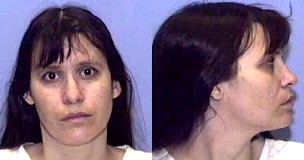 Andrea Yates
Homicide · USA · 2001
Andrea Pia Yates (born Andrea Pia Kennedy on July 2, 1964) was a former Houston…
5 victims
Andrea Yates
Homicide · USA · 2001
Andrea Pia Yates (born Andrea Pia Kennedy on July 2, 1964) was a former Houston…
5 victims
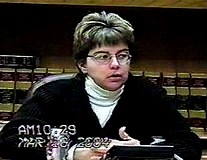 Coleen Thompson
Homicide · USA · 2002
Coleen Thompson was a former intensive care nurse at Shady Grove Adventist Hosp…
5 victims
Coleen Thompson
Homicide · USA · 2002
Coleen Thompson was a former intensive care nurse at Shady Grove Adventist Hosp…
5 victims
 Christine Paolilla
Homicide · USA · 2003
Christine Marie Paolilla was an American woman born on Long Island, New York on…
4 victims
Christine Paolilla
Homicide · USA · 2003
Christine Marie Paolilla was an American woman born on Long Island, New York on…
4 victims
 Erin Caffey
Homicide · USA · 2008
Erin Caffey (juvenile daughter of Terry Caffey and Penny Caffey; charged in con…
3 victims
Erin Caffey
Homicide · USA · 2008
Erin Caffey (juvenile daughter of Terry Caffey and Penny Caffey; charged in con…
3 victims
 Lashaun Harris
Homicide · USA · 2005
Oct. 19, 2005 — A jury trial later concerned the drownings of three young sons…
3 victims
Lashaun Harris
Homicide · USA · 2005
Oct. 19, 2005 — A jury trial later concerned the drownings of three young sons…
3 victims
 Leatrice Brewer
Homicide · USA · 2008
Leatrice Brewer killed her three children, Jewell Ward, Michael Demesyeux, and…
3 victims
Leatrice Brewer
Homicide · USA · 2008
Leatrice Brewer killed her three children, Jewell Ward, Michael Demesyeux, and…
3 victims
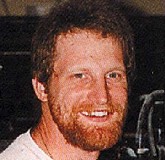 Terry Driver
Murderer · Canada · 1995
Terry Driver was known as the “Abbotsford killer.” He was a convicted Canadian…
1 victim
Terry Driver
Murderer · Canada · 1995
Terry Driver was known as the “Abbotsford killer.” He was a convicted Canadian…
1 victim
 Taiana Matheny
Murderer · USA · 2005
Taiana Matheny was a Tucson woman accused of luring two Omaha, Neb., men to the…
2 victims
Taiana Matheny
Murderer · USA · 2005
Taiana Matheny was a Tucson woman accused of luring two Omaha, Neb., men to the…
2 victims
 Suleiman Khater
Mass murderer · Egypt · 1985
Suleiman Mohammed Abdul-Hamid Khater (Arabic سليمان خاطر, also transcribed Sole…
7 victims
Suleiman Khater
Mass murderer · Egypt · 1985
Suleiman Mohammed Abdul-Hamid Khater (Arabic سليمان خاطر, also transcribed Sole…
7 victims
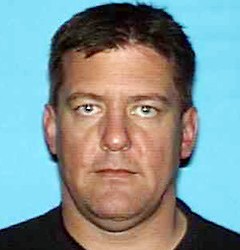 Bruce Pardo
Mass murderer · USA · 2008
Bruce Pardo was 45 years old. He dressed in a Santa suit while inside a house w…
9 victims
Bruce Pardo
Mass murderer · USA · 2008
Bruce Pardo was 45 years old. He dressed in a Santa suit while inside a house w…
9 victims
 Rodrigo Hernandez
Murderer · USA · 1991
Rodrigo Hernandez was convicted in 2004 of the rape and capital murder of Susan…
2 victims
Rodrigo Hernandez
Murderer · USA · 1991
Rodrigo Hernandez was convicted in 2004 of the rape and capital murder of Susan…
2 victims
 Glen Charles McGinnis
Homicide · USA · 1990
Glen Charles McGinnis was executed by lethal injection in Texas on January 25,…
1 victim
Glen Charles McGinnis
Homicide · USA · 1990
Glen Charles McGinnis was executed by lethal injection in Texas on January 25,…
1 victim
- Gender
- female
- Country
- USA
- Location
- Ventura, Ventura County, California, USA
- Date of birth
- 1985
- Age at first offence
- 25
- Characteristics
- child killer, domestic violence
- Victim profile
- Alaina Stockdill, 8 (her daughter)
- Method of murder
- Drowning
- Date(s) of murder
- September 15, 2010
- Years active
- 2010
- Date of arrest
- 5 days after
- Status
-
Life imprisonment
Pleaded guilty to first-degree murder by reason of insanity; sentenced to 25 years to life on January 9, 2013, to be served inside a locked state mental facility
Case record: Blair Stockdill
Background
Blair Stockdill was 27 at the time of her sentencing and 25 at the time of her arrest. She had a long history of mental illness and was described as having battled bipolar disorder for years. Her mental health history included hospitalization for mental illness in June 2003, followed by release three weeks later. After that hospitalization, she told a social worker that she had been “screaming at the top of my lungs in tongues.” She also remembered holding her daughter inappropriately, and police were called; she said she had been told that “I held her calves and put her upside down, because there were evil spirits in her,” and she said she would never hurt her daughter, adding: “She saved my life.”
After Alaina’s death, her father, Michael Stockdill, reported that he recently worried his daughter had gone off her medication. He went with his daughter to get her medication when he visited her and Alaina for a meal Sept. 13, according to the death investigation report.
Michael Stockdill took custody of Alaina in 2005, according to relatives and court documents. Blair Stockdill regained full custody of Alaina in December 2009 after living with Alaina for about two years.
The offence
On Sept. 20, 2010, the decomposing body of Stockdill’s 8-year-old daughter, Alaina, was found dead in their apartment in the 1300 block of Saratoga Avenue in Ventura. Investigators found evidence that Alaina had been immersed in water. There were no signs of trauma on Alaina’s body, and investigators found no significant external injury in the autopsy examination; a small bruise on Alaina’s head was found, but it was unclear exactly when or how the bruise was suffered and it was not described as significant.
Alaina was found lying on her side in an empty bathtub with her head on a small pillow. A wet towel was under her torso, her face was turned toward the wall, her left arm was around her torso, and her right hand was tucked partly under the pillow. The child was undressed, and a towel covered her feet and most of her legs.
Prosecutors said that Stockdill believed demons were trying to harm her through her cats and her daughter. Prosecutor Chrystina Jenson described that Stockdill had placed “a pink silk satin pillow” under the girl’s head in the tub and had been “running warm water over her body, hoping that if she kept Alaina warm, she would come back to life.”
Investigation
Autopsy and investigation details were released through reports from the Ventura County Medical Examiner’s Office. The autopsy described Alaina as an “apparently well-nourished” girl who was 4-foot-2 and 55 pounds. Investigators found fluid in her lungs and blood congestion in her organs, and her hands and feet showed signs of being immersed in water.
The examination found that the condition of her body suggested she had been deceased “for a few days,” with a timeline that could vary, and that authorities did not have a reliable account of when the girl was last seen alive.
Police stated that Stockdill made a statement that “an incident occurred” while she was taking a bath with her daughter the week prior to the discovery of her body, but that she would not be specific about it. Cmdr. Mark Stadler declined to comment on that statement.
Toxicology had not been completed at the time the investigation details were discussed.
Investigation also included evidence of a disturbance in the home connected to Stockdill’s sometimes boyfriend, John Kimmis. Kimmis forced his way into the apartment and discovered Alaina’s body. Neighbors said Kimmis came after hearing a cat crying outside Stockdill’s residence all night and after someone reportedly called him. A fight began between Stockdill and Kimmis; police said she stabbed him, and police later said his injuries were minor and he was a witness, not a victim. Investigators found signs of a struggle in the entry way and living room, including drops of blood, broken windows, and scattered papers, according to Chief Deputy Medical Examiner James Baroni’s report and police.
Alaina had last been in class at Elmhurst School on Sept. 15. Stockdill called the school the next day to say her daughter was ill and would not be in, according to the death investigation report. A neighbor said his daughters had played with Alaina the day before she was found.
Child welfare and prior allegations
Less than a month before Alaina was found dead, police and social workers investigating complaints found she was not in danger. The 165-page report was released under a 2007 state law requiring authorities to disclose details about child deaths determined to be a result of abuse and neglect; names of people and agencies were redacted but the major figures were evident from context.
When Ventura police looked into a complaint on Aug. 25, officers found Stockdill capable of taking care of Alaina and found no evidence that the child had been abused. A complaint had been third hand: officers were told by Stockdill’s one-time boyfriend that a neighbor told him about the allegation, and that person never talked to police. Officers interviewed Blair and Alaina separately but could not substantiate the allegation; they found no physical injury and the child said she had not been abused.
A day later, the county’s Child Protective Services unit received an anonymous report that Alaina was being abused and neglected. Social workers were told that police had been called to the home the night before to investigate whether the child had been choked. The report alleged that Stockdill has bipolar disorder with psychotic episodes and was not taking her medication, instead using methamphetamine. The person also alleged that Alaina was not properly supervised or fed and that her bedroom was dirty.
Over several days, a social worker had difficulty tracking down Blair and Alaina, going to the home several times, finding no one there, and leaving a card. Blair called back at one point and set up an appointment for the next day, but when the social worker arrived at the scheduled time, again no one was there. A social worker called police Sept. 2 to ask whether a report had been filed; an officer called back the same day and said there seemed to be enough food and that the apartment appeared safe. The officer told the social worker that she “does appear to have a mental illness, but on that date it did not appear to be affecting her ability to parent her child,” according to CPS records. The officer did not believe CPS needed to reinterview the child because police had covered the allegations.
Several days later, social workers visited the home and found it clean and safe. Alaina was home, dressed in footed pajamas. A social worker noted that Alaina showed no signs of fear. Blair was described as “very guarded,” denied using drugs or physical discipline, and answered most questions with yes or no while refusing to discuss mental health issues. The social worker found that mental illness did not appear to interfere with Stockdill’s ability to parent. The allegations of general neglect and physical abuse were determined to be unfounded, and the case was closed Sept. 8. The report said CPS did not interview the child separately away from her mother, but police said they had done so days earlier. It also stated that this was an accepted practice in child abuse investigations.
Professor Jill Duerr Berrick said: “It’s very difficult to predict murder, very difficult.” She added: “They’re terrible, terrible tragedies. It is one of those things where sometimes you can prevent it, and sometimes you may not be able to catch it fast enough.” She also said: “Unfortunately it’s a case-by-case situation that requires extreme caution so you don’t abridge the parent’s rights and yet keep the child safe.” Barry Zimmerman said that for CPS to remove a child, “there needed to be evidential matter or an assessment that the child was in immediate danger.” Zimmerman also said a history of mental illness is taken into account but must be weighed against the current episode. It said that Berrick stated a history of mental illness is not a strong predictor of abuse because many people manage well with medication and support, and that other predictors include extreme poverty, substance abuse, and isolation from family and friends.
The narrative also included a history of escalation prior to the death: in June 2003 Stockdill had been hospitalized; by July 30 there had been a complaint that she was out of control, showing psychotic behavior and not connected to reality; investigation found the child looked healthy but was wearing soiled clothes. Social workers recommended family guardianship by August 2003 but did not find grounds for a judge to remove the child. Social workers investigated complaints of neglect and emotional abuse three times that summer but did not substantiate them. By summer 2005, the situation appeared to be escalating, including June reports that police found Alaina, 3, left alone in a car while her mother went into a friend’s house, and two months later a social worker visit where Blair had put her furniture out on the lawn stating she had nowhere else to place her things; the social worker told her she needed to get back on her medication and insisted that the grandfather immediately take guardianship of Alaina, then 3. It also stated that in later years Blair and Alaina appeared to be doing well and that CPS records showed no contact with the family since two complaints in 2007 that alleged neglect and were not substantiated.
Arrest
Blair Stockdill was arrested on suspicion of killing her 8-year-old daughter after the body was found in her condominium several days after she died. Neighbors reported that someone had been stabbed and they heard a person screaming, “She is dead!” Ventura Police Department officers arrived just after 11:30 a.m. and found a man with knife wounds on his arms and Stockdill holding a knife. After searching the home, police found the body of an 8-year-old girl, later determined to have been dead “for several days.” Police charged Stockdill after recovering evidence from the scene and conducting several interviews, and she was held at the Ventura County Jail. Police said Stockdill had recently regained legal custody of her daughter.
Police later stated that the man with knife wounds was a relative of Stockdill; his relation to the mother was unclear at the time of the report. Police said his injuries were minor and he was a witness, not a victim.
Trial
Blair Stockdill changed her plea from not guilty to not guilty by reason of insanity. On Feb. 7, 2012, she pleaded not guilty by reason of insanity in Ventura County Superior Court through her lawyer, Donna Forry. Judge Kevin McGee appointed psychologists John Lewis and Lauren Thomas to do a mental health evaluation. Prosecutor Chrystina Jenson told Stockdill that if she were found not guilty by reason of insanity, she could spend the rest of her life in a mental institution. Stockdill said she understood. She was in jail in lieu of $530,000 bail. The next court hearing was set for May 9, when the psychologists’ reports were expected to be completed. Forry declined to comment.
Jenson described what prosecutors must prove in a not guilty by reason of insanity trial: prosecutors first must prove to the jury that the defendant committed the crime, then if the defendant is found guilty, a jury decides whether the defendant was insane when the crime was committed. Jenson said that if Stockdill were found guilty and the jurors found she was sane, she faced 29 years to life in prison.
On Dec. 14, 2012, Stockdill pleaded guilty to first-degree murder by reason of insanity at Ventura County Superior Court. Prosecutor Chrystina Jenson said Stockdill had a long history of mental illness and that she would be sentenced to 25 years to life but serve her time inside a locked state mental facility. Judge Charles Campbell said Stockdill entered the guilty plea “voluntarily and intelligently.” Stockdill sat beside her lawyer, Donna Forry of the Public Defender’s Office, and appeared dressed in blue and orange jail garb in shackles. Stockdill told the judge she understood the constitutional rights she was waiving by pleading guilty, and she occasionally asked Forry questions about the terms of her guilty plea, which the judge encouraged her to do. The judge set sentencing for Jan. 9.
Sentencing
On Jan. 9, 2013, Stockdill was sentenced to 25 years to life. She would serve her time inside a locked state mental facility. Senior Deputy District Attorney Chrystina Jenson told Superior Court Judge Charles Campbell that in her 17 years as a prosecutor, she had never agreed to allow a defendant to plead guilty by reason of insanity, but that the facts indicated Stockdill was legally insane when she killed her daughter. Jenson said: “This case is incredibly sad.” She described that Stockdill suffered from mental illness since she was in her teens and had a complete “psychotic breakdown” when she committed the slaying. The judge said: “I certainly agree with everything that has been said,” Campbell added: “It is a terrible situation.” The judge said he hoped that someday Stockdill could be released back to society, but right now the only solution was to send her to Patton State Hospital.
Stockdill’s lawyer, Donna Forry, said: “There isn’t a day that goes by that she doesn’t think about Alaina,” and Stockdill declined to make a statement to the court. No victim impact statements were given.
Jenson described the victim as a “beautiful little girl who deserved to grow up, do artwork and have boyfriends.” Jenson told the court: “I can’t imagine what Blair Stockdill goes through thinking what happened to her child.”
Appeals
No appeal information was included.
Outcome
Blair Stockdill pleaded guilty to first-degree murder by reason of insanity and was sentenced to 25 years to life on January 9, 2013. She was to serve her time inside a locked state mental facility and was described as being sent to Patton State Hospital.
Aftermath
Jenson said psychiatrists would interview Stockdill to determine which facility she would be placed in and that she would be placed “there up to the rest of her life.” She said Stockdill could potentially be found mentally well by psychiatrists and could be recommended for release back into the community with mental health support, but that the District Attorney’s Office would have a chance to contest that and a judge would have to agree; Jenson said an outside unlikely thing was that she would be released and “what’s more likely is that she will spend decades in a locked mental facility.”


Spotted an error, or have more information about this case?