
Louise Vermilyea
Serial killer Jane Toppan
Serial killer · USA · 1887
Jane Toppan (1880-1901) was a nurse from Boston, Massachusetts. Another record…
31 victims
Jane Toppan
Serial killer · USA · 1887
Jane Toppan (1880-1901) was a nurse from Boston, Massachusetts. Another record…
31 victims
 Belle Gunness
Serial killer · USA · 1880
Belle Gunness was Norwegian-born. She was born as Brynhild Paulsdatter Størseth…
42 victims
Belle Gunness
Serial killer · USA · 1880
Belle Gunness was Norwegian-born. She was born as Brynhild Paulsdatter Størseth…
42 victims
 Billy Gohl
Serial killer · USA · 1903
Billy Gohl (? - 1928) was an American serial killer who, while working as a uni…
40 victims
Billy Gohl
Serial killer · USA · 1903
Billy Gohl (? - 1928) was an American serial killer who, while working as a uni…
40 victims
 Bertha Gifford
Serial killer · USA · 1909
Bertha Gifford (1872- August 20, 1951) was a farmwife in rural Catawissa, Misso…
17 victims
Bertha Gifford
Serial killer · USA · 1909
Bertha Gifford (1872- August 20, 1951) was a farmwife in rural Catawissa, Misso…
17 victims
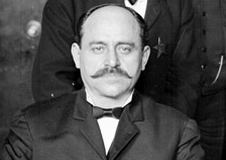 Johann Otto Hoch
Serial killer · USA · 1890
Johann Otto Hoch (1855 - 1906) was the most famous and last-used alias of a Ger…
15 victims
Johann Otto Hoch
Serial killer · USA · 1890
Johann Otto Hoch (1855 - 1906) was the most famous and last-used alias of a Ger…
15 victims
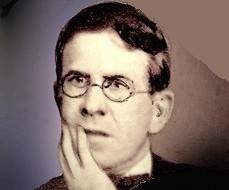 Dr. Bennett Clark Hyde
Murderer? · USA · 1909
Dr. Bennett Clark Hyde was accused in Kansas City of murdering members of the S…
3 victims
Dr. Bennett Clark Hyde
Murderer? · USA · 1909
Dr. Bennett Clark Hyde was accused in Kansas City of murdering members of the S…
3 victims
 Roy Lee Ward
Murderer · USA · 2001
Name: Roy Lee Ward · Sex: White male · Date of birth: 07-20-1972 · DOC #: 91497…
1 victim
Roy Lee Ward
Murderer · USA · 2001
Name: Roy Lee Ward · Sex: White male · Date of birth: 07-20-1972 · DOC #: 91497…
1 victim
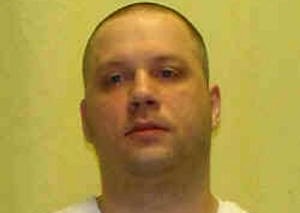 Tyrone Noling
Murderer · USA · 1990
Tyrone Noling was sentenced to death for the murders of Bearnhardt Hartig and C…
2 victims
Tyrone Noling
Murderer · USA · 1990
Tyrone Noling was sentenced to death for the murders of Bearnhardt Hartig and C…
2 victims
 Robert MacGregor
Serial killer ? · USA · 1909
Robert MacGregor was a doctor who established his practice in the Ubly area in…
4 victims
Robert MacGregor
Serial killer ? · USA · 1909
Robert MacGregor was a doctor who established his practice in the Ubly area in…
4 victims
 Shane Ragland
Murderer · USA · 1994
Shane Ragland was convicted of murder for the sniper-style shooting death of Un…
1 victim
Shane Ragland
Murderer · USA · 1994
Shane Ragland was convicted of murder for the sniper-style shooting death of Un…
1 victim
 James Allen Kinney
Murderer · USA · 1997
James Allen Kinney was convicted for the rape and murder of Keri Lynn Sherlock.…
3 victims
James Allen Kinney
Murderer · USA · 1997
James Allen Kinney was convicted for the rape and murder of Keri Lynn Sherlock.…
3 victims
- Gender
- female
- Country
- USA
- Location
- Chicago, Illinois, USA
- Date of birth
- ????
- Characteristics
- poisoner, attempt to collect insurance money
- Victim profile
- Fred Brinkamp, 60 (first husband) / Charles Vermilyea, 59 (second husband) / Cora Brinkamp, 8 (daughter) / Florence Brinkamp, 4 (daughter) / Harry J. Vermilyea, 31 (step-son) / Frank Brinkamp, 23 (step-son) / Lilian Brinkamp, 26 (grand-daughter) / Richard T. Smith (conductor who roomed at the Vermilyea home) / Arthur Bissonette, 26 (policeman)
- Method of murder
- Poisoning (arsenic)
- Date(s) of murder
- 1893 - 1911
- Years active
- 1893–1911
- Date of arrest
- November 1, 1911
- Status
-
Died in custody
Committed suicide by poison following arrest; died in December 1911
Overview
Louise Vermilyea was a “black widow” poisoner who killed husbands and children, and also poisoned lodgers in her rooming house. Authorities connected multiple deaths to her using “white pepper.” She was taken into custody pending exhumation of other suspected victims and later committed suicide by poison following arrest.
Timeline
- late October 1911 — Policeman Arthur Bisonette fell ill and died after being a boarder in Vermilyea’s home.
- October 28 — Authorities reported Vermilyea had been ingesting poison with her meals since she was first confined at home.
- November 1, 1911 — A report described Vermilyea as a woman suspected of poisoning nine.
- November 4 — Detectives rushed Vermilyea to the hospital after she became a victim of her own “white pepper.”
- November 9 — She was reported to be near death, with valvular heart problems reported in connection with her condition.
- December 9 — She was stricken with paralysis, described by her physicians as a permanent condition.
- December 1911 — Vermilyea died.
The offence
A series of homicides was linked to Vermilyea’s poisoning activities. The pattern began within her first marriage and expanded to include family members, associates, and people who ate in her home.
Homicide detectives concluded that greed and the elimination of Vermilyea’s husbands and assorted offspring made financial gain “obvious.” The deaths of “husbands and assorted offspring” were described as being for financial gain, and poison was administered with meals.
Background
The string of homicides was described as beginning in 1893, when Fred Brinkamp, Vermilyea’s first husband, died at his farm near Barrington, Illinois. His death was not initially treated as cause for undue comment, though he left his widow richer by $5,000.
Soon after, two daughters by the marriage also died:
- Cora Brinkamp, eight years old
- Florence Brinkamp, nearly five
Later, in January 1906, Lillian Brinkamp, Fred’s 26-year-old granddaughter, died in Chicago after being stricken by “acute nephritis.”
Vermilyea later remarried to Charles Vermilyea, 59. By 1909 Charles Vermilyea was dead following sudden illness, leaving Vermilyea $1,000 in cash.
A step-son, Harry Vermilyea, also died after he quarreled with Louise over the sale of a house at Crystal Lake, ten miles north of Chicago in McHenry County.
In 1910, Vermilyea inherited $1,200 on the death of Frank Brinkamp, her 23-year-old son from her first marriage. Frank Brinkamp died while on his death bed, and he told his fiancée, Elizabeth Nolan, of belated suspicions involving his mother. He declared: “going the way dad did.”
Investigation
Suspicion became clear after the death of policeman Arthur Bisonette.
Homicide detectives grew suspicious after speaking with Bisonette’s father, who reported stomach pains after dining with his son at the boarding house.
The father recalled that Vermilyea had sprinkled “white pepper” over his son’s food before it was served. An autopsy on Bisonette discovered arsenic.
Vermilyea was taken into custody pending exhumation of other suspected victims.
Arrest and custody
Vermilyea was placed under house arrest after detectives connected poison to Bisonette’s death. Authorities reported she had been ingesting poison with her meals since she was first confined at home on October 28.
While under house arrest, she denigrated the efforts to indict her for a string of ten known homicides. Vermilyea said:
“They may go as far as they like,” she said of police, “for I have nothing to fear. I simply have been unfortunate in having people dying around me.”
Trial
No trial proceedings were described.
Sentencing
No sentence was described.
Outcome
After her arrest and confinement, investigators reported her condition deteriorated following poisoning with her own “white pepper.”
- On November 4, detectives rushed her to the hospital.
- On November 9, she was reported to be near death, with valvular heart problems.
- By December 9, she had been stricken with paralysis, described by her physicians as a permanent condition.
- Vermilyea ultimately committed suicide by poison following arrest and died in December 1911.
Other details
The first death connected to Vermilyea’s poisoning after the family pattern was described as beginning with Jason Ruppert, a railroad fireman. Ruppert became ill after dining with Vermilyea on January 15, 1910 and died two days later.
Richard Smith, a train conductor, rented rooms in Vermilyea’s household. He should have eaten elsewhere, and he died after sudden illness struck him down a short time prior to Arthur Bisonette’s arrival on the scene.
An undertaker, E.N. Blocks, of Barrington, recalled that Vermilyea “actually seemed to enjoy working around bodies.” He stated:
“actually seemed to enjoy working around bodies, and while I never employed her, for a couple of years I couldn't keep her out of the office. At every death she would seem to hear of it just as soon as I and she would reach the house only a little behind me.”

Spotted an error, or have more information about this case?