Michael Stevens
Spree killer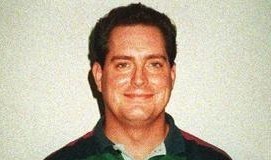 Mark Barton
Spree killer · USA · 1999
Mark Orrin Barton (1955 – July 29, 1999) committed a spree killing in Stockbrid…
12 victims
Mark Barton
Spree killer · USA · 1999
Mark Orrin Barton (1955 – July 29, 1999) committed a spree killing in Stockbrid…
12 victims
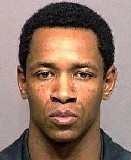 John Allen Muhammad
Spree killer · USA · 2002
John Allen Muhammad carried out the 2002 D.C. sniper attacks with his 17-year-o…
10 victims
John Allen Muhammad
Spree killer · USA · 2002
John Allen Muhammad carried out the 2002 D.C. sniper attacks with his 17-year-o…
10 victims
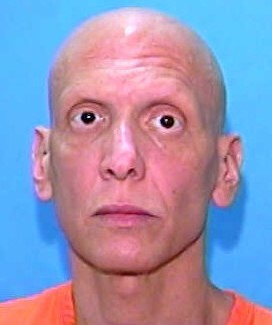 Manuel Pardo
Spree killer · USA · 1986
Manuel Pardo, Jr. was a former police officer who was convicted of nine counts…
9 victims
Manuel Pardo
Spree killer · USA · 1986
Manuel Pardo, Jr. was a former police officer who was convicted of nine counts…
9 victims
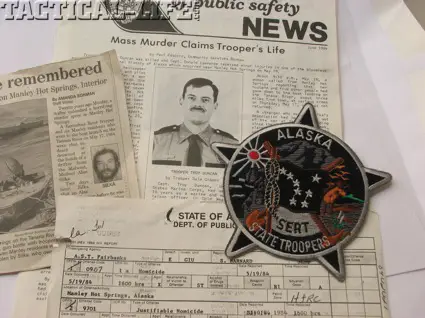 Michael Alan Silka
Spree killer · USA · 1984
Michael Alan Silka was killed during a shoot-out with the police on May 19, 198…
9 victims
Michael Alan Silka
Spree killer · USA · 1984
Michael Alan Silka was killed during a shoot-out with the police on May 19, 198…
9 victims
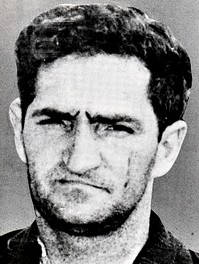 Eric Edgar Cooke
Serial killer · Australia · 1959
Eric Edgar Cooke (25 February 1931 – 26 October 1964) was an Australian serial…
8 victims
Eric Edgar Cooke
Serial killer · Australia · 1959
Eric Edgar Cooke (25 February 1931 – 26 October 1964) was an Australian serial…
8 victims
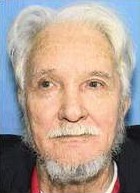 John Nixon
Murderer · USA · 1985
John B. Nixon Sr. was executed by lethal injection in Mississippi on December 1…
1 victim
John Nixon
Murderer · USA · 1985
John B. Nixon Sr. was executed by lethal injection in Mississippi on December 1…
1 victim
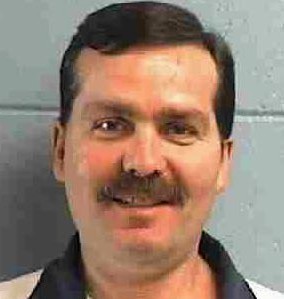 Anthony Goodin
Murderer · USA · 1987
Anthony Goodin was connected with homicide in the death of Marlin Carpenter, a…
1 victim
Anthony Goodin
Murderer · USA · 1987
Anthony Goodin was connected with homicide in the death of Marlin Carpenter, a…
1 victim
 Randall Loyal Smith
Murderer · USA · 1990
Randall Loyal Smith was born on 12/31/53. He was sentenced to death on 3/9/1992…
1 victim
Randall Loyal Smith
Murderer · USA · 1990
Randall Loyal Smith was born on 12/31/53. He was sentenced to death on 3/9/1992…
1 victim
- Gender
- male
- Country
- USA
- Location
- Rochester, Monroe County, New York, USA
- Date of birth
- 1940
- Age at first offence
- 53
- Characteristics
- —
- Victim profile
- Brenda's mother, Eleanor Fowler, 56; sister, Pamela Lazore-Lanza; and stepfather, Robert Fowler, 38; and two bystanders
- Method of murder
- Letter bombs
- Date(s) of murder
- December 28, 1993
- Years active
- 1993
- Date of arrest
- Next day
- Status
-
Life imprisonment
Sentenced to three terms of life imprisonment without parole in 1995; conviction affirmed on appeal by the United States Court of Appeals for the Second Circuit on May 8, 1996
Case record: Michael Stevens
Status and legal outcome
Michael Stevens was sentenced to three terms of life imprisonment without parole in 1995. The United States Court of Appeals for the Second Circuit affirmed his conviction.
Background
Michael Stevens feared that his girlfriend, Brenda Chevere (Brenda Lazore Chevere), would end their relationship. Stevens sent six booby-trapped mail bombs to Brenda's relatives across upstate New York.
The offence
Stevens sent six booby-trapped letter bombs and mail-bomb parcels packaged in brown cardboard and wrapped with tape. Several parcels contained a fishing-tackle box. When the latch was opened, it connected an electrical circuit and set off several pounds of dynamite surrounded by shrapnel. The parcels were delivered by mail or private courier, and the explosions occurred almost simultaneously across western New York.
Four of the bombs exploded. One failed to detonate. Another was intercepted by the police. The bombings killed five people and injured three more people.
The dead included Brenda Chevere’s mother, her sister, and her stepfather, as well as two bystanders.
One bomb killed Eleanor Fowler, 56, in West Valley, near Buffalo. Another bomb was opened by her husband, Robert Fowler, 38, at his job in an armored-car garage in nearby Cheektowaga; it killed him and a co-worker. A third bomb blew up Pamela Lazore-Lanza and a male friend. Pamela Lazore-Lanza was Eleanor Fowler’s daughter from an earlier marriage. On the St. Regis Indian Reservation near the state’s northern tip, an exploding package lacerated the legs of William Lazore, Brenda Chevere’s uncle.
Identical parcels were sent to Lucille Kemp and her boyfriend, but were detonated safely by authorities. All four explosions occurred within 90 minutes. One of the bombs failed to go off when opened by Lucille Kemp, another was intercepted by authorities.
Investigation
Police connected the bombings to Stevens shortly after the explosions. Investigators arrested Michael Stevens and Earl Figley after the bombings within six hours, with further details given up to the following 12 hours.
Police told the media that Stevens wanted to knock off Brenda's family because they were trying to break up his relationship.
A newspaper quote attributed to “one investigator” described the explanation as follows:
“This guy just didn't want to deal with the fact that the stepfather of his girlfriend didn't like him,”
The media also reported that another outlet criticized the explanation as lacking sense, and the reported quote was:
“a motive that hardly makes sense.”
A quote attributed to Brenda Chevere was given after she was reached by reporters at the house she shared with Stevens:
“I've had a day,” “I've lost most of my family.”
Detective Klancy Grasman, heading a joint investigation between the OPP and Long Sault Police into Lazore's death, said:
“no indication that it's related to this incident at all.” (He spoke in connection with a later incident involving Dawn Lazore.)
Arrest and suspects
Police arrested ex-convict Michael Stevens and Earl Figley after the letter-bomb explosions.
Stevens was 53 when police arrested him, and 54 at the time referenced during later proceedings. Earl Figley was 56 in one account and 57 in another.
Brenda Chevere met Stevens and moved in with him soon after he got out of jail in 1989. Stevens had served 20 months for overselling ads in store coupon books under the alias David Creditford. Stevens was described as having emotional instability, and at his 1987 trial he launched into a speech about Jimmy Cagney.
In 1992, local merchants Susan Katz and John Spinelli filed a police complaint alleging that after nine months of harassment that included cruising their block and stealing their garbage, Stevens threatened to burn their business down.
Stevens and Chevere had a two-year-old son. Chevere’s relationship with Stevens’ family of interest and her own family was described as having deteriorated.
Trial
Federal Court proceedings and jury
A jury convicted Michael Stevens of sending lethal package bombs to relatives of his girlfriend. A jury took three hours to convict him of 16 counts in the deaths of five people in the bombing spree on December 28, 1993.
The jury in Federal Court for the Western District of New York was sent back into deliberations on whether Stevens should face multiple life sentences.
Judge Michael Telesca of Federal District Court denied Stevens’s request to act as co-counsel in his defense.
Jury selection was completed in 4 1/2 hours. Five women and seven men would hear the case. The trial was expected to last four to six weeks.
Prosecution and defense positions
Prosecutors said Stevens plotted for at least six months in 1993 to kill Brenda Chevere’s relatives and lay the blame on Earl Figley. Prosecutors said Stevens was angry at Chevere’s family for excluding him and feared she would vanish with their two-year-old son.
The defense argued in closing that Figley acted alone in building the bombs and sending them by mail, private courier, and taxi.
Prosecutors said Stevens directed much of the process and had Figley carry out work intended to insulate Stevens from blame, including buying dynamite in Kentucky using a bogus Vermont driver's permit and stealing shrapnel from a dumpster. Prosecutors also said Stevens’s motivation and planning included designing and building booby trap bombs using how-to manuals.
Prosecutor Frank Sherman described Figley as follows:
“Earl Figley was the ultimate patsy,”
The defense lawyer William Easton Jr. described Figley differently, saying:
“Something went wrong in Earl Figley's mind,” “He went mad.”
Easton also argued:
“Figley cannot be trusted. It's obvious you cannot convict a man based on his testimony.”
In the trial account, Earl Figley had pleaded guilty in February and agreed to testify in exchange for a 20-year prison sentence.
A quote attributed to Lucille Kemp after the verdict was read was:
“It's not the same as bringing them back,” “That's what I wish we really could do.”
The prosecution called 72 witnesses during three and a half weeks of testimony. The defense called none.
Plea and government cooperation
Earl H. Figley pleaded guilty in Rochester and promised to testify against Stevens. In return, Figley was told he would receive a 20-year sentence in Federal prison in Butner, N.C.
Statements about the plea included a defense comment from Peter J. Pullano:
“It didn't come as a surprise,” “We had been expecting it for some time. Basically as we have seen it, the case against our client relies upon Earl Figley's believability, and the deal he made with the Government today shows how much he'll act in his self-interest, and we feel he will not be a believable witness for the Government.”
Jonathan W. Feldman, the federal public defender, said:
“I have absolutely no doubt in my mind that Earl Figley will be a credible and truthful witness at the trial, and I don't believe the Government would have entered into the agreement with him if they had any doubts themselves.”
Sentencing
After conviction, the jury deliberated on whether Stevens should face multiple life sentences. Stevens was sentenced to three terms of life imprisonment without possibility of parole, with several other terms of years to be served either concurrently or consecutively with these life terms. The later status line recorded the sentence as “three terms of life imprisonment without parole in 1995.”
Appeals
Stevens appealed to the United States Court of Appeals for the Second Circuit.
Court case details
The appeal was listed as: UNITED STATES OF AMERICA, Appellee, v. MICHAEL T. STEVENS, Defendant-Appellant. It was argued February 15, 1996 and decided May 8, 1996. The docket number was 95-1346, and the Second Circuit docket was noted as No. 1041, August Term, 1995.
Issues raised
The appeal challenged admission of testimony by prisoners turned government informants and objected to district court rulings.
The appellate court held that almost all claims raised were without merit. The court addressed an issue about government use of information obtained from the defendant by other prisoners while the defendant was incarcerated pending trial. It concluded that the district court did not err with respect to the testimony it admitted, while warning the government had come “dangerously close” to the constitutional line described by Massiah v. United States.
The appellate court quoted the general rule from Massiah v. United States:
“deliberately elicit[]” and it discussed the rule that the Massiah rule applies only when information is obtained as a result of intentional effort by the government.
The court stated it would not disturb the district court’s findings on essentially factual questions and noted that precautions by Judge Telesca had been important.
The appellate court also addressed several other issues raised and stated none ultimately had merit:
- Request for change of venue due to pre-trial publicity.
- Denial of Stevens’s motion to serve as co-counsel.
- Jury instructions, including instructions related to voluntariness and use of false names.
- Evidentiary rulings, including admission of prior bad acts under Federal Rule of Evidence 404(b).
Venue and jury impartiality
The appellate court described that substantial publicity alone was not enough to require a change of venue and that Stevens did not show actual prejudice of the selected jury.
Motion to serve as co-counsel
The appellate court discussed that a defendant has an absolute right to represent himself, but that the right to serve as “co-counsel” was within the trial court’s discretion, and it held there was no abuse of discretion.
Jury instructions and voluntariness
The appellate court held 18 U.S.C. § 3501 applied only to confessions made during interrogation following arrest or detention, and it held the statute did not apply under the case’s suppression findings because Stevens had confessed voluntarily when not arrested or detained.
For the false name instruction, the appellate court held the jury instructions had safeguards and included the condition that the jury could consider false names “if [it] find[s] that the defendant knowingly used a name other than his own . . . with respect to the crimes charged in this indictment.”
Evidentiary rulings
The appellate court stated prior bad act testimony could be admitted for any purpose except showing criminal propensity and held the district court acted within discretion.
The appellate court’s conclusion stated:
“We have examined all of the defendant's arguments and found them meritless.” and it held: “The judgment of conviction against appellant Michael Stevens is therefore affirmed.”
Other details
Stevens used an alias and prior names in relation to earlier matters; in the appeal discussion, the court referenced Stevens’s use of false names between December 1992 and December 1993.
The account described an earlier event involving a firearm, explosives, and aliases connected to Figley’s purchase of explosives under a name. The narrative included that Figley bought 55 lbs. of Power Prime dynamite under the name Leslie V. Milbury in Kentucky, and that explosives were used to craft bombs. The narrative also stated that explosives could be sold over the counter, with a mention of the Brady Bill.
During the appeal background, police initially met at the home where Stevens and his girlfriend were living and wanted her to identify one of the bodies. Stevens agreed to accompany them to the police station for questioning, and during questioning that followed Stevens confessed to sending the bombs while not yet under arrest.
The appeal background described that, while incarcerated, Stevens made attempts to convince fellow inmates to assist him in disrupting the investigation. The appellate court described that at least seven prisoners contacted government officials seeking benefits.
The appeal described three key inmate witnesses:
- Maximillion Franco testified about conversations where Stevens asked him to locate someone who could make a payment on a rental storage locker, and Franco believed the locker might contain explosives. Franco received $600 and was promised a letter to his parole board in Texas.
- Barry Berman testified that Stevens sought his help in formulating an alibi for December 27 and 28, 1993, and Stevens gave Berman documents including a statement to be signed by Stevens’s mother and statements to be signed by his co-defendant. Berman said he received approximately $700 for cooperation.
- David Streb testified about Stevens’s plan to kill his co-defendant. Streb contacted government agents and hoped for sentence reduction; the government posted $500 bail for Streb.
The appeal also described that the district court excluded some testimony but found admissible evidence provided by these three inmates, after hearings outside the presence of the jury.
A motion was also discussed in the appellate record related to Stevens’s request to represent himself or serve as co-counsel after jury selection began.
Timeline
- 1987 — Stevens launched into a speech about Jimmy Cagney at his 1987 trial.
- 1989 — Stevens got out of jail and served 20 months for overselling ads in store coupon books under the alias David Creditford; Chevere moved in with him soon after his release.
- 1990 — Chevere moved in with Stevens, forcing him to live elsewhere (as discussed in the defense account).
- 1992 — Susan Katz and John Spinelli filed a police complaint alleging harassment and a threat by Stevens to burn their business down.
- June 1993 — Stevens sent Figley on a deadly errand to Mount Vernon, Kentucky; Figley bought 55 lbs. Milbury (as described by police).
- December 27, 1993 — The appeal background described a plan to create an alibi for December 27.
- December 28, 1993 — Letter bombs exploded at several locations in western New York, killing five people within about 90 minutes.
- February 1995 — Earl Figley pleaded guilty and agreed to testify in exchange for a 20-year prison sentence.
- April 1, 1995 — A jury convicted Michael Stevens of 16 counts related to the bombing spree; the jury was sent back to deliberations about multiple life sentences.
- March 7, 1995 — Jury selection was completed for the trial of Michael Stevens (as described in the jury selection account).
- 1995 — Stevens was sentenced to three terms of life imprisonment without parole.
- May 8, 1996 — The United States Court of Appeals for the Second Circuit affirmed the conviction.
Spotted an error, or have more information about this case?