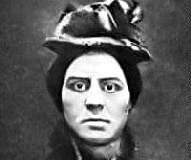
Kate Webster
Murderer Jessie King
Murderer · United Kingdom · 1887
Jessie King was executed in Edinburgh on March 11, 1889, and she was described…
2 victims
Jessie King
Murderer · United Kingdom · 1887
Jessie King was executed in Edinburgh on March 11, 1889, and she was described…
2 victims
 Catherine Flannagan
Murderer · United Kingdom · 1883
Catherine Flannagan and her sister Margaret Higgins used arsenic to poison peop…
1 victim
Catherine Flannagan
Murderer · United Kingdom · 1883
Catherine Flannagan and her sister Margaret Higgins used arsenic to poison peop…
1 victim
 Christiana Edmunds
Murderer · United Kingdom · 1871
Christiana Edmunds (3 October 1828–1907) was an Englishwoman known as The Choco…
1 victim
Christiana Edmunds
Murderer · United Kingdom · 1871
Christiana Edmunds (3 October 1828–1907) was an Englishwoman known as The Choco…
1 victim
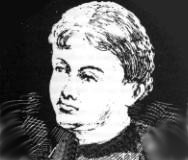 Louisa Jane Taylor
Murderer · United Kingdom · 1882
Louisa Jane Taylor was widowed in 1882 and had a small pension to survive on. S…
1 victim
Louisa Jane Taylor
Murderer · United Kingdom · 1882
Louisa Jane Taylor was widowed in 1882 and had a small pension to survive on. S…
1 victim
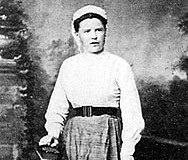 Marguerite Dixblanc
Murderer · United Kingdom · 1872
Marguerite Dixblanc was a Belgian cook. She entered the Park Lane household of…
1 victim
Marguerite Dixblanc
Murderer · United Kingdom · 1872
Marguerite Dixblanc was a Belgian cook. She entered the Park Lane household of…
1 victim
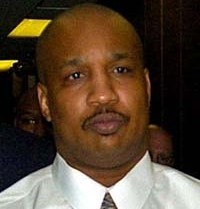 Derrick Todd Lee
Serial killer · USA · 1998
Derrick Todd Lee was born in 1968 in St. Francisville, Louisiana, USA. He was d…
7 victims
Derrick Todd Lee
Serial killer · USA · 1998
Derrick Todd Lee was born in 1968 in St. Francisville, Louisiana, USA. He was d…
7 victims
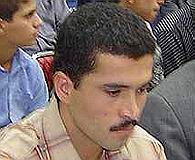 Mohammed Bijeh
Serial killer · Iran · 2004
Mohammed Bijeh (Persian: محمد بيجه ) was an Iranian serial killer. He confessed…
20 victims
Mohammed Bijeh
Serial killer · Iran · 2004
Mohammed Bijeh (Persian: محمد بيجه ) was an Iranian serial killer. He confessed…
20 victims
 Donald Keith Bashor
Murderer · USA · 1955
Donald Keith Bashor was convicted of her murder and executed in the gas chamber…
2 victims
Donald Keith Bashor
Murderer · USA · 1955
Donald Keith Bashor was convicted of her murder and executed in the gas chamber…
2 victims
 Eric Borel
Spree killer · France · 1995
Eric Borel (11 December 1978 – 24 September 1995) was a French student. At the…
5 victims
Eric Borel
Spree killer · France · 1995
Eric Borel (11 December 1978 – 24 September 1995) was a French student. At the…
5 victims
 Gunn-Britt Ashfield
Murderer · Australia · 1993
Gunn-Britt Ashfield was the mother of six-year-old John Ashfield. In 2011 she w…
1 victim
Gunn-Britt Ashfield
Murderer · Australia · 1993
Gunn-Britt Ashfield was the mother of six-year-old John Ashfield. In 2011 she w…
1 victim
- Gender
- female
- Country
- United Kingdom
- Location
- Richmond, London, England, United Kingdom
- Date of birth
- 1849
- Age at first offence
- 30
- Characteristics
- robbery, dismemberment
- Victim profile
- Julia Martha Thomas, 54
- Method of murder
- Beating with an axe
- Date(s) of murder
- March 2, 1879
- Years active
- 1879
- Date of arrest
- March 29, 1879
- Status
-
Executed
Executed by hanging at Wandsworth Prison on July 29, 1879
Case details
Kate Webster was executed by hanging at Wandsworth Prison on July 29, 1879.
Timeline
- 29 January 1879 — Julia Martha Thomas took on Kate Webster as her servant.
- 2 March 1879 — Mrs. Thomas went off to church; Webster had Sunday afternoons off work but returned late after visiting her son and a pub; Mrs. Thomas went home early and confronted her.
- 2 March 1879 — Webster dismembered Mrs. Thomas’ body, boiled parts in a copper, and burned organs and intestines.
- 18 March — John Church came to collect the furniture.
- 18 March — Church agreed to pay Kate £68 for the contents of the house, £18 of it in advance.
- 28 March — The Royal Irish Constabulary arrested Kate.
- 2 July 1879 — The Old Bailey trial began before Mr. Justice Denman.
- 8 July 1879 — The jury retired; returned just over an hour later with a guilty verdict.
- 29 July 1879 — Kate was executed at Wandsworth Prison.
Background
Kate Webster was described as an Irish criminal known as Kate. She was born Catherine Lawler in Killane, County Wexford, in 1849, of poor but respectable parents. As a small child she was caught stealing on numerous occasions and developed a reputation for dishonesty.
In her early teens she stole a quantity of money and used it to sail to Liverpool. She spent the next few years living on what she could steal. She tried picking pockets but was inept and was sent to prison for four years at the age of eighteen. After her release she travelled to London and took a job as a charwoman, and supplemented this by becoming a prostitute. She became pregnant and gave birth to a son. She took to robbing boarding houses by taking a room, selling everything she could lay her hands on before absconding.
She was arrested on numerous occasions and received short prison sentences. In 1875 she was sent to spend eighteen months in Wandsworth. When released in 1877 she was free for only a short time before finding herself back inside. In January 1879 she moved to Richmond.
She obtained a job as maid to wealthy Mrs Julia Martha Thomas who lived at 2 Vine Cottages, Park Road, Richmond.
The offence
On Sunday 2 March 1879, after having held the job for just one month, Kate Webster was sacked by Mrs. Thomas. After Mrs. Thomas returned from church, she went upstairs to her bedroom. When she was removing her hat Kate, wielding an axe, burst into the room and struck Mrs. Thomas a glancing blow on the head. Mrs. Thomas managed to struggle out onto the landing where Kate pushed her down the stairs. Kate rushed after her and smashed the woman’s head with the axe.
Kate dragged the body into the kitchen and began dismembering it. She hacked the corpse to pieces, started to boil the body parts in a large copper pot set on an open fire, and left the mixture to simmer while she went to Hayhoe’s Pub for some refreshment. On her return she packed up the remains in a box and placed the whole lot inside cloth bags lined with thick, brown paper. She then cleaned the kitchen and hallway.
The next day Kate made up a fire in the kitchen and fed in Mrs. Thomas’s bones. She visited the pawnbroker’s and pledged Mrs. Thomas’s gold bridgework for six shillings. She then retired to Hayhoe’s and got drunk. While there she tried to sell jars of “best dripping,” described as reduced body fat of Mrs. Thomas. Kate then called herself “Mrs Thomas” and started to sell off the furniture.
A wooden chest containing the par-boiled remains was later carried to Richmond Bridge by Kate and Robert Porter, left there by Robert, and was then heard to be dropped into the Thames when Kate appeared from out of the fog and said “Well, that's over.” Fishermen found the chest the next day and, when opened, found par-boiled remains of a woman. Later, police examined the body parts and a local doctor declared they were from a human female and that the skin showed signs of having been boiled.
Kate left out the head and one foot, which she disposed of separately. The head was placed into a black bag and was never found at the time of the trial.
Investigation
After the authorities were called, a search was made of No. 2 Vine Cottages and an axe, razor and some charred bones were recovered, together with the missing handle from the box found in the river.
A coal man found the box the next morning after it was thrown into the river and reported the discovery to Inspector Harber at Barnes police station. Police had the various body parts examined by a local doctor who declared they were from a human female and noticed that the skin showed signs of having been boiled. The doctor could not identify the body without the head.
Arrest
Miss Ives, the next-door neighbour, grew suspicious at seeing Mrs. Thomas’s furniture being removed and called the police. When the authorities arrived Kate managed to slip out of the back door and fled back to Killane. The police tracked her there and the Royal Irish Constabulary arrested her on 28 March. Kate was still wearing Mrs. Thomas’s clothes and jewellery.
She was taken back to London and charged with murder.
Trial
Kate Webster’s Old Bailey trial began on 2 July and lasted seven days. It was opened before Mr. Justice Denman at the Central Criminal Court (the Old Bailey).
In view of the seriousness of the crime the Crown was led by the Solicitor General, Sir Hardinge Gifford, and Kate was defended by Mr. Warner Sleigh.
A hat maker named Mary Durden gave evidence for the prosecution, telling the court that on 25 February Kate had told her she was going to Birmingham to take control of the property, jewellery etc. that had been left her by a recently deceased aunt. The prosecution claimed this showed premeditation because the conversation had occurred six days before the murder.
The prosecution and evidence addressed the problem of proving that the human remains found by the police were those of Mrs. Thomas. Medial evidence was given to show that all the body parts belonged to the same person and were from a woman in her fifties. The defence tried to suggest that Mrs. Thomas could have died of natural causes, based on her agitated state when she was last seen alive leaving church on the Sunday afternoon.
Both Henry Porter and John Church gave evidence against Kate describing events of which they had been involved. Kate denied involvement and accused Henry Porter and John Church of the deed.
In his summing up the judge pointed to the actions and previously known good characters of both Porter and Church. Two of Kate’s friends, Sarah Crease and Lucy Loder, gave evidence for her good nature.
Late on the afternoon of Tuesday 8 July the jury retired to consider their verdict, returning just over an hour later to pronounce her guilty.
Before being sentenced Kate made a complete denial of the charge but cleared Church and Porter of any involvement in the crime. She claimed to be pregnant. She was examined by women present in the court and the claim was dismissed as just another of her lies. She went back to Newgate and was transferred the next day to Wandsworth to await execution. She also made two further “confessions” in Wandsworth, the first implicating Strong, the father of her child; these allegations were found to be baseless. On the eve of her hanging she made another confession to the prison chaplain, Father McEnrey.
Verbatim statements
Webster’s confession about the killing included:
"We had an argument which ripened into a quarrel, and in the height of my anger and rage I threw her from the top of the stairs to the ground floor. She had a heavy fall. I felt that she was seriously injured and I became agitated at what had happened, lost all control of myself and to prevent her screaming or getting me into trouble, I caught her by the throat and in the struggle choked her."
Webster described her actions in dismembering and disposing of the body:
"I determined to do away with the body as best I could. I chopped the head from the body with the assistance of a razor which I used to cut through the flesh afterwards. I also used the meat saw and the carving knife to cut the body up with. I prepared the copper with water to boil the body to prevent identity; and as soon as I had succeeded in cutting it up I placed it in the copper and boiled the body. I opened the stomach with the carving knife, and burned up as much of the parts as I could."
Kate’s statement during the disposal on Richmond Bridge included:
"Well, that's over."
Sentencing
After the jury found Kate guilty, she denied the charge and claimed she was pregnant. The claim was dismissed. She was sentenced to death, with no reprieve granted.
Appeals
A few days before her execution an appeal was submitted on her behalf to the Home Secretary, R. A. Cross. It was turned down with an official statement that after considering the arguments put forward, the Home Secretary had "failed to discover any sufficient ground to justify him in advising Her Majesty to interfere with the due course of the law."
Execution
The execution took place three clear Sundays after sentence, set for the morning of Tuesday 29 July 1879 at Wandsworth prison. Wandsworth Prison had been built in 1851 and had taken over housing Surrey’s condemned prisoners on the closure of Horsemonger Lane Gaol in 1878.
Kate was the second person and the sole woman to be hanged at Wandsworth.
At 8.45 a.m. the prison bell started to toll, and a few minutes before 9.00 a.m. the Under Sheriff, the prison governor, Captain Colville, the prison doctor, two male warders and Marwood formed up outside her cell. Inside Kate was being ministered to by Father McEnrey and attended by two female warderesses.
The governor entered her cell and told her it was time. She was led out between two male warders across the yard to the execution shed nicknamed the “Cold Meat Shed.” Marwood stopped her on the chalk mark on the double trap doors and placed a leather body belt round her waist to which he secured her wrists, while his assistant strapped her ankles with a leather strap. Marwood placed the white hood over her head and adjusted the noose, leaving the free rope running down her back.
Kate’s last words were:
"Lord, have mercy upon me"
Marwood pulled the lever and Kate plummeted down about 8 feet into the brick-lined pit below. Her body was left to hang for the usual hour before being taken down and prepared for burial.
A black flag was hoisted on the flag pole above the main gate. Later in the day her body was buried in an unmarked grave in one of the exercise yards at Wandsworth. She was listed in handwritten prison records as Catherine Webster, interred 29/07/1879. She was buried in grave no. 3.
Aftermath
An auction of Mrs. Thomas’s property was held at 2 Mayfield Cottages on the day after Kate Webster’s execution. John Church, the publican, obtained Mrs. Thomas’s furniture and other personal effects including her pocket-watch and the knife with which Mrs. Thomas had been dismembered. The copper in which Mrs. Thomas’s body had been boiled was sold for five shillings. The house remained unoccupied until 1897, when occupants reported servants were reluctant to work at the place.
Other details
Kate’s known relationships and involvement in events included Henry Porter and his son Robert Porter, and John Church, a publican and general dealer.
Kate was reported to have posed as Mrs. Thomas and wore Mrs. Thomas’s clothes and jewellery while dealing with tradesmen and entering transactions under the assumed identity.
Two neighbours and witnesses included Miss Ives and Mary Durden, with Miss Ives growing suspicious at seeing Mrs. Thomas’s furniture being removed and calling the police.
A statement of confusion around sentencing included that Webster pleaded pregnancy and a “scene of uncertainty, if not of confusion, ensued, certainly not altogether in harmony with the solemnity of the occasion,” as reported in connection with the proceedings.
An outcome related to the identification of the skull later appeared in the material: in 2010 workmen uncovered a woman’s skull under the Hole in the Wall pub’s stables area, and later in July 2011 a coroner concluded that the skull was that of Julia Martha Thomas, recording a verdict of unlawful killing, superseding the open verdict recorded in 1879, with cause of death given as asphyxiation and a head injury.


Spotted an error, or have more information about this case?