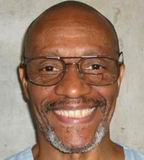
Anthony Banks
Murderer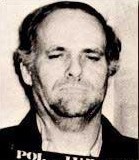 Ervil LeBaron
Murderer · USA · 1972
Ervil Morrell LeBaron (1925 to August 16, 1981) was the leader of a polygamous…
35 victims
Ervil LeBaron
Murderer · USA · 1972
Ervil Morrell LeBaron (1925 to August 16, 1981) was the leader of a polygamous…
35 victims
 Brian Kevin Rosenfeld
Murderer · USA · 1985
Brian Kevin Rosenfeld Brian Kevin Rosenfeld was sentenced to three concurrent l…
23 victims
Brian Kevin Rosenfeld
Murderer · USA · 1985
Brian Kevin Rosenfeld Brian Kevin Rosenfeld was sentenced to three concurrent l…
23 victims
 Marvin Gray
Murderer · USA · 1975
Marvin Gray was convicted killer who claimed responsibility for 23 slayings and…
23 victims
Marvin Gray
Murderer · USA · 1975
Marvin Gray was convicted killer who claimed responsibility for 23 slayings and…
23 victims
 Yahweh ben Yahweh
Murderer · USA · 1980
Yahweh ben Yahweh was born and legally named Hulon Mitchell Jr. (October 27, 19…
23 victims
Yahweh ben Yahweh
Murderer · USA · 1980
Yahweh ben Yahweh was born and legally named Hulon Mitchell Jr. (October 27, 19…
23 victims
 Joseph Fama
Murderer · USA · 1989
Joseph Fama fired the shots that killed Yusef Hawkins, a 16-year-old African Am…
1 victim
Joseph Fama
Murderer · USA · 1989
Joseph Fama fired the shots that killed Yusef Hawkins, a 16-year-old African Am…
1 victim
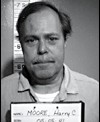 Harry Charles Moore
Murderer · USA · 1992
Harry Charles Moore was an Oregon double murderer. Moore’s mother, a former min…
2 victims
Harry Charles Moore
Murderer · USA · 1992
Harry Charles Moore was an Oregon double murderer. Moore’s mother, a former min…
2 victims
 Suzane von Richthofen
Murderer · Brazil · 2002
Suzane Louise Freiin von Richthofen was born on November 3, 1983. She was descr…
2 victims
Suzane von Richthofen
Murderer · Brazil · 2002
Suzane Louise Freiin von Richthofen was born on November 3, 1983. She was descr…
2 victims
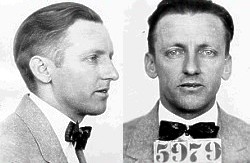 Paul Hadley
Murderer · USA · 1916
Paul V. Hadley was executed by hanging in Arizona on April 13, 1923. On Friday,…
2 victims
Paul Hadley
Murderer · USA · 1916
Paul V. Hadley was executed by hanging in Arizona on April 13, 1923. On Friday,…
2 victims
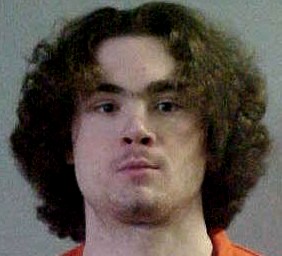 Paul Bradley Speer
Murderer · USA · 2002
Paul Bradley Speer was in jail awaiting trial for burglary. In March 2002, he a…
1 victim
Paul Bradley Speer
Murderer · USA · 2002
Paul Bradley Speer was in jail awaiting trial for burglary. In March 2002, he a…
1 victim
- Gender
- male
- Country
- USA
- Location
- Tulsa, Tulsa County, Oklahoma, USA
- Date of birth
- July 5, 1952
- Age at first offence
- 26
- Characteristics
- armed robbery, rape, kidnapping
- Victim profile
- David Paul Fremin (convenience store clerk) / Sun "Kim" Travis, 24
- Method of murder
- Shooting
- Date(s) of murder
- April 11, 1978 / June 6, 1979
- Years active
- 1978–1979
- Date of arrest
- —
- Status
-
Executed
Sentenced to death on November 22, 1999; executed by lethal injection in Oklahoma on September 10, 2013
Case overview
Anthony Banks was sentenced to death and later executed by lethal injection in Oklahoma. He was convicted of first-degree murder for the June 6, 1979, killing of Sun “Kim” Travis in Tulsa County.
Timeline
- April 11, 1978 — Anthony Banks was convicted in connection with the slaying of a Tulsa convenience store clerk, David Paul Fremin, during an armed robbery, and he was sentenced to death.
- June 6, 1979 — Sun “Kim” Travis was abducted from the parking lot of a Tulsa apartment complex and later raped and shot in the head.
- November 7, 1979 — Anthony Rozelle Banks gave a statement to an assistant district attorney for Tulsa County, which was tape-recorded and later played for the jury.
- November 9, 1979 — Walter Banks gave a statement corroborating Anthony’s account.
- August 1997 — Banks and a co-defendant, Allen Wayne Nelson, were charged in Travis’s death when DNA was detected in evidence found on Travis’s body and clothing.
- June 5, 1998 — At preliminary hearing, the State asked to amend the information to charge Banks alternatively with malice aforethought murder and felony murder in the commission of kidnapping and rape by force or fear.
- June 25, 1998 — The State mistakenly filed an amended information charging Banks only with felony murder, and then corrected the error on August 27, 1999.
- November 22, 1999 — Banks was sentenced to death.
- September 10, 2013 — Banks was executed at the Oklahoma State Penitentiary at McAlester; he was pronounced dead at 6:07 p.m.
Background
Sun “Kim” Travis was a 24-year-old Korean national. Her body was later found in a roadside ditch. Her partially clothed body was found the next morning near a trash pile in the 1800 block of East 36th Street North.
Anthony Banks was a 61-year-old Oklahoma inmate at the time of execution. He was already serving a life prison sentence following his conviction for the April 11, 1978, slaying of David Fremin, a Tulsa store clerk, during an armed robbery.
Banks’s daughter, Toni Banks, spoke after the execution. She said Banks found religion while serving time on death row and that she believed he was remorseful.
The offence
Travis kidnapping, rape, and killing (June 6, 1979)
On June 6, 1979, Sun “Kim” Travis returned home from work and was abducted from the parking lot of a Tulsa apartment complex. Her husband, Steve Travis, saw their car pull into the apartment complex parking lot, apparently followed by another vehicle. After Travis did not come inside, he went outside and discovered the car parked in the wrong space with dome and headlights on and the pillow from which she sat to drive on the ground.
The next morning, Travis’s lifeless and partially clothed body was found in the grass next to a nearby road. She had bruises on her face and died from a gunshot wound to the head. She had been raped, including being raped and sodomized, and her blouse was missing and her panties were ripped. Semen was found on her clothing, in her vagina, and in her anus.
Banks abducted from the parking lot of the apartment complex; Travis was raped and shot in the head.
Prior slaying during armed robbery (April 11, 1978)
Banks was previously convicted for the April 11, 1978, slaying of David Paul Fremin, a Tulsa convenience store clerk, who was shot and killed during an armed robbery. Banks had originally been sentenced to die for Fremin’s slaying, but his conviction was thrown out by federal courts. He accepted a plea deal that sent him to prison for life with the possibility of parole.
Investigation
Information leading to the case
Anthony Banks sought leniency on unrelated robbery charges and offered information about Fremin’s murder. On November 7, 1979, Anthony gave a statement to an assistant district attorney for Tulsa County that was tape-recorded and later played for the jury.
In Anthony’s statement, he said he and Walter Banks were buying beer and snacks at the Git-N-Go store when a man named McClure entered with a gun, told them to leave, and then shot the clerk. Anthony said McClure left with a paper bag and the cash drawer and forced Walter and Anthony at gunpoint to give him a ride across town.
After Anthony gave his statement, police made progress with physical evidence left at the crime scene and identified a latent fingerprint as Anthony Banks’s.
On November 9, 1979, Walter Banks gave a statement corroborating Anthony’s account of the murder. Walter said McClure had been with him and Anthony all evening at a party and that McClure left the party with them when they took another friend home.
Police soon located Anthony’s ex-wife, Traci Banks, who gave a different account of the evening’s events.
DNA link to Travis murder (1997)
The Travis case remained unresolved until DNA testing in 1997. DNA analysis was performed on sperm samples obtained from the victim and her clothing.
DNA analyst David Muniec testified that the sperm found on Travis’s clothing was a mixture matching both Banks’s and Nelson’s DNA. Muniec also testified that the sperm found on a vaginal swab matched Banks and that the sperm on an anal swab matched Nelson. Forensic Chemist Julie Kempton testified that the DNA found on Travis’s pants was a mixture of Banks’s and Nelson’s DNA.
Arrest and charging
Banks and co-defendant Allen Wayne Nelson, 54, were charged in Travis’s death in August 1997, when their DNA was detected in evidence found on Travis’s body and clothing.
Trial
Joint trial and statements about the homicide
Anthony Banks and his brother Walter Thomas “Tony” Banks had been tried jointly in Tulsa County District Court, Case No. CRF-79-3393, for the murder of David Fremin. The jury convicted both defendants as charged and sentenced Anthony to death by lethal injection; Walter received life imprisonment.
In the Travis murder prosecution, Banks was alternatively charged with malice aforethought murder and felony murder in the commission of kidnapping and rape by force or fear. The jury verdict form indicated Banks was found guilty of both and the evidence supported conviction for both.
Trial testimony about events
Banks gave a statement beginning at approximately 11:00 p.m. on June 6, 1979. In the statement, Banks said:
- he was at a convenience store in his light blue AMC Hornet hatchback when Allen Nelson asked for a ride;
- Banks drove Nelson to Travis’s apartment complex;
- Nelson exited and spoke with Travis, then reentered the car and requested Banks drive them to the Apache Manor Apartments;
- Nelson and Travis entered the apartments while Banks drank beer and waited;
- Nelson and Travis returned shirtless;
- Banks drove around for about ten minutes;
- Nelson asked Banks to stop on 36th Street about 300 yards from the entrance of the Comanche Apartments;
- Travis exited the car to the front and Nelson to the rear;
- Nelson circled around to the front and shot Travis in the head;
- Nelson returned to the car and asked Banks not to tell anyone;
- Banks and Nelson drove away and later stopped when Nelson noticed a sewer drain;
- Nelson discarded Travis’s blouse and purse in the drain and returned to the car;
- Banks drove Nelson home.
Banks denied participation in the killing and claimed he was along for the ride.
Co-defendant Allen Wayne Nelson
Nelson was charged with Travis’s death along with Banks. A 12-member jury convicted Nelson of first-degree murder and sentenced him to life in prison.
Sentencing
Aggravating circumstances and death sentence
The jury found three aggravating circumstances:
- that Banks was previously convicted of a felony involving the use or threat of violence to the person;
- that the murder was committed to prevent lawful arrest or prosecution;
- that the murder was especially heinous, atrocious, or cruel.
In accordance with the jury’s recommendation, the Honorable Thomas C. Gillert sentenced Banks to death.
At the time of his death sentence, Banks had been charged with several aggravating factors in the Travis murder trial, including:
- continuing threat to society (the jury did not find this aggravator existed in later mandatory sentence review);
- especially heinous, atrocious, or cruel;
- avoiding lawful arrest or prosecution;
- prior violent felony convictions.
“Avoiding lawful arrest or prosecution”
Banks challenged the aggravating circumstance that the murder was committed to avoid or prevent lawful arrest or prosecution. The court reviewed this for evidence supporting a predicate crime separate from the murder and found that the evidence was sufficient.
“Heinous, atrocious, and cruel”
Banks challenged the aggravating circumstance “heinous, atrocious and cruel.” The court determined that while conscious and before execution, Sun Travis was kidnapped, physically assaulted, and raped and sodomized by Banks and Nelson, and that her ordeal lasted over two hours, which supported serious physical abuse and torture.
Appeals
Direct appeal and affirmation of Anthony Banks’s death sentence for Fremin murder
In 1986, the Oklahoma Court of Criminal Appeals described an appeal involving Walter Thomas Banks, who was tried jointly with Anthony Rozelle Banks for the murder of David Fremin. The court affirmed the judgment and sentence for Walter and stated that the death sentence for Anthony Banks had been affirmed.
Post-conviction relief (1991)
In 1991, the Oklahoma Court of Criminal Appeals addressed Banks’s second application for post-conviction relief and affirmed the denial by the district court, including denial of motions to strike and filing of a second amended application.
The decision addressed issues including ineffective assistance of appellate counsel, severance, admissibility of taped statements, impeachment with prior convictions, prosecutor disqualification, expert assistance, and jury instruction issues, including anti-sympathy instructions in capital sentencing deliberations and the adequacy of “avoiding arrest” aggravating circumstance instructions.
The court also addressed an argument about a conflict of interest relating to counsel’s prior representation, mitigation evidence, and denial of an evidentiary hearing.
The district court order denying post-conviction relief was affirmed.
Appeal in 2002 regarding Travis murder (Oklahoma Court of Criminal Appeals)
In 2002, the Oklahoma Court of Criminal Appeals reviewed Anthony Rozelle Banks’s conviction and death sentence for the Travis murder. The opinion described that the jury found three aggravating circumstances, and it affirmed the judgment and sentence.
The 2002 opinion addressed multiple propositions including:
- amendment of the information;
- denial of motion to quash a search warrant for blood sample and suppression of DNA evidence;
- sufficiency of evidence for malice aforethought and felony murder in the course of kidnapping or forcible rape;
- Fifth Amendment privilege issues relating to Walter Banks being called as a witness;
- other crimes evidence referenced in opening and closing arguments;
- separate verdict forms for alternative theories;
- sentencing-stage objections including “Trail of Terror” title on an illustration;
- mandatory sentence review and challenges to aggravating circumstances including “avoid or prevent lawful arrest” and “heinous, atrocious, or cruel”;
- prosecutor misconduct in both guilt and second stage arguments;
- effectiveness of trial counsel.
The court affirmed the Judgment and Sentence.
Federal habeas proceedings (Tenth Circuit)
In federal habeas review, the U.S. Court of Appeals for the Tenth Circuit held that no relief was warranted and affirmed denial of Banks’s petition.
The Tenth Circuit addressed:
- Confrontation Clause issues arising from the prosecutor calling Walter Banks and Walter invoking the Fifth Amendment;
- Brady issues relating to a note written by a corrections officer;
- due process and Sixth Amendment issues relating to a clinical psychology expert’s alleged intoxication;
- other due process challenges based on alleged prosecutorial misconduct, including discussions of Banks’s prior criminal record context, closing arguments, and comments about Banks’s silence;
- cumulative error.
The Tenth Circuit concluded that none of the asserted grounds merited relief and affirmed.
Outcome
Banks’s conviction and death sentence were affirmed through direct appeal and subsequent post-conviction and federal habeas proceedings. He was executed on September 10, 2013.
Aftermath
Execution details (September 10, 2013)
Banks was executed at the Oklahoma State Penitentiary at McAlester shortly after 6:00 p.m. on September 10, 2013. He was pronounced dead at 6:07 p.m. after receiving a lethal dose of drugs that made him unconscious, stopped breathing, and stopped his heart.
Banks was strapped to a gurney with IV lines attached to his arms and made statements shortly before death.
He spoke briefly to his attorney, Tom Hird, and to his spiritual adviser. He also spoke to Tulsa County Sheriff Stanley Glanz.
Banks’s statements included:
- “This is justified,”
- “I love you. I’ll see you again,”
- “Hi,”
- “I haven’t seen you in years. Decades even,”
- “I can’t express the terrible things I’ve done,”
- “I’m sorry,”
- “To know I’ve taken lives hurts me,”
- “I know it hurts the victims’ families, too,”
- “I’m thankful everybody’s here. I appreciate that,”
- “I’ve done one good thing in my life and that is to become a Jehovah’s Witness. For that, I’m eternally grateful,”
- “He could’ve made a different decision, but he made the wrong decision,”
Prison officials said death-row inmates sometimes bang on their cell doors as a sign of respect for someone being led to the execution chamber; there was no noise Tuesday as Banks was walked to meet his fate.
No family members of either Banks or Travis attended the execution.
Attorney General and prosecutor statements
Attorney General Scott Pruitt issued a statement before the execution. It included:
- “Anthony Banks brutally ended the life of an innocent young woman and has proven his willingness to continue committing violent crimes.”
Pruitt’s statement also said:
- “My thoughts are with the family and friends of Sun Travis, who lost a loved one due to Banks’ heinous actions.”
Tulsa County First Assistant District Attorney Doug Drummond described the kidnapping, rape, and execution of Sun Travis as a heinous and thoughtless crime, and stated that the jury heard the evidence and Banks’s violent criminal history and decided he should be accountable to the fullest extent. Drummond also said:
- “I never understand the concept of why an individual murders another, although I have seen it frequently in my 17-year career,”
- “The kidnapping, rape and execution of Sun Travis was a heinous and thoughtless crime. The jury heard the evidence as well as the violent criminal history of Mr. Banks and decided he should be accountable to the fullest extent.”
Drummond also said:
- “I certainly think such cases should be scrutinized by the courts,”
- “but it makes the families wait a long time for any finality in the case.”
Drummond said the case was one of the first in Tulsa County to significantly use DNA evidence securing a murder conviction, and that was the primary reason the state was able to successfully prosecute a case 20 years after it happened.
Protests
About five people protested the execution at the governor’s mansion in Oklahoma City. One protester, D.W. Hearn, held a rosary and said:
- “I was praying for the man about to be executed, the man’s family and the victim’s family.” He said he believed Oklahoma would eventually abolish the death penalty.
Other details
Co-defendant and related participants named in the proceedings
- Allen Wayne Nelson (54) — co-defendant charged in the Travis murder; convicted of first-degree murder and sentenced to life in prison.
- Walter Thomas “Tony” Banks — Banks’s brother; sentenced to life imprisonment in the Fremin murder case; was called as a witness in the Travis murder proceedings and invoked the Fifth Amendment.
- David Paul Fremin — Tulsa convenience store clerk murdered during the April 11, 1978, armed robbery.
- Traci Banks — testified at the Fremin murder trial regarding events in Walter’s and Anthony’s apartment.
- Becky Moore — named as being with Walter and Anthony in the apartment per Traci’s testimony.
- Billy McClure and McClure — a man named in Anthony’s 1979 statement in connection with the Fremin murder.
- Norman Lee Hicks — named in relation to Banks’s ineffective assistance arguments in the post-conviction proceedings.
- Stephen “Steve” Travis — victim’s husband; testified during sentencing phase in Banks’s 1999 trial.
- Toni Banks — Banks’s daughter; spoke after the execution.
- Tom Hird — Banks’s attorney who witnessed Banks’s statements before death.
- Stanley Glanz — Tulsa County Sheriff who witnessed Banks’s execution.
- Jerry Massie — spokesperson for the Department of Corrections in relation to execution protocols and who would be present to witness.
- Dylan Goforth and Tim Talley — named as authors of news articles referenced in the case summary text.
Execution method and protocol
The state used a three-drug lethal injection protocol:
- Pentobarbital was administered first to render the inmate unconscious.
- Vecuronium bromide was administered next to stop breathing.
- Potassium chloride was administered to stop the heart.
Spotted an error, or have more information about this case?