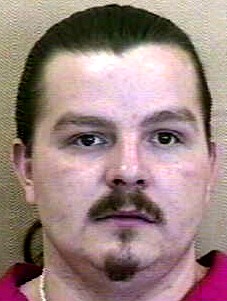
Joseph Earl Bates
Murderer Brian Kevin Rosenfeld
Murderer · USA · 1985
Brian Kevin Rosenfeld Brian Kevin Rosenfeld was sentenced to three concurrent l…
23 victims
Brian Kevin Rosenfeld
Murderer · USA · 1985
Brian Kevin Rosenfeld Brian Kevin Rosenfeld was sentenced to three concurrent l…
23 victims
 Yahweh ben Yahweh
Murderer · USA · 1980
Yahweh ben Yahweh was born and legally named Hulon Mitchell Jr. (October 27, 19…
23 victims
Yahweh ben Yahweh
Murderer · USA · 1980
Yahweh ben Yahweh was born and legally named Hulon Mitchell Jr. (October 27, 19…
23 victims
 Russell Ellwood
Murderer · USA · 1991
Russell Ellwood was a former taxi driver. Authorities suspected him of killing…
20 victims
Russell Ellwood
Murderer · USA · 1991
Russell Ellwood was a former taxi driver. Authorities suspected him of killing…
20 victims
 Robert Martines Perez
Murderer · USA · 1994
Name: Robert Martines Perez · Other name used in proceedings: Robert Martinez P…
15 victims
Robert Martines Perez
Murderer · USA · 1994
Name: Robert Martines Perez · Other name used in proceedings: Robert Martinez P…
15 victims
 Sergey Gordeyev
Homicide · Russia · 2014
Sergey Gordeyev (also spelled as Sergei Gordeev; Russian: Сергей Гордеев) was a…
2 victims
Sergey Gordeyev
Homicide · Russia · 2014
Sergey Gordeyev (also spelled as Sergei Gordeev; Russian: Сергей Гордеев) was a…
2 victims
 Albert Clozza
Murderer · USA · 1983
Albert Clozza was convicted of killing a 13-year-old girl, Patricia Beth Bolton…
1 victim
Albert Clozza
Murderer · USA · 1983
Albert Clozza was convicted of killing a 13-year-old girl, Patricia Beth Bolton…
1 victim
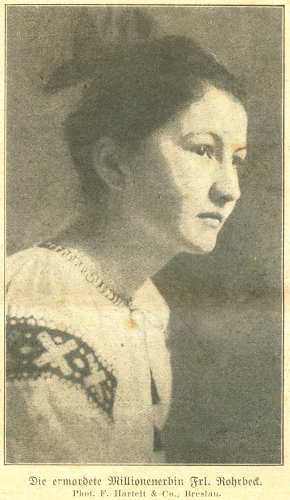 Peter Grupen
Murderer · Germany · 1921
Peter Grupen was Ursula Schade’s stepfather and Dorothea Rohrbeck’s step uncle.…
2 victims
Peter Grupen
Murderer · Germany · 1921
Peter Grupen was Ursula Schade’s stepfather and Dorothea Rohrbeck’s step uncle.…
2 victims
 Verry Henyansyah
Serial killer · Indonesia · 2006
Verry Idham Henyansyah, also known as “Ryan,” was an Indonesian convicted seria…
11 victims
Verry Henyansyah
Serial killer · Indonesia · 2006
Verry Idham Henyansyah, also known as “Ryan,” was an Indonesian convicted seria…
11 victims
 Juan Edward Castillo
Murderer · USA · 2003
Juan Edward Castillo (TDCJ Number 999502) was convicted of capital murder and s…
1 victim
Juan Edward Castillo
Murderer · USA · 2003
Juan Edward Castillo (TDCJ Number 999502) was convicted of capital murder and s…
1 victim
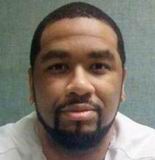
 Earnest Morrison
Murderer · USA · 1987
Earnest Ulysses Morrison (also referred to as Earnest Morrison) was convicted i…
1 victim
Earnest Morrison
Murderer · USA · 1987
Earnest Ulysses Morrison (also referred to as Earnest Morrison) was convicted i…
1 victim
- Gender
- male
- Country
- USA
- Location
- Yadkin County, North Carolina, USA
- Date of birth
- May 1, 1968
- Age at first offence
- 22
- Characteristics
- torture, kidnapping, rape
- Victim profile
- Charles Edwin Jenkins
- Method of murder
- Shooting
- Date(s) of murder
- August 11, 1990
- Years active
- 1990
- Date of arrest
- August 30, 1990
- Status
-
Executed
Executed by lethal injection in North Carolina on September 26, 2003
Case overview
Joseph Earl Bates was convicted of first-degree murder and first-degree kidnapping involving the killing of Charles Edwin Jenkins.
Bates confessed to police to beating Jenkins, hog-tying him, kidnapping him, tying him to a tree, and questioning him at gunpoint. He also admitted shooting Jenkins in the neck and throwing Jenkins’ body into the Yadkin River. Bates’ confession included that he shot Jenkins because Jenkins “acted like he knew who had shot into my house, he spit on me and told me to go to hell, and this made me mad and I shot him.”
Timeline
- August 1990 — Gunshots were fired into Bates’ house; Bates set up a temporary campsite on his employer Hal Eddleman’s property.
- August 10, 1990 — Bates called Hal Eddleman and told Eddleman to meet him at the bridge later that evening because something was "going down."
- August 25, 1990 — Two fishermen discovered Charles Jenkins’ body floating in the Yadkin River in Yadkin County, North Carolina.
- August 26, 1990 — An autopsy was performed on Charles Jenkins’ body.
- August 30, 1990 — Two law enforcement officers went to Bates’ house while investigating the murder; officers obtained a piece of paper and some molding with what appeared to be bloodstains on it.
- August 31, 1990 — Bates gave a thirteen-page confession to police.
- October 29, 1990 — Bates was indicted on murder and first-degree kidnapping of Charles Edwin Jenkins.
- February 1991 — Bates was tried capitally; the jury found him guilty of one count of first-degree murder and one count of first-degree kidnapping; he was sentenced to death for the first-degree murder conviction.
- March 2, 1991 — Bates was first sentenced to death in Yadkin County Superior Court for the August 1990 murder of Charles Edwin Jenkins.
- 1993 — The North Carolina Supreme Court awarded Bates a new trial.
- November 9, 1994 — Judge Julius Rousseau sentenced Bates to death for the first-degree murder conviction and to an additional forty years in prison for the kidnapping conviction.
- February 14, 2002 — The United States District Court for the Middle District of North Carolina adopted the magistrate’s recommendation to dismiss Bates’ petition.
- September 26, 2003 — Bates was executed by lethal injection in North Carolina.
The offence
Background and events leading to the killing
Some time in late July or early August 1990, someone broke into and fired gunshots into Bates’ house. Bates set up a temporary campsite on his employer Hal Eddleman’s property. Around this same time, Bates told his friend, Gary Shaver, that he could kill someone.
On August 10, Bates called Eddleman and told Eddleman to meet him at the bridge later that evening because something was "going down." Eddleman went to the bridge as instructed, but Bates never came to meet him.
The next evening Bates and Shaver went to a night club. At approximately 1:45 a.m., Bates instructed a waitress to ask Billy Grimes to telephone Eddleman and told her that Grimes and Eddleman would know what was going on. At approximately 2:00 a.m., Charles Edwin Jenkins asked Bates and Shaver for a ride home.
During the ride, Bates asked Jenkins if he knew Bates’ ex-wife, Lisa Bates, or her boyfriend, Jeff Goins. Jenkins responded:
- “Yeah, isn't Lisa the one that has big breasts”
- “long blond hair.”
Shaver testified at trial that although Bates’ ex-wife had long blond hair at that time, she did not have “big breasts.”
Bates stopped twice during the ride. During the first stop, Bates and Shaver used the bathroom, and the victim did not exit the vehicle. During the second stop, the victim and Shaver got out to use the bathroom. Shaver stood on the passenger side, and the victim stood at the rear of the vehicle. Bates struck the victim at least three times on the back of the head with a shovel handle. The victim fell to the ground.
Bates then gave the shovel handle to Shaver, took some rope from the vehicle, and tied the victim’s hands. The victim appeared unconscious, moaned, and Bates told Shaver to hit the victim with the shovel handle. Shaver refused; Bates struck the victim again on the back of the head. The victim stopped moaning and appeared unconscious again. Bates then bound the victim’s arms and legs behind his back, hog-tied him, and asked Shaver to help place the victim into Bates’ vehicle; Shaver did so.
Bates and Shaver then headed toward Bates’ campsite. Bates drove, Shaver was in the passenger seat, and the victim was hog-tied and lying on the floor of the rear of the vehicle. At some point, the victim propped his head up; Bates asked for directions. The victim responded that he could not see because his glasses had been lost. The victim asked what had been done and what was going on; Bates told the victim to shut up.
Bates noticed a sign indicating entry into Yadkin County and proceeded to his campsite.
Events at the campsite and at Eddleman’s house
On the way back to his campsite, Bates stopped at Eddleman’s house. Bates and Shaver exited the vehicle. Bates knocked on the front door and entered Eddleman’s house while Shaver waited outside in front of Bates’ vehicle. Bates remained inside for fifteen or twenty minutes.
While inside, Bates told Eddleman:
- “We got one of the MF's.”
Eddleman asked who the victim was. Bates said:
- “His name is Chuck.”
Eddleman asked how Bates knew he was one of them. Bates said:
- “He's told us.”
Eddleman asked where the victim was. Bates responded:
- “He's hogtied in the jeep. You want to see him?”
Eddleman said:
- “No, the best thing you can do is take him back where you got him, apologize to him and do anything he wants you to do, and hope that he don't prosecute you for kidnapping him.”
After Bates and Eddleman stepped onto the porch, Billy Grimes arrived in a white Mitsubishi pickup truck and parked behind Bates’ vehicle. Bates spoke with Grimes and said:
- “I've got one of the guys that's been messing with me. Do you want to watch or help?”
Grimes declined, left, and went home.
Eddleman stepped off the porch to speak with Shaver. Eddleman told Shaver:
- “Gary, you don't want nothing to do with this either.”
- “Gary, you better talk to [defendant].”
Eddleman told Bates:
- “Joe, you better listen.”
Bates then told Shaver:
- “He could get out of the situation if he wished.”
Shaver said he wanted out because he had sole custody of his daughter and did not want to jeopardize his custody. Bates told Shaver he would take Shaver back to his vehicle. Bates and Shaver returned to Bates’ vehicle and left. When they arrived at Bates’ campsite, Shaver got into his vehicle and left while the victim was alive.
Shaver went home, set his alarm clock, and went to bed. Bates returned to Eddleman’s house later that morning, awoke Eddleman, and returned Eddleman’s gun which he had borrowed earlier. Eddleman placed the gun in one of his bedrooms. Bates asked:
- “What do you think I should do with the body?”
Eddleman responded:
- “What?”
- “Man, if you've got a body, you've only got about three choices. You either take him to the sheriff's office, bury him or throw him in the river.”
After further conversation, Bates asked:
- “Do you reckon I should tie cement blocks to him?”
Eddleman responded:
- “If you do, or not, he will come up in from nine to eleven days.”
Bates then said:
- “I guess I can load him by myself,”
and left. Eddleman later woke and discovered what appeared to be flesh and blood on the gun. He cleaned the gun.
Later that day, Eddleman spoke with Bates, and Bates said:
- “I was just thinking about what happened last night.” Bates also said:
- “Well, it don't bother me all that bad.”
Eddleman responded:
- “Man, you better quit thinking. You're going to have a hard enough day as it is.” and later:
- “It will.”
When Bates left Eddleman’s house, he packed up his tent and left the campsite.
Grimes saw Bates around noon as Bates unloaded his vehicle and placed his tent and other items into his residence. Grimes noticed blood all over the contents of Bates’ vehicle. Bates took items inside and washed blood off in the sink. Grimes later saw Bates at Bran’s Game Room and Bates told him:
- “he shot the victim through the neck and threw his body into the river.”
Grimes asked why Bates killed the victim. Bates said he could not let the victim live after Bates tortured him and that he would get just as much time for murder as he would for kidnapping.
Killing and disposal of the victim’s body
At the campsite, the victim was alive when ropes were loosened and Bates began asking who had shot into his house. The victim mentioned two people who were involved but did not say anything else. Bates then tied the victim to a tree and retrieved a gun borrowed from Eddleman.
Bates put the gun up to the victim’s throat, and the victim repeated that he did not know for sure who had shot into Bates’ home. Bates then untied the victim, took him to the back of the truck, and shot him in the neck. Jenkins was lying face-up near the back of the truck when Bates shot him.
In his confession, Bates said:
“shot him . . . because he acted like he knew who had shot into my house, he spit on me and told me to go to hell, and this made me mad and I shot him.”
After rummaging through Jenkins’ pockets, Bates retied the victim’s hands and feet and loaded him into a jeep. Bates drove back to Eddleman’s house, returned Eddleman’s gun, and asked:
Bates left and threw the body into the Yadkin River. Later that day, Bates discussed the murder with both Eddleman and Grimes, telling Eddleman:
Bates told Grimes he killed Jenkins because he would get no more time for murder than for kidnapping.
Victim and injuries
On August 25, 1990, two fishermen discovered Charles Jenkins’ body floating in the Yadkin River in Yadkin County, North Carolina.
The victim’s ankles and wrists were bound by rope, his legs and arms were hog-tied, and a rope was tied around his neck. The victim’s body was in an early stage of decomposition. His belt buckle was undone, and his pants were unzipped.
On August 26, 1990, an autopsy was performed. The medical examiner noted the victim’s wrists and ankles were bound with rope and his arms and legs had been fastened behind his back in a “hogtie” configuration. The medical examiner also noted a loop of rope around the victim’s neck and a separate rope around his knee area. There was considerable decomposition. The medical examiner found a gunshot wound to the back of the victim’s neck.
The medical examiner was unable to testify with any degree of medical certainty whether the victim experienced any pain as a result of the gunshot wound but testified that the victim could have died instantaneously.
Investigation
During the investigation, two police officers went to Bates’ house to speak with him. Officers obtained a piece of paper and some molding from Bates’ home having what appeared to be bloodstains on it.
On August 30, 1990, the officers asked Bates’ permission to search his vehicle. Bates gave permission and assisted them into the vehicle. One officer found a newspaper on the floor with a front-page story about the officer’s uncle; the officer asked for it and Bates agreed. Inside the newspaper, the officer found a receipt with what appeared to be bloodstains on it.
The officers also asked Bates’ permission to have a small piece of rope from a bucket on his front porch; Bates allowed them to take the rope. A piece of molding containing what appeared to be blood was taken from Bates’ vehicle. The receipt and molding were examined by the SBI, and the substance on them was determined to be blood. No useable fingerprints were taken from the molding, and no determination could be made whether the blood matched the victim’s blood since the victim’s body contained no blood when found.
Prior to the autopsy, police officers took fingerprints from the victim to establish identity. The SBI was unable to determine identity from the prints; the victim’s hands were surgically removed and turned over to an agent of the SBI for processing and better fingerprints. The SBI processed fingerprints from the hands and determined that the victim was Charles Edwin Jenkins.
On August 31, 1990, Bates gave a thirteen-page confession to police, admitting beating, binding with ropes, kidnapping, tying the victim to a tree, questioning him at gunpoint, shooting him in the neck after Jenkins would not tell him who had shot into Bates’ house and after Jenkins spat on him.
Bates also admitted tying a cement block around the victim’s neck, removing the cement block after he discovered it made the body too heavy to throw off the bridge, and throwing the victim’s hog-tied body into the Yadkin River.
Arrest
No arrest facts were stated.
Trial
Charges and verdicts
Bates was indicted for kidnapping and murder.
In the first capitally tried proceeding in February 1991, a jury found Bates guilty of one count of first-degree murder and one count of first-degree kidnapping.
At the second capital trial, a second jury found Bates guilty of one count of first-degree kidnapping and one count of first-degree murder on the basis of both the felony murder rule and premeditation and deliberation.
Sentencing phase and aggravating circumstances
In the second capital sentencing proceeding, conducted pursuant to N.C.G.S. § 15A-2000, the jury recommended a sentence of death for the first-degree murder conviction.
The jury found as aggravating circumstances that:
- the murder was committed while Bates was engaged in the commission of a kidnapping; and
- the murder was especially heinous, atrocious, or cruel.
The jury also found seven of the seventeen statutory and nonstatutory mitigating circumstances submitted to it.
In the first trial, Bates was sentenced to death for the first-degree murder conviction.
Statements and confession use
Bates did not testify at trial.
The trial included discussion of whether Bates appeared to show remorse. During the penalty phase of the second trial, the prosecutor pointed out that Jenkins’ mother, Bates’ mother, and Bates’ sister each cried while on the stand and asked whether the jurors saw Bates cry during the trial or whether Bates had presented any evidence of remorse. The prosecutor also commented that Bates had received the benefit of a lengthy trial and two good lawyers who would ask jurors not to return the death penalty because it was a lawyer’s job to do so.
Sentencing
On November 9, 1994, Judge Julius Rousseau sentenced Bates to death for the first-degree murder conviction and to an additional forty years in prison for the kidnapping conviction.
The record reflected that Bates’ first death sentence was March 2, 1991 in Yadkin County Superior Court for the August 1990 murder of Charles Edwin Jenkins, and that on appeal the North Carolina Supreme Court awarded Bates a new trial.
After a second trial, Bates received the death sentence on November 9, 1994.
Appeals
North Carolina Supreme Court
The North Carolina Supreme Court awarded Bates a new trial based on improper denial of an ex parte hearing regarding his request for funds to employ a forensic psychologist. The proceedings involved a grant of a motion to bypass and that denial was found to have jeopardized Bates’ constitutional rights and could not be deemed harmless, with a new trial ordered.
After the second trial, the Supreme Court of North Carolina affirmed the conviction and sentence.
United States Supreme Court
Bates sought certiorari. The United States Supreme Court denied certiorari.
Other details
Confession details
Bates’ thirteen-page confession included admission of beating, hog-tying, kidnapping, tying the victim to a tree, questioning him at gunpoint, shooting the victim in the neck after the victim would not tell him who had shot into his house and after the victim spat on him, and throwing the victim’s hog-tied body into the Yadkin River.
Victim’s identity and forensic handling
The SBI was unable to determine the victim’s identity from initial prints and surgically removed the victim’s hands so they could be processed and better fingerprints obtained. The SBI determined the victim was Charles Edwin Jenkins.
Food and last words
Bates’ final meal included fried pork chops, French fries, hush puppies, apple pie, a Pepsi and a Dr. Pepper.
Bates’ last words, when asked by prison warden Marvin Polk for last words before being wheeled into the steel-walled execution chamber, were:
“I haven't really give it any thought,” Bates said when asked by prison warden Marvin Polk for last words before being wheeled into the steel-walled execution chamber. “Let's see. Hebrews, Chapter 13, Verse 6, they can read it.” The verse says: “So that we may boldly say, the Lord is my helper, and I will not fear what man shall do unto me.”
Execution
Bates was executed by lethal injection at Central Prison in Raleigh. He was pronounced dead at 2:14 a.m.
No relatives witnessed the execution. Bates stared straight ahead as four law enforcement officers and two relatives of the victim watched as he died.
Department of Correction spokeswoman Pam Walker stated he was pronounced dead at 2:14 a.m.
Yadkin County Sheriff Michael Cain said:
- “It's just an ending of the case. Certain crimes are going to be met with certain penalties.”
Witnesses named for execution
The state Correction Department named official witnesses:
- David Jenkins and Karl Jenkins;
- Ron Perry and Frank Brown;
- Yadkin County Sheriff Michael Cain; and
- Yadkin County sheriff’s Maj. Raymond Wells Swain.
The media witnesses were:
- Andy Matthew of the Yadkin Ripple;
- Scott Sexton of the Winston-Salem Journal; and
- Estes Thompson of The Associated Press.
Spotted an error, or have more information about this case?