Thomas Henry Battle
Murderer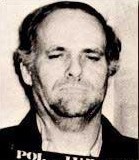 Ervil LeBaron
Murderer · USA · 1972
Ervil Morrell LeBaron (1925 to August 16, 1981) was the leader of a polygamous…
35 victims
Ervil LeBaron
Murderer · USA · 1972
Ervil Morrell LeBaron (1925 to August 16, 1981) was the leader of a polygamous…
35 victims
 Brian Kevin Rosenfeld
Murderer · USA · 1985
Brian Kevin Rosenfeld Brian Kevin Rosenfeld was sentenced to three concurrent l…
23 victims
Brian Kevin Rosenfeld
Murderer · USA · 1985
Brian Kevin Rosenfeld Brian Kevin Rosenfeld was sentenced to three concurrent l…
23 victims
 Marvin Gray
Murderer · USA · 1975
Marvin Gray was convicted killer who claimed responsibility for 23 slayings and…
23 victims
Marvin Gray
Murderer · USA · 1975
Marvin Gray was convicted killer who claimed responsibility for 23 slayings and…
23 victims
 Yahweh ben Yahweh
Murderer · USA · 1980
Yahweh ben Yahweh was born and legally named Hulon Mitchell Jr. (October 27, 19…
23 victims
Yahweh ben Yahweh
Murderer · USA · 1980
Yahweh ben Yahweh was born and legally named Hulon Mitchell Jr. (October 27, 19…
23 victims
 Frazier Glenn Miller
Murderer · USA · 2014
Frazier Glenn Miller, Jr., commonly known as Glenn Miller, was a former leader…
3 victims
Frazier Glenn Miller
Murderer · USA · 2014
Frazier Glenn Miller, Jr., commonly known as Glenn Miller, was a former leader…
3 victims
 Jeffery Ray Williams
Murderer · USA · 1988
Jeffery Ray Williams was sentenced to death on May 16, 1989. On September 3, 19…
2 victims
Jeffery Ray Williams
Murderer · USA · 1988
Jeffery Ray Williams was sentenced to death on May 16, 1989. On September 3, 19…
2 victims
 Rekha Kumari-Baker
Murderer · United Kingdom · 2007
Davina and Jasmine Kumari-Baker were murdered by their mother, Rekha Kumari-Bak…
2 victims
Rekha Kumari-Baker
Murderer · United Kingdom · 2007
Davina and Jasmine Kumari-Baker were murdered by their mother, Rekha Kumari-Bak…
2 victims
 Luis Caballero
Murderer · USA · 1995
Luis Caballero was born on 09/23/73. He was indicted in the Seventeenth Judicia…
1 victim
Luis Caballero
Murderer · USA · 1995
Luis Caballero was born on 09/23/73. He was indicted in the Seventeenth Judicia…
1 victim
- Gender
- male
- Country
- USA
- Location
- St. Louis City, Missouri, USA
- Date of birth
- March 4, 1962
- Age at first offence
- 18
- Characteristics
- rape, robbery
- Victim profile
- Birdie Johnson (female, 80)
- Method of murder
- St abbing with twelve-inch butcher knife
- Date(s) of murder
- July 5, 1980
- Years active
- 1980
- Date of arrest
- —
- Status
-
Executed
Executed by lethal injection in Missouri on August 7, 1996
Case details
Thomas Henry Battle was executed by lethal injection in Missouri on August 7, 1996.
Background
Thomas Battle lived in his parents' basement, next door to Ms. Birdie Johnson, an 80-year-old neighbor. He occasionally helped his parents with their business and Ms. Johnson with odd jobs. Up to the time of the crime, Battle and Ms. Johnson lived a relatively peaceful life in their community. Battle and Ms. Johnson called each other affectionately; Battle said Ms. Johnson called him "sweetboy."
At the time of the crime, Battle was eighteen years old. His school attendance was erratic after the eighth grade. Despite claims about the extent of his education in the record, Battle was described as articulate and literate and able to speak and write very well.
Battle and Tracy Rowan were in Battle's bedroom drinking beer and "getting high" in the early morning hours of July 5, 1980.
The offence
In the early morning hours of July 5, 1980, Thomas Battle and Tracy Rowan were drinking beer and "getting high" in Battle's bedroom. Battle suggested that they burglarize the apartment of **Ms. The two gained entrance by ripping the screen from an open kitchen window and climbing into the apartment.
While in the apartment, Battle picked up a twelve-inch butcher knife. Evidence showed that Ms. Johnson was brutally beaten and raped while the two were inside. The apartment was ransacked.
At one point, Rowan turned on a light. Battle announced that because Ms. Johnson had seen their faces she would have to die. Battle repeatedly stabbed Ms. Johnson with the butcher knife. Battle finally plunged the blade into Ms. Johnson's face just under her left eye.
Ms. Johnson was still alive when Battle and Rowan left the apartment; she was talking and saying short prayers.
Sometime between 3:00 and 4:00 a.m., a neighbor of Ms. Johnson's was awakened by knocking sounds from the victim's apartment. The neighbor broke down the front door after hearing moans and found Ms. Johnson laying on the floor. Police and medical personnel were summoned, and Ms. Johnson was transported to the hospital, where she died at 5:45 a.m.
Death was attributed to:
- severe trauma and bruising of her head resulting in cranial hemorrhaging;
- multiple bruises and contusions to her face and body;
- multiple incisions and lacerations to her chest and back;
- eight rib fractures;
- multiple lacerations of the lung;
- an injury to the brain from the facial stab wound; and
- shock.
Investigation
Police interviewed a number of individuals concerning the murder, which led them to Battle.
After an interview in which police observed Battle's behavior and shoe impressions, police matched Battle's shoes to a shoe print lifted from the crime scene. Battle was given Miranda rights. He gave written and oral permission for his shoe and palm prints to be taken and compared with those obtained from Ms. Johnson's home at the perpetrators' point of entry and exit. Both the shoe and palm prints matched.
By two-thirty that afternoon, Battle gave three successive recorded statements in which he became progressively more candid about the murder of Ms. Johnson.
According to Battle, he and Rowan committed the crime at the end of a night spent drinking and partying. Battle described how they entered Ms. Johnson's apartment to commit a burglary, picked up a butcher knife on their way in through the kitchen, and knew the occupant was elderly and lived alone. Battle stated that Rowan then raped Ms. Johnson while Battle engaged in an ever-shifting variety of activities.
Battle told how they searched for valuables and how they decided they must kill Ms. Johnson when a light was turned on and their identities were revealed. He said each attempted to fatally stab Ms. Johnson, but were initially unsuccessful because the knife kept bending. Battle said Ms. Johnson nearly escaped out the back door when their attention was diverted toward a renewed search for valuables, so they grabbed her and stabbed her some more.
Finally, Battle said he took the knife from Rowan, complaining that Rowan was torturing Ms. Johnson, and plunged it into her eyesocket. After that, Battle fled, saying he knew Ms. Johnson was not yet dead because she was crawling on her knees towards her front door saying "little short prayers." Battle also told police that he did not know what Rowan would tell them because "we haven't even got our story together."
The evidence presented at trial included serology evidence linking Battle to the scene. Human sperm with A and B antigens were found in Ms. Johnson. A separate sperm stain was found on her sheets containing only B antigen. Battle is a B secretor, and therefore a possible source of the stain containing the B antigen.
Police also received a tip that Elroy Preston might be involved. Preston was picked up for questioning. Neither his fingerprints nor shoe prints matched those from the crime scene. Preston told police that he had been drinking with Battle and Tracy Rowan that night and had then gone to a party. Officers sought Battle to confirm Preston's alibi.
Battle later told police that Preston lived nine houses from the Battles, that Battle owed Preston $15 to $35 for a chess board broken during one of their chess games, and that Preston wanted his money that night. Battle said Preston coerced him into participating in the burglary and argued that Preston or Rowan committed the rape and murder after he had fled.
A separate account described Battle as recanting an initial confession and later maintaining his innocence to the end; it stated that prison officials said his last words were:
"God as my witness, I did not commit murder and rape."
Police Interview and Physical Evidence The interview began at the station at about ten-thirty A.M. During the interview, officers noticed that Battle seemed unduly distraught for someone not suspected of any crime. When Battle slouched down in his chair, the sergeant-in-charge noticed that Battle's shoes seemed to match a shoe print lifted from the crime scene.
The interview was halted, and Battle was given Miranda rights. Written and oral permission was obtained for his shoe and palm prints to be taken and compared with those from Ms. Johnson's home. Both prints matched.
Trial
Battle was convicted of capital murder and sentenced to death. The Missouri Supreme Court affirmed the conviction and sentence on direct appeal.
Battle went to trial on the murder charges and was found guilty. The jury recommended a sentence of death.
The trial court sentenced Battle to receive capital punishment for murdering Birdie Johnson.
At trial, Battle testified that Preston coerced him into participating in the burglary, and he argued that Preston or Rowan committed the rape and murder after he had fled the scene.
The evidence presented at trial included:
- Battle's confessions described above;
- shoe and palm print matches;
- serology evidence linking Battle to the scene; and
- physical evidence of the crime scene including the butcher knife and the injuries to Ms. Johnson.
Sentencing
Appeals
Direct appeal
The Missouri Supreme Court affirmed Battle's conviction and sentence.
Post-conviction proceedings
Battle filed a pro se motion for post-conviction relief pursuant to Missouri Supreme Court Rule 27.26 in the Circuit Court of St. Louis City. Through appointed counsel, Battle filed an amended Rule 27.26 motion. An evidentiary hearing was held. The Circuit Court denied Battle's Rule 27.26 motion.
The Missouri Court of Appeals Eastern District affirmed the denial of post conviction relief.
Battle's subsequent petitions included a petition for writ of habeas corpus in the United States District Court for the Eastern District of Missouri, which the federal district court denied. The United States Court of Appeals for the Eighth Circuit vacated the judgment and remanded for further review. The district court later denied the petition again.
The Eighth Circuit Court of Appeals affirmed the judgment denying the petition for writ of habeas corpus. The Eighth Circuit held Battle's petition for rehearing in abeyance pending the United States Supreme Court's decision in Schlup v. Delo. After rehearing, the Eighth Circuit reaffirmed the denial. The Eighth Circuit denied Battle's motion for rehearing en banc.
The United States Supreme Court denied Battle's petition for a writ of certiorari.
Issues raised in federal habeas litigation
Battle filed his section 2254 petition claiming fifteen separate grounds for relief and requesting appointment of counsel. The grounds were grouped into five categories:
- ineffective assistance of counsel;
- error in jury selection;
- error in jury instruction;
- introduction of improperly obtained confessions; and
- improper application of the death sentence.
The district court engaged in review of the records of the trial, appeal, and Rule 27.26 proceedings and denied the petition and his motion for appointment of counsel. The district court granted a motion for reconsideration but again denied the petition.
The appellate opinion addressed Battle's request for appointment of counsel and his effort to use an "actual innocence" gateway to overcome procedural default.
The appellate court vacated the judgment of the district court and remanded for appointment of counsel and reconsideration, without reaching the merits of Battle's claims.
"Actual innocence" gateway proceedings and new evidence
The appellate court reconsidered Battle's claim of "gateway innocence" in connection with procedural default. Battle presented new evidence as an affidavit by Charles Hall. The affidavit stated that Hall watched a group of people including Battle and Preston drinking in the street during the early morning hours of the date of the murder. It stated that Hall's stepson, Julius Henderson, woke him early that morning to inform him that Battle, Preston, and Rowan were breaking into Ms. Johnson's home. The affidavit also said Hall learned later that Ms. Johnson had been murdered and that he heard Preston threaten Pearl Thompson about one week after the murder, telling her he would "do to [her] what [he] done to that old lady."
It described that when Hall initially contacted police with his tip, he related the alleged incident with Pearl Thompson. After police questioned Preston, a woman purportedly Thompson called police to report that whoever reported the threat was lying, and she replied that Preston was disliked and that many people would like to harm him. Thompson was described as deceased.
Preston could not remember making the threat but told police he was frequently drunk and said a lot of crazy things he did not mean.
After Battle confessed, police again contacted Hall and Preston. Both confirmed that Battle and Rowan had been drinking near Ms. Johnson's house on the date of the murder. Hall's stepson Julius Henderson was contacted by Battle's attorneys and declined to get involved, but counsel's affidavit said Henderson related he had seen Battle, Preston, and Rowan walking toward Ms. Johnson's house and later saw Preston walking the opposite direction alone.
The appellate court discussed that at Battle's state postconviction hearing, Preston claimed to be the real killer, but the state court found Preston's testimony not only "not credible" but "incredible." It stated that the state court finding of fact bound the federal court absent a showing that it was deficient, and it gave no weight to Preston's purported confession.
The appellate court concluded that even crediting the affidavits and considering their cumulative effect, no reasonable juror would more likely than not have entertained reasonable doubt as to Battle's guilt.
The appellate court also addressed Battle's request for remand to develop serology evidence, stating that this claim had two prongs: ineffective assistance and "actual innocence." It stated that the ineffective assistance prong was procedurally barred due to abandonment in the appeal of his postconviction motion. It described that at the motion hearing, Battle's counsel explained consultation with a serologist and described weaknesses of the State's serology evidence. The appellate court referenced that counsel brought the B secretor statistical fact out on cross-examination and that the motion court ruled counsel adequately prepared and that it was not ineffective assistance to forego engaging an expert. It stated that Battle chose not to attack that finding on appeal, resulting in abandonment of the ineffective assistance claim.
The appellate court stated that Battle did not show cause and prejudice or fundamental miscarriage of justice to excuse failure to develop the evidence in state court, and it denied the request for remand for an evidentiary hearing.
Timeline
- 05/17/1979 — Battle was convicted of Making a False Police Report in Ferguson, Missouri and fined $200.00.
- 01/19/1980 — Battle was arrested in Ferguson, Missouri for Failure To Appear and ordered to pay a fine of $1 30.00.
- 07/05/1980 — Thomas Henry Battle stabbed Ms. Birdie Johnson, an 80-year-old neighbor, to death.
- 08/08/1980 — Battle was indicted for capital murder in the Circuit Court of St. Louis City.
- 07/13/1981 — Battle went to trial on the murder charges and was found guilty; the jury recommended a sentence of death.
- 09/18/1981 — The trial court sentenced Battle to receive capital punishment for murdering Birdie Johnson.
- 11/22/1983 — The Missouri Supreme Court affirmed Battle's conviction and sentence.
- 05/14/1984 — The United States Supreme Court denied certiorari.
- 07/26/1984 — Battle filed a pro se motion for post conviction relief pursuant to Missouri Supreme Court Rule 27.26 in the Circuit Court of St. Louis City.
- 09/22/1986 — Through appointed counsel, Battle filed an amended Rule 27.26 motion.
- 10/10/1986 — An evidentiary hearing was held on Battle's post-conviction motion.
- 04/10/1987 — The Circuit Court denied Battle's Rule 27.26 motion.
- 12/29/1987 — The Missouri Court of Appeals Eastern District affirmed the denial of post conviction relief.
- 10/03/1988 — The United States Supreme Court denied certiorari.
- 10/18/1988 — Battle filed a petition for writ of habeas corpus in the United States District Court for the Eastern District of Missouri.
- 03/14/1989 — The Federal District Court denied Battle's petition for writ of habeas corpus.
- 05/09/1990 — The United States Court of Appeals for the Eighth Circuit vacated the judgment of the District Court denying the petition and remanded the case to the district court for further review.
- 03/01/1993 — The District Court denied Battle's petition for writ of habeas corpus.
- 03/28/1994 — The Eighth Circuit Court of Appeals affirmed the judgment of the District Court denying Battle's petition for writ of habeas corpus.
- 06/01/1994 — The Eighth Circuit Court of Appeals held Battle's petition for rehearing in abeyance pending the United States Supreme Court's decision in Schlup v. Delo.
- 08/21/1995 — On rehearing, the Eighth Circuit reaffirmed the denial of Battle's petition for writ of habeas corpus.
- 11/02/1995 — The Eighth Circuit Court of Appeals denied Battle's motion for rehearing en banc.
- 06/03/1996 — The United States Supreme Court denied Battle's petition for a writ of certiorari.
- 06/04/1996 — The Office of the Attorney General petitioned the Missouri Supreme Court to set an execution date.
- 06/06/1996 — The Missouri Supreme Court set Battle's execution for August 7, 1996.
- 08/07/1996 — Battle was executed by lethal injection in Missouri.
Outcome
Thomas Battle was executed by lethal injection in Missouri on August 7, 1996.
Other details
Participants and relationships referenced
- Tracy Rowan was referred to as Battle's "nephew" in Battle's account; the account described Rowan as the brother of Battle's brother-in-law, while Battle referred to Rowan as his nephew.
- Elroy Preston was named as a possible participant after police received a tip.
- Charles Hall was identified as the tipster who originally turned police suspicion to Preston.
- Julius Henderson was identified as Hall's stepson.
- Pearl Thompson was named in the affidavit as the person Preston threatened.
- A quotation included in the record was Preston's purported threat: "do to [her] what [he] done to that old lady."
Facts about medical outcome and injuries
Ms. Johnson was found naked, ravished, and beaten, still conscious and alert and trying to summon help. She had multiple stab wounds, bruises, crushed bones, and a butcher knife protruding from her eyesocket. She died shortly afterwards at 5:45 a.m.
Print and serology evidence
- Shoe and palm prints matched those obtained from Ms.
- Human sperm with A and B antigens was found in Ms. Johnson.
- Battle was described as a B secretor, making him a possible source of the B antigen stain.
Drug and drinking context
The early morning hours of July 5, 1980 involved drinking beer and "getting high." The appellate opinion also described that by all accounts, Battle, Rowan, and Preston had been drinking together at Preston's on July 4, the evening preceding the crime.
Prior criminal history (related to timeline)
Battle had been convicted of Making a False Police Report in Ferguson, Missouri and fined $200.00 on 05/17/1979, and was later arrested for Failure To Appear in Ferguson, Missouri on 01/19/1980 and ordered to pay a fine of $1 30.00.

Spotted an error, or have more information about this case?